

World’s leading source of high-quality data & analysis on what Africans are thinking. Research network, headquarters in Accra, partners in 40 African countries.
Africa
Joined May 2012
- Tweets23K
- Following1.8K
- Followers37K
- Likes9.9K





Pinned Tweet
The African Insights 2026 Flagship Report is now available.
Head to our website and explore what citizens across 38 African countries think about trade, migration, global partnerships, climate change and Africa's role in shaping global governance.
Download it here: bit.ly/4xpcJPW
#AfricanInsights2026 #VoicesAfrica
Ballot secrecy is considered foundational to a representative democracy. Do Africans think their votes are safe from prying eyes?
Read our newest @thecontinent_ piece to find out what they say.
#VoicesAfrica #Elections #Democracy

2
465
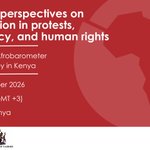
What do Kenyans think about democracy and human rights? New Afrobarometer findings offer insights into citizens’ views and evaluations.
On Tuesday 24 November 2026, our National Partner in Kenya, the Institute for Development Studies at the University of Nairobi (@IDS_UONBI), will present findings on Kenyans’ perspectives on protest participation, democracy, and human rights.
Follow us for key findings from the survey!
#Kenya #Democracy #VoicesAfrica

Afrobarometer retweeted

Welcome to #PollingFriday.
With less than 60 days until the January 2027 polls, Nigeria’s democracy faces a defining test: can legal and technological reforms restore public confidence when institutional trust is at a historic low?
Follow the thread and share your comments using #PollingFriday or tweet at us @NOIPolls.
#ABNigeriaR11

#InfographieDeLaSemaine : En moyenne, à travers 38 pays africains, près de la moitié (47%) des répondants déclarent avoir dû solliciter l’aide de membres de leur famille au cours de l’année écoulée pour joindre les deux bouts ; 8% précisent même l’avoir fait « souvent ».
Pour en savoir plus, consultez notre dernier Profil Panafricain sur la pauvreté vécue : bit.ly/47Os6Xv
#VoicesAfrica #Pauvreté #Afrique

329
#InfographicOfTheWeek: On average across 38 African countries, almost half (47%) of respondents say they had to seek assistance from family members during the previous year to make ends meet, including 8% who say they did so “often.”
Find out more in our latest Pan-Africa Profile on lived poverty: bit.ly/4iuvJqa
#VoicesAfrica #Poverty #Africa

1
312
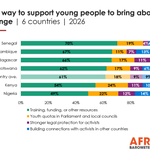
(6/6) To bring about change, young people want training and funding (61%), well ahead of youth quotas (18%), legal protection for activists (9%) and links with activists abroad (9%).
#VoicesAfrica

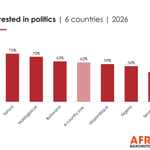
(5/6) About six in 10 young people in the six countries say they have become interested in politics at some point.
Young men are more interested than young women (68% vs. 57%), and interest rises steadily with education, from 42% among those with no formal education to 70% among those with post-secondary education.
#VoicesAfrica

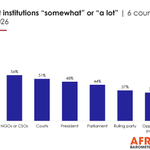
(4/6) Most Gen Zs in the six countries surveyed want major (28%) or fundamental (28%) changes to their country’s political system, and fewer than half trust Parliament (44%) or the ruling party (37%).
#VoicesAfrica

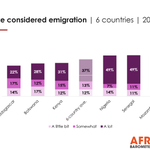
(3/6) Across the six countries surveyed, half of the Gen Zs have thought of migrating, mostly in search of jobs or to escape poverty.
#VoicesAfrica

(2/6) Young people are optimistic about their future, but unemployment is their overriding concern.
#VoicesAfrica

(1/6) What does Gen Z really think about democracy, politics, and the quality of life in Africa?
At the 2026 Gaborone Democracy Lab, co-hosted with the Friedrich-Ebert-Stiftung (@FESonline) Hub Africa, the Afrobarometer team shared fresh insights from telephone surveys conducted across six countries: Botswana, Kenya, Madagascar, Mozambique, Nigeria, and Senegal.
Here is a thread on young Africans’ experiences and evaluations.
#VoicesAfrica

Did you miss the news? Check out the top stories featuring Afrobarometer data this week.
Discover more on our website: bit.ly/3GxB6CI
#VoicesAfrica #WeAreAfrobarometer #ABInTheNews
3
330
(7/7) Head over to our website to read more: bit.ly/3XtS3JG
#VoicesAfrica #Lesotho #AfricaYouthMonth #Unemployment

(6/7) Basotho youth say economic growth should be the country’s top goal, closely followed by reducing corruption.
#VoicesAfrica #Lesotho #AfricaYouthMonth #Unemployment

(5/7) Seven in 10 young Basotho (70%) say that unemployment is the most important problem that the government should address, far ahead of infrastructure/roads (39%) in second place.
#VoicesAfrica #Lesotho #AfricaYouthMonth #Unemployment

(4/7) An overwhelming majority (86%) of young Basotho say they went without a cash income at least once over the past year, while half (50%) lacked food.
#VoicesAfrica #Lesotho #AfricaYouthMonth #Unemployment

(3/7) Asked about their main occupation, about one-quarter (24%) of young citizens are non-farming workers who earn wages, while slightly fewer (21%) say they are self-employed in non-farming business. Smaller shares work on farms for themselves (9%) or for others (3%). About one in 10 youth are students (9%) or homemakers (9%).
#VoicesAfrica #Lesotho #AfricaYouthMonth #Unemployment

(2/7) More than half (53%) of Basotho youth (aged 18-35) are not working and looking for a job. Only one-quarter are working part time (11%) or full time (13%).
#VoicesAfrica #Lesotho #AfricaYouthMonth #Unemployment

(1/7) #FlashbackFriday: Last week, our National Partner in Lesotho, Advision Lesotho (@Advision8), shared Afrobarometer’s Round 11 findings on young Basotho’s views on politics, the economy, and challenges facing youth in the country.
Here’s a thread highlighting the key findings.
#VoicesAfrica #Lesotho #AfricaYouthMonth #Unemployment

Majorities in Kenya, Tanzania, and Uganda see the economic impact of immigration as positive but want their governments to reduce the number of foreign job seekers they admit into the country.
Head over to our website to read more: bit.ly/4CcGtCL
#EastAfrica #Migration #VoicesAfrica

330