

Building towards energy superabundance @fuseenergy, previously employee #3 @revolut
Joined August 2014
- Tweets1.5K
- Following664
- Followers12.1K
- Likes2.8K






Pinned Tweet
For far too long solar and storage systems are only accessible if you have >£8k to spare and a roof you own.
So we built Jules.
It’s a 2.5 kWh battery that plugs into a normal 3-pin socket. No electrician, no scaffolding, no hardwiring.
Add up to four 500W panels on a balcony, wall or in the garden. No space for panels? It also works battery-only. It runs itself: charges when electricity is cheap, discharges when it’s expensive, forecasts your solar production and your usage from your smart meter. Up to £330 a year off your bill. £799 outright. £199 if you fix with Fuse for 5 years. Panels £189 each. 10-year warranty. Reservations are open today, launch estimated 2027. Fuse customers get priority.
fuseenergy.com/jules-by-fuse


Meet Jules by Fuse Energy.
An intelligent energy system for your home. Plug in and autopilot does the rest.
It learns your habits, stores power, trades the excess and continuously lowers your bills.
Solar and storage is now for everyone.
Energy intelligently designed for you.
Up to £330 a year off your bills.
Reservations now open
Net zero with today’s technology is a fantasy.
Before I started Fuse I naively thought we could have low-cost energy and net zero with existing technologies. I was wrong.
Two reasons.
Cost: Most batteries today store around 2 hours of energy. To cover longer durations, you have to stack more batteries in sequence, but every one adds storage cost on top of the cost of generation. Even if renewables itself is cheap, it becomes uneconomical quickly.
Resilience: Even if cost were not a concern, there will be long periods of low sun and low wind. You cannot build a high-uptime system on renewables and storage alone, let alone a cheap one.
So I changed my mind.
Today: renewables, storage, nuclear fission, plus gas (to fill in renewable gaps)
Long term: renewables, storage, nuclear fission, (maybe) long-duration storage, and (maybe) fusion.
The primary goal must be low-cost, reliable energy. Deep decarbonisation will come from R&D into new technologies, which takes time and immense engineering effort. Policymakers who fail to understand this will quickly see the consequences in their GDP.
January 2020. Nik told me the company was burning too much money. Make it profitable by 2021.
For the first 3 months I only focussed on revenue. New subscriptions, pricing changes.
Then COVID hit. Lockdown hit all of Revolut’s core markets and overnight we lost 40% of revenue.
Revenue optimisation was not going to cut it. Declared war mode on costs.
Asked finance to show me every single invoice from the last 12 months. Went line by line and labelled each one: renegotiate or kill.
Assembled a small team of the best business developers and lawyers in the company. Every cost line got an owner, with one job: exit the contract or renegotiate it.
Key vendor contracts were renegotiated. We shut down a whole unused floor of the office just to save on power. We even got rid of office plants because they were leased.
It was still not enough.
So I made myself the single cost approver for the whole company. Not a single dollar could leave the bank account without my approval. I blocked any spend that did not have justified return on spend. HR was extremely pissed off.
The company broke even 2 months ahead of schedule.
Electricians & Plumbers are the backbone of the AI & energy economy, and selling only one field service is the biggest mistake you can make.
Field services is a utilisation and CAC game.
Utilisation: Most of the labour cost is fixed salary, with a variable bonus for top performers. The more jobs you fit into a month, the lower the labour cost per job.
CAC: A single-service company pays to acquire a customer, does one job, then pays again to find the next one.
Take a rooftop solar installer. Demand peaks in summer and when energy prices are high. They control neither. When demand drops, salaries stays the same. All those inefficiencies are passed on to consumers.
At Fuse, we hire one workforce and point it at many sources of demand. We pay to acquire the customer exactly once (via energy supply), which instantly drives demand across multiple trades.
Electricians:
• Smart meter, EV charger installs & electrical repairs (driven by user growth)
• Solar and battery installs (driven by summer/high energy prices)
• Power infrastructure for Fuse Compute (driven by AI demand)
Plumbers / HVAC:
• Heat pump installs & plumbing repairs (driven by user growth)
• Cooling infrastructure for Fuse Compute (driven by AI demand)
When one slows, another picks up. Our workforce optimiser (solving the travelling salesman problem) then cuts idle and commute time to push utilisation even higher.
Then, we go one step further. We are building in-house hardware to collect egocentric data (first-person video) of the physical work. We will sell this data to AI labs to support physical world-model training, and use that revenue to subsidise the cost of every job.
Only know some of these trades? Or none? We will train you for free. We are building training centres where any motivated person can learn any trade they want.
This is how we lower the cost of energy and still pay top-of-market for our field workforce.
Founder CEOs: make yourself unfirable.
Your investors and board should not be able to remove you.
If you can’t get that, staff your board with people who have actually built something.
People who have never built anything will eventually sabotage the company.
I really want to build nuclear reactors. We won’t, not until Fuse makes at least $1B a year in free cash flow.
People ask me all the time why Fuse isn’t doing SMRs or fusion. Truth is, I want to. It really pains me to say but it’s not wise, at least not yet.
Nuclear startups are betting everything on a single technology. They have my deepest respect, but it is very risky. From R&D to licensing, an SMR takes at least 10 years to reach meaningful revenue. That is 10 years of deeply negative cash flow, funded almost entirely by investors.
Unfortunately venture money follows what’s hot. It stops when you stop being hot. Over 10 years you will almost certainly go through at least one bear market. All it takes is one missed technical milestone, and you are deeply fucked. Fusion is even worse - it is one big venture funded science experiment where no one even knows if the unit economics will work.
At Fuse, we take a different approach. We start with mature energy technologies and just out execute incumbents.
We have been generating operating free cash flow for almost a year without taking any science risk.
We will keep taking zero science risk until we get to at least $1B in annual free cash flow. That is the only funding I fully trust, because it will still be there in a bear market.
Then we take a percentage of it and bet big on SMRs and fusion.
A data centre can wait up to 15 years for a grid connection. We think it should be weeks.
So Fuse is now acquiring and expanding power grids.
Grids are the real bottleneck on growth. Data centres, distribution centres, factories.
Our approach is simple:
1. Buy grid
2. Build generation
3. Build storage
4. Expand the grid: more cables, more substations
Do this and the grid can carry far more industrial load.
The bonus: more energy users on the same cables means the fixed costs get spread thinner, so grid charges for everyone on the same grid come down (grid charges account for up to half of your energy bill)
Renewables actually made gas power more expensive, not cheaper.
Today, a gas engine only runs about 20% of the year. The other 80% of the time, it can’t compete with wind and solar on costs. Same fixed costs, one-fifth the output & the cost per gas powered MWhs increases. Fuse started in grid-scale solar (~100MW live and under construction). But solar only works when the sun shines, so we are now buying operational and building gas engines too.
We are solving the utilisation problem by putting Fuse Compute right next to the engine.
Power cost is a small fraction of GPU revenue, power availability is the key bottleneck to deploying compute. Co-locating AI compute allows us to run these gas engines at nearly 100% utilisation instead of 20%. The cost of every gas-powered MWh goes down by ~25%. Cheaper gas power means lower cost for Fuse energy customers.
We are hiring for the projects team (aka the build-everything team). If you are an electrical or mechanical engineer who just wants to build without BS politics & redtape, join us.
We’re training an AI to be a superhuman energy trader. Early results are the best I’ve seen in my career.
2 weeks ago we started pre-training an energy foundation model at Fuse on our own in-house energy demand data.
The benchmark was our existing forecasting stack: classical ML, already industry state of the art.
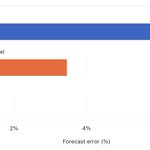
Demand forecast error:
Industry standard: 7.84%
Fuse classical ML model: 3.46%
Fuse transformer: 1.00%
That’s a 3.5X improvement on our own best model, and 8X better than the industry.
Why this matters: every percent of forecast error is pure cost. Get it wrong and you buy too much or too little power in a volatile market, and your margin erodes.
It’s early. But I have never seen a jump like this.
If you’re an AI researcher who wants to lower the cost of energy, and would rather train models than fight office politics for GPU allocation, we’re hiring.

In June, Fuse Compute was just an idea. In October, we signed our first compute customer.
June: US trip. Every AI company had the exact same problem: they can’t find enough power for compute.
July - August: Learnt everything we could about compute: prefill, decode, grey space, and white space.
August: Stood up the Fuse Compute team.
October: First customer signed.
December: First cluster live.
Standing up compute is an energy problem.
I invested $1M to set up Fuse. Almost 100% of my liquid net worth.
When Charles and I set the company up, we made each other a commitment: if Fuse fails, both of us should get fcked. Properly. So we each invested nearly everything we had.
Trillion or bust.
Yet another wealthy to poor redistribution policy from the government, without addressing the root cause of the problem 🤦♂️
The problem Britain face is friction to build, the simple reason why energy costs are high is generation per capita has been declining in the last 25 years, we are building slower than generation being retired. At Fuse, in Britain alone we are 5Xing our generation capacity next year, but that number could be a lot higher if we we allowed to build faster

Bad idea. The problem is that energy infrastructure will always have fixed costs (wires and pipes don't vanish when energy isn't flowing through them).
if fixed costs are recovered with usage-based charges, you create a lottery.
If usage is higher, profits are higher than they would've been if the charges were fixed.
if usage is lower, there's a risk variable payments don't cover fixed costs.
Energy companies will price this risk in as a premium... and bills will go up 😐
In 2018 I tried to cut my Revolut salary to £0.
I’d just been promoted to VP. We’d just closed Series C. 3 years in, I had full conviction Revolut would become a $1T company. I didn’t want cash. I wanted shares.
My general counsel wouldn’t let me go below minimum wage. It was against the law. So I took minimum wage and the rest in equity.
I had ~£20k in the bank from university side hustles. I built a simple runway model and I had about two years before I went broke. LFG.
So I rented a 300 sq ft studio five minutes from the office and ate free company food to keep costs down.
Today those shares are worth $10M+.
Elon is right. This is what I sent to the team


Pretty much.
As of the past few weeks, debt markets have almost entirely shut off access to money for any company that doesn’t have substantial revenue independent of AI data centers.
SpaceX closed $40B of debt for GPUs, but we’re investment grade and have Starlink & launch revenue.
That means the 200+ neoclouds are going to see guppy-level death and consolidation. Some will make it through, but not many.
At the Revolut Series D closing dinner I sat next to the investor who tried to get me fired.
I only found out because he got drunk and told me himself, unprompted.
He apologised. Said he was wrong once he saw what I could do. But by then Revolut was already a breakout company.
Nik is 100% right. Most investors can't be trusted with any power over the company. They should cheer from the sidelines and count their returns.
So at Fuse I've put it in the constitutional docs: VCs can't fire me. No matter what.

Revolut founder Nik Storonsky says one of his investors tried forcing him to fire his best person:
“He was forcing me to fire my best person, because he was too hardcore.”
“Of course I didn’t fire him. I said no.”
“Pretty early on I realized that quite a few VCs, they are not very operational, and they can be actually dangerous for the company if they have enough power. So every single investment round, we just remove VCs.”
“Now I don't have any VCs on the board. I think that's the best. You always need to have operators rather than VCs on the board, people who actually build business and who know how to do things.”
Green lighting Jackdaw is a great decision. Gas from the North Sea is better than importing it: lower emissions than LNG shipped from the Gulf or the US, billions in tax revenue, jobs, and real energy security for the country. None of this changes the goal. Low cost, abundant, low carbon energy is still the destination, but its impossible to achieve today or near future, the technology simply isn’t there yet. Fuse is working hard to build it. It will take time, and in the meantime using our own gas is 100% the right call.
Power availability is the biggest bottleneck in deploying AI compute. By 2027, Fuse will have 100MW of owned energy infrastructure, and compute is the first downstream service we’re offering on top of our energy capacity.
We hit this problem ourselves. Fuse runs heavy AI workloads internally, and we wanted dedicated compute hosted in country, right where our customers are. We couldn’t find it, so we built it. Fuse is Fuse Compute’s first customer, and now we’re opening it up to the world.
Fuse Energy is entering AI compute.
Introducing Fuse Compute: dedicated NVIDIA GPUs in UK data centres hosted and powered by Fuse. Available to businesses globally.
Sensitive customer data needs a clear answer to where it runs and who it runs next to.
With Fuse Compute, it’s bare-metal GPU nodes reserved for you alone, hosted in the UK, under UK jurisdiction.
The hardest part of scaling compute today is getting power to the site, which is the part we already do. With 142MW of data centre connections in the pipeline across 15 projects, compute is our next step. We have the infrastructure to deliver this to businesses globally.
Our first 128 NVIDIA GPUs are due online in December 2026, followed by 1,024 in Q2 2027.
Reserve your capacity now.

Yesterday we announced Jules, a plug-in home battery starting at just £199. It uses the same premium LFP cells as everyone else, but features a Fuse-designed PCB, IoT, firmware, enclosure, and digital twin. We priced it at 5X cheaper per kWh of storage than the rest of the market (when bundled with our 5-year energy tariff). Here’s how:
We’re the energy company. Because we see a property’s live consumption and wholesale energy prices, we build vastly better forecasts. Every piece of hardware we ship is also a trading asset. It draws power when costs are low and supports the grid when it’s congested - automatically, without the customer lifting a finger. That trading profit subsidises the hardware cost and lowers consumer energy bills.
Jules is the first of many. Our hardware roadmap includes:
1. Big Jules: A larger battery for bigger homes, businesses, and the US market.
2. Fuse EV Charger.
3. Fuse Heat Pump: Heating and cooling designed for harsh winters and summer heatwaves.
Right now, we optimise single devices against raw energy costs. Next, we will deploy an in-house, transformer-based AI model for full portfolio co-optimisation. Think of it as a superhuman energy trader that dictates when to toggle utility-scale solar, gas, storage, home batteries, EVs, and HVAC, co-optimising everything against user consumption and market prices. Ultimately, this brings us one step closer to true energy abundance.
Two things we will never compromise on:
Design: These live in people’s homes and should look beautiful.
Hardware/Software Harmony: One app. One system. No more juggling five OEM apps that don’t talk to each other.
We’re hiring electrical, mechanical, and embedded hardware engineers. If you’ve spent years building hardware for companies that sell it once and forget it, come build hardware that gets smarter every day it’s plugged in.
Jensen Huang in London, asked what’s holding back AI in the UK. Chips: “easy to solve, because we have it.” Infrastructure: being built. Energy: “very challenging in the UK. We got to solve that. Without energy, there’s no industry. Without industry, there’s no economic prosperity.”
He’s right. AI is a manufacturing industry. Energy goes in, tokens come out. You can have every scientist in the world (and the UK has a lot of them, DeepMind is here for a reason) but if the power isn’t there, nothing gets built on top. This is why we decided to build Fuse in the UK as our first market. The UK has some of the most expensive electricity in the developed world, and that cost sits under every industry we want to build here, AI included. Cheap, abundant power is not an energy sector problem. It is the growth problem.