

A full-stack institute for AI and biology research.
Palo Alto, CA
Joined November 2021
- Tweets876
- Following75
- Followers48.2K
- Likes270




Much of the functional biology encoded in genomes remains hidden in noncoding DNA.
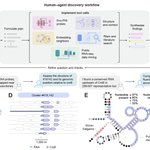
In a preprint out today, @pdhsu and team introduce COMPASS, a genomic language model-based approach to systematically map this underexplored sequence space.

To explore the atlas at scale, the team deployed AI agents to develop analyses and investigate biological hypotheses under researcher guidance.
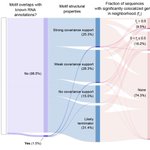
They identified candidate divergent riboswitches, ribozymes, and previously uncharacterized PhoH2-associated RNAs that existing annotation methods missed.

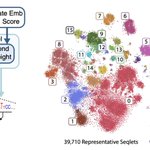
COMPASS is an annotation-free atlas of prokaryotic noncoding sequence space, linking RNA structure, genomic context & evolutionary diversity.
The database is publicly available for human-agent discovery via a web app and MCP server: compass.arcinstitute.org/
Full preprint: biorxiv.org/content/10.64898…
Arc Institute retweeted

Excited to share Bolero, out on bioRxiv. @arcinstitute posted a great overview. Here I want to add another perspective that motivated it for us (also a few more higher resolution images).
Arc Institute retweeted

Excited to share some of my new work being presented at #NeurIPS2026 this year!
1. Compositional Perturbation Planning with a Generative Structural Causal World Model - openreview.net/pdf?id=N2ewxv…
Going from an embryonic stem cell to a target cell fate is a multi-step planning problem, but current perturbation models can’t capture multi-gene effects or epistasis. We built a structural causal VAE world model that takes in sets of transcription factors, represents interventions in its latent causal graph, and accurately predicts held-out high-order perturbations. A GFlowNet policy trained over it autoregressively samples TF sets to reach downstream fates, recovering the correct genes at 36x lower cost than search and nominating well-known blood-lineage drivers zero-shot for hematopoietic stem cell fate. Thank you to Ivy Liu and @genophoria for your mentorship, and @arcinstitute for the support!
2. Interpretability-Conditioned Value Priors for Evaluation-Efficient Intervention Search - openreview.net/pdf?id=CkD0V7…
Interpretability tools reveal a lot about what a model has learned, but that insight rarely turns into better decisions, and testing every possible fix is expensive. With my good friend @parshawnn , we asked whether concept-level interpretability can predict which interventions on a representation are worth evaluating before any feedback comes in. On a shortcut-learning benchmark built on frozen CLIP features of CelebA, an interpretability-based value prior reached 95% of the attainable improvement with 64% fewer evaluations than a matched generic model and 73% fewer than random search.
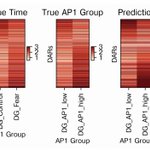
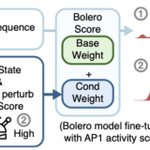
Our cells carry the same DNA, but how this DNA is interpreted differs wildly from cell to cell. In a new preprint, Science Fellow @zhou_jingtian and team introduce Bolero, a model conditioned on cell state that predicts chromatin accessibility and expression from DNA alone.

Trained only on human data, Bolero's AP-1 model correctly predicted enhancer activity in mouse and macaque neurons it never saw in training. In effect, Bolero turns genome sequence into a queryable map of cell-state-specific regulation across cell types, activity states, and species.

Access the preprint: biorxiv.org/content/10.64898…
Learn @zhou_jingtian’s thoughts on the paper: arcinstitute.org/news/bolero

More than 5,000 people have registered for the Virtual Cell Challenge, and with over 1,500 teams on the leaderboard, we wanted to know who they are and why they’re competing:
arcinstitute.org/news/vcc-co…

The Challenge runs through November 5. Learn more at virtualcellchallenge.org

Arc Institute retweeted

Dialectic 60: Patrick Hsu!
@pdhsu & @arcinstitute are combining biology, engineering, and AI to turn a sci-fi future into reality.
Patrick got expelled from college at 13, returned at 15, later worked on early CRISPR breakthroughs, and teamed up with @SKonermann & @patrickc to found Arc.
He works 3 jobs: core investigator at Arc, professor at Stanford, and venture partner at @thrivecapital. For all his intensity and ambition, he carries a lightness and boldness that is contagious.
We discuss:
- why research is 99% failure and even your best ideas kind of suck
- infinite games and speedrunning school
- the reach of GLP-1s and power laws in biotech
- what makes a good biologist
- Arc’s bet on people over projects
- lab robots that finally work
- AI-designed organisms and new forms of life
- why heart disease could go the way of infectious disease
- bro science, peptides, and biofuturism
- research taste in the age of AI
Timestamps:
(0:00) Opening Highlights
(1:39) Intro: Patrick Hsu
(4:29) Start: Boldness, Infinite Games, & Ambition
(12:54) GLP-1s and Power Laws in Biotechnology
(20:17) Expelled at 13 and Falling for Biology
(25:51) What Makes a Good Biologist, Research Taste, and Biology's Data Challenges
(37:58) The Arc Model: Full-Stack Science
(52:01) Betting on People, Style, & Learning to Simplify
(57:22) Perturbation, World Models, and Evo
(1:03:27) Virtual Cell Models
(1:09:56) Designing Life: From Stem Cells to Genome Writing
(1:18:39) Testing, Bro Science, and Human Data
(1:24:26) Can It Exist vs. Will It Exist: Science Meets Markets
(1:29:59) Biofuturism: Interoception, Peptides, Muscle Modulation, Sleep, and New Forms of Life
(1:43:47) Fun, Obsolescence, Going Slow, and the Future
@dialecticpod 60: Patrick Hsu - Speedrunning the Infinite Game - is available on all platforms, including X. Links below.