
Scientist @GoodFoodInst, analyzing progress & challenges in #cultivatedmeat & alternative proteins. Opinions my own. BlueSky: @elliotswartz.bsky.social
Joined January 2011
- Tweets4.6K
- Following2K
- Followers5.3K
- Likes12.3K






My two favorite genres of anti-cultivated meat propaganda:
1. People buying gross-looking meat at the grocery store and calling it lab-grown (it's from an animal)
2. AI videos warning you to check the labels:

Canadian startup @Opaliafoods first offtake by dairy company Hoogwegt for testing its cultivated whole milk, produced from bovine mammary cells. Its modular bioreactor can produce ~28L of milk/day, equivalent to ~1 cow.
proteinproductiontechnology.…

Pythag Tech raises $4.25 to improve cell line, media, and process development for #cultivatedmeat with AI
proteinproductiontechnology.…

Cultivated pet food enters the market in Hong Kong. That makes three countries/regions where cultivated pet food has been sold in 2026.
The company Friends & Family produces cultivated quail cells for use in a variety of pet food SKUs.
greenqueen.com.hk/friends-an…

Here's the first comprehensive study evaluating the consumption of #cultivatedmeat in vivo. The study evaluated mice fed diets with high & low cultivated biomass (produced by Chinese startup Joes Future Food), compared to conventional pork and controls (saline). Although there are some nutritional differences between cultivated & conventional meat, there were no adverse safety effects observed on the health of the animals, measured by their body weight, multi-organ health, blood serum, and microbiome.
Regardless of whether you think animal feeding trials are needed or not to establish the safety of cultivated meat, there are going to be people (& some regulators) who demand them. So it's great to see this body of evidence being built openly in the public literature.
Paper is open-access here: sciencedirect.com/science/ar…

Trying to improve the environmental footprint of beef production is the agricultural equivalent of "clean" coal
Over the next decade, its market share will deservedly head in the same direction as coal and ICE vehicles: down, down, down
newyorker.com/news/the-lede/…

Elliot Swartz retweeted

🎉 - my first Substack essay just went live.
I would be honored if you would: 1) subscribe; and 2) share it with others.
Issues 2 and 3 will continue with this theme: optimism about the science of cultivated meat and urgency around ensuring its success.
Check it out and subscribe - I will work hard to make sure each post is worth your while:
MeatMatters(.)substack(.)com
Thank you.

🔬📚 3 new cell lines are now listed in GFI’s Cell Line Database: two bovine + one chicken
Developed by Luyef Biotechnologies, these cell lines provide the tools that researchers need to drive cultivated meat science forward
Explore & request cell lines here: bit.ly/4ydH4RR

Tufts opens a new Innovation Hub for food and materials, including a pilot facility, cell bank, and startup incubator space.
Supported by a $2M grant from the Massachusetts government:
now.tufts.edu/2026/08/17/tuf…

More M&A activity in the #cultivatedmeat sector, with Ever After Foods acquiring Fishway
Ever After Foods is one of the few companies using an edible packed-bed bioreactor strategy for production:
globenewswire.com/news-relea…

A nice 15-minute rundown on the case for cultivated meat by @SciencEric:
open.spotify.com/episode/3vG…

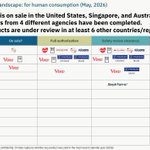
.@AlephFarms secures regulatory approval in Singapore. It's the fifth #cultivatedmeat product approved for sale in Singapore, and the first for cultivated beef in the country. Restaurant introductions expected in 2027:
greenqueen.com.hk/aleph-farm…

Elliot Swartz retweeted

Can Lab-Grown Meat Replace Real Meat?
Firstpost's @danielaureltv is joined by @elliotswartz of the Good Food Institute on the future of the cultivated meat industry.
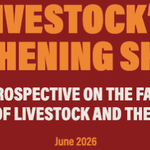
In 2006, the FAO published a report stating that the livestock sector was one of the top 2-3 contributors to the most serious environmental problems. The new report Livestock's Lengthening Shadow reviews how this has only worsened over the last 20 years.
Despite some meat production systems improving in impact efficiency per animal produced, these improvements are dramatically offset by the number of farmed animals rising by over 50% in the 20 years since publication (from ~62B to 95B). This has resulted in:
🏭 Emissions from farmed animals increasing by 22%.
🌏 A 27% increase in the global use of cropland dedicated to animal feed, equivalent to 40% of global arable land.
🌽 A 63% increase in the annual use of grain for animal feed, totaling over 1B tons annually.
💧 A 100% increase in freshwater withdrawals to irrigate animal feed crops.
This translates to more deforestation, soil degradation, pesticide use, and eutrophication from fertilizers. With meat consumption expected to increase by another 50% by 2050, business-as-usual isn't an option.


Full report here: stopfinancingfactoryfarming.…

French startup PARIMA completes successful run of its cultivated duck at the 20kL/ton-scale using Vow's production line in Sydney
Great example of process validation & tech transfer for the sector:
greenqueen.com.hk/parima-gou…

Be one of the first to try cultivated salmon:
US startup @wildtypefoods launches kickstarter for its direct-to-consumer cultivated lox product & new skincare product line, joining several other CM startups to pursue cosmetics
Back the project: kickstarter.com/projects/jko…

Australian cultivated meat startup @itsjustvow changes CEOs, as former CEO @peppsyd steps into a role to lead a new biomanufacturing spinout
Continues the trend of cultivated meat startups leveraging their capabilities into different markets:
forbes.com.au/news/entrepren…

.@UPSIDEfoods has placed a $50M bid on the largest cultivated meat facility in the world, based in North Carolina, which was constructed by defunct company @believermeats. Other competing bids will be accepted until July 20th:
agfundernews.com/exclusive-u…
