

Investment research for those short on time. 1M+ community worldwide. Apple: https://teapawt.org/t.co/0p21ytqB6X Android: https://teapawt.org/t.co/LIix0Ka3YI
🌎
Joined October 2014
- Tweets7.3K
- Following529
- Followers25K
- Likes9.1K







Pinned Tweet
How Our Research Picks Have Held Up: November 2026
It's time for the Finimize Portfolio update. Every month, we revisit our open ideas, check the results, and consider what's changed. You can follow every trade in the tracker, which has links to every investment case and up-to-date performance stats.
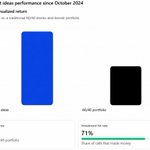
Since their launch in October 2024, our ideas have delivered an average annualized return of 19%, beaten a classic 60/40 stocks-and-bonds portfolio by 9 percentage points, and posted a 71% hit rate.
So let’s go analyst by analyst and look at what worked, what didn’t, and what needs to change now. Read it here:
finimize.substack.com/p/how-…

The tech selloff explained in one map.

America’s AI boom has hit a political roadblock.
Newly elected state leaders are promising to pause or restrict data center construction, putting roughly 40% of planned US capacity at risk.
Meanwhile, 46 local ballot measures could further slow development, including 17 outright bans.
That’s bad news for an industry racing to build computing power.
Bloomberg Intelligence reckons the backlash could shave 5% to 7% off the $1.4 trillion expected to be spent on AI infrastructure in 2027, with as much as 10 gigawatts of capacity potentially delayed.
For investors, though, the implications go beyond slower spending.
If building new data centers becomes harder, existing facilities – particularly those with secured power connections and permits – could become significantly more valuable. Scarcity, after all, tends to boost pricing power.
The flip side is that developers relying on rapid capacity expansion to drive revenue growth could struggle.
Those borrowing heavily against future projects face an even bigger headache: delays could leave them without the cash flow needed to service their debts.
Meanwhile, electricity is becoming a political flashpoint.
Voters increasingly oppose data centers pushing up household energy bills, and some policymakers want operators to supply their own power.
That could accelerate demand for on-site generation, benefiting suppliers of natural gas generators and fuel cells.
The latter may have an edge: they’re cleaner and can often be deployed faster, making them attractive where emissions rules and grid delays complicate construction.
Ultimately, one thing’s for sure: the blue wave sweeping Washington is set to reshape the AI trade’s winners and losers.
#AI #DataCenters

Finimize retweeted

America’s AI boom has hit a political roadblock.
Newly elected state leaders are promising to pause or restrict data center construction, putting roughly 40% of planned US capacity at risk.
Meanwhile, 46 local ballot measures could further slow development, including 17 outright bans.
That’s bad news for an industry racing to build computing power.
Bloomberg Intelligence reckons the backlash could shave 5% to 7% off the $1.4 trillion expected to be spent on AI infrastructure in 2027, with as much as 10 gigawatts of capacity potentially delayed.
For investors, though, the implications go beyond slower spending.
If building new data centers becomes harder, existing facilities – particularly those with secured power connections and permits – could become significantly more valuable. Scarcity, after all, tends to boost pricing power.
The flip side is that developers relying on rapid capacity expansion to drive revenue growth could struggle.
Those borrowing heavily against future projects face an even bigger headache: delays could leave them without the cash flow needed to service their debts.
Meanwhile, electricity is becoming a political flashpoint.
Voters increasingly oppose data centers pushing up household energy bills, and some policymakers want operators to supply their own power.
That could accelerate demand for on-site generation, benefiting suppliers of natural gas generators and fuel cells.
The latter may have an edge: they’re cleaner and can often be deployed faster, making them attractive where emissions rules and grid delays complicate construction.
Ultimately, one thing’s for sure: the blue wave sweeping Washington is set to reshape the AI trade’s winners and losers.
#AI #DataCenters
What you need to know about markets today 👇
1️⃣ Toyota shares surged nearly 17% – their biggest rally in almost 40 years – after strong hybrid demand boosted profits and prompted a $3 billion forecast upgrade. The rally lifted Japan’s broader Topix index even as its tech-heavy Nikkei fell, highlighting investors’ shift away from AI-linked stocks.
2️⃣ The Bank of England raised interest rates for the first time since 2023 as war-driven energy costs kept inflation stubbornly high. Higher borrowing costs are squeezing households, but the bond selloff has a silver lining: investors can now lock in more attractive yields.
The market has spoken...
Big Tech had a big day on Wednesday, but not everyone joined the party.
Apple, Microsoft, Amazon, Alphabet, and Meta collectively added over $800 billion in market value following the US midterms. Nvidia and Tesla, meanwhile, lost billions. So what gives?
Well, the election results could put the brakes on America's AI spending spree.
Democrats now govern the five biggest states for data center construction, and they're not exactly rolling out the welcome mat.
In fact, Goldman Sachs reckons restrictions could affect 45% of planned data center expansion.
That might sound like bad news for Big Tech. But investors could see a silver lining.
After all, hyperscalers like Microsoft, Amazon, and Alphabet have been pouring eye-watering sums into AI infrastructure, raising concerns about whether those investments will ever pay off.
Slower construction could ease spending pressures, protect cash flows, and reduce the risk of building expensive facilities that quickly become obsolete.
For Nvidia, though, it's a different story. Fewer data centers could mean fewer orders for its lucrative AI chips.
And Tesla? Its decline might have less to do with AI infrastructure and more with Elon Musk's close ties to Republicans, who suffered a bruising election defeat.
#Midterms2026 $NVDA $TSLA $META $GOOGL $AMZN $MSFT $AAPL

What you need to know about markets today 👇
1️⃣ Democrats won control of Congress in the US midterms, raising the prospect of political gridlock and tougher scrutiny of data center development. That could slow the massive AI buildout, putting pressure on chipmakers and cloud infrastructure firms even as broader stocks held up.
2️⃣ Eurozone inflation hit 4% in October, double the ECB’s target, as soaring energy costs kept prices climbing. Another rate hike now looks likely, but European companies’ strong earnings outlook – boosted by their substantial exposure to markets outside Europe – offers investors some reassurance.
🤖 The AI boom is real. But who's actually making money?
Research from @landg_uk shows infrastructure suppliers enjoying 51% operating margins, while AI developers remain deep in the red.
The biggest long-term winners might surprise you 👇
finimize.com/content/the-ai-…

Latest Market Open episode is out, and boy is it quite timely!
🎙️ New Podcast Episode: Anthropic’s IPO Filing Should Make Investors Nervous
Every week, Finimize analyst Russell Burns and I sit down for a casual chat about all things markets – from the biggest recent headlines and under-the-radar trends to what we’re watching in the week ahead.
In this week’s episode, we look at what the US midterm elections could mean for markets, why AI data centers are becoming a political issue, and whether the usual post-midterm rally can hold up against high valuations and a shaky tech sector.
We also discuss Big Tech’s latest earnings, the huge sums still being raised to fund AI, and the fallout from Binance’s $6.3 billion hack.
For the full conversation, check out the latest episode of Market Open on Apple Podcasts, Spotify, or wherever you get your podcasts.
You can also watch the episode on YouTube.
🎧 Apple:
podcasts.apple.com/gb/podcas…
📺 YouTube:
youtube.com/watch?v=Q1t_kJCO…
#Midterms2026 #BigTech $AAPL $MSFT $GOOGL $AMZN $ORCL

There's a new version of this post
What you need to know about markets today 👇
1️⃣ Wall Street’s FOMO is turning into FOGO – fear of getting obliterated – as major investors warn about debt-fueled market risks. But rather than abandoning stocks, investors are rotating out of tech, helping the equal-weight S&P 500 outperform its tech-heavy counterpart.
2️⃣ Banks and cybersecurity officials are warning of an unprecedented wave of cyberattacks, with recent incidents hitting everything from supermarkets to crypto exchanges. As AI makes hacking easier and threats spread, demand for cybersecurity could keep growing – creating opportunities for firms providing protection.
Finimize retweeted

Chipotle was trading at half of what @BillAckman thought it was worth: investors didn’t believe the company’s problems could be fixed. He explains how Pershing Square bought a 10% stake, got the board on side without a proxy fight, and turned it into a $2 billion+ return @finimize
A timely chart ahead of today’s US midterm elections.
The S&P 500’s Perfect Midterm Winning Streak Faces Its Biggest Test Yet
Wall Street has a winning streak to defend.
The S&P 500 has risen in the six months following every US midterm election since 1950, with investors historically benefiting as political uncertainty fades.
But this year, that impressive record could be in jeopardy.
For starters, US stocks have already enjoyed double-digit gains in 2026, unlike previous midterm years when markets typically struggled before election day.
The index's biggest drop this year was just 9%, compared with a historical average of 18%.
Then there are valuations.
The S&P 500's cyclically adjusted price-to-earnings ratio has hit 40.7, its highest ever heading into a midterm election.
That's concerning, especially since expensive markets have historically delivered weaker post-election returns.
Add worries about AI spending, a tech sell-off, and potential US military escalation against Iran, and investors have plenty to chew over.
Politics could complicate matters further.
Historically, stocks have returned an annual average of 13.7% under a Republican president and split Congress, versus just 4.9% when Democrats controlled both chambers.
With Democrats tipped to win the House, the Senate could prove decisive.
So while history might favor a post-election rally, lofty valuations and mounting risks mean investors shouldn't bank on another guaranteed win.
#Midterms2026 $SPY


Finimize retweeted
Big Tech's AI Spending Spree Is Crowding Out Shareholder Payouts
Big Tech is making record amounts of cash.
But shareholders are seeing less of it than they have in at least 15 years.
The culprit? AI's eye-watering price tag.
Microsoft, Alphabet, Amazon, Meta, and Oracle returned just 9.3% of their operating cash to shareholders in the first nine months of 2026, down from 27.4% a year earlier.
That's despite generating a record $543 billion in operating cash flow, up 29%.
The problem is that AI spending is growing even faster.
Capital expenditure doubled to $557 billion, leaving the five giants with a combined $14 billion free cash flow deficit, compared with a $144 billion surplus last year.
Something had to give.
Share buybacks plunged 83% to $13.6 billion, while dividends edged higher to $37 billion.
Alphabet and Meta haven't repurchased a single share this year.
That's a big deal for investors.
Buybacks have historically boosted earnings per share by reducing the number of shares outstanding, helping support lofty tech valuations.
Now, with that tailwind fading and data center costs mounting, Big Tech needs genuine profit growth to keep investors happy.
In other words, shareholders are swapping cash today for the promise of AI riches tomorrow.
And that bet had better pay off.
#AI $MSFT $GOOGL $AMZN $META $ORCL

🔎 The Focus This Week: Magnificent Things
Apple’s been one of the bright lights this year. Its stock is up 27%, making it the best-performing member of the Magnificent Seven so far.
So investors are expecting big things today when it releases its quarterly update.
Analysts are expecting revenues to climb 10% from a year ago, to $113 billion, with profit rising 6% to $29.2 billion.
As ever, the iPhone will provide much of the sales muscle, accounting for roughly half of its sales.
Apple has raised prices on its new iPhone 18 Pro and Pro Max, along with older models like the iPhone 17 and Air.
That should help iPhone revenue grow by a mid-teens percentage, even if it does sell fewer phones overall.
The one hangup is that pricier memory chips could squeeze the company’s margins.
Still, Apple’s been holding up remarkably well in a pretty miserable smartphone market.
Across the industry, phone shipments plunged a record 22% in the third quarter compared with a year earlier, as rising component costs pushed prices up.
Apple’s dropped just 4%, though. And that’s partly because its loyal, relatively well-off customers have been more than willing to answer the call and keep on spending.
Apple’s got another money maker, too: services.
The higher-margin business, which includes the App Store, iCloud+, and AppleCare+, is expected to show revenue growth of 10% over last year.
And with Apple’s huge base of existing customers, steady services growth, product innovation, and its decision not to toss hundreds of billions of dollars at AI, it’s easy to see why investors are so devoted
In fact, investors are willing to pay a hefty 36 times Apple’s expected 2027 earnings, compared to just 20 times for the broader S&P 500.
It’s a good reminder that a pricey stock isn’t necessarily a bad investment, just as a cheap one isn’t automatically a bargain.
The quality and durability of a company’s earnings, profit margins, cash flow, and strategy are often more important than a single earnings ratio.
Read the full Finimize Weekly Brief – a recap of last week’s highlights and a preview of the key things to watch in the week ahead – here:
finimize.substack.com/p/the-…
#Apple $AAPL

Finimize retweeted
Wall Street’s AI spending spree is running into a rather inconvenient problem: investors are getting tired of footing the bill.
With tech companies borrowing billions to build data centers and power their AI ambitions, credit markets are showing signs of strain.
AI-related companies have raised a record $460 billion in debt globally this year, but finding willing lenders is becoming trickier.
At least 18 data-center financings now carry double-digit yields, while borrowing costs for highly rated data-center bonds have climbed from below 5% to around 7% since January.
And investors are getting nervous.
The cost of insuring against defaults on debt from companies like Oracle, Nvidia, and Meta has surged, reflecting concerns about mounting financial risks.
Meanwhile, banks and insurers are approaching their lending limits, and contractual loopholes allowing customers to abandon delayed projects are making deals even less attractive.
Even Wall Street heavyweights like Citadel and Oaktree are sounding the alarm, questioning whether credit markets can support the industry's proposed $5.5 trillion AI buildout.
The upshot? AI's ambitions aren't shrinking, but investors' appetites might be.
Unless tech giants can prove their enormous spending will generate equally impressive profits, financing the AI revolution could become considerably more expensive.
#AI $META $AMZN $MSFT $GOOGL $AVGO $SPCX $NVDA $ORCL $AMD


Planning on calling in sick on November 19th?
Grand Theft Auto VI is finally getting its much anticipated release, after a decade’s long wait 🚔🔫
But what could the numbers actually look like for the biggest game release of all time? Check out how the bear, base and bull launch sale scenarios add up. Which way do you think it’ll go?
Read the full analyst report on Take-Two Interactive's here: finimize.com/content/gta-vi-… $TTWO


Finimize retweeted
Emerging-market (EM) stocks are trading at their biggest-ever discount to US shares, potentially giving investors reason to take a closer look.
The MSCI EM Index trades at less than 9x expected earnings, compared with roughly 19x for the S&P 500. That's a 53% discount – the widest since records began in 2006.
And it's not because EM stocks have been struggling.
They've climbed 15% this year, outperforming their US counterparts.
But earnings forecasts have risen even faster, jumping 70% and making valuations look relatively more attractive.
AI is driving much of that growth.
While American tech giants spend heavily on AI infrastructure, Asian companies are benefiting from supplying the chips and hardware.
Earnings estimates in Asia have surged 87%, while EM tech stocks have rallied 63% this year.
In short, EM companies' earnings prospects have improved faster than their share prices have risen, leaving valuations lower.
Historically, valuation gaps this wide have often been followed by periods of EM outperformance.
But, as always, there's no guarantee that pattern will repeat, and while EM stocks may look cheap, they still come with their share of risks.
#EmergingMarkets

Want to be up to date on Anthropic S-1 Filing?
Catch our analyst's take here 👇
youtube.com/watch?v=a5yPWqAw…
GTA VI Is Coming. Here’s How To Play Take-Two’s Stock.
Gamers have booked their time off work (or plotted their sick days) for November 19th.
That’s when Grand Theft Auto VI finally arrives, 13 years after its predecessor became one of the biggest entertainment releases in history.
The hype is off the charts: its first trailer racked up a record 93 million YouTube views in 24 hours, and an extended look at the game briefly crashed Netflix.
For Take-Two Interactive, the company behind GTA, the stakes are high. But a blockbuster game doesn’t necessarily make a blockbuster investment.
With the shares already pricing in plenty of success, the questions are whether GTA can beat its lofty expectations, keep the money rolling in after the launch rush, and justify its valuation.
Here’s how the numbers stack up – and what they mean for anyone considering buying the stock.
Read the Research here:
finimize.substack.com/p/gta-…
$TTWO #GTA6
