

Co-Founder @ https://teapawt.org/t.co/hjbHe3knbV | B2B Growth playbooks using AI
New York
Joined November 2022
- Tweets1.9K
- Following60
- Followers5.2K
- Likes1.2K






Fivos Aresti retweeted
Things that kill cold outbound (after setting it up for 250+ B2B companies):
1. Blaming the channel → the broken system never gets fixed.
2. Vague ICP → every step after it won’t work.
3. One data provider → gaps in your TAM.
4. Automated sending through primary domain → land in spam.
5. No account research → prospects don't feel understood.
6. No scoring → reps treat every account the same.
7. One contact per account → you're betting on luck.
8. Unverified emails → bounces that hurt deliverability.
9. Testing every variable at once → no idea what worked.
10. Scaling off one SDR's wins → a signal mistaken for proof.
11. Scaling unproven messaging → louder inefficiency.
12. More volume before deliverability is stable → deliverability tanks.
13. Using a warm offer on cold traffic → it will NOT work.
Fivos Aresti retweeted
As long as humans communicate with each other through messages, cold email will never die.
In fact, thousands of the top b2b companies are growing MoM on outbound alone.
Compared to your other channels, outbound is:
• Much cheaper than running ads
• Much faster than creating organic content
Even without a sales team cold calling all day, you should have an automated outbound engine running at all times.
Things that kill cold outbound (after setting it up for 250+ B2B companies):
1. Blaming the channel → the broken system never gets fixed.
2. Vague ICP → every step after it won’t work.
3. One data provider → gaps in your TAM.
4. Automated sending through primary domain → land in spam.
5. No account research → prospects don't feel understood.
6. No scoring → reps treat every account the same.
7. One contact per account → you're betting on luck.
8. Unverified emails → bounces that hurt deliverability.
9. Testing every variable at once → no idea what worked.
10. Scaling off one SDR's wins → a signal mistaken for proof.
11. Scaling unproven messaging → louder inefficiency.
12. More volume before deliverability is stable → deliverability tanks.
13. Using a warm offer on cold traffic → it will NOT work.
As long as humans communicate with each other through messages, cold email will never die.
In fact, thousands of the top b2b companies are growing MoM on outbound alone.
Compared to your other channels, outbound is:
• Much cheaper than running ads
• Much faster than creating organic content
Even without a sales team cold calling all day, you should have an automated outbound engine running at all times.

Fivos Aresti retweeted
25 buying signals to track in Q4 (and the 3 layers every one of them falls into):
(bookmark this)

Fivos Aresti retweeted
Follow this content plan for 90 days and come back as an industry authority in your space:
(the exact plan behind generating 40M+ LinkedIn impressions)
1. Cadence
• 3 posts a week for 12 weeks = 36 posts
• Spread across Monday, Wednesday and Friday
• 36 posts = an actual dataset, down to which posts bring profile visits and DMs
2. Layers (1 of each, every week)
• Top of funnel: personal stories, opinions, shareable resources → reach
• Middle of funnel: frameworks, process breakdowns → credibility
• Bottom of funnel: case studies, direct offers → conversations
3. Week by week
• Weeks 1-4 (positioning): personal journey post, "old way vs new way" infographic, resource lists, tech stack infographic
• Weeks 5-8 (authority): real company SOPs, case studies with client results, "this vs that" infographics, screen-recorded walkthroughs
• Weeks 9-12 (conversion): comment-for-an-audit offers, milestone posts, lessons from failures, full case study breakdowns
4. What this snowballs into
• 3 months → you stop second-guessing every post
• 6 months → people recognize your name before they read the post
• 12 months → a five-figure base of relevant followers + inbound opportunities
Bookmark this.
Fivos Aresti retweeted
The exact domain + mailbox setup I'd use to send 63,000 cold emails a month:
(bookmark)


Fivos Aresti retweeted
Every rep on your team should get a Slack digest of Tier 1 accounts to work.
Here’s the automation that pings whenever they pop-up in the CRM:
1. Signal fires → logged in the CRM with a timestamp and a category (fit, activity or intent)
2. Engagement crosses your threshold → the account lands on a dynamic list and an automation triggers
3. Tier 1 account visits your pricing page → alert in a dedicated Slack channel
4. CRM account owner → matched to their Slack user → the alert goes to the rep who owns the account
5. Awareness stage changes → Slack message to that rep
6. Every morning or every week → the Tier 1 Account Digest lands in Slack
7. Rep confirms the next step with a Slack bot or an emoji reaction → the action logs back to the CRM
What feeds the loop:
• First-party: website visits, product usage, demo requests, email replies
• Second-party: ad engagement, past users interacting with your content
• Third-party: tech-stack changes, hiring patterns, new funding rounds
Fivos Aresti retweeted
I’ve worked with some of the highest performing GTM teams in all of B2B.
Most orgs go through these 3 stages of growth:
1️⃣ Stage 1: Pre-Seed - Founder-Led
The founders are the sales and marketing team.
They close the first customers themselves and learn what resonates.
Tools: GSheets, Gmail, LinkedIn
2️⃣ Stage 2: Seed - First Hires
Sales
Your first AEs are full-cycle: they prospect, take the inbound calls and run every demo.
They start building the sales playbook.
Tools: SalesNav, HubSpot, AI Ark, Nooks, Ergo, Qwilr
RevOps
The GTM Engineer's job is to build the revenue infrastructure and make the AEs' lives easier.
The first workflows they usually need to build:
• Inbound Orchestration
• TAM Sourcing
• Automated CRM Enrichment
• Signal Tracking
• Content Engineering
And while AEs work the Tier 1 accounts, the GTM Engineer runs automated outbound to everyone else.
Tools: Clay, DiscoLike, Ocean(.)io, RB2B, AI Ark, Findymail, BetterContact, HeyReach, Instantly(.)ai, n8n, Claude Code
Marketing
The Growth Manager is a generalist who runs different growth experiments simultaneously (e.g. partnerships, SEO, LinkedIn/X content)
Depending on how much you raised, a GTM Engineer could cover parts of this role at this stage.
The Designer handles the website, product and social content.
Tools: Clay, Semrush, beehiiv, Claude Code, Figma, Notion
3️⃣ Stage 3: Series A - Growth
Agents
Your company OS lives on GitHub with agents for every department.
Agent examples: Content Ideator, LinkedIn Post Drafter, Blog Creator, Client Onboarding Agent, Cold Email Copywriter, Campaign Launcher, TAM Mapping Agent
Sales
At this point, the team needs structure, targets, and accountability.
A Head of Sales brings that structure and turns what works into a repeatable process.
SDRs bring in pipeline, and AEs focus on closing.
Tools: HubSpot, Mutiny, AI Ark, Nooks, Ergo, Qwilr, SalesNav, TitanX
RevOps
A RevOps specialist joins to keep the CRM the source of truth and becomes the Head of Sales' right hand.
The GTM Engineer owns everything before a lead lands in the CRM.
Tools: Freckle(.)io, Clay, DiscoLike, Ocean(.)io, RB2B, AI Ark, Polytomic, HubSpot, Findymail, BetterContact, Claude Code, n8n, Instantly(.)ai, HeyReach
Marketing
The Growth Manager runs ongoing ad tests and scales content across every relevant platform.
Assuming LinkedIn is a proven channel, the next hire is a FT LinkedIn Content Strategist (underrated given the impact).
The Designer supports all of it.
Tools: Clay, Semrush, MagicPost, Figma, Notion, Fibbler, Customer(.)io, Tally, Claude Code, n8n, beehiiv
---
There's no one-size-fits-all playbook, but this is one of the best structures I've seen after working with 275+ B2B tech companies.
Any changes you’d make? 👇
Follow Fivos Aresti for more GTM playbooks.

Fivos Aresti retweeted
"Our buyers aren't on LinkedIn, so we'll buy a list from a niche data broker."
Broker data sets are usually NOT clean.
Here's the route we use instead:
1. Find 3 to 5 domains of your best-fit accounts
2. Add them to DiscoLike
• It has aggregated every company that has a website
• It writes the search prompt for you and adds any other relevant filters
3. Export the list of similar companies
4. Qualify that pool with AI
• A GTM tool built for it: Clay or Freckle
• A coding agent with enrichment MCPs and CLIs: Claude Code or Codex
• We typically use a mix of both
5. Pick the model
• Lean: a low-cost model researches every website for industry and product fit
• Strict: a more expensive model with more accurate results
• In Clay, the model also gives you its reasoning and confidence level
6. Test it on 10 samples, then run it on hundreds of thousands of companies
I’ve worked with some of the highest performing GTM teams in all of B2B.
Most orgs go through these 3 stages of growth:
1️⃣ Stage 1: Pre-Seed - Founder-Led
The founders are the sales and marketing team.
They close the first customers themselves and learn what resonates.
Tools: GSheets, Gmail, LinkedIn
2️⃣ Stage 2: Seed - First Hires
Sales
Your first AEs are full-cycle: they prospect, take the inbound calls and run every demo.
They start building the sales playbook.
Tools: SalesNav, HubSpot, AI Ark, Nooks, Ergo, Qwilr
RevOps
The GTM Engineer's job is to build the revenue infrastructure and make the AEs' lives easier.
The first workflows they usually need to build:
• Inbound Orchestration
• TAM Sourcing
• Automated CRM Enrichment
• Signal Tracking
• Content Engineering
And while AEs work the Tier 1 accounts, the GTM Engineer runs automated outbound to everyone else.
Tools: Clay, DiscoLike, Ocean(.)io, RB2B, AI Ark, Findymail, BetterContact, HeyReach, Instantly(.)ai, n8n, Claude Code
Marketing
The Growth Manager is a generalist who runs different growth experiments simultaneously (e.g. partnerships, SEO, LinkedIn/X content)
Depending on how much you raised, a GTM Engineer could cover parts of this role at this stage.
The Designer handles the website, product and social content.
Tools: Clay, Semrush, beehiiv, Claude Code, Figma, Notion
3️⃣ Stage 3: Series A - Growth
Agents
Your company OS lives on GitHub with agents for every department.
Agent examples: Content Ideator, LinkedIn Post Drafter, Blog Creator, Client Onboarding Agent, Cold Email Copywriter, Campaign Launcher, TAM Mapping Agent
Sales
At this point, the team needs structure, targets, and accountability.
A Head of Sales brings that structure and turns what works into a repeatable process.
SDRs bring in pipeline, and AEs focus on closing.
Tools: HubSpot, Mutiny, AI Ark, Nooks, Ergo, Qwilr, SalesNav, TitanX
RevOps
A RevOps specialist joins to keep the CRM the source of truth and becomes the Head of Sales' right hand.
The GTM Engineer owns everything before a lead lands in the CRM.
Tools: Freckle(.)io, Clay, DiscoLike, Ocean(.)io, RB2B, AI Ark, Polytomic, HubSpot, Findymail, BetterContact, Claude Code, n8n, Instantly(.)ai, HeyReach
Marketing
The Growth Manager runs ongoing ad tests and scales content across every relevant platform.
Assuming LinkedIn is a proven channel, the next hire is a FT LinkedIn Content Strategist (underrated given the impact).
The Designer supports all of it.
Tools: Clay, Semrush, MagicPost, Figma, Notion, Fibbler, Customer(.)io, Tally, Claude Code, n8n, beehiiv
---
There's no one-size-fits-all playbook, but this is one of the best structures I've seen after working with 275+ B2B tech companies.
Any changes you’d make? 👇
Follow Fivos Aresti for more GTM playbooks.
"Our buyers aren't on LinkedIn, so we'll buy a list from a niche data broker."
Broker data sets are usually NOT clean.
Here's the route we use instead:
1. Find 3 to 5 domains of your best-fit accounts
2. Add them to DiscoLike
• It has aggregated every company that has a website
• It writes the search prompt for you and adds any other relevant filters
3. Export the list of similar companies
4. Qualify that pool with AI
• A GTM tool built for it: Clay or Freckle
• A coding agent with enrichment MCPs and CLIs: Claude Code or Codex
• We typically use a mix of both
5. Pick the model
• Lean: a low-cost model researches every website for industry and product fit
• Strict: a more expensive model with more accurate results
• In Clay, the model also gives you its reasoning and confidence level
6. Test it on 10 samples, then run it on hundreds of thousands of companies
Fivos Aresti retweeted
Outbound usually swings between 2 extremes:
1. Large SDR teams prospecting by hand in spreadsheets
2. Fully automated outbound powered by AI
In practice, neither works well on its own.
Our outbound system is the combination of:
• A GTM Engineer doing TAM sourcing, account enrichment, signal tracking, automated sequences and lead allocation to reps
• Reps cold calling positive replies and assigned accounts only, with a 1:1 approach that can't be replicated with AI
So we put the whole system into one ultimate outbound guide for 2026.
What's inside:
• 4 channels we run and the job each one does
• 5 data sources we merge into 1 Clay table to map the TAM
• The 4-tier split of prospects
• 5 signal plays that got 2-10x the replies of standard outbound (+ the tools behind them)
• How we decide which accounts get automation and which get a human
Comment "OUTBOUND" and I'll DM it to you.
(must be following)
Fivos Aresti retweeted
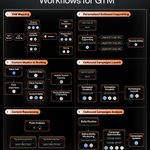
More and more B2B GTM teams are running their GTM from Claude Code.
Here are the 6 workflows I'd build FIRST:

Outbound usually swings between 2 extremes:
1. Large SDR teams prospecting by hand in spreadsheets
2. Fully automated outbound powered by AI
In practice, neither works well on its own.
Our outbound system is the combination of:
• A GTM Engineer doing TAM sourcing, account enrichment, signal tracking, automated sequences and lead allocation to reps
• Reps cold calling positive replies and assigned accounts only, with a 1:1 approach that can't be replicated with AI
So we put the whole system into one ultimate outbound guide for 2026.
What's inside:
• 4 channels we run and the job each one does
• 5 data sources we merge into 1 Clay table to map the TAM
• The 4-tier split of prospects
• 5 signal plays that got 2-10x the replies of standard outbound (+ the tools behind them)
• How we decide which accounts get automation and which get a human
Comment "OUTBOUND" and I'll DM it to you.
(must be following)