





Pinned Tweet
This is my third reflection on AI and freedom. My goal is to post once every three months. So far, the quarterly progress is blowing my mind. I've never seen a field evolve so blazingly fast. And for now, the winds are very much blowing in the direction of individual freedom.
My first post was 6 months ago, in early March, riding the zeitgeist of the OpenClaw revolution.
In the span of a few weeks between December 2025 and March 2026, we went from vibe coding websites on corporate platforms to hosting our own full-on personal agents on our own hardware. Systems and tools that hadn't even existed in early January had by late February become daily drivers for millions of people. Non-technical individuals could now instantly outsource technical tasks to machines, and become massively more productive. I was hooked.
At HRF we ran our first Agent Camp in mid-February, equipping human rights activists with their own personal agents. Looking back, to what seems like forever ago, the setup was crude: early OpenClaw software running on a Macbook, connected to Opus 4.6. Everything struggled to work. But when it worked, it was pure magic. I still remember, during that first session, one of the Campers recording himself playing guitar and signing, alongside one of the instructors playing the piano, and then the Camper uploaded the recording via their phone to their agent, and then directed it to create, out of that, a killer gospel rock anthem. It was glorious. And a great example of how machines can help humans boost and advance creativity, not kill it.
During that heady time we began working closely with the AI experience company Finite, whose goal is to make humans more human, and liberate them from tasks that are easy for machines. Over the next few months we collaborated on a better way to provide personal agents to activists, switching to a cloud-based model that could be accessed anywhere, moving from OpenClaw to the more stable and self-learning Hermes, and eventually hooking up to confidential compute inference, so that third party servers couldn't read our prompts.
In January we worked with Rod Roudi and the AI Freedom Lab to host the first AI Hack for Freedom. What was novel about that first hack in Austin was that the human rights activist team captains worked with developers who, thanks to vibe coding, could make really useful software in just a matter of hours, instead of weeks or months. In May, for the second AI Hack for Freedom, things had advanced so much that activists actually could code now and were leading the effort, instead of just telling developers what to do. Talk about a step change.
A few weeks later, at the Oslo Freedom Forum at the end of May, we set up an Apple Store-style AI experience lounge where hundreds of dissidents were able to use a personal agent for the first time to start hacking away at fun creative projects. And that's, in my view, a critical first step towards understanding the intelligence revolution that is happening all around us: using a personal agent and developing the muscles to understand what you can do with an agent, how it can help you, and how it will start shaping the new AI-powered world. Integrating an agent into your workflow and life takes time, but you have to start somewhere.
My second post followed soon after all this in early June, just as local AI was really becoming a thing. Before the summer, local AI could only get you so far: a cool chatbot, a neat but basic research assistant. With apps like Atomic Chat, people could indeed harness the intelligence, for example, that already exists on your iPhone, to obtain an impressive ChatGPT-like experience, fully local and offline. But with the rise of new smaller models from Qwen and Deepseek, people could actually start to run frontier-quality intelligence on machines at home, on hardware that cost less than $10,000. Full tool calling, running agents, on laptops!
Today, 3 months later, it's staggering to reflect on and absorb the speed of what is happening. Back in June, the benchmarker extraordinaire @0xSero showed me a version of DeepSeek that he was running on his MacBook Pro. It was capable of some pretty amazing, fast, complex stuff: he sat down and showed me how it could instantly scan massive legal documents for analysis, fully on-device. But again, comparing those models to what you can run now on a similar machine, it's just a whole different ballgame.
For comparison: 6 months ago, confidential compute was possible, but the models that powered it were not that impressive. The gap between Opus 4.6 and "open weights" back in February was massive and very noticeable. 3 months ago, with the rise of Kimi 2.6, and then GLM 5.2, it was a big leap forward. It was finally a moment when I felt like I wasn't being handicapped by using open weights versus for example Opus 4.7 or ChatGPT 5.5, which were leading the frontier world at the time. But in the past 6-8 weeks, with Kimi K3, GLM 5.3 Flash, and just in the past day or two, DeepSeek 4.1 Flash, we've entered a world where open weights are legitimately going toe-to-toe with the best proprietary models, and sometimes even outperforming them.
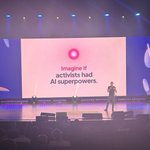
My mission is to give activists and dissidents AI superpowers. When Justin Moon first showed me what was possible back in January just on the Claude Code desktop app, a couple days after it came out, I knew that I had to give this awesome power to all my friends. And OpenClaw evolved that power significantly, by helping people choose what kind of intelligence they wanted to run, where they want to run it, and how they wanted to talk to it. This, I realized, had to be in the activist toolkit.
Today I can say we are truly cooking with gas. My Finite agent today runs on GLM 5.3 Flash, in a TEE, giving me privacy and frontier-intelligence. The Hermes-based harness knows me, knows what I am working on, and auto-learns as I go. I also run my own OpenClaw, still on my own machine, connected to Astra, for fun and comparison's sake. I talk to both agents from my phone on the go and often give them the same tasks to compare. I would say that for most things that I am working on, GLM 5.3 is nearly or just as good as Astra. Which is a crazy thing to consider. Certainly, for advanced mathematics, science research, or complex engineering, one would prefer Astra. But for 95% of the daily tasks the average person needs help with, open weight models are perfect, and often snappier.
And maybe this is where we are headed: to a "minimum viable intelligence" being available openly and cheaply to the world at large, getting constantly upgraded to within a few percentage points of the very best proprietary models, and with those most elite, very expensive, very gatekept highly-specialized models being primarily used by governments and companies for cutting edge research. But with this advantage only being ephemeral, being constantly erased and eroded in a matter of days or weeks by open weight models.
The trend is clear: not only are open weight models dominating corporate ones in terms of usage on platforms like Openrouter -- mainly because they offer near-equal quality at a fraction of the cost -- but they also are increasingly being able to be run on reasonable hardware at home. In my next update, in December, I am excited to reveal what I'll be able to do at home... I can only imagine what kind of local models will be available, and I will have a 128GB Macbook Pro to run them on. I get my hands on the beast in October and will report back.
If you are still reading, thank you, and good for you, as I have completely buried the lede.
The single biggest difference between today and 3 months ago, and certainly between today and February or March, is the rise of the organizational brain. At HRF we have built one in the past few weeks for our Freedom Tech team, and I use my GLM 5.3-powered agent to interact with it. I think the best way to explain the brain is to detail how we set it up, and how we use it.
The first thing we did is dump all Freedom Tech historical content into a folder. All reports, public updates, relevant social media posts, anything public or external the Freedom Tech team produced over the past 7-8 years at HRF. This took our team a few days. Then, each member of the team uploaded an interview where they talked about what they do on the team, what they have been working on, and what they are doing moving forward. Finite then helped us arrange this into an encrypted database that uses nostr as infrastructure for user permissions and access. Here's where it gets really interesting: starting in early August, every week we started ingesting the transcript of the weekly all-hands meeting of the team into the brain. (I also get an email summary of this meeting, drawn up by our agent-brain combo, instead of by Google). Then every Friday, every team member reports to the brain a short brief by voice or email on challenges, opportunities, changes, etc. A slack achievements channel and social media posts and mailchimp emails and newsletters are all ingested. The results are extraordinary.
I can now ask the Freedom Tech brain for updates on what is happening with the team, and where points of stress might be. I can ask for beautifully-designed reports about certain aspects of our work. The brain has transformed things like donor updates, annual reports, and impact briefings from exhausting team efforts that once took weeks or months to something my agent can extract in minutes. Instead of having to call a meeting to figure something out, or to set up a phone call to find out a key piece of information, I can just ask the intelligence and get it instantly. And GLM 5.3 is just so damn smart. It notices trends, gaps, and issues. It can spot problems and opportunities. And we are just getting started.
In March, I had no idea what an organizational brain was. In June, I barely grasped its importance. Now, in September, I can't imagine going back to a world without one. That shows how fast we're moving. I fully expect most innovative organizations to have some kind of organizational brain by the end of this year, and most organizations period, by the end of next year, if not sooner. Jack Dorsey and Roelof Botha's paper "From Hierarchy to Intelligence" gave the earliest, clearest picture of what a "brain" is and what it can do back in March, but to really grok it, like with anything in AI, you have to set one up and experience it yourself.
I also wanted to share a few words on big picture AI topics:
Open weights are the only thing separating us from a techno-totalitarian future. If intelligence is in the hands of a small few, tyranny is the only possible outcome. Full stop. This is why we must push back against restrictions on open weights, and on the breathless frantic moral panic of "AI Safety". Just consider: we were told earlier this summer that Fable and Mythos had catastrophic abilities, and that it was too powerful for mere mortals. But since then, that original version of Fable is in the rearview mirror, being already superseded by Astra and even possibly DeepSeek 4.1.
Did the world change because of Fable and K3-level intelligence? Yes! Cyber-systems are being pushed to their limits. We saw this most clearly in the past 6-8 weeks as Bitcoin systems (canaries in the coal mine) came under new AI-powered pressure: first the ColdCard hack, then the BTCPay Server vulnerability, then issues with Lightning infrastructure, then the Liquid theft. But did the world end? No. In fact, as a result of AI-powered "red team" white hat hackers, Bitcoin systems are now being constantly monitored for vulnerabilities and are now, possibly, stronger than ever. It's true that hackers now have powerful tools to probe systems for flaws. But it's also true that defenders can now aim those same powerful tools, constantly, at infrastructure, to spot weaknesses and shore them up. And often, open-source models are the only ones that can be used for cyber-defense, as the proprietary models often refuse these kind of tasks.
Of course, the mainstream media presents a very different picture. We are being told in the past 48 hours that cutting-edge AI models have a 10% chance of killing everyone on earth. But the reality is that the models the MSM is dreading will be essentially totally irrelevant in 6-8 months and will be able to run on anyone's laptop in a year or two.
The real outcome we should fear, in my view, is that the most elite frontier intelligence ends up being restricted to a handful of governments or companies, and power centralizes even more grotesquely than it ever has centralized in the history of humanity. The only thing that can stop this is open weights: super-intelligence for everyone. Here, personal responsibility will matter. There is a tradeoff to consider. Do you want to rely on the corporate stack of using Meta's agent, or Grok's agent, or ChatGPT's suite of products? And be a slave to those companies? And watch what you say lest you get banned? Or do you want to control your own intelligence and run it yourself and be free? In some ways the tradeoffs are similar to Bitcoin. Do you want to do the hard work of learning how to self custody and be your own bank? Or take the easy way and have someone else hold your money? Here, in the AI world, you'll be able to run your own intelligence, or you can trust someone else to control the limits of your thinking and creativity.
One key thing to remember: you can't obtain privacy-protecting frontier cloud-based inference from the big labs, at least not at the moment. The ONLY way to get encrypted inference at the frontier level is from open weight models. So anyone who is against open weights (cough Anthropic cough) is necessarily against privacy.
Now, what of China? I think the CCP is likely making a mistake by pushing open weights so heavily. It's a gift to humanity, but it's something that will eventually rock Xi Jinping's extremely centralized control. I still think the CCP is likely to shift course and stop sharing open weights, potentially very soon. So, download all the good models while you can! Clearly, Xi's short term objective of commoditizing US super lab value IS working. Anthropic and OpenAI are not nearly as important as they once were. So much of their value can be downloaded for free off the internet. But this gamble comes with great political risk for the CCP as more and more individuals become more and more powerful.
We see this in our own work, as we now have helped dozens of the world's top dissidents learn how to use personal agents. They are much more powerful when equipped with AI tools. They'd probably never have a shot at challenging AI-powered dictators without AI, but with AI? They stand a chance. For those curious: YES the irony of human rights activists depending on the CCP for freedom tech never ceases to amaze me.
Even if China cracks down on open weights, it seems we are heading in the right direction in the US, and globally, on the issue. NVIDIA is leading the way with a variety of other AI infrastructure and hardware companies who know that a diverse world with a lot of inference players is best for their business, not a world where two or three superlabs control everything and can dictate pricing.
So what next? I am excited for the coming few months as local AI gets smaller and more potent, and as TEE-powered cloud inference gets more powerful. We are, in a huge shift from sentiment and reality one year ago, simply **barreling** toward a future where everyone can run their own super intelligence, if they wish.
I'm also excited for a future where we are liberated from "being on our computer" all day. The computer should do most of that work! The amount of time you spend glued to a screen should, for most people, shrink dramatically in the next year. This is especially true for leaders, and activists. AI certainly isn't the only factor here, to help free up people's time to focus on what they should be focusing on, but it's a big one.
This moment, today, and in the next few months, is a CRITICAL opportunity for human rights activists to gain new powers, save time, dial in more on what they are good at, harness creativity, automate boring and time-consuming tasks, and scale their work. That is what I am focused on.
I hope you all can join me.
See you in December for update #4!
Alex Gladstein 🌋 ⚡ retweeted

BELGRADE, Serbia (AP) — Serbia’s strongman leader Aleksandar Vucic has conceded defeat to a student-led movement in a seismic political shift.
👀

Breaking | Opposition leader Maria Corina Machado returned to Venezuela, challenging the U.S.-backed government as she pushes for presidential elections. on.wsj.com/47Gjz8Q


Alex Gladstein 🌋 ⚡ retweeted

banned for reverse engineering work? that’s wild
oh well, -$500, and a bunch of banked resets) but gained motivation to get 3 more machines and finish my cluster.
i have never used openai to exploit or find vulnerabilities, only local reverse engineering which tripped daybreak.


Alex Gladstein 🌋 ⚡ retweeted

No surprise Chinese universities are cracking down on students’ VPN use. The economy is faltering and graduates are facing bleak job prospects. The deeper the crisis, the stronger the urge to seek information beyond the Great Firewall.

【中国多所高校密集查禁"翻墙",有学校斥资三十万采购监控系统"关联到人"】据"李老师不是你老师"@whyyoutouzhele 近期汇总,入秋以来中国多所高校以普法、自查、技术监测等方式收紧对师生"翻墙"的管控。
中央财经大学保险学院10月9日在官网发文称,大学生翻墙"使用即违法",并警告相关记录可能影响奖学金评定、保研、考公政审和参军审查。辽宁师范大学心理与脑科学研究院研究生会10月20日发布倡议,称"无论出于何种目的",未经审批翻墙均属违法。国科大杭州高等研究院一学院更称,使用境外手机卡漫游访问受限网站,"本质上仍然属于绕过国内监管的非法联网行为"。
西北大学10月13日发布校园网络安全公告,将"翻墙连接"与钓鱼、木马并列,称将采取技术手段检测和限制。厦门软件职业技术学院要求全体师生自查接入校园网的电脑、手机和平板,发现翻墙软件立即卸载,教程和节点分享亦列入排查,情节严重者移交执法部门。另据网传,国防科技大学开展"信息清理",要求逐人、逐屋检查电脑和柜子,"不可以有打不开的门"。
多所院校还为此专门采购监控设备。浙江经济职业技术学院以30万元预算招标跨境VPN监测系统,要求同步上网账号,实现违规行为"关联到人";义乌工商职业技术学院以17万元中标价采购"翻墙流量审计"系统,要求可按账号查询跨境上网记录并生成"人员画像";四川达州中医药职业学院的"非法翻墙管理设备及服务项目"亦以13.65万元成交。
管控已波及学生的正常需求。有浙江学生投稿称,其电脑并未安装任何翻墙软件,只是通过校园网访问新西兰、澳大利亚移民局官网和PTE考试官网办理签证,便被学校约谈,理由是"访问涉外敏感网站"。
查阅文献、学习外语、申请留学,本是大学生再正常不过的日常,如今却被纳入"违法"的范畴,习近平治下中共政权的倒行逆施,由此可见一斑。



Alex Gladstein 🌋 ⚡ retweeted

Kushner also failed to disclose himself as an agent of a foreign government, having been paid nearly $2 billion in total by foreign leaders. trib.al/OTkGEv6

Alex Gladstein 🌋 ⚡ retweeted

NEW: Version of Electrum (@ElectrumWallet) released after critical security bug discovered in the mempool acceptance logic of the popular wallet app, which could allow an attacker to convince a wallet to sign a malicious transaction

Alex Gladstein 🌋 ⚡ retweeted

Jason Furman on AI vs human economists: If he were running the CEA today and had a choice between 20 highly qualified staff members “versus the AI systems that we have today, I would somewhat regretfully and sadly choose the AI systems.” axios.com/2026/10/23/ai-econ…

What a timeline

Israel central bank rejects Netanyahu’s plan to use crypto to evade sanctions ft.trib.al/NlDJ7ip

Alex Gladstein 🌋 ⚡ retweeted

Wow. Commercial banks have KYC obligations and are under law enforcement, but i guess you can bypass that by having access to an account at a central bank. This takes 'off the books' transactions to a whole other level.

Netanyahu helped Kushner hide $1 billion in UAE funds at Israel's central bank, new book claims. This is from Israeli media ynetnews.com/article/b1avqqu…

Alex Gladstein 🌋 ⚡ retweeted

Bank of Israel horrified by Netanyahu’s interview yesterday, just put out a statement saying “cryptocurrencies cannot be used as a way of bypassing sanctions on Israel. The right thing to do is safeguard Israel’s trade relations with major trade partners and prevent sanctions”

Alex Gladstein 🌋 ⚡ retweeted

💥Stop everything and watch a ghoulish Netanyahu promise to be the overlord of an underground, sanctioned Israel, a Super Sparta in which he promises bitcoin and blockchain will protect Israel's "bypass economy" and pluckily declares he's "already ordered plans for it." #NotAI

Alex Gladstein 🌋 ⚡ retweeted

Run a 763B-parameter model locally. DeepSeek-V4.1-Flash-1017 on a 12GB GPU.
Frontier quality with GSQ-RCO quants, directly supported in the Strata inference engine.
Further info below. Much more to come. Follow for updates.

