

Protect Your Every Transaction. User App: https://teapawt.org/t.co/FHHKZyzH1j 🛡️ Dev Integration: Security Intelligence & SafeToken Protocol 🛡️
On-Chain
Joined May 2021
- Tweets3.9K
- Following1.1K
- Followers416K
- Likes3.3K





Pinned Tweet
📢GoPlus #DeepScan Comprehensive Upgrade: A New Paradigm of AI-Powered Smart Contract Security.
Smart contracts hold funds — and hackers are already using AI to uncover deep-layer vulnerabilities. One-time audits can no longer keep pace with today's attack-defense dynamics. The industry must evolve toward AI-powered, continuous security: higher efficiency, lower cost, full-lifecycle protection.
GoPlus DeepScan delivers three interconnected modules forming a closed-loop, continuous security service for the entire smart contract lifecycle: AI Contract Audit, Continuous Security Monitoring, and Token Security Self-Check.
Features
AI Auditing
AI-powered deep analysis of contract source code, permission management, and business logic. Systematically detects syntax vulnerabilities and business-logic flaws, and delivers a structured audit report — including security scores, key findings, issue details, and remediation recommendations.
Security Monitoring
Post-audit, always-on assurance for live contracts. Tracks newly disclosed vulnerabilities, on-chain attacks, and status changes in external dependencies (oracles, cross-chain bridges) in real time. AI continuously assesses impact, triggers targeted re-reviews, and issues alerts — moving beyond the "audit as finish line" model.
Token Security Checking
A rapid pre-launch self-inspection tool for tokens preparing to launch or list. Identifies common high-risk characteristics in minutes, including: Honeypot detection, Malicious mint detection, Blacklist mechanism detection, Abnormal buy/sell tax detection, Owner privilege & trading restriction risks.
Benchmark
An open-source benchmark built from real-world attack incidents. Extracts vulnerable contract source code from attacked projects to systematically evaluate AI capabilities in vulnerability identification, attack-path understanding, contextual reasoning, and audit stability. Nearly 100 real, representative attack cases from May 2025 to date, continuously updated.
Use Cases
Developers — Cost-effective, high-efficiency security scanning with audit-grade quality, enabling fast, confident innovation.
Project Teams — Pre-launch scanning as a complement to traditional audits; continuous auditing and monitoring during operations to stay ahead of attackers.
Exchanges — Enhanced pre-listing security review efficiency and capability; continuous monitoring as routine risk control to catch new threats early and minimize post-listing incidents.
Get Started
GoPlus DeepScan is live — try it now: **deepscan.gopluslabs.io/**
AI Auditing Benchmark: github.com/GoPlusSecurity/ai…

🚨 GoPlus Security Alert: Suspected #XMR1 Exploit on Hyperliquid—Deployer Address Transfers ~5.2M Tokens
XMR1’s deployer address on Hyperliquid transferred approximately 5.2 million $XMR1 to a newly funded address. The recipient then sold the tokens into the order book, receiving approximately 13.3 million USDC. XMR1’s trading price plunged from around $494 to $1 in roughly 35 minutes.
The proceeds have since been converted into approximately 7,300 ETH, most of which has been bridged to Ethereum:
0x1464dacaceb0d511f9964cdac5eba50ea42220bf
XMR1 is a tokenized representation of Monero bridged to Hyperliquid via Wagyu. It is not native XMR on the Monero network.
🛡 Security Recommendations
1. Hold off on large XMR1 trades or cross-chain transfers until you have checked Wagyu’s official channels for updates on the incident and redemption status.
2. If you hold XMR1, monitor order book liquidity and bridge redemptions. Do not judge the asset’s value solely by its collapsed trading price.
3. Verify the asset and token identity before trading. Do not confuse XMR1 with native XMR, and watch out for fake announcements, compensation scams, and other phishing attempts exploiting the incident.

DeepScan AI Audit identified the smart contract vulnerability behind @k3_capital’s $3.43M loss in just 10 minutes.
Project teams should start using DeepScan AI Audit early and scan their smart contracts continuously to strengthen security and reduce risk.
Full report: deepscan.gopluslabs.io/audit…
Benchmark update: github.com/GoPlusSecurity/ai…


2
5
2,030
1/8
⚠️ Exploit Analysis: K3 Capital
On November 18, @k3_capital’s sBOLD vault on #Ethereum was exploited. The attacker flash-borrowed wstETH and WETH, opened a Liquity V2 borrowing position (trove), and minted 9,010,000 BOLD as working capital.
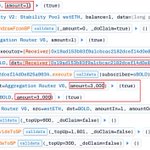
The exploit targeted a validation flaw in the vault’s swap() function: it checked whether the BOLD received met minOut, but never verified that the router had actually spent the specified collateral token and amount.
By donating 4 WETH to inflate the vault’s net asset value, then routing swaps through 1inch using a fake ERC-20, the attacker repeatedly extracted BOLD from the vault. Total vault losses reached approximately 3,428,799.42 BOLD, worth around $3.43 million at the time of the attack.
🔍 Root Cause:
The flaw lay in the swap() execution path. SwapLogic._execute approved the source token for the swapAdapter—configured onchain as the 1inch Aggregation Router V6 at 0x111111125421cA6dc452d289314280a0f8842A65—and executed arbitrary caller-supplied calldata.
However, it only checked whether the vault received enough BOLD to satisfy minOut, calculated from the quoted value and maxSlippage of 50 bps. It did not verify that the router had spent the specified collateral token and amount.
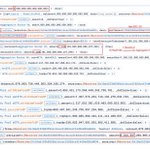
The attacker temporarily transferred WETH worth just under the 7,500 BOLD cap into the vault, increasing its net asset value per share. The attacker then executed a purported swap through 1inch, supplying approximately 7,159.16 BOLD to satisfy minOut while leaving the donated 4 WETH untouched.
The vault counted both the incoming BOLD and the unspent WETH in its share valuation. The attacker redeemed shares at this inflated price to extract other depositors’ BOLD, then used the unspent WETH allowance to recover the temporary donation.

4
23
4,320
7/8
After subtracting the approximately 7,159 BOLD supplied to the vault, the first loop yielded a surplus of roughly 3,428 BOLD. The 4 WETH was recovered and reused in the next loop.
After all eight loops, the attacker had accumulated approximately 27,508 BOLD before the Liquity upfront borrowing fee.
The attacker then burned 9,014,254 BOLD to close the trove. The additional approximately 4,254 BOLD above the original 9,010,000 minted represented the upfront borrowing fee added to the trove’s debt.
Closing the trove returned 10,000 wstETH and the 0.0375 WETH compensation amount. The attacker repaid the 5 WETH Balancer flash loan and the 10,000 wstETH Morpho flash loan.
The remaining approximately 23,254 BOLD was redeemed through Liquity’s CollateralRegistry for 4.52 WETH, 6.20 wstETH, and 0.43 rETH.
The wstETH was unwrapped into 7.74 stETH and swapped for 7.74 ETH through Curve’s stETH/ETH pool. The WETH was unwrapped into 4.52 ETH.
The helper contract also made three unsuccessful attempts to burn the rETH or swap it for ETH through Uniswap V3. The transaction ultimately paid out approximately 12.26 ETH and 0.43 rETH to the attacker, plus 1 wei of stETH, before gas costs.
The attacker executed 13 transactions calling run() on 0x19Ad153B… in total.

1
1
224
8/8
📌 Related Transactions
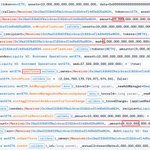
The attacker sent approximately 1.00, 50.00, and 111.00 ETH to three THORChain vaults, totaling 162.00 ETH. The three listed depositWithExpiry transactions to the Maya Protocol router totaled approximately 18.81 ETH. Example—111 ETH sent to THORChain:
etherscan.io/tx/0x49dfb325fc…
Attacker address:
0xDC0e2FDEb89D2F363F2EA1B50E923d464C414dAA
Attack contract:
0x19Ad153B83f9a1cbCAc2182DcEf14D0E825A9634
Attack helper contract / fake ERC-20:
0x745940908a0209db70fe8bea47d9ca2786302b26
Exploited vault (sBOLD by K3 Capital):
0x50Bd66D59911F5e086Ec87aE43C811e0D059DD11
Example attack transactions:
etherscan.io/tx/0xf1eb51b3db…
etherscan.io/tx/0xa61572b54e…
Transfers to THORChain:
etherscan.io/tx/0xd9c18ff1d3…
etherscan.io/tx/0x0d097068c4…
etherscan.io/tx/0x49dfb325fc…
Maya Protocol depositWithExpiry transactions:
etherscan.io/tx/0x88ca7d5050…
etherscan.io/tx/0xa5d78fb9d4…
etherscan.io/tx/0x9811d6a48b…

221
🚨 GoPlus Security Alert: Five nginx2root Vulnerabilities Disclosed—Check HTTP/2-Enabled Deployments First
On November 18, NGINX released security updates addressing five nginx2root vulnerabilities, including CVE-2026-123007. These are independent attack paths affecting different configurations. Successful exploitation allows arbitrary code execution with the privileges of an nginx worker process. The demonstrated attack chain achieves root access on the host by chaining a separate Linux kernel privilege escalation vulnerability.
wiz.io/blog/nginx-http2-rce-…
📌 Exploitation Conditions
All five vulnerabilities can be exploited without authentication when their respective version and configuration requirements are met.
1. CVE-2026-123007 (broadest exposure): An unpatched nginx build includes the HTTP/2 module, with HTTP/2 enabled on a listener reachable by the attacker. The officially affected versions are 1.9.5–1.31.8. Version numbers alone do not establish exposure—check the actual build, active configuration, and whether the distribution has backported a fix.
2. CVE-2026-123634: A resolver is configured, the proxy_pass destination is derived from request data, and mirror is used with mirror_request_body off.
3. CVE-2026-123633: nginx receives requests over HTTP/2 and proxies them to an upstream server while available connection slots in the worker are running low.
4. CVE-2026-121810: HTTP/3 is enabled, and requests are reverse-proxied to an upstream server.
5. CVE-2026-113425: The nginx mail proxy is enabled with both proxy on and auth_http configured.
🛡️ Security Recommendations
1. Prioritize internet-facing nginx instances with HTTP/2 enabled, then check the configuration requirements for the remaining vulnerabilities.
2. Upgrade NGINX Open Source 1.31 deployments to 1.31.9 or later, and 1.30 deployments to 1.30.7 or later. For NGINX Plus or distribution packages, consult the relevant vendor advisories to confirm patched releases and backported fixes.
3. If you cannot upgrade immediately, temporarily disable HTTP/2 on affected listeners. Apply the configuration change and confirm that the old worker processes have exited. This mitigates only the two HTTP/2 attack paths.
After installing the patched binary, restart nginx or perform a supported live binary upgrade. Reloading the configuration alone does not replace the running binary.

3
8
2,439
🚨 OpenJDK “Java4Shell” Vulnerability Alert
On November 17, 2026, Oracle and the OpenJDK project released security updates addressing CVE-2026-114938, a memory corruption vulnerability dubbed Java4Shell. The flaw affects HotSpot’s AVX-512 VBMI-accelerated Base64 decoding intrinsic and can lead to heap data disclosure, JVM crashes, and potentially remote code execution (RCE).
Oracle assigned the vulnerability a CVSS 3.1 score of 8.1 (High). A proof of concept and technical details are publicly available, although application-specific exploit chains remain withheld. Developers should assess their exposure and patch as soon as possible.
📌 Affected Versions and Exploitation Conditions
Affected releases include OpenJDK 17.0.6 and later unpatched builds in the Java 17, 21, 25, and 27 release lines. Distributions incorporating the affected code are also impacted, including Amazon Corretto, Eclipse Temurin, Azul Zulu, Microsoft Build of OpenJDK, and Red Hat OpenJDK.
Exploitation typically requires all of the following:
- An affected, unpatched Java runtime.
- An x86-64 processor supporting AVX-512 VBMI and the associated required CPU features.
- The vulnerable Base64 decoding intrinsic active in the JVM.
- Attacker-controlled data reaching the affected Java Base64 decoder.
ARM64 systems and x86-64 systems without AVX-512 VBMI support are unaffected. Standard OpenJDK 8 and 11 are also unaffected. However, certain Oracle Java SE 8 Enterprise Performance Pack releases are affected.
Researchers at Calif demonstrated pre-authentication RCE in controlled environments against Jira, Confluence, Jenkins, Keycloak, Artifactory, and PingFederate, as well as post-authentication RCE against Kafka, Solr, Elasticsearch, Gerrit, and Spinnaker. Exploitability depends on the application and deployment; there is no universal exploit.
🛡️ Security Recommendations
For Oracle JDK, upgrade to the following patched releases or later vendor-supported security updates:
- Java 17: 17.0.21.1
- Java 21: 21.0.13.1
- Java 25: 25.0.5.1
- Java 27: 27.0.1.1
- Oracle Java SE 8 Enterprise Performance Pack: 8u513-perf
For other OpenJDK distributions, follow the respective vendor’s security advisories and install the appropriate patched builds.
Restart affected JVMs after upgrading. For containerized applications, rebuild and redeploy images containing the patched runtime. Update bundled or embedded JREs using the method supported by the product vendor.

1
8
2,245

🚨 GoPlus Security Alert: Widespread Malicious Code Injection in Optimizely Web Customer Projects
On November 16, attackers injected malicious code into custom JavaScript across multiple Optimizely Web customer projects, causing affected websites to serve malicious content through previously trusted scripts. The incident affected 178 organizations, including websites operated by CNN, Zoom, BBC, GitLab, and Ledger.
The malicious code attempts to swap crypto recipient addresses for attacker-controlled addresses on pages, in input fields, and in the clipboard. It can also skim payment card details entered into affected sites’ forms, steal non-HttpOnly cookies, capture page screenshots, and deliver Coruna / DarkSword exploits targeting certain iOS devices. Card details inside hosted payment iframes, such as those from Stripe and Adyen, were outside the script’s direct reach.
For attacker addresses, which have received approximately $7K, and the list of affected websites, see:
blog.report-uri.com/worlds-l…
GoPlus has blocklisted the attacker addresses. Exercise caution on affected sites and double-check recipient addresses before sending funds.
🛡 Security Recommendations
Website operators: Inspect custom code in your Optimizely projects and experiments. Review accounts, API tokens, and write permissions. Monitor third-party scripts for changes and unexpected outbound connections.
Crypto users: Review recipient addresses you copied or entered on affected websites on November 16, along with any transactions you initiated. Always double-check recipient addresses before sending funds, and watch for unauthorized transactions.
iOS users: Update to the latest iOS or iPadOS version available for your device. Report URI notes that the exploit kit’s own comments identify versions 18.7.3 and later, and 26.3 and later, as patched. Monitor your wallets for unauthorized transactions.

#Lighter Incident Breakdown: Nonce Reuse in Custom Signing Code Enabled API Private Key Recovery
1️⃣ Affected Accounts
An attacker derived the API private keys for two trading accounts on Lighter and used them to move funds out of those accounts. Approximately $15.48M was reportedly affected, with around $5M in USDC recovered and returned to the affected trader by the Lighter Security Council.
Reported affected accounts:
Account 1:
Lighter Account ID: 714710
Associated onchain address:
0x0d1D09312665D31Ed68231b88079a245E0458F6F
Amount affected: ~$10.39M
Account 2:
Lighter Account ID: 714723
Associated onchain address:
0x66Cf2f85115CC20bF439720927C1f93De9672068
Amount affected: ~$5.09M
2️⃣ Root Cause
The affected accounts used insecure, unofficial signing code that reused cryptographic signing nonces across different transactions. This allowed the attacker to derive the API private keys from publicly available signatures.
Lighter said its protocol, smart contracts, and official SDKs were unaffected.
The attacker moved the funds through the following sequence:
Create a public pool using the compromised account → Mint pool shares to an attacker-controlled account → Transfer the victim’s funds into the pool, increasing its net asset value (NAV) without issuing corresponding shares to the victim → Redeem the attacker’s shares and withdraw the funds.
3️⃣ Funds Withdrawn
The attacker withdrew approximately 10.39M USDC from Lighter and swapped the proceeds for ETH. Onchain tracing identified part of the proceeds moving through multiple wallets to buy XMR1 on Hyperliquid.
XMR1 should not be conflated with native Monero ($XMR). The available evidence does not establish that these purchases drove up Monero’s price.
4️⃣ Reported Attacker Account and Address
Lighter Account ID: 769455
Associated onchain address:
0xb3fffca23d4444eE73349825ACD84f7b5020e387
🛡️ Security Recommendations
▪️ Use Lighter’s official Python, Go, or TypeScript SDKs, or its Agent Kit. Avoid implementing your own signing logic.
▪️ Let the official signer handle cryptographic signing nonces. Never reuse a signing nonce or substitute timestamps, counters, weak random values, or cached values. Signing nonces are distinct from transaction nonces.
▪️ If your code may have reused signing nonces, revoke and replace all related API keys immediately. Fixing the code alone isn’t enough.
▪️ Enable IP allowlisting and per-key permissions and limits as they become available. Separate permissions for trading, transfers, pool creation, and redemptions wherever supported.
▪️ Lighter now requires wallet signatures for transfers into public pools and no longer exposes API signatures publicly.


1/7
⚠️ Exploit Analysis:
On November 14, @KAVA_CHAIN’s native lending protocol Kava Lend was exploited. The attacker reduced the net supply of its largely inactive BUSD market to just 2 base units, inflating the market’s supply interest index by approximately 243,000× in about three minutes. The attacker then used inflated BUSD deposit claims to borrow 55,205,050.60 KAVA across 127 transactions—worth approximately $3.76 million at the pre-attack price.
🔍 Root Cause:
Kava Lend uses the supply interest index, supplyInterestFactor, to distribute interest paid by borrowers to depositors. It divides the interest accrued since the previous block, newInterest, by the market’s net supply, totalSupply (cash + borrows − reserves). The public code skips the division and returns a neutral factor when net supply is exactly zero, but does not guard against a positive yet extremely small denominator. When totalSupply approaches zero while remaining positive, the resulting supply interest index can become massively inflated.
github.com/Kava-Labs/kava/bl…
The attacker first repaid all 37 outstanding BUSD loans on behalf of their borrowers, then used a single deposit–borrow–withdraw transaction to reduce net supply to 2 base units (2×10⁻⁸ BUSD). The tiny amount of interest accrued each block was then divided by these 2 base units, causing the index to rise from approximately 2.76 to 671,186.99—roughly 243,000×—in about three minutes. As a result, the main wallet’s previously deposited BUSD was recorded as a claim worth approximately 1.25449 billion BUSD.
The attacker then used a second wallet in a loop: the helper wallet deposited BUSD as collateral; the main wallet withdrew the same BUSD against its inflated deposit claim; and the helper wallet borrowed KAVA at a loan-to-value ratio of approximately 50%. In the next block, the main wallet liquidated the helper wallet. Despite there being almost no BUSD left in the pool to seize—the first liquidation auction had a lot of 0 BUSD—the loan was still closed, freeing up capacity under the KAVA borrowing cap. The configured maximum_limit for ukava was equivalent to 448,358 KAVA.


The public incident report on the November 14 HARD Lend security incident is now available.
The identified exploit has been blocked. Kava Chain’s underlying security was not compromised.
Read the official report:
medium.com/@Kava_Chain/hard-…

6/7
5️⃣ Transferring the borrowed KAVA back to the main wallet, then bridging to BNB Chain via LayerZero for sale
The helper wallet transferred 53,932,564.485351 KAVA to the main wallet. The main wallet subsequently sent most of those funds to the selling address, kava1xltn9y20smxxav0gwsv7xpr2ww0szyzzga76lv, corresponding to 0x37d732914f86cc6eb1e87419e3046a739f011042 on Kava EVM and BNB Chain.
Through the LayerZero contract on Kava, 0x964fef44181763f5ee8eddfa124c9ad476570e2a, this address bridged out 149,045.86 KAVA and 48,209,645.86 KAVA, including fees. The corresponding amounts minted to the selling address on BNB Chain were 149,000 KAVA and 48,209,600 KAVA, totaling 48,358,600 KAVA. A third transfer bridged out approximately 849,080.97 KAVA, bringing the total across all three transfers to approximately 49.21 million KAVA.
1
1
369
7/7
📌 Related Addresses and Transactions
Attacker’s main wallet on Kava—index manipulation and liquidations:
kava1uzx5924cqsutcw365ajs8kkc3rr4vtlyzms255
Attacker’s helper wallet on Kava—127 KAVA borrowing transactions:
kava1v2s266sll8ca5xrs06swmsc00nwwt7u77eufk4
Selling addresses:
kava1xltn9y20smxxav0gwsv7xpr2ww0szyzzga76lv (Kava Cosmos)
0x37d732914f86cc6eb1e87419e3046a739f011042 (Kava EVM / BNB Chain)
Kava Lend module account (hard):
kava1a42xtwfzphuuu9mdp0es6633wu5mm8fhm789v3
LayerZero contract (Kava EVM):
0x964fef44181763f5ee8eddfa124c9ad476570e2a
KAVA OFT contract (BNB Chain):
0x9bafc8d4b487cebff201721702507a3e2c67ad79
Key attack transactions:
mintscan.io/kava/tx/6C00E9ED…
mintscan.io/kava/tx/D5D8F728…
mintscan.io/kava/tx/C59113E2…
mintscan.io/kava/tx/3B32EFCF…
mintscan.io/kava/tx/3F79C5AD…
Example cross-chain transaction—source and destination chains:
mintscan.io/kava/tx/0x062c77… (Source: Kava)
bscscan.com/tx/0x76c34906326… (Destination: BNB Chain)
Example selling transactions:
bscscan.com/tx/0x5973dc1e5e0…
bscscan.com/tx/0xa3e2e8b63ad…

351