

Director @ EconOne | Editorial Board @TheSlingOrg | NYT: "one expert for the plaintiffs" | Prospect: "preeminent watchdog of The Economist's most wrong takes"
Joined December 2011
- Tweets6.5K
- Following2.6K
- Followers17.5K
- Likes45.8K





If inflation were driven via too much demand, this prescription might make sense.
But if the inflation is coming from too little supply or profiteering by companies with market power or coordinated price hikes via common pricing algorithms, interest hikes are most definitely NOT the solution.
When are these guys gonna learn this economic lesson?


Adding this link to my latest inflation piece here for folks who missed it yesterday
teapawt.org/halsinger/status/21197…

I have a new piece up, co-authored with @DeveshKRay who is studying econ at Columbia, in @TheSlingOrg explaining how companies used the cover of inflation to raise prices in excess of any incremental cost increase (aka "gouging" or "profiteering"). We examined broader trends in the economy, as well as the grocery industry in particular. Go check it out.
Figured it was good timing, as voters just delivered a powerful message to Congress about affordability.
A short thread coming with tables and figures.

34
Hal Singer retweeted

The most common question I am asked is, “How do I break into the antitrust field?” I usually give a hodgepodge of advice. Today, to keep supporting the antimonopoly movement, I’m releasing a free document that covers everything you need to know.
papers.ssrn.com/sol3/papers.…


Hal Singer retweeted

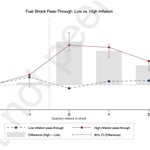
Both. Suppliers charged grocers more, and grocers passed that on AND some more. If they’d only passed on supplier costs, their margin would’ve stayed ~2.6 cents per dollar. It hit 5.75.
I have a new piece up, co-authored with @DeveshKRay who is studying econ at Columbia, in @TheSlingOrg explaining how companies used the cover of inflation to raise prices in excess of any incremental cost increase (aka "gouging" or "profiteering"). We examined broader trends in the economy, as well as the grocery industry in particular. Go check it out.
Figured it was good timing, as voters just delivered a powerful message to Congress about affordability.
A short thread coming with tables and figures.
The piece concludes with policy implications, particularly in light of the recent elections, where voters expressed their dismay about affordability.
The new Democratic-controlled Congress will be looking for ideas on how to tame inflation. The first lesson from our analysis is that inflation stokes even more inflation, by permitting companies to raise prices in excess of any legitimate cost increase. Congress should break this vicious cycle by adopting a national ban on price gouging during a crisis (think oil shock or COVID). Companies would be free to raise prices to cover any cost increase, but by no more.
We offer a host of other anti-inflationary policy ideas.

You can go read the whole piece here:
thesling.org/how-companies-u…
Comments welcome.
The standard industry defense, often peddled by industrial organization economists, is that widening margins reflects a hot economy. Demand clearly played a part, as the industries that grew their output the most also tended to see the biggest jumps in margins. But that story can’t explain what happened in the industries that made fewer things. Of the 21 manufacturing industries we could match to the Federal Reserve’s industrial production data, 14 produced less output in 2021 to 2023 than before the pandemic, yet margins went up in ten of them anyway.
1
95
Hal Singer retweeted

It’s not what they say publicly in the spotlight, it’s what they do when no one’s looking. So the best way to understand Dems is to look at last month’s roll call vote to hand the NCAA back its power to harm college athletes.
Lots of surprising support to crush young working people. Notable bad vote from Ossoff. senate.gov/legislative/LIS/r…
Hal Singer retweeted

Personal News:
my debut book 'WHAT CAN WE AFFORD: A TOUR ACROSS AMERICAN INEQUALITY
& A SEARCH FOR THE ROAD AHEAD'
COMING MARCH 9TH is
AVAILABLE ON PREORDER
all original reporting. literal sweat blood & tears went into finalizing it
no time for elite policy pretense.
lets go

Wait this is their defense of AI? Someone should tell them we want *high wages* for workers, which would ease the affordability crisis. If real wages continue to fall, which seems to be the master plan, we will have riots in the streets like France.

Hal Singer retweeted

I still remember economists uniting as a profession against the $15 minimum wage. It went far beyond explaining likely tradeoffs--they acted like we needed their permission to try it

If by “tons of normal private market activity,” you mean personalized pricing or the use of common pricing algorithms or the use of most favored nations provisions by dominant platforms or the appropriation of publisher content by AI companies, then yes—we should treat those “normal private market activities as being presumptively suspect.” Indeed, many of them should be banned.

Part of the problem with “economic populism” discourse is it simultaneously means broadly accepted ideas on the left like raising taxes on the wealthy & corporations, regulating social media companies & AI companies, and increased government intervention in the healthcare market. (All of this mainstream lib economists agree with)
And then there is this intellectual vanguard that also call their project economic populism but they are focused on eliminating the influence of economists, resurrecting tariffs, and treating tons of normal private market activity as presumptively suspect/worthy of govt intervention.
Also, aside from Peter Navarro, I’m not aware of any prominent economic populist or anti-monopolist who is advocating for “resurrecting tariffs” across the board a la Trump. While there is a case to be made for a targeted tariff (or two) to protect certain strategic industries or unionized jobs, linking Isabella’s philosophy to Trump’s tariffs seems like a straw man.
I interpret @IsabellaMWeber’s words to mean that neoliberal economists have hijacked policy debates by elevating their own (mathematically tractable) objectives like “maximizing economic efficiency” or “maximizing output” above things that voters actually care about.