

Cardiologist MBBS, MD, FACC, FESC | Physician-Sci & Researcher MPH, DMSc | #HeartFailure 🧑⚕️| #HFA Committee @escardio | Content Catalyst @TCTMD
USA | Earth 🌎
Joined July 2017
- Tweets18.9K
- Following845
- Followers16.8K
- Likes272K





Pinned Tweet
What’s new in heart failure? September 2026
academic.oup.com/eurjhf/adva…
@ESC_Journals #EJHF @EJHFEiC @GianluSava


Henry Han retweeted

Here are my initial thoughts on Lp(a)HORIZON. This is targeted to the people to whom it matters the most, my wonderful PATIENTS over the years in my Lp(a) Clinic. I have done my best to keep you healthy, and for the most part it worked. And I think this is reflected in the results of the Lp(a)HORIZON trial. This is also for those with elevated Lp(a) that been carrying significant anxiety and concern over their elevated levels.
1- Big picture: I do not see Lp(a)HORIZON as a failure, like many Monday morning quarterbacks out there who claim to have known the results all along after all. I see it as a MAJOR SUCCESS for our patients.
2- Why? Because we learned that there may be an alternative to reduce Lp(a) mediated risk: which is to: a) keep LDL-C below 65 or lower; b) keep blood pressure at 120 or lower; c) control all other risk factors as best as possible; d) take your medicines that have proven efficacy regularly.
3- I have called Lp(a)HORIZON testing the “Lp(a) Hypothesis”. Which means we did not know if lowering Lp(a) would benefit patients. If we knew Novartis would not have spent >1 billion dollars to do the trial and the FDA would have approved the drug simply on Lp(a) lowering.
4- Why did we not see a benefit in specifically lowering Lp(a) in Lp(a)HORIZON? I think we need to go back to “first principles” in how Lp(a) causes atherothrombosis. It is a minor contributor to atherosclerosis. It is a major contributor to inflammation, via OxPL. It is also anti-fibrinolytic- NOT pro-thrombotic. That means it contributes to vulnerable plaques but not to “plaque burden”. And it contributes to a blood clots enlarging and occluding blood vessels if clots are already made, but not in making blood clots per se.
5- So if one is intensively treated to remove the nidus for vulnerable plaques and clot formation, like the patients in HORIZON (and in the ongoing trials), then Lp(a) may become quiescent.
6- In my Lp(a) Clinic, this is my summary of how I treat my patients: 75% on statin, 50% of ezetimibe and 50% (!!) on PCSK9i, along with judicious use of aspirin in primary prevention and universal use in secondary prevention. This double/triple/quadruple combo is highly effective. If I see no coronary calcium or evidence of atherosclerosis, I am not aggressive with therapy if otherwise not indicated for another reason.
7- That being said, 1 out of 8 people still had an event in Lp(a) HORIZON. So, we need to figure out why beyond classical lipids and blood pressure. I am already thinking 10 yrs ahead and will have new concepts for this issue in near future.
8- I do not think the Lp(a)HORIZON results apply to Aortic Stenosis, as this is not affected by LDL-C or for the most part aspirin, but is more @OxPL_apoB driven in people with high Lp(a).
I think we owe a huge debt of gratitude for the Lp(a)HORIZON trial, to @novartis and to @ionispharma for leading the Lp(a) field.
And to circle back to people with elevated Lp(a): Lp(a)HORIZON has now armed us with actionable (and inexpensive) knowledge to help people with elevated Lp(a). Take a big breath and sigh of relief, Lp(a) risk can be managed. Treat it like you do other risk factors and your prognosis will be good, like many of my Lp(a) Clinic patients. We do need to do more work to figure out, among those with elevated Lp(a), who are highest risk, and target those in future studies,
I will provide more scientific comments at a later time and will be publishing my thoughts in a journal in the future.
With all that said, we still don't know the physiological function of Lp(a), if any, and why >99.99% have some circulating Lp(a) and why 1 in 5 have very high levels. Knowing this may give us the ultimate answer on Lp(a) and it role not only in CV disease but also in life and longevity. Along with my collaborators, we will have something on this also in near future.
Thank you all for following Lp(a)'s journey in these pages. The story is actually in the middle not at the end...a few more chapters are in the works.
Henry Han retweeted

Evaluating the role of lower extremity elastic bandage in patients with acute decompensated heart failure
academic.oup.com/eurjhf/adva…
@HanCardiomd @AmrAbdin10 @GiuseppeGalati_


Henry Han retweeted

Now in @JACCJournals by #HFC member @JavedButler1 et al.
A new study estimates the potential impact of recently approved cardiometabolic therapies and risk-based prevention strategies on the future burden of HF in the U.S. jacc.org/doi/10.1016/j.jchf.…

Henry Han retweeted

Honored to receive the Sir William Osler Young Investigator Award from the Interurban Clinical Club, founded by Osler in 1905. 🏅
A legacy of discovery & mentorship I’m grateful to share with our mentors, collaborators & trainees. ❤️ @Yale

Henry Han retweeted

Can one risk equation predict two HF phenotypes? PREVENT-HF predicted both #HFpEF and #HFrEF across community cohorts and health system samples, with modestly better discrimination for HFpEF. #ScientificSessions26 @AHAScience
ahajrnls.org/4zBqgoW

LBBP Vs RVP for AV Block (#OptimPacing Trial)
📍 702 patients with AV block randomized 1:1 to #LBBP vs #RVP); 685 included in modified intention-to-treat analysis
📍Trial was stopped early for benefit at prespecified interim analysis.
📍At median 35.1 months, primary composite of death, HF 🏥, or pacing-induced cardiomyopathy occurred in 16 (LBBP) vs 35 (RVP).
🎯 4-year event rate: 8.5% vs 19.2%; HR 0.41 (95% CI 0.23–0.75), P=0.003. Serious non-procedural adverse events were similar (11.8% vs 9.3%).
nejm.org/doi/full/10.1056/NE… @NEJM
#LBBP #CardiacPacing #HeartFailure #AHA26 #ScientificSessions26


Henry Han retweeted

Interesting findings from OPTIMAL-DIABETES trial demonstrating intensive BP-lowering (SBP <120 vs. <140) in Brazilian T2DM cohort + high CV risk did not significantly reduce the occurrence of major cardiovascular events! @AHAScience #ScientificSessions26

Intensive BP Lowering in Patients with Type 2 DM : #OPTIMAL-DIABETES Trial
👥📍 9,476 patients | Mean age 64.7 years | 62% women
📍 Achieved SBP: 121.8 vs 135.4 mm Hg (intensive vs standard), Median follow-up: 4.0 years
📍 Primary outcome: 6.0% vs 6.7% — HR 0.90 (95% CI 0.77–1.06), P=0.20 → no significant benefit
⚠️📍 Serious AEs: 14.9% vs 14.6% — similar between groups
nejm.org/doi/full/10.1056/NE…
#ScientificSessions26 #AHA26 @AHAScience @NEJM


Henry Han retweeted
Reporting the newest #hypertension discovery from @AHAScience #ScientificSessions26! In the era of novel BP-lowering modalities, hyperaldosteronism remission after extended aldosterone synthase inhibition with substantial BP and ARR reduction!
#Hyperaldosteronism Remission after Extended #Aldosterone Synthase Inhibition
14-patient cohort: Improvements persisted up to 2 years after treatment cessation. BP ⬇️ by approximately 25 mm Hg, with 23% estimated clinical success.
📌 Aldosterone-to-renin ratio: 210.0 → 1.29 at 1–2 years (n=9)—a 99.2% reduction (95% CI, 98.2–99.6).
nejm.org/doi/full/10.1056/NE…
#ScientificSessions26 #AHA26 @AHAScience


Hemodynamic effects of #semaglutide in individuals with heart failure with preserved ejection fraction and obesity: a placebo-controlled RCT
nature.com/articles/s41591-0…
@NatureMedicine
#GLP1RA @AHAScience #ScientificSessions26 #AHA26


Effects of #semaglutide on cardiac structure and function in #HFpEF and obesity: a pre-specified CMR substudy of the #CAMEO-SEMA trial
@Nature @AHAScience @AHAMeetings #ScientificSessions26
nature.com/articles/s41591-0…
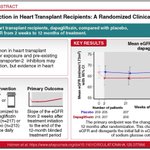
#Dapagliflozin for Renal Protection in Heart Transplant Recipients: #DAPARHT Trial
📍 430 heart transplant recipients randomized to dapagliflozin 10 mg vs placebo; median 7 years post-transplant.
📍 Dapagliflozin improved 12-month #eGFR change: +2.0 vs +0.3 mL/min/1.73 m² . Between-group difference: +1.7 mL/min/1.73 m² (95% CI 0.1–3.3; P=0.03)
📍 No unexpected safety signals; adverse events, including infections, were similar between groups.
ahajournals.org/doi/10.1161/…
#ScientificSessions26 #AHA26 @AHAScience @AHAMeetings @CircAHA
#DAPARHT #SGLT2i #HeartTransplant #CardioRenal


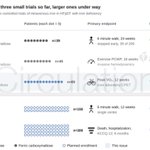
IV iron in #HFpEF : The #IRONMET-HFpEF Randomized Trial
📍 65 patients randomized to ferric derisomaltose 1000 mg IV vs placebo; 98.5% completed 12-week follow-up.
📍 Peak VO₂ improved significantly: +1.2 vs +0.1 mL/kg/min; LS mean difference +1.1 mL/kg/min (95% CI 0.2–1.9), P=0.02
📍 Functional gains: anaerobic-threshold VO₂, 6-minute walk distance, and NYHA class all improved vs placebo; KCCQ-OSS was not significantly different.
📌 Iron stores were effectively repleted with higher TSAT and ferritin, with no serious adverse events attributed to ferric derisomaltose
ahajournals.org/doi/10.1161/…
@AHAScience #ScientificSessions26 #AHA26
#HFpEF #HeartFailure #IronDeficiency @CircAHA


Iron Repletion in #HFpEF: An Endpoint Is Not Yet an Indication
ahajournals.org/doi/10.1161/…
@CircAHA @AHAScience @AHAMeetings #ScientificSessions26

Effects of #Sotatercept on Cardiac Structure and Function in Combined Post- and Precapillary Pulmonary Hypertension in #HFpEF : Analysis of the #CADENCE Study
ahajournals.org/doi/10.1161/…
#ScientificSessions26 @AHAScience @AHAMeetings @CircAHA

Intensive BP Lowering in Patients with Type 2 DM : #OPTIMAL-DIABETES Trial
👥📍 9,476 patients | Mean age 64.7 years | 62% women
📍 Achieved SBP: 121.8 vs 135.4 mm Hg (intensive vs standard), Median follow-up: 4.0 years
📍 Primary outcome: 6.0% vs 6.7% — HR 0.90 (95% CI 0.77–1.06), P=0.20 → no significant benefit
⚠️📍 Serious AEs: 14.9% vs 14.6% — similar between groups
nejm.org/doi/full/10.1056/NE…
#ScientificSessions26 #AHA26 @AHAScience @NEJM
Digital Health Intervention to Optimize #HeartFailure Management After Hospital Discharge in Brazil (#OPT-HF Trial)
In 154 hospitalized HF patients (EF <50%) with GDMT gaps:
📍 90-day GDMT score: 10.5 vs 7.5
Adj diff +3.01 (95% CI 2.30–3.73), P<0.001
📍 Hospitalization: 10.3% vs 22.4%
RR 0.46 (95% CI 0.21–0.99)
📍 Better self-care and No significant mortality difference
@CircHF #ScientificSessions26 #AHA26
#HeartFailure #GDMT #DigitalHealth
ahajournals.org/doi/10.1161/…


#REDUCE Trial : #Spironolactone after Stroke
📍 Open-label RCT of 160 stroke survivors—add-on spironolactone (n=85) vs usual care (n=75).
📍 Primary endpoint: 3-month mean home #SBP 125.6 vs 133.3 mm Hg; difference −7.7 mm Hg (P=0.0002). At 6 months: −6.9 mm Hg (P=0.0004).
📍 BP target <130/80 mm Hg at 3 months: 52% vs 30% (P=0.01).
📍 Caveats: More BP meds at 3 months (2.6 vs 2.1), ~15% missing BP data, early closure (160/200 planned). Stroke/MI prevention remains unproven.
#AHA26 @AHAScience


