






Pinned Tweet
Can data be more than something we analyze or visualize?
I’ve put together 10 defining questions about data art.
The central idea:
Data can be not only information, but also artistic material—something to transform into visual, sonic, physical, interactive, or computational experiences.
[Link in the first comment]
Data Artwork: Giorgia Lupi, Stefanie Posavec. Dear Data: Week 7 (Musical Complaints / A Week of Complaints), 2014

12
30
492
The NASA GISS dataset provides monthly global surface temperature anomalies from 1880 to the present.
A + anomaly indicates a warmer-than-average month; a - anomaly indicates a cooler-than-average month.
I asked each student to create a visual data artwork for this dataset.


2
2
91

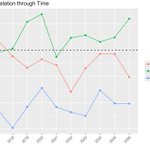
Three data artworks telling global warming.
An anomaly measures the difference, in degrees Celsius, between an observed temperature and the corresponding average temperature during the reference period 1951–1980.


9
26
140
I wrote an R analysis to compare Bitcoin and gold as financial assets from January 2017 until the current date (link below).
I investigate:
* price evolution;
* cumulative performance;
* daily returns;
* volatility;
* risk-adjusted performance using the Sharpe ratio;
* correlation between Bitcoin and gold;
* correlation of both assets with the U.S. dollar.


P vs NP asks a deceptively simple question: if a solution to a problem can be checked quickly, can it also be found quickly?
This is one of the seven (six?) Clay Millennium Problems still open.
Will AI solve it? There are roughly three possible scenarios:
1. AI as an amplifier. A human mathematician develops the crucial conceptual idea, while AI discovers lemmas, checks cases, searches literature, formalizes proofs, and explores variants.
2. Human–AI co-discovery. An AI notices some structural phenomenon—for example in circuit lower bounds—that humans had overlooked, and humans turn it into a theory. At that point it becomes difficult to say who "solved" the problem.
3. Autonomous discovery. An AI invents a new mathematical framework producing a proof that humans subsequently verify.
And P vs NP may actually be an unusually revealing benchmark for advanced mathematical AI. Current systems can increasingly succeed by extending existing mathematics. P vs NP seems likely to require something closer to creating new mathematics. If an AI independently crossed that boundary, the significance would extend far beyond complexity theory.
An interactive real-time demo of Conway's Game of Life rendered with infinite recursion.
Each cell at one level is itself a full Game of Life simulation at the next.
Chapeau!

7
13
631
Task: We repeatedly toss two fair coins.
We want to estimate:
𝑃(both coins are heads ∣ at least one coin is heads).
1. Guess the theoretical probabilty of the event;
2. Write an R simulation to estimate the probability.
AI-policy: AI not allowed!
5
15
305
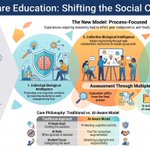
I am designing an AI-aware Data Science teaching/learning model.
Modern Data Science education must adapt to a landscape where artificial intelligence is both ubiquitous and powerful.
Because traditional assignments no longer guarantee that a student has actually learned the material, educators need to redesign their teaching models to address this reality.
A proposed social contract shifts the focus from simply producing final answers to fostering genuine cognitive development and critical thinking. This framework relies on a stepped progression that begins with solo human effort, moves through group collaboration, and culminates in the thoughtful integration of technology.
Ultimately, students are evaluated across multiple layers to ensure they retain essential judgment while augmenting their capabilities with modern tools rather than blindly automating their coursework.

AI is extraordinarily adept at extracting patterns from the past in order to make predictions; human beings, on the other hand, possess the ability to formulate causal theories about things that do not yet exist, to act upon reality in order to test them and, in so doing, to generate new data and new knowledge.

29
57
545
Every subject taught [at MIT] will likely need to be reexamined and potentially revamped to make sure that how students are being taught, what they’re learning, and how they’re assessed are “AI-aware.”
aiandeducation.mit.edu/repor…
I’m therefore proposing a three-step plan with the goal of pacing the frontier: building AI at a balanced rate that aims to ensure its safety while still achieving its benefits and grappling with important geopolitical dilemmas. To be clear, pacing does not mean halting model training or technical progress, but ensuring companies take adequate time to align and safeguard their models, and for third party evaluators to confirm this.
darioamodei.com/post/we-must…

18
38
363

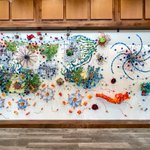
Nathalie Miebach — Changing Waters, c. 2009
Miebach transforms meteorological and oceanographic measurements into woven sculptures and musical scores.
Observations of the Gulf of Maine - including variables such as temperature, wind, pressure, tides, and other environmental measurements - are encoded into physical structures.
Her woven grids assign variables to different structural dimensions, meaning that changing measurements literally alter the sculpture's form.
This artwork directly addresses this meaningful question:
What changes when we experience data through the body rather than through a screen?
nathaliemiebach.com/work/new…

6
23
238
The Listening Post by Mark Hansen and Ben Rubin
Listening Post continuously harvested text from thousands of public Internet chat rooms and forums. Software analyzed fragments of these conversations and transformed them into an installation combining more than 200 electronic displays, synthesized speech, musical tones, and sound effects. The system organized the stream into six different audiovisual movements.
Imagine standing in front of a wall while fragments of thousands of people's online conversations appear and disappear while synthetic voices speak them aloud.
The artwork doesn't merely visualize a dataset. It turns a continuously changing dataset into an environment. It therefore introduces several important ideas at once: real-time data → algorithm → text + sound + space.
It also raises questions of privacy, surveillance, anonymity, and collective identity that are now even more relevant than when it was created.
youtu.be/Rzfnndd9fCk?si=Clbo…
7
17
200
We are working on a paper about token-based voting systems.
As a case study, we address the Snapshot vote for the removal of Brantly Millegan as Director of The @ensdomains Foundation. How would the vote have turned out if ENS had used a radical voting function (as we propose in the article) instead of the one-token-one-vote method?
Read a pre-print version on @SSRN: papers.ssrn.com/sol3/papers.…

1
12
185
What unwound was not digital art, nor the idea of blockchain-based ownership. It was a specific institutional layer: the venture-backed NFT marketplace, built for exponential growth in a market that proved cyclical, thin, and culturally fragile.
The lesson is not that NFTs failed. It is that markets built on speculation cannot double as cultural institutions, and that decentralization in theory does not guarantee resilience in practice.
nowmedia.co/posts/nft-market…

My paper on modern forms of generative art has been finally published in Leonardo journal, MIT Press.
Thanks to @robertoranon @tylerxhobbs @bottoproject for featuring their art!


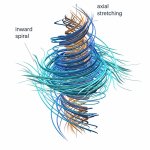
helix6c, Two
Where the lines connecting points on the warped spiral become circles.
#generarive #processing


