

Supercharge your tax workflows and drive productivity by 10x with our Tax AI co-pilot.
Philippines
Joined February 2025
- Tweets254
- Following30
- Followers96
- Likes131




Pinned Tweet
Pagod ka na bang ma-stress tuwing tax season? 😩
Nalilito sa BIR rules, deadlines, at filings?
That’s why we created @ignitetaxai 🔥
✨ Tax AI answers your tax questions anytime
📄 Agent Andy analyzes invoices, receipts, contracts, at BIR letters in seconds
🧮 Tax Tools make tax calculations fast and easy
📅 Calendar & Reminders help you stay updated and never miss BIR deadlines
Mas simple, organized, at less stress para sa freelancers, business owners, at taxpayers 💼
Try IgniteTax AI for FREE with 15 credits 👇
App: app.ignitetax.ai/taxai
Website: ignitetax.ai/
FB: facebook.com/ignitetaxai/
#IgniteTaxAI #TaxPH #BIR #AccountingPH #FintechPH #AItools #PHStartups #TaxCompliance #InnovationPH
2
127
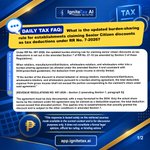
💡 Daily Tax FAQ: What is the updated burden-sharing rule for establishments claiming Senior Citizen discounts as tax deductions under RR No. 7-2026?
Powered by Ignite Tax AI ⚡
Are you a retailer, pharmacy, distributor, or wholesaler sharing the cost of Senior Citizen discounts with your suppliers? Before claiming that discount as a tax deduction from your gross income, check the updated rules under Revenue Regulations (RR) No. 007-2026 (amending Section 7 of RR No. 07-10)!
Here is what every business owner and accountant needs to watch out for:
•Strict Deduction Cap: When retailers, manufacturers/distributors, wholesalers-retailers, and wholesalers enter into a burden-sharing agreement (consistent with DOH guidelines), each party can only deduct their actual allocated share of the discount—never the full amount.
•Documentation & DOH Copy: The burden-sharing agreement must be duly documented, with a copy furnished to the Department of Health (DOH).
•Actual Grant Requirement: Only establishments that actually granted the Senior Citizen discount (and meet the other conditions under amended Section 7) can claim their corresponding portion as a deductible expense.
📲 Swipe through the carousel for the full rule and BIR reference!
💬 Got a tax question you want answered next? Drop it in the comments below! 👇
💬 Check the comment section below to get started.
🔗#DailyTaxFAQ #IgniteTaxAI #RR72026 #SeniorCitizenDiscount #TaxDeductionsPH #RetailBusinessPH #BIRCompliance #AccountantsPH


1
22
Stop wasting hours scrolling through complex tax PDFs.
🎯 Try it now at 👉 app.ignitetax.ai/
📌 Save this post or tag a friend who needs this Philippine tax guide!
1
💡 Daily Tax FAQ: How do businesses claim Net Operating Loss Carry-Over (NOLCO) in offline eBIRForms and eFPS?
Powered by Ignite Tax AI ⚡
Trying to encode extended 2020 or 2021 NOLCO in your Annual Income Tax Return (AITR), only to find that the system table restricts entries to the 3 immediately preceding taxable years?
Under RMC No. 081-2026, the BIR prescribed an interim workaround procedure for both the Offline eBIRForms Package and eFPS so businesses can properly claim their extended 5-year NOLCO under RR No. 25-2020 (Bayanihan II / RA 11494):
📋 1. Standard NOLCO Schedule/Table Entry
•Encode regular NOLCO amounts within the built-in NOLCO Schedule/Table to the extent allowed by the system (e.g., NOLCO from 2022, 2023, and 2024).
🛠️ 2. Workaround for 2020 & 2021 NOLCO
•Go to the Special Allowable Itemized Deductions Schedule in your ITR.
•In the description field, clearly specify the NOLCO year being claimed (e.g., "NOLCO – TY 2020" or "NOLCO – TY 2021").
•Enter "RA 11494" as the Legal Basis.
•Input the corresponding amount of NOLCO applied for the current taxable year.
✅ Validation & Disclosure Reminder:
•Make sure the combined NOLCO claimed across both schedules does not exceed your total allowable NOLCO deduction for the year.
•Click "Validate" to confirm zero errors before hitting "Submit"—and remember to still present 2020 and 2021 NOLCO separately in your ITR Reconciliation Section and Notes to Financial Statements!
📲 Swipe through the carousel for the step-by-step guide!
💬Navigate your tax compliance with confidence using IgniteTax AI!
💬Got a tax question you want answered next? Drop it in the comments below! 👇
💬 Check the comment section below to get started. 🔗
#DailyTaxFAQ #IgniteTaxAI #NOLCO #RMC0812026 #eBIRForms #eFPS #IncomeTaxPH #AccountantsPH #TaxCompliancePH


17
💡 Daily Tax FAQ: What are the updated requirements for claiming a tax credit or refund for erroneously or illegally collected taxes under RMC No. 103-2026?
Powered by Ignite Tax AI ⚡
Filing a claim for a tax credit or refund under Section 204(C) in relation to Section 229 of the Tax Code? Before gathering extra checklists, note what RMC No. 103-2026 actually updates!
It doesn't introduce a whole new list of documentary requirements—instead, it amends Section I (2) of RMC No. 74-2024 to clarify where you file BIR Form No. 1914 (Application for Tax Credits/Refunds):
📍 CGT & Related DST
on Real Property (Capital Asset):
•File with the Revenue District Office (RDO) having jurisdiction over where the real property is located.
📍 All Other Claims Under Sec. 204(C) & Sec. 229:
•File with either the RDO OR the Large Taxpayers Audit Division (LTAD) / Large Taxpayers Division (LTD) under the Large Taxpayers Service (LTS)—whichever has jurisdiction over the taxpayer-claimant.
⚡ Good to Know: RMC No. 103-2026 takes effect immediately and modifies/repeals only inconsistent prior issuances, without adding new substantive requirements or procedural steps in the circular itself.
📲 Swipe through the carousel for the full breakdown!
💬 Have questions about BIR Form 1914, refund jurisdiction, or RMC No. 103-2026? Drop a comment below, or try IgniteTax AI—your Philippine Tax Co-Pilot—for instant, cited tax answers! ⚡
💬 Check the comment section below to get started. 🔗
#DailyTaxFAQ #IgniteTaxAI #RMC1032026 #TaxRefundPH #BIRForm1914 #TaxCompliancePH #AccountantsPH #BusinessTipsPH


1
23
Stop wasting hours scrolling through complex tax PDFs.
🎯 Try it now at 👉 app.ignitetax.ai/
📌 Save this post or tag a friend who needs this Philippine tax guide!
1
💡 Daily Tax FAQ: What extensions or relief measures does the BIR grant to taxpayers in areas affected by severe typhoons or natural calamities? ⛈️🇵🇭
When severe typhoons, flooding, or power outages strike, tax deadlines shouldn't be an added burden on affected communities and businesses.
Under Revenue Regulations (RR) No. 13-2024, the BIR Commissioner is empowered to grant immediate deadline extensions and compliance relief during force majeure events.
Here is how the BIR supports taxpayers in calamity-hit areas:
•Filing & Payment Extensions: Statutory deadlines for tax returns, tax payments, reports, and attachments falling within the affected period are moved to a later date (such as the end of the month or a specified extended deadline) for both taxpayers and Authorized Agent Banks (AABs) in declared RDOs.
•Waiver of Penalties: Taxpayers who file and pay within the extended window face zero surcharges, interest, or compromise penalties (RMC No. 012-2026).
•Manual Filing Fallback: Mandated eFPS and eBIRForms users experiencing power or internet disruptions may file returns and pay taxes manually without penalty (RMC No. 133-2020).
•Broader Relief in States of Calamity: Extensions can also cover VAT/tax refund applications and statutory periods for assessment notices and warrants (RR No. 22-2021).
📌 Note: Exact extended dates and covered RDOs/provinces are announced through specific Revenue Memorandum Circulars tailored to each weather disturbance.
📲 Swipe through the carousel for the full breakdown and legal references!
💬 Need to check if your RDO is covered by an active BIR typhoon extension? Drop a comment below, or try IgniteTax AI—your Philippine Tax Co-Pilot—for instant, cited tax answers! ⚡
💬 Check the comment section below to get started. 🔗
#DailyTaxFAQ #IgniteTaxAI #BIRRelief #TaxExtensionPH #CalamityRelief #BIRCompliance #AccountantsPH #BusinessTipsPH


1
21
Stop wasting hours scrolling through complex tax PDFs.
🎯 Try it now at 👉 app.ignitetax.ai/
📌 Save this post or tag a friend who needs this Philippine tax guide!
1
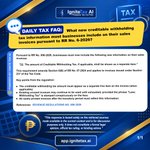
💡 Daily Tax FAQ: What new creditable withholding tax information must businesses include on their sales invoices pursuant to RR No. 6-2026? 🧾🚨🇵🇭
Issuing sales invoices to corporate clients or withholding agents? Make sure your invoice format is updated to comply with Revenue Regulations (RR) No. 006-2026!
Amending Section 6(B) of RR No. 07-2024 (Ease of Paying Taxes rules), the BIR added Item 22 to the mandatory information on sales invoices:
📌 What Must Be Shown:
•"22. The amount of Creditable Withholding Tax, if applicable, shall be shown as a separate item."
📋 Key Compliance Rules to Keep in Mind:
•Separate Line Item: Whenever a transaction is subject to CWT, the withheld tax amount must appear clearly as a separate line item on the invoice (not hidden or lumped into discounts).
•Using Existing Unused Invoices: You may continue using existing unused invoice booklets/stock until fully exhausted, provided the phrase "Less: Withholding Tax" is stamped conspicuously on the face of the invoice.
•Newly Printed Invoices: All newly printed invoices after the transitory period must already include this dedicated CWT field.
(Bonus Tip: Under subsequent BIR guidance in RMC No. 112-2026, you only need to indicate/stamp the CWT line on sales where the buyer is actually required to withhold—regular B2C sales don't need it!)
💬 Have questions about updating your invoice layout, CAS/POS fields, or CWT reconciliation? Drop a comment below, or try IgniteTax AI—your Philippine Tax Co-Pilot—for instant, cited tax answers! ⚡
💬 Check the comment section below to get started. 🔗
#DailyTaxFAQ #IgniteTaxAI #RR62026 #CreditableWithholdingTax #SalesInvoice #InvoicingRulesPH #BIRCompliance #AccountantsPH #BusinessTipsPH

1
29
Stop wasting hours scrolling through complex tax PDFs.
🎯 Try it now at 👉 app.ignitetax.ai/
📌 Save this post or tag a friend who needs this Philippine tax guide!
3
💡 Daily Tax FAQ: What is the one-time abatement of taxes and penalties available for Micro Taxpayers under Revenue Regulations (RR) No. 4-2026? ⏳📢🇵🇭
Are you a Micro Taxpayer (gross sales under ₱3,000,000) dealing with open stop-filer cases, delinquent accounts, or unpaid BIR penalties? You only have until December 31, 2026 to take advantage of a major tax relief program!
Under RR No. 4-2026, eligible micro taxpayers can settle covered taxes and penalties for a flat ₱5,000 abatement fee instead of paying the full amount due.
Here is how the program works:
• Who & What Is Covered: Applies to delinquent accounts, preliminary/final assessments (disputed or not), and open stop-filer cases as of December 31, 2025—including ceased businesses (Section 3).
• Liability Cap: Total basic tax liabilities and/or penalties across covered cases for a taxable year must not exceed ₱80,000 (Section 4).
• Flat Settlement Fee: Pay ₱5,000 via BIR Form No. 0605 within 5 working days of filing the application (non-refundable, though applicable as partial payment if denied/withdrawn) (Section 7).
• How to File: Submit BIR Form (Annex "A") manually at your registered RDO per taxable year, specifying the tax types and basic amounts due (Section 6).
• Case Closure: Once approved, the RDO issues a Certificate of Availment to officially close your case (Section 9).
• Deadline: Available until December 31, 2026 (unless extended) (Section 8).
⚠️ Important Note: This is a fixed-fee settlement program, not a full waiver—any prior payments made before RR No. 4-2026 took effect remain non-refundable (Section 5).
📲 Swipe through the carousel to review the complete requirements!
💬 Have questions about checking your open cases or filing Annex "A" before year-end? Drop a comment below, or try IgniteTax AI—your Philippine Tax Co-Pilot—for instant, cited tax answers! ⚡
💬 Check the comment section below to get started. 🔗
#DailyTaxFAQ #IgniteTaxAI #RR42026 #TaxAbatement #MicroTaxpayersPH #StopFiler #BIRCompliance #AccountantsPH #SmallBusinessPH


26
💡 Daily Tax FAQ: What happens if a homeowner fails to pay Real Property Tax (RPT) for several consecutive years?
Skipping your annual Amilyar (Real Property Tax) doesn't just add a small late fee—prolonged delinquency can actually put your home or land ownership at risk!
Here is what happens under Philippine local government rules when RPT goes unpaid:
📈 Mounting Interest & Penalties:
•Interest starts accruing immediately after the due date—typically at 2% per month (or fraction of a month), capped at a maximum of 36 months (up to 72% total penalty).
🔒 Automatic Lien on the Property:
•Unpaid RPT creates a statutory lien directly on the property itself, taking priority over almost all other claims until settled.
🔨 Warrant of Levy & Public Auction:
•After prolonged delinquency (often 1 year or more), the local treasurer can issue a warrant of levy to seize and sell the property at public auction.
•Homeowners generally have a 1-year redemption period from the auction date to reclaim the property by paying the full balance plus interest.
🏛️ Forfeiture & Permit Restrictions:
•If unredeemed (or if no buyer bids at auction), the LGU takes title through forfeiture, and the homeowner permanently loses ownership rights.
•Delinquency can also block local clearances, business permits, or building permits.
💡 Pro Tip: Behind on RPT? Reach out to your local treasurer's office immediately to ask about installment plans, compromises, or local tax amnesty programs!
📲 Swipe through the slides for the complete details!
💬 Have questions about Real Property Tax, local tax clearances, or property compliance? Drop a comment below, or try IgniteTax AI—your Philippine Tax Co-Pilot—for instant, cited tax answers! ⚡
💬 Check the comment section below to get started. 🔗
#DailyTaxFAQ #IgniteTaxAI #RealPropertyTax #Amilyar #PropertyTaxPH #TaxCompliancePH #HomeownersPH #AccountantsPH


2
34
Stop wasting hours scrolling through complex tax PDFs.
🎯 Try it now at 👉 app.ignitetax.ai/
📌 Save this post or tag a friend who needs this Philippine tax guide!
2
💡 Daily Tax FAQ: Are lottery winnings, sweepstakes prizes, or game show winnings subject to final taxes in the Philippines? 🎰🏆🇵🇭
Won the PCSO lotto, hit a casino jackpot, or took home cash from a TV game show? Before celebrating, know how much the BIR takes off the top!
Under Philippine tax rules, winnings and prizes are generally subject to Final Withholding Tax (FWT) once they cross the ₱10,000 threshold—with a few key distinctions depending on the type of prize:
🎟️ Lottery & PCSO Winnings:
•Over ₱10,000: Subject to 20% Final Withholding Tax (for resident citizens, resident aliens, and non-resident aliens engaged in trade/business).
•₱10,000 or less: Completely tax-exempt!
•Non-Resident Aliens (not engaged in trade/business): Subject to 25% FWT regardless of the amount.
🎰 Sweepstakes & Jackpot Prizes:
•Casino and gambling winnings (including sweepstakes) fall under the final tax regime based on the gross amount (no deductions for fees or commissions).
•Tax Rate: 20% for individuals under Section 24(B)(1) (or 25% for non-resident aliens not engaged in trade/business).
📺 Game Show Winnings & Other Prizes:
•Over ₱10,000: Subject to 20% Final Withholding Tax.
•₱10,000 or less: Not subject to final tax—instead, they are included in gross income and taxed under basic graduated income tax rates!
🌍 Foreign Winnings Note: Foreign-sourced lottery or prize winnings received by resident citizens are generally subject to basic income tax (worldwide taxation), not the 20% final tax.
📲 Swipe through the carousel for the full breakdown and legal citation .
💬 Have questions about final withholding taxes or prize reporting? Drop a comment below, or try IgniteTax AI—your Philippine Tax Co-Pilot—for instant, cited tax answers! ⚡
💬 Check the comment section below to get started. 🔗
#DailyTaxFAQ #IgniteTaxAI #FinalWithholdingTax #LottoTaxPH #PCSO #TaxCompliancePH #AccountantsPH #TaxTipsPH


1
41
Stop wasting hours scrolling through complex tax PDFs.
🎯 Try it now at 👉 app.ignitetax.ai/
📌 Save this post or tag a friend who needs this Philippine tax guide!
1
💡 Daily Tax FAQ: What is Documentary Stamp Tax (DST), and on what types of legal documents or financial transactions is it levied? 📜🇵🇭
Signing a loan agreement, transferring shares of stock, or buying real estate? You’ve likely encountered Documentary Stamp Tax (DST)—one of the most common taxes attached to formal legal and financial paperwork!
Here is what every business owner, investor, and taxpayer needs to know:
🔹 What is DST? It is an excise tax levied on documents, instruments, loan agreements, and papers evidencing the acceptance, assignment, sale, or transfer of an obligation, right, or property.
📋 Common Transactions & Documents Subject to DST:
• Shares of Stock: Sales, agreements to sell, or transfers of shares/certificates of stock (RMC No. 6-2022)
• Debt Instruments: Original issues of debt instruments—computed at 75% of 1% of the issue price, or proportional for terms under 1 year (RR No. 19-2025)
• Mortgages & Pledges: Mortgages, pledges, and deeds of trust securing payment of a definite sum of money (RR No. 4-2018)
• Government Certificates: Taxable certificates issued by government agencies or instrumentalities via constructive affixture (RR No. 2-2023)
• Real Property Transfers: Deeds of sale and conveyances of real property (₱15 per ₱1,000 or fractional part thereof)
⏰ Who Pays & When Is It Due?
• Liability: Falls on the person making, signing, issuing, accepting, or transferring the document. If one party is tax-exempt, the non-exempt party becomes directly liable.
• Deadline: Declared and paid via BIR Form No. 2000 within five (5) days after the close of the month when the taxable document was made, signed, accepted, or transferred (RMC No. 48-2024).
📲 Swipe through the slides for the complete details and BIR references!
💬 Check the comment section below to get started. 🔗
💬 Have questions about DST rates, eDST filing, or BIR Form 2000? Drop a comment below, or try IgniteTax AI—your Philippine Tax Co-Pilot—for instant, cited tax answers! ⚡
#DailyTaxFAQ #IgniteTaxAI #DocumentaryStampTax #DST #BIRForm2000 #TaxCompliancePH #AccountantsPH #BusinessTipsPH


1
24
Stop wasting hours scrolling through complex tax PDFs.
🎯 Try it now at 👉 app.ignitetax.ai/
📌 Save this post or tag a friend who needs this Philippine tax guide!
1
💡 Daily Tax FAQ: What is Estate Tax, and within what timeframe must heirs file and pay it after a property owner's passing? 🏠⚖️🇵🇭
Settling the estate of a loved one involves critical tax deadlines that families and heirs should never overlook! Missing the statutory window can lead to hefty surcharges and interest.
Here is what you need to know about Philippine Estate Tax:
🔹 What is Estate Tax? It is a tax imposed on the privilege to transmit the net estate of a decedent upon death. It accrues at the exact moment of death, and the tax rates and rules in force at that time govern the estate.
⏰ Filing Deadline (BIR Form 1801):
• Must be filed within one (1) year from the date of the decedent's death.
• Filed by the executor, administrator, or any of the legal heirs.
• Mandatory whenever the estate includes registered or registrable property (regardless of gross value).
• The BIR Commissioner may grant an extension of up to 30 days in meritorious cases.
💳 Payment Deadline & Relief Options:
• Pay-As-You-File: Estate tax is paid at the time the return is filed.
• Cash Installment: If the estate lacks sufficient cash, payment by installment is allowed within two (2) years from the statutory due date without civil penalty and interest.
• Undue Hardship Extension: The Commissioner may extend payment for up to 5 years (if settled judicially) or 2 years (if settled extrajudicially) when payment on time imposes undue hardship.
📲 Swipe through the carousel for the full breakdown and legal references.
💬 Have questions about Estate Tax deductions, extrajudicial settlement, or BIR Form 1801? Drop a comment below, or try IgniteTax AI—your Philippine Tax Co-Pilot—for instant, cited tax answers! ⚡
💬 Check the comment section below to get started. 🔗
#DailyTaxFAQ #IgniteTaxAI #EstateTaxPH #BIRForm1801 #EstatePlanningPH #TaxCompliancePH #AccountantsPH #RealEstatePH


1
15
Stop wasting hours scrolling through complex tax PDFs.
🎯 Try it now at 👉 app.ignitetax.ai/
📌 Save this post or tag a friend who needs this Philippine tax guide!
💡 Daily Tax FAQ: What is Donor's Tax, and what is the current flat tax rate for gifts or donations made to relatives versus strangers? 🎁🇵🇭
Planning to transfer property, cash, or assets to family members or friends during your lifetime? Many taxpayers still wonder if donating to a "stranger" carries a higher tax rate than donating to a relative!
Here is how Donor’s Tax actually works under current BIR rules:
🔹 What is Donor’s Tax? It is an excise tax imposed on a donor's right during their lifetime to transfer property to others as a gift (inter vivos), whether direct or indirect, in trust or otherwise, and whether the property is real, personal, tangible, or intangible. It only applies once there is a completed gift.
🔹 Current Flat Tax Rate (Relatives vs. Strangers):
• 6% Flat Rate: Imposed on total gifts made during the calendar year in excess of the ₱250,000 exempt threshold.
• No Distinction by Relationship: Under the TRAIN Law, the old progressive tax rates based on relationship were removed—meaning the same 6% flat rate applies uniformly whether the recipient is a relative or a stranger!
📑 Legal Basis: National Internal Revenue Code (NIRC) of 1997 (Section 99) & Revenue Regulations No. 12-2018 (Section 11).
💬 Have questions about Donor's Tax computations, exemptions, or BIR Form 1800? Drop a comment below, or try IgniteTax AI—your Philippine Tax Co-Pilot—for instant, cited tax answers! ⚡
💬 Check the comment section below to get started. 🔗
#DailyTaxFAQ #IgniteTaxAI #DonorsTax #EstatePlanningPH #TRAINLaw #TaxCompliancePH #AccountantsPH #BusinessTipsPH

1
11
Stop wasting hours scrolling through complex tax PDFs.
🎯 Try it now at 👉 app.ignitetax.ai/
📌 Save this post or tag a friend who needs this Philippine tax guide!
💡 Daily Tax FAQ: What is the tax rate applied to the sale of shares of stock not traded through the local stock exchange? 📈🇵🇭
Selling or transferring unlisted shares of a domestic corporation? The tax rule is completely different from selling publicly listed stocks on the exchange!
Here is what investors, shareholders, and business owners need to know:
🔹 The Tax Rate: 15% Capital Gains Tax (CGT) based on the net capital gain.
🔹 Who is Covered: Applies to sales, exchanges, or dispositions of shares of stock in a domestic corporation held for investment purposes that are not traded through a local stock exchange.
🔹 How It Differs from Listed Shares:
• Shares listed and traded through a local or foreign stock exchange are subject to the Stock Transaction Tax (now 1/10 of 1% under the CMEPA effective July 1, 2025, down from 6/10 of 1%) under Section 127 of the NIRC.
• Private/unlisted stock sales fall outside Section 127 and are governed by the 15% CGT regime instead.
💬 Have questions about share transfers, CAR processing, or capital gains computations? Drop a comment below, or try IgniteTax AI—your Philippine Tax Co-Pilot—for instant, cited tax answers! ⚡
💬 Check the comment section below to get started. 🔗
#DailyTaxFAQ #IgniteTaxAI #CapitalGainsTax #StockTransfer #CMEPA #TaxCompliancePH #AccountantsPH #BusinessTipsPH

1
25
Stop wasting hours scrolling through complex tax PDFs.
🎯 Try it now at 👉 app.ignitetax.ai/
📌 Save this post or tag a friend who needs this Philippine tax guide!
3
💡 Daily Tax FAQ: What is Capital Gains Tax (CGT), and when is it triggered during the sale of real estate property? 🏠🇵🇭
Selling real estate in the Philippines? Don't get caught off guard by how Capital Gains Tax works!
Here is what every property seller, buyer, and practitioner needs to know:
📌 What is CGT on Real Property? It is a 6% final tax imposed on the gross selling price OR fair market value (FMV)—whichever is higher.
• How FMV is determined: The higher amount between the Assessor's assessed value or the BIR zonal value.
🚨 Important Rule: CGT applies regardless of whether the seller actually made a profit or incurred a loss—making it a unique exception to the general rule that income tax requires realized income!
⏰ When is it Triggered & Due?
• Triggered upon the sale, exchange, or other onerous disposition of real property classified as a capital asset in the Philippines.
• Must be filed and paid using BIR Form 1706 within 30 days following the date of the transaction.
• Applies equally whether the seller is an individual or a corporation.
💬 Have questions about real estate tax computations or BIR Form 1706? Drop a comment below, or try IgniteTax AI—your Philippine Tax Co-Pilot—for instant, cited tax answers! ⚡
💬 Check the comment section below to get started. 🔗
#DailyTaxFAQ #IgniteTaxAI #CapitalGainsTax #RealEstatePH #BIRForm1706 #TaxCompliancePH #AccountantsPH

1
35
@highlights
Stop wasting hours scrolling through complex tax PDFs.
🎯 Try it now at 👉 app.ignitetax.ai/
📌 Save this post or tag a friend who needs this Philippine tax guide!
1
💡 Daily Tax FAQ: How does the Electronic Invoicing System (EIS) affect how businesses issue receipts to consumers? 🧾💻🇵🇭
Curious whether digital invoicing means customers will stop getting paper receipts? While the BIR’s Electronic Invoicing/Receipting System (EIS) transforms how mandated businesses generate and transmit sales data to the BIR, delivery to consumers remains flexible!
Here is how EIS impacts everyday B2C transactions:
🔹 For Mandated Taxpayers (E-Commerce, Large Taxpayers, CAS/POS Users, Exporters):
• Invoices must be generated in a structured electronic format (like JSON) for transmission to the BIR.
• Consumer Delivery: Customers can receive invoices digitally (via email, QR code, apps, or web platforms). However, a printed copy must still be provided upon request or when electronic transmission is impractical.
🔹 For Micro & Non-Mandated Taxpayers:
• Micro taxpayers are generally exempt from mandatory EIS and may continue using registered manual invoices or other allowed systems.
⚙️ Key Operational Rules to Remember:
• 3-Day Transmission: Sales data must reach the EIS within 3 calendar days (a backend reporting rule that does not delay point-of-sale checkout).
• No Direct Edits: Electronic records cannot be altered or deleted; corrections require separate Credit Notes.
• Downtime Fallback: Manual invoices may be issued during technical issues and replaced electronically once systems are restored.
📲 Swipe through the carousel for the complete breakdown and legal references.
💬 Is your business ready for electronic invoicing, or are you still using manual booklets? Drop a comment below, or check out IgniteTax AI—your Philippine Tax Co-Pilot—for instant, cited tax answers! ⚡
💬 Check the comment section below to get started. 🔗
#DailyTaxFAQ #IgniteTaxAI #EIS #ElectronicInvoicing #BIRCompliance #AccountantsPH #BusinessTipsPH


1
29
@highlights
Stop wasting hours scrolling through complex tax PDFs.
🎯 Try it now at 👉 app.ignitetax.ai/
📌 Save this post or tag a friend who needs this Philippine tax guide!
💡 Daily Tax FAQ: What is a VAT-inclusive price versus a VAT-exclusive price when purchasing goods or services? 🧾🇵🇭
Checking receipts or issuing sales invoices? Understanding how Value-Added Tax (VAT) is reflected in pricing prevents billing errors and compliance issues!
Here is the clear difference under BIR guidelines:
🔹 VAT-Exclusive Price: The base amount paid for goods or services before 12% VAT is added. This corresponds to the "gross selling price" (for goods) or "gross sales" (for services).
🔹 VAT-Inclusive Price: The total amount actually paid by the purchaser, which already embeds the 12% VAT within the stated figure.
🧮 How It Works in Practice:
• If an invoice lists a base price of ₱10,000 and separately adds 12% VAT (₱1,200), the VAT-exclusive price is ₱10,000 and the VAT-inclusive price is ₱11,200.
• If an invoice simply states ₱11,200 with no separate VAT line, the BIR treats that amount as already VAT-inclusive.
📲 Swipe through the images to see the full explanation and legal citations!
💬 Have questions about invoicing rules or VAT calculations? Drop a comment below, or try IgniteTax AI—your Philippine Tax Co-Pilot—for instant, cited tax answers! ⚡
💬 Check the comment section below to get started. 🔗
#DailyTaxFAQ #IgniteTaxAI #VAT #InvoicingRules #TaxCompliancePH #AccountantsPH #BusinessTipsPH


1
20
@highlights
Stop wasting hours scrolling through complex tax PDFs.
🎯 Try it now at 👉 app.ignitetax.ai/
📌 Save this post or tag a friend who needs this Philippine tax guide!
💡 Daily Tax FAQ: Are Senior Citizens and Persons with Disabilities (PWDs) entitled to VAT exemptions alongside their statutory discounts? 👵👴♿🇵🇭
YES! Under Philippine tax laws and BIR regulations, Senior Citizens and PWDs are entitled to a VAT exemption on top of their statutory 20% discount for covered goods and services!
Here is how the rules work for sellers and consumers:
🎯 Where the 20% Discount + VAT Exemption Applies:
• Medical services and diagnostic fees
• Food and beverages (dine-in, take-out, value meals, and cooked items for personal consumption)
• Concerts, leisure, and funeral services
🛒 What About the 5% Special Discount on Basic Commodities?
• The 5% discount on basic/prime commodities does not automatically grant a VAT exemption unless the item is already VAT-exempt by default (such as raw agricultural or marine food products under Section 109 of the Tax Code).
⚠️ Key Rules & Limitations to Remember:
• No Double Discounts: An individual who is both a Senior Citizen and a PWD can claim only one statutory discount (either Senior OR PWD, not both).
• VAT-Exclusive Base: The 20% discount is computed on the total cost of goods/services exclusive of VAT.
• Utilities: The 5% discount on electricity and water for Senior Citizens does not include a VAT exemption.
• Merchant Accounting: Input tax attributable to these VAT-exempt sales is treated as a cost or expense by the seller and is non-creditable.
📲 Swipe through the carousel for full details and BIR references!
💬 Have questions about computing Senior Citizen or PWD discounts for your business? Drop a comment below, or check out IgniteTax AI for instant, cited tax answers! ⚡
💬 Check the comment section below to get started. 🔗
#DailyTaxFAQ #IgniteTaxAI #SeniorCitizenDiscount #PWDDiscount #VATExemption #BIRCompliance #AccountantsPH #TaxTipsPH


1
1
14
@highlights
Stop wasting hours scrolling through complex tax PDFs.
🎯 Try it now at 👉 app.ignitetax.ai/
📌 Save this post or tag a friend who needs this Philippine tax guide!
2
💡 Daily Tax FAQ: What common consumer goods and essential services are completely exempt from Value-Added Tax (VAT)? 🛒🇵🇭
Did you know that not all goods and services are subject to the standard 12% VAT? Under BIR rules, several basic necessities and essential services are completely VAT-exempt!
Here is a quick look at what is exempt:
🌾 Consumer Goods:
• Agricultural and marine food products in their original state (rice, fish, meat, vegetables, fruits, etc.)
• Fertilizers, seeds, livestock, and poultry feeds
• Books, newspapers, and magazines (not primarily for ads)
• Residential lots $\le$ ₱1.5M or housing/residential dwellings $\le$ ₱2.5M
🏥 Essential Services:
• Medical, dental, hospital, and veterinary services (excluding professionals)
• Educational services by accredited or government institutions • Employment services (employer-employee relationship)
• Low-cost residential leases (monthly rental $\le$ ₱10,000)
• Services by agricultural cooperatives and lending activities
📌 Small Business Threshold: Taxpayers with gross annual sales/receipts not exceeding ₱1,500,000 are also generally VAT-exempt (subject to 3% percentage tax instead).
⚠️ Note: Exempt transactions mean zero output VAT charged, but no input VAT credit is allowed on related purchases.
📲 Swipe through the images to view the full list and legal references (RR No. 16-2005 & RMC No. 7-2024)!
💬 Have questions about VAT exemptions for your specific business? Drop a comment below, or check out IgniteTax AI—your Philippine Tax Co-Pilot—for instant, cited tax answers! ⚡
💬 Check the comment section below to get started. 🔗
#DailyTaxFAQ #IgniteTaxAI #VATExempt #TaxCompliancePH #AccountantsPH #SmallBusinessPH #TaxTipsPH


1
18
@highlights
Stop wasting hours scrolling through complex tax PDFs.
🎯 Try it now at 👉 app.ignitetax.ai/
📌 Save this post or tag a friend who needs this Philippine tax guide!
1
💡 Daily Tax FAQ: What is the standard rate of Value-Added Tax (VAT) applied to goods, properties, and services in the Philippines? 📊🇵🇭
When it comes to business transactions in the country, understanding your VAT obligations is essential!
The standard and default VAT rate in the Philippines is 12%. Here is where that rate applies:
🔹 Sales of goods and properties (including deemed sales)
🔹 Sale or exchange of services (including the use or lease of properties)
🔹 Importation of goods into the Philippines
📌 Note: While certain specific transactions may be zero-rated (0%) or exempt under Sections 106 to 109 of the NIRC, 12% remains the standard default rate.
📲 Swipe through the images to check out the legal basis, including NIRC Sections 107 & 108, RR No. 16-2005, and RR No. 8-2018!
💬 Have questions about VAT computation or exemptions for your business? Drop a comment below, or check out IgniteTax AI—your Philippine Tax Co-Pilot—for instant, cited tax answers! ⚡
💬 Check the comment section below to get started. 🔗
#DailyTaxFAQ #IgniteTaxAI #VAT #ValueAddedTax #TaxCompliancePH #AccountantsPH #BusinessPH


1
8
@highlights
Stop wasting hours scrolling through complex tax PDFs.
🎯 Try it now at 👉 app.ignitetax.ai/
📌 Save this post or tag a friend who needs this Philippine tax guide!
💡 Daily Tax FAQ: How are partnership income and General Professional Partnerships (GPPs) taxed under Philippine law?
Did you know that not all partnerships are taxed the same way by the BIR? The tax rules differ significantly between an ordinary partnership and a General Professional Partnership (GPP)!
Here is a quick breakdown under NIRC Sec. 26 & 55:
⚖️ General Professional Partnerships (GPPs):
• Income Tax Exempt: GPPs are exempt from income tax on ordinary business income.
• Flow-Through Taxation: Income passes through to the partners, who report their distributive shares in their personal income tax returns at graduated rates.
• Annual Information Return: Must still file an annual info return (NIRC Sec. 55) showing gross income, deductions, and partners' shares.
• Deduction & Tax Rate Restrictions: Partners cannot claim additional deductions from their distributive share (since it's already net of GPP expenses) and cannot elect the 8% income tax option on GPP income.
🏢 Ordinary (Non-Professional) Partnerships:
• Treated as corporations for tax purposes and subject to regular corporate income tax (CIT) on taxable income.
📌 Other Tax Liabilities for GPPs: GPPs remain subject to final withholding tax on passive income, capital gains tax, applicable business taxes (VAT or Percentage Tax), and local business taxes. Draws or advances to partners are also generally subject to 15% creditable withholding tax per BIR rules!
📲 Swipe through the images to view the full details and citations (NIRC Sec. 26, Sec. 55, RMC 50-2018)!
💬 Have questions about GPP income reporting or partner withholding taxes? Drop a comment below, or try IgniteTax AI—your Philippine Tax Co-Pilot! ⚡
💬 Check the comment section below to get started. 🔗
#DailyTaxFAQ #IgniteTaxAI #GPP #PartnershipTax #BIRCompliance #AccountantsPH #TaxTipsPH


1
35
@highlights
Stop wasting hours scrolling through complex tax PDFs.
🎯 Try it now at 👉 app.ignitetax.ai/
📌 Save this post or tag a friend who needs this Philippine tax guide!
2