Physician | https://xitter.cf/t.co/ymdHK4O5hQ | The Podcast by KevinMD

Nashua, NH, north of Boston
Joined December 2007
In the first year of COVID, visitors were not allowed in the ICU. On the video chats set up for one family, the nurse sometimes left the room, and a daughter was left watching her mother gasp for breath during a breathing trial. Sara Merwin (@Saramerwin1), an epidemiologist and patient advocate, says she helped that family from the outside. What she says they ran into: The only contact from the ICU was a request for authorization for procedures. Calls that were often put on hold for 20 minutes. Staff pulled in a million different directions, with many out sick. Video chats where the nurse would sometimes leave the room and leave the patient on the feed with the daughter. Her ask to the hospital: you cannot leave the feed on and not be bedside. If a family is watching a loved one on a video feed, who should be at the bedside? Listen to the full conversation on The Podcast by KevinMD. Link in the replies. Search "The Podcast by KevinMD" wherever you listen to podcasts. #CriticalCare #ThePodcastbyKevinMD
2
1
455
A boy suddenly could not read or see far. Four months into vision therapy, his mother says, the therapist implied it might be her stress. Christine Ko (@ChristineJKoMD), a dermatologist and dermatopathologist and a mother, says her son developed an acute vision problem he had never had. “All of a sudden he literally could not read or see far,” she says. “So he was sort of functionally blind.” What she describes next: Many ophthalmology and optometry appointments, two fields she says do not necessarily see eye to eye. A diagnosis she had never heard of, Streff syndrome. Vision therapy that was intense, with a lot of visits and a lot of questioning of herself. Stress, implied. “In more than one health care visit, it was implied,” she says, and one time the vision therapist said it a little more directly. He had earlier suggested she was a pushy mom. She came home upset and was “literally eating Nutella with a spoon in the kitchen” when her daughter came down and asked what was wrong. In the room, she told the therapist, “I think you’re saying that I have some role in this, and I just want you to know that that may be, but I don’t think that how you said it just now is really useful, like helpful.” She started crying while she said it. He told her, slowly, “Please sit down,” and they talked for about 30 minutes. She says she does think he is a caring individual and that there wasn’t malicious intent. She also says that honestly, nobody knows why it happened, and that on a logical basis she knows it is in no way her fault: “I recognize that sometimes you do everything right, and still a child can have various problems, including medical ones.” When has a health care professional implied something about you, or your child, without ever saying it? Listen to the full conversation on The Podcast by KevinMD. Link in the replies. Search "The Podcast by KevinMD" wherever you listen to podcasts. #PatientExperience #ThePodcastbyKevinMD
1
2
956
A man with a brain tumor, thought to be nonverbal, had been NPO, nothing by mouth, for 14 days. When he said he would love some coffee, his hospitalist asked the nurses to dip a mouth swab in it. Augusta Uwah, an internal medicine physician and hospitalist, says she found out he was not as altered as she had thought. He was an advanced conversationalist who asked her where she trained. What she says it took: Sitting with him a little longer and giving him the time to get his words out. Asking what she could do to make his day or his stay better. Nurses who agreed to put coffee on the mouth swabs instead of ice or water, for a few consecutive days. On her last day there were flowers at his bedside. She says he told her, “Oh, they’re for you.” What she says gets in the way: discharges due before 9, 10, or 11 a.m., admissions, meetings, and the documenting and billing. Most physicians, she says, leave patients who can’t speak up to the nursing staff, and those patients are often overlooked, probably not intentionally, maybe because of anchoring bias. She says she tends to care a little more about the people who really cannot speak up for themselves, and that for her it boils down to really wanting to connect with the person as a human. What is the smallest thing a clinician did for you or someone you love in a hospital that you still remember? Listen to the full conversation on The Podcast by KevinMD. Link in the replies. Search "The Podcast by KevinMD" wherever you listen to podcasts. #Hospitalist #ThePodcastbyKevinMD
3
2
13
5,259
Two nurses, one of them still in training, were responsible for 16 emergency room patients, including a baby with RSV who needed to be transferred. Molly Murray, a physician assistant in emergency medicine, says that was her last shift. She says the baby, in all likelihood, should have been one-to-one, and that administration said, “Well, technically there are two of you, so this seems like a fair staffing ratio.” She says it wasn’t, because one of the two was still in training. What else she says the nurses were juggling on the same shift: Patients asking for medications, water, and discharge paperwork, some of them yelling at the nurses. Two ICU holds, one of them a GI bleed. Consultants to talk to, orders to carry out, and blood products to pick up. Hours of documentation after the shift was over. What does your unit get when the nurses call administration for help? Listen to the full conversation on The Podcast by KevinMD. Link in the replies. Search "The Podcast by KevinMD" wherever you listen to podcasts. #EmergencyMedicine #ThePodcastbyKevinMD
7
6
3
18
4,534
Her water broke at 14 weeks, and she was pregnant with twins. Every week after that, the nurses printed a certificate and all of them signed it. Vince Baiera, a nurse and health care executive, says his wife was on bed rest for five months, three of them in the hospital. He describes the small things the nurses did. The certificate said, “Congrats, you made it to 24 weeks.” They hung them on the door. The nurses wore sweaters that said, “We grow miracle babies.” When the fluid leaked again and they were scared, the nurses stayed calm: “We see this all the time. Don’t worry, we got you.” They pointed to what they had seen before, like no blood in the fluid. They kept a board of the weeks and days, and the nurses cheered the count: “31 and three!” He also says one question mattered more than they knew. The team asked if she was having contractions, she said yes, and what they meant was painful contractions. He says that miss was shared, and they learned it in the last month. What does your unit do when a hospital stay is long and the outcome is uncertain? Listen to the full conversation on The Podcast by KevinMD. Link in the replies. Search "The Podcast by KevinMD" wherever you listen to podcasts. #PatientExperience #ThePodcastbyKevinMD
1
8
2,080
She asked her care team whether her first breast biopsy would hurt, and was told it was really simple. Bianca Haines, a patient advocate, says no one told her she would be in excruciating pain, or that she would be able to see the whole procedure on a flat-screen TV above her head. The bed had no grips. She says she kept saying, “I need a grip.” Her list of what care teams could do differently is short and specific: Tell the patient what to expect during a biopsy before it starts. Put the information in layman’s terms, with bullet points, instead of a pointer to a website. Make sure every specialist knows the patient before she walks in the door. She says her second team did, and that the communication between them was essential. She had three more biopsies after that first one, and she says she knew what to expect each time. What do you tell a patient before a first biopsy? Listen to the full conversation on The Podcast by KevinMD. Link in the replies. Search "The Podcast by KevinMD" wherever you listen to podcasts. #PatientExperience #ThePodcastbyKevinMD
4
2
1
10
4,727
The two physicians she had brought in and trained gave her three months’ notice, because she was not, in their words, “feeding the mid-levels.” Sarah A. Vlach, a physiatrist and sports medicine physician, says she built her practice from scratch. She says she worked about nine months without a medical assistant before the notice came. A former partner once offered to take her last two procedures so she could make her daughter’s soccer game. She says he added, “Of course, you wouldn’t want to miss out on those RVUs.” Has a metric ever told you what your work is worth? Listen to the full conversation on The Podcast by KevinMD. Link in the replies. Search "The Podcast by KevinMD" wherever you listen to podcasts. #PhysicianCareers #ThePodcastbyKevinMD
1
4
12
7,264
On the day her insurance ran out, a woman with wounds on both feet was told to go home from a skilled nursing facility. 34 home health agencies refused her. Gary Rothenberg, a podiatrist who had treated her for years, says there was no plan for home care and she lived alone. He says it was around Thanksgiving, the agencies were short staffed, and no one was in her home to teach the wound care she needed. He says she ended up back in the emergency room with infected ulcers and a prolonged hospital stay. What should be in place before a patient’s coverage for a facility stay ends? Listen to the full conversation on The Podcast by KevinMD. Link in the replies. Search "The Podcast by KevinMD" wherever you listen to podcasts. #CareTransitions #ThePodcastbyKevinMD
4
4
3
2,770
At her first prenatal visit, 3 of a patient’s 4 sonograms were thrown in the trash at checkout, in front of the whole waiting room. The 1 the office kept for its records showed what appeared to be a single embryo. Nichole Cubbage, a biorepository technician, says she demanded the other 3 back and was told the images of her own uterus were incorrect and nothing she should look into. Of course, she looked. She had come in at 6 weeks and 1 day and says she was scoffed at for coming in so early. After that, she says, her repeated questions met a huge lack of answers, with physicians referring her to other physicians within the same practice. She did not have an ultrasound after 24 weeks because her provider said it was not medically necessary. What should an office do before it throws away a patient’s own images? Listen to the full conversation on The Podcast by KevinMD. Link in the replies. Search "The Podcast by KevinMD" wherever you listen to podcasts. #PatientAdvocacy #ThePodcastbyKevinMD
1
2
3
4,485
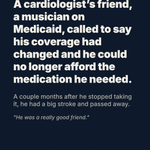
A cardiologist’s friend, a musician on Medicaid, called to say his coverage had changed and he could no longer afford the medication he needed. Payman Sattar (@md_payman), a cardiologist, says the medication was now over $300 a month. Then the pandemic dried up all of his friend’s gigs. Sattar tried a few things to get him the medication, but he just stopped taking it. About a couple months later, he had a big stroke and passed away. How many patients stop a medication without ever telling their doctor? Listen to the full conversation on The Podcast by KevinMD. Link in the replies. Search "The Podcast by KevinMD" wherever you listen to podcasts. #Medicaid #ThePodcastbyKevinMD
3
6
2,247