

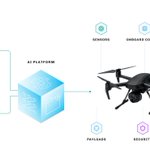
An all-in-one AI development kit that empowers developers to build secure models ultra-fast, with seamless field or lab updates.
United States
Joined July 2009
- Tweets2.4K
- Following537
- Followers3.5K
- Likes442









Find us next week at the IDGA Counter-UAS Summit, Aug 25 to 26 at National Harbor, MD.
Come see our tracker demo cueing a target three ways: with a pre-trained detector, a click in the interface, or an open-vocabulary VLM.
Then watch the tracker turn that track into autonomous action on the edge: controlling a gimbal, following a drone for persistent surveillance, or guiding terminal homing.

Getting an autonomous system to work in a demo has become table stakes. So has proving it out in a limited pilot deployment. The programs that struggle aren't the ones that can't build autonomy — they're the ones that can't keep it running once it leaves controlled conditions.
Our latest white paper argues that the real competitive advantage sits deeper in the stack.
Getting to a working demo (Day 1) and even a successful pilot deployment (Day 2) are no longer the hardest engineering problems. The challenge is Day 3: sustained operation in the real world, when hardware changes, connectivity degrades, missions evolve, and operators need the system to adapt without starting over.
In “Inside the Defense Autonomy Stack”, we explore why the underlying AI infrastructure is becoming the foundation for resilient autonomy and how we're approaching system-level orchestration for deployment at the tactical edge.
If we're going to field autonomous systems at scale, we have to think beyond the application itself.
Link in comments.
We're proud to share that LatentAI has been named to the Constellation ShortList™ for Artificial Intelligence and Machine Learning Best-of-Breed Platforms — Q3 2026.
Constellation Research's ShortList program evaluates vendors that enterprise technology buyers should consider when navigating digital transformation. Being named to this list reflects the work our team has put into building AI/ML infrastructure that performs where it matters most — at the edge.
Thank you to our customers, partners, and the LatentAI team for making this possible.
Read more about Constellation's ShortList program: constellationr.com/research/…

Interoperability isn’t a feature you add to an edge AI system. It’s the foundation you build it on.
At the tactical edge, connectivity is degraded, compute is constrained, and platforms and sensors are constantly changing. An AI system that only works when every part of the stack is configured exactly as expected is not operationally interoperable.
In a new piece for Military Embedded Systems, Latent AI CTO Sek Chai joins Sigma Defense’s Michael MacFadden and James Beere to examine what it takes to build edge AI that can actually operate under these conditions.
The key is an open, modular architecture with orchestration at its core—one that can adapt to available resources, operate disconnected from the cloud, and integrate new capabilities without starting over.
The systems being designed today will define the operational baseline for the next decade. Interoperability needs to be designed in from the start.
Read “Interoperability is not a feature – it’s a foundation”: militaryembedded.com/ai/cogn…

What happens when a target moves out of one camera's field of view?
In many multi-camera systems, the track simply ends. This summer, our intern Adhithi Uppalapati set out to solve that problem and built a system that lets one camera automatically hand a target off to the next.
Working with our AI/ML team, Adhithi developed a distributed multi-camera tracking system that runs across edge hardware. As a target moves between cameras, the system transfers the tracker's learned memory of that target over the network so the receiving camera can re-identify and reacquire it without manual intervention.
The system combines:
• Real-time object tracking with motorized pan-tilt-zoom control, allowing cameras to physically reposition themselves to keep a moving target in view
• Cross-device tracking handoff between a Dell GB10 workstation and an NVIDIA Jetson Nano
• Target re-identification, allowing the system to distinguish the specific target of interest from visually similar objects
• Natural-language target selection, so an operator can specify what to track by description rather than clicking on an object
• Controlled reliability testing to measure how factors like camera overlap and viewpoint separation affect successful handoff
The result is a distributed system that can maintain continuous track of a target across a wider area using a network of smaller edge devices.
Just as importantly, Adhithi didn't stop at building the system. She designed experiments to understand where it works, where it breaks down, and what conditions affect performance—the kind of engineering discipline that turns a prototype into something that can be evaluated in the real world.
We're proud of what Adhithi accomplished this summer and excited to see where she takes this work next. Congratulations, Adhithi, and best of luck at Cornell! 🎓

Counter-UAS defense depends on making decisions where the threat is, not waiting for the cloud.
That’s why we’re proud to be part of BlueDragon, BlueShadow ApS’s maritime counter-drone system being developed to detect and track aerial threats over the Black Sea.
Latent AI provides the onboard AI for detection and tracking, enabling autonomous platforms to process and respond to targets at the edge, even in contested environments.
Proud to contribute to this effort alongside BlueShadow and our partners.
Read the full story in the comments.
Everyone's racing to field autonomous systems.
The harder question is whether they'll still work after deployment.
As defense autonomy moves from prototypes to operational programs, the competitive advantage is shifting away from individual AI models and toward the software stack that keeps those systems running when hardware changes, connectivity drops, and missions evolve.
Our newest white paper, "Inside the Defense Autonomy Stack", explores what it takes to engineer autonomy that persists beyond the lab, and why the future of defense AI will be won by the systems behind the system.
Inside you'll learn:
• Why "Day 3" is where autonomy succeeds or fails
• How to build AI systems for persistence and scale
• Why orchestration matters as much as model performance
• How Latent AI approaches deployment at the tactical edge
Link in the comments.

Welcome to the team, Ryan!
Ryan is our summer intern joining us from New York University, where he is a rising senior studying Mathematics and Computer Science.
At Latent AI, he’s developing a real-time object tracking demo using a gimbal-mounted camera system. His work involves building an automated pipeline that detects objects of interest, tracks and centers them within the camera's field of view, and analyzes trajectory data. It's a hands-on application of physical AI at the edge. He is also exploring the tradeoffs between model efficiency and accuracy to optimize the pipeline for deployment on edge AI devices.
Outside of work, Ryan is a self-described diehard New York Jets fan.
We're thrilled to have him on board and look forward to seeing what he builds this summer!

Happy Fourth of July from the Latent AI team. Today we're grateful for the people who make the mission possible, both on the field and off it.

Every AI system eventually meets the moment it wasn't trained for.
A mission shifts. A new environment introduces different lighting, weather, or terrain. An operator changes tactics. An adversary adapts. A factory opens a new production line. Suddenly, the assumptions that produced great benchmark results no longer match reality.
That's the challenge facing organizations deploying AI at the edge. The question isn't simply whether a model performs well in testing, but whether the entire system can continue performing when conditions inevitably change.
That's why we're increasingly thinking about edge AI as a systems engineering problem rather than a model optimization problem. Adaptability isn't a feature you add after deployment. It has to be designed into the model, the hardware, the deployment pipeline, and the operational workflow from the beginning.
Our latest blog explores why so many AI deployments struggle once they leave controlled environments, and why building AI that survives the field requires rethinking what "deployment" actually means.
Read it here: latentai.com/blog/edge-ai-sy…

The hardest part of deploying AI at the edge isn't building the model; it's keeping it working after it leaves the lab. Environments degrade. Hardware isn't uniform. Conditions shift faster than a quarterly update cycle can track. And in defense applications, someone on the other side is actively trying to break your system.
We've been working on this problem across programs like Project AMMO and Linchpin. "AI Under Fire" captures what we've learned: four standards that determine whether an edge AI system survives contact with mission reality, and what it takes to build one that does.
Read it here: latentai.com/lp/white-paper-…

Help us give a warm welcome to Aleka Tzoumas, our summer intern joining us from James Madison University, where she’s a senior studying Business Management with a concentration in Consulting and a minor in Global Supply Chain Management.
At JMU, Aleka competed in the Rainey-Sheppard-Kushel Business Plan Competition, a flagship program integrating finance, management, marketing, and operations, where her team earned 2nd place and the Accenture Best Idea Award.
At Latent AI, Aleka is researching AI supply chain visibility for edge deployments in defense and government contexts, with a focus on how developers can build resilience before a crisis forces the conversation. Her work this summer will culminate in a white paper on AI supply chain resilience in defense and government edge deployments.
Outside of work, you can find Aleka in the kitchen or behind the decks. She enjoys cooking and DJing in her spare time.
We're thrilled to have her on board and look forward to sharing her research this summer!

Trust is the adoption barrier nobody is solving for.
Edge AI performance benchmarks don't tell you what happens when a system acts unpredictably in a GPS-denied environment, or why a soldier decides to disengage the technology entirely.
Our CTO and co-founder Sek Chai breaks down five design principles for building trust into edge systems from the ground up — including why deployment is the start of system exposure, not the finish line.
Read "The Challenge of Trust in Edge AI" in The AI Journal: ow.ly/NPFT50Z8azw
#EdgeAI #DefenseAI #AutonomousSystems #TrustworthyAI #LatentAI

Getting capable technology to the warfighter faster isn't a procurement problem. It's a translation problem.
Commercial developers optimize for what sells. Defense programs optimize for what survives. When those two communities don't understand each other's constraints, good technology stalls in the pipeline.
Our Co-Founder & CTO Sek Chai addressed this directly at the Edge AI Foundation's Mission Critical Edge AI for Defense Industries panel — what it actually takes to bridge that gap, and why COTS adoption in defense isn't just a strategy, it's how we close the capability timeline.
Watch the full discussion: youtube.com/watch?v=bnRyWaHh…
#defensetech #edgeai #militarytech #AIthatmatters

Autonomous systems don't fail because the AI wasn't smart enough. They fail because the systems around the AI couldn't guarantee predictable, certifiable behavior when it mattered.
That's the problem Sek Chai and Dr. Justin Pearson of Wind River dug into on the Military Embedded Systems webinar this week — and it's exactly the kind of cross-industry conversation that moves defense AI from promising to deployable.
Watch now if you're working on embedded systems, autonomous platforms, or defense program integration.
🎧 resources.embeddedcomputing.…
#defensetech #embeddedsystems #autonomy #tacticaledge

The problems Latent AI solves in defense are the same ones manufacturers are running into on the factory floor. Offline operation. Constrained hardware. No tolerance for latency.
Manufacturers Alliance just published research on AI in design, engineering, production, and maintenance — and Latent AI's Natalia Jurado Espín is cited directly on what it means to act on data at the point of production, not route it somewhere else first.
Defense proved the solution. Manufacturing is adopting it.
Read the full report: manufacturersalliance.org/re…
#edgeai #defensetech #manufacturing #dualuse

Memorial Day. A day set aside to remember the U.S. service members who paid the ultimate price.
We're grateful for what they made possible. Today we think of them and their families.
#MemorialDay

The last day of #SOFWeek2026, and the demo is still drawing a crowd.
We had the honor of welcoming Indian Special Forces, including Lt Col Sheel Ranawat, to our booth for a hands-on session with our terminal homing capability.
Thank you to everyone who stopped by.
#EdgeAI #AutonomousSystems #SOFWeek

Before a drone can complete a terminal approach autonomously, it has to maintain a persistent track on a moving target — through partial occlusion and changing conditions like camera angle shifts and target speed variation — without losing it.
This is that capability running on real-world footage. It's what sits underneath the terminal homing demo we're bringing to SOF Week.
Read the blog here: latentai.com/blog/what-to-ex…
#SOFWeek #AutonomousUAS #EdgeAI #LatentAI #DefenseTech