

2-time U.S. Investing Champion. Author Trade Like A Stock Market Wizard and Think & Trade Like a Champion. Featured in Stock Market Wizards. Read disclosure.
Joined January 2010
- Tweets38.9K
- Following161
- Followers781K
- Likes36.4K




Pinned Tweet
EXCLUSIVE EXPOSÉ - In-depth interview with MARK MINERVINI - 33,554% Return • 2-Time U.S. Investing Champion.
youtu.be/RoKPBa8Ppyk?si=p9co… via @YouTube

Mark Minervini retweeted
EXCLUSIVE EXPOSÉ - In-depth interview with MARK MINERVINI - 33,554% Return • 2-Time U.S. Investing Champion.
youtu.be/RoKPBa8Ppyk?si=p9co… via @YouTube
Mark Minervini retweeted
Did this interview on Friday wirh USIC Founder Norm Zada.
youtu.be/MqBhsMVCgm0?is=Z535…
A failure for the S&P 500 to find support near the 200-day would be an ominous sign. That's how meltdowns start. How we close today is important. The market is clearly under selling pressure. We need to capitulate.

$NVDA earnings. Anthropic IPO. US, China, Russia summit. Perfect storm for volatility.

I'm still short, but looking for a spot to cover and take profits, possibly sooner than later.
Why?
Because an impending push up is growing likely.
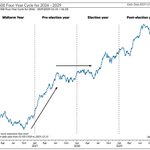
Based on history, the current bull market is long in the tooth; the fifth longest on record. However, since 1950 the S&P 500 has never declined in the year after mid-terms elections. The average S&P 500 gain in pre-election years is 17.2%. What is noteworthy is: most of the gains have come in the first half of pre-election years. The S&P 500 has been flat-to-down in the second half (see chart).
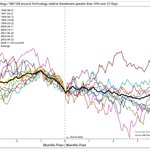
We are heading into a period with multiple bullish tendencies working in the market’s favor. Year-end seasonality is one. The historically strong first half of the Presidential cycle is another (see charts).
If we can get through this period without the Fed moving into a fast tightening cycle, those tailwinds should remain intact. Under that scenario, I would expect the current correction to be relatively short-lived and ultimately give way to a resumption of the broader uptrend.
Could we bottom soon?
There is an interesting historical precedent worth keeping in mind as we approach Thursday's scheduled meeting between the U.S., Russia and China. Going back to some of the most significant meetings between the world's major powers, the stock market was higher following nearly every one of them—sometimes substantially higher.
In 1945, Roosevelt, Churchill and Stalin met at Yalta. Stocks rallied immediately following the meeting and continued higher over the next several weeks.
In 1972, Nixon's historic meeting with Mao in China was also followed by a rising market and new highs in the weeks that followed.
The Reagan-Gorbachev summits show a similar pattern. Following Geneva in November 1985, stocks moved higher.
Reykjavik in October 1986 actually ended without an agreement, yet the market shrugged off the disappointment and gained roughly 5% over the next three weeks.
Following the Washington summit in December 1987, where Reagan and Gorbachev signed the INF Treaty, the market rallied sharply, gaining roughly 7% within a week and continuing higher.
After their Moscow summit in 1988, stocks again rallied strongly, gaining roughly 7% over the next couple of weeks and close to 10% within a month.
Obviously, this is a small sample and every period had a different economic and market backdrop. But the pattern is noteworthy: these major superpower meetings were generally followed by higher stock prices over the ensuing days and weeks.
That matters to us because we're currently short the S&P 500 and sitting on a profitable trade. If the market gives us additional downside going into Thursday, I will likely use that weakness to cover some or potentially all of our short exposure ahead of the meeting.
There's enough historical precedent for a positive reaction that I don't see a reason to overstay a profitable short going into the event.
I have not made the decision to cover my shorts just yet, but a decline from here could be just the opportunity to cover right into weakness at peak equity.
minervini.com


Don't just read the headline... read the entire post, and then retweet. Best wishes. 🤑
I'm still short, but looking for a spot to cover and take profits, possibly sooner than later.
Why?
Because an impending push up is growing likely.
Based on history, the current bull market is long in the tooth; the fifth longest on record. However, since 1950 the S&P 500 has never declined in the year after mid-terms elections. The average S&P 500 gain in pre-election years is 17.2%. What is noteworthy is: most of the gains have come in the first half of pre-election years. The S&P 500 has been flat-to-down in the second half (see chart).
We are heading into a period with multiple bullish tendencies working in the market’s favor. Year-end seasonality is one. The historically strong first half of the Presidential cycle is another (see charts).
If we can get through this period without the Fed moving into a fast tightening cycle, those tailwinds should remain intact. Under that scenario, I would expect the current correction to be relatively short-lived and ultimately give way to a resumption of the broader uptrend.
Could we bottom soon?
There is an interesting historical precedent worth keeping in mind as we approach Thursday's scheduled meeting between the U.S., Russia and China. Going back to some of the most significant meetings between the world's major powers, the stock market was higher following nearly every one of them—sometimes substantially higher.
In 1945, Roosevelt, Churchill and Stalin met at Yalta. Stocks rallied immediately following the meeting and continued higher over the next several weeks.
In 1972, Nixon's historic meeting with Mao in China was also followed by a rising market and new highs in the weeks that followed.
The Reagan-Gorbachev summits show a similar pattern. Following Geneva in November 1985, stocks moved higher.
Reykjavik in October 1986 actually ended without an agreement, yet the market shrugged off the disappointment and gained roughly 5% over the next three weeks.
Following the Washington summit in December 1987, where Reagan and Gorbachev signed the INF Treaty, the market rallied sharply, gaining roughly 7% within a week and continuing higher.
After their Moscow summit in 1988, stocks again rallied strongly, gaining roughly 7% over the next couple of weeks and close to 10% within a month.
Obviously, this is a small sample and every period had a different economic and market backdrop. But the pattern is noteworthy: these major superpower meetings were generally followed by higher stock prices over the ensuing days and weeks.
That matters to us because we're currently short the S&P 500 and sitting on a profitable trade. If the market gives us additional downside going into Thursday, I will likely use that weakness to cover some or potentially all of our short exposure ahead of the meeting.
There's enough historical precedent for a positive reaction that I don't see a reason to overstay a profitable short going into the event.
I have not made the decision to cover my shorts just yet, but a decline from here could be just the opportunity to cover right into weakness at peak equity.
minervini.com
Slide could come first. I'm positioned for that, but always ready to move. Market is currently under pressure. I want to be clear, I'm still short. But always thinking forward, and always prepared for the other side of the trade.
I'm still short, but looking for a spot to cover and take profits, possibly sooner than later.
Why?
Because an impending push up is growing likely.
Based on history, the current bull market is long in the tooth; the fifth longest on record. However, since 1950 the S&P 500 has never declined in the year after mid-terms elections. The average S&P 500 gain in pre-election years is 17.2%. What is noteworthy is: most of the gains have come in the first half of pre-election years. The S&P 500 has been flat-to-down in the second half (see chart).
We are heading into a period with multiple bullish tendencies working in the market’s favor. Year-end seasonality is one. The historically strong first half of the Presidential cycle is another (see charts).
If we can get through this period without the Fed moving into a fast tightening cycle, those tailwinds should remain intact. Under that scenario, I would expect the current correction to be relatively short-lived and ultimately give way to a resumption of the broader uptrend.
Could we bottom soon?
There is an interesting historical precedent worth keeping in mind as we approach Thursday's scheduled meeting between the U.S., Russia and China. Going back to some of the most significant meetings between the world's major powers, the stock market was higher following nearly every one of them—sometimes substantially higher.
In 1945, Roosevelt, Churchill and Stalin met at Yalta. Stocks rallied immediately following the meeting and continued higher over the next several weeks.
In 1972, Nixon's historic meeting with Mao in China was also followed by a rising market and new highs in the weeks that followed.
The Reagan-Gorbachev summits show a similar pattern. Following Geneva in November 1985, stocks moved higher.
Reykjavik in October 1986 actually ended without an agreement, yet the market shrugged off the disappointment and gained roughly 5% over the next three weeks.
Following the Washington summit in December 1987, where Reagan and Gorbachev signed the INF Treaty, the market rallied sharply, gaining roughly 7% within a week and continuing higher.
After their Moscow summit in 1988, stocks again rallied strongly, gaining roughly 7% over the next couple of weeks and close to 10% within a month.
Obviously, this is a small sample and every period had a different economic and market backdrop. But the pattern is noteworthy: these major superpower meetings were generally followed by higher stock prices over the ensuing days and weeks.
That matters to us because we're currently short the S&P 500 and sitting on a profitable trade. If the market gives us additional downside going into Thursday, I will likely use that weakness to cover some or potentially all of our short exposure ahead of the meeting.
There's enough historical precedent for a positive reaction that I don't see a reason to overstay a profitable short going into the event.
I have not made the decision to cover my shorts just yet, but a decline from here could be just the opportunity to cover right into weakness at peak equity.
minervini.com
When you fail to respect risk, you will win some battles, but you will lose the war.
At times, you’ll look like a genius. Over time, you’ll be proven a fool.
This I can gaurantee.
This is a repost. I had the date wrong on the post. Sorry.
Our market short positions are doing well. We have not yet covered and remain overweight short. As I posted on Thursday, on 11/11 we doubled our already profitable $SPY short position initiated on 10/15.
Our market short positions are doing well. We have not yet covered and remain overweight short. As I posted on Thursday, on 11/11 we doubled our already profitable $SPY short position initiated on 10/15.
Did this interview on Friday wirh USIC Founder Norm Zada.
youtu.be/MqBhsMVCgm0?is=Z535…
So great to hear. 😇🙏 Day 4 tomorrow.

@markminervini Finished Day 3 of Master Trader Program: HTFs, selling into strength. To anyone considering, its the trading equivalent of God appearing in front of you and giving you all of the answers to life. Every question and problem with my trading answered without asking.
My story, my performance and more information than most traders on the planet are available publicly. There are thousands of pages of content about me, including multiple best-selling books, Youtube videos, podcasts, articles and webinars available.
I won two U.S. Investing Championships, one of which I publicly shared a full audit at my own expense in 2025. In the 40 year history of the contest, no one had ever done that.
My 33,500% return was audited by an accounting firm for Jack Schwager when I was featured in Market Wizards.
If you want to see me in action live, you can subscribe to minerviniprivateaccess.com.
The person I blocked had been pestering me non-stop for weeks. Now you’re doing the same.
I’ve been trading for 43 years. Most serious traders know who I am.
I don’t owe you or your accomplices an explanation, or anything else. Following me is not a right, and it doesn’t give you a license to make demands or antagonize me.
I have nothing more to prove to the world, and I certainly have no reason to fancy your demands, simply because you think you are entitled to something.
People like you are the reason high level individuals are not accessible on social media. But I will not let the Negatoilets like yourself and your little friends you are defending discourage me from helping the good people who follow me. I will block the clowns and serve the rest. And if you don't like what I say or how I run my businesses, I DON'T GIVE A 💩.

@markminervini u block accounts because someone asked your annual returns of each year from 2000 to 2026 isnt it unethical

In case the message isn't clear enough. What i'm saying is: praying and forgiveness doesn't absolve you from your personal responsibility.
If you do stupid shit and live a life doing wrong; behavior and choices you know better, don't think God is going to save you from yourself. God already gave you the gift of life and a working brain. It's up to you to be grateful for that gift and give back. 🙏 😇
This is something I had to learn over the years. It's called personal responsibility. And it's the first step to personal empowerment.