

Cyber Risk as a Business Decision Independent Validation for Leaders, Boards, and Deal Teams.
Los Angeles, CA
Joined January 2009
- Tweets54.9K
- Following8.2K
- Followers9.9K
- Likes1.5K


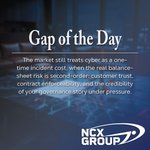


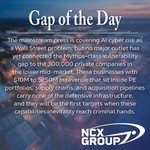

Our founder and CEO, Mike Fitzpatrick, asked the right question.
If the answer on AI agent reach comes from the target's own IT, it isn't proof.
Independent diligence turns it into price, escrow, or indemnity before close.
Catch it in diligence or write the check after close.

AI agents start with approved credentials. Then they quietly reach more systems and more data.
IBM just bought AuthMind to watch exactly that.
Most of your targets can't measure it. Ask what their agents can reach.
Price the risk, or inherit it.
f.mtr.cool/rmuiqa3z4d

1
2
57
Your firewall has a budget. Does your CEO?
Spies don't need your network. They need your boss. A former FBI counterintelligence operative calls the executive "the easiest way to penetrate a billion-dollar company."
Jensen Huang just left Nvidia amid scrutiny of his ties to a suspected Chinese spy. One personal lapse became a governance event overnight.
The CEO is the attack surface.
The person a buyer pays for is also your biggest exposure.
f.mtr.cool/7lsn1j5c5p

53
If your AI agent pays the wrong vendor tomorrow, which policy pays you back?
Likely none. 2,369 generative-AI exclusions are in force across 49 states.
Insurers now price AI on what you can prove you control.
Proof, not the operator's word.
f.mtr.cool/kxzgphzo68

22
Breach costs aren't outside estimates anymore. They're in the filings.
Boston Scientific booked about $85M in production variances from one attack. Its CFO put lost sales at roughly $150M more.
What gets priced into a stock gets priced into a deal.
The insurance side is tightening:
- 2,369 AI exclusions are in force across 49 states.
- 30% of companies without standalone cyber coverage say they can't get underwritten. In 2024, it was 17%.
After a breach, the insurer checks every box on your application. At the deal table, most buyers never check the diligence questionnaire at all.
Same checkbox. Same gap.
Buying? Verify it before you price it.
Selling? Find it before the buyer does.
Read the full article from our founder and CEO, Mike Fitzpatrick.
I smiled while writing this one. Sometimes it's the only sane way to read the bad news.
Boston Scientific gave its cyberattack its own line in a quarterly filing: about $85 million off the margin, plus roughly $150 million in lost sales by the CFO's count. Breach costs aren't an outside estimate anymore.
Companies are reporting them to their own shareholders.
Then I read the cyber insurance application my broker sent me. Eleven checkboxes.
Aon and Ponemon's new 2026 study says only 34% of insured companies believe their policy pays for ransomware.
And at the deal table? I've had nearly 400 conversations with deal professionals and reviewed 40 hours of transaction interviews. Cyber risk never came up. Not once.
If you buy companies, sell one, or advise on either, this one's for you. Grab a coffee. Keep smiling.
linkedin.com/pulse/number-fi… via @LinkedIn

1
175
53% of cyber policies are endorsements earning 4% of premium.
Buyer's first question: real policy or endorsement? The answer moves indemnity.
Loss ratio 53, up from 48.7. Only 1% of global losses insured.
Unvalidated cover is a guess the buyer prices.
f.mtr.cool/7zx9ktivmo

26
PE deal teams and corp dev: read this before your next LOI.
Your target likely runs AI agents. Its own IT set them up. That's not validation.
Independent diligence the deal committee can price against.
Palo Alto Networks is reportedly in talks to buy Clutch Security for $500M. About 50x ARR to control AI agent access.
The market priced that risk. Has your diligence?
The target's IT can't grade its own work.
Price the risk, or inherit it.
f.mtr.cool/xu8jvy22ux

35
What does it cost when cyber risk reaches the board too late?
The GMO Internet Group story raises a hard question for every board: how do you know critical cyber issues are being surfaced to the people who can do something about them?
Shares fell sharply in the aftermath, and GMO acknowledged it still could not fully assess its losses.
That’s not only an IT problem. It’s a governance problem.
The operator can’t validate the operator. Boards need independent proof that escalation works before an incident tests it.
f.mtr.cool/06y2l67d1l

70
One employee fooled by a fake trusted contact.
12% off Asos shares before anyone knew the loss would stay at £4m–£8m.
The market reprices first. Management explains later.
Proof before the incident. Not after.
f.mtr.cool/n39jk4ewqp

48
Buy-side deal teams: here is a market signal that changes your diligence checklist.
AI governance now has a price tag: $495M.
CrowdStrike is paying it for Fiddler AI and Dreadnode, two startups that test AI agents.
A target with no AI controls carries a gap the market can now benchmark.
Who measured that gap before you signed?
Buy-side teams diligencing AI-forward targets: this changes your pricing conversation.
CrowdStrike just paid $495M for two startups that monitor and test AI agents.
The market now prices AI control.
Your target runs agents with no proven controls? That gap has a price too.
Price it in diligence. Or pay for it after close.
f.mtr.cool/n4niry6a22

1
74
Mike wrote this for business owners, CEOs, and leaders.
The article pushes leaders to do something most companies avoid: walk through the first 72 hours of a real disruption before it happens.
Not in theory.
Not in a checklist.
As an exercise.
If your systems are unreliable, communications are degrading, payments are failing, and leadership cannot reach every location, what still works? Who decides? What stops?
Read on LinkedIn: linkedin.com/pulse/world-sen…

I wrote this for business owners, CEOs, and leaders. Use it to walk your team through the first 72 hours of a crisis as an exercise before you ever face one for real.
When I read that governments are telling families to be ready to fend for themselves for three days, I didn't think about my pantry. I thought about my business. And about yours.
Most of what keeps our companies running no longer lives in our buildings. It sits in someone else's data center, on someone else's cell towers, and moves through someone else's bank. When those systems go down, help won't reach us first.
The old Boy Scout motto still holds up: "Be Prepared."
Most of us know it. Fewer of us live it.
So live it.
Read on LinkedIn: f.mtr.cool/tw27e2jfqt
1
55
Boston Scientific lost a few days to a cyberattack in August. Two months later, it cut guidance.
Our founder and CEO Mike Fitzpatrick explains why that is a return problem for deal teams, not an IT problem.
Who priced that risk in your last deal?
Boston Scientific's August cyberattack cut its EPS guide to $3.16–$3.18 vs. $3.23 expected. Q4 sales could fall up to 3%.
A few days down. Several quarters of damage.
Not an IT problem. A return problem.
Who priced that risk before close?
f.mtr.cool/lt4ikc09qb

74
Running a company day to day? This one's for you.
Microsoft pushed emergency .NET fixes on a Sunday. Teams with a tested process finished in hours.
A policy binder doesn't patch a server.
Patching, access control, backups, practiced until boring. That protects your value today and the day you sell.
How long would your Sunday last? Read Back to Basics: Security First.
ncxgroup.com/2026/10/back-to…

24
What does a ransomware attack actually cost? Not the ransom. Everything after it.
A ransomware CEO's two brutal lessons, that's what NCX Group founder and CEO Mike Fitzpatrick unpacks with Bill Forster of CEO Zones in this clip.
The number you plan for is rarely the number that hits.
f.mtr.cool/uwyenycddk

1
56
One emergency patch. Three different problems.
The owner running the company loses a month. The owner selling hands the buyer a reason to cut the price. The buyer inherits whatever never got fixed.
Mike Fitzpatrick on why the basics decide who pays. Full piece on LinkedIn: linkedin.com/pulse/back-basi…

Last Sunday, Microsoft made everyone patch the same thing twice. Groundhog Day, with patches.
That same day. Three different bills: the owner running a company, the owner selling one, the buyer across the table.
The fix is the basics.
Read on LinkedIn: f.mtr.cool/bru7luguuz
1
54
Founders and deal teams:
When cyber hits a deal, 42% lose significant value.
22% of 2025 deals excluded a cyber rep entirely. In 2024 it was 5%.
Nobody warranted the risk. You still own it.
Price the risk before close. Or inherit it after.
Full breakdown on LinkedIn: f.mtr.cool/jos3u32o24

33
Deal teams: the seller’s cyber risk becomes your risk at close. The Nethive deal shows how seriously buyers are starting to treat that.
Bregal Milestone just took a majority stake in Nethive, backing its acquisition of JoyComm. PE keeps consolidating SME cyber services because capital follows firms that can prove diligence and remediation capacity at scale.
Can you prove your next target's?
See the deal: f.mtr.cool/bhch97dyp9

67
If you own, run, buy, or sell a business, the next 18 months are important. Our founder and CEO Mike Fitzpatrick wrote about how they will decide who stays insurable, financeable, and sellable.
Read "The Man Who Owns the Storm Cellar Just Told Us to Take Cover"
Attackers move in hours; most of us patch in weeks. I wrote about why proving the basics beats more tools.
If you own, run, buy, or sell a business, you'll want to learn more about this, and why the next 18 months will decide who stays insurable, financeable, and sellable.
Read "The Man Who Owns the Storm Cellar Just Told Us to Take Cover": f.mtr.cool/o77bep8rdc

1
47
You've spent years building something worth protecting. Our founder and CEO, Mike Fitzpatrick, knows exactly what that means, and what it costs when you don't.
He was fired three times. He built NCX Group anyway.
25 years, one story, zero fluff. Hear it on the latest Bite Size Security podcast episode.
If you've built a business and are thinking about what comes next, this one's for you.
I got fired three times. Started NCX Group with $3,000. What I learned shapes how we protect sell-side owners today.
Your story is your valuation. Protect it.
Tune in to the episode on the Bite Size Security podcast: Fired Three Times: The Story Behind 25 Years of NCX Group f.mtr.cool/lnz203rttq
1
60
Our founder and CEO, Mike Fitzpatrick, and Bill Forster, founder of CEO Zones, break down what’s really at stake when ransomware strikes.
A 250-person firm was down for 40 days.
Watch the short.
Ransomware took a 250-person firm down for 40 days.
The breach isn't the real number. Third-party risk, downtime, and cyber posture decide your deal.
Bill Forster the Founder of CEO Zones and I break down what's actually at stake. Watch the short: f.mtr.cool/26rccacq4i

What did diligence miss in the IonQ/Elisity deal? NCX Group founder and CEO Mike Fitzpatrick breaks down the risk angle most coverage overlooked.
IonQ's $1.3B all-stock bet on Elisity comes with no published diligence findings. No valuation methodology. Just a number.
Most people read this as a technology story. I read it as a diligence story.
Elisity sells Zero Trust security. Who independently validated its own posture before close?
The seller's risk becomes your risk at close. Price it, or inherit it.
f.mtr.cool/767snvixhp