

The best place to find out what’s new in science – and why it matters.
Worldwide
Joined January 2009
- Tweets169K
- Following278
- Followers4.3M
- Likes16.2K








Pinned Tweet
In this week’s issue: A tiny particle, a massive breakthrough, and a whole new understanding of reality.
Grab a copy in shops now or download our app for digital editions.
newscientist.com/issue/3618/

The glymphatic system flushes toxins out of the brain, but this seems to be disrupted in Alzheimer's disease, and cholesterol may be involved newscientist.com/article/259…

Co-Existence by Ethan Mollick is an excellent practical guide to effectively collaborating with AI without relinquishing our most valuable human cognitive capabilities, says Daniel Cossins newscientist.com/article/259…

Feedback learns of an unexpected new partnership for Star Trek, and of an even more unexpected promotional stunt newscientist.com/article/259…

We now know that cells exchanged during pregnancy can take up residency in our brain. Could they influence our development, health or even behaviour? Columnist Helen Thomson explores this mysterious cellular legacy newscientist.com/article/259…

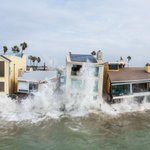
El Niño has already raised sea levels in part of the eastern Pacific by 40 centimetres and as it continues to strengthen, there could be coastal flooding from Alaska to Chile newscientist.com/article/259…

When There Are Wolves Again by E. J. Swift somehow delivers both a determined call for more wildernesses globally – and a great novel. Sci-fi columnist Emily H. Wilson is thrilled she gave it another chance newscientist.com/article/259…

We have arguably already discovered dark matter, says columnist Chanda Prescod-Weinstein. To observe it, we will need to figure out whether we expect it to act like a particle or a wave. newscientist.com/article/259…

We know that this monster El Niño will bring floods, droughts, cyclones and wildfires, but some governments aren’t putting in the necessary resources to prepare for disaster newscientist.com/article/259…

Fossils of a ground-dwelling, carnivorous bird with wing anatomy similar to that of a pheasant may force a rewrite of the role of flight in the early evolution of birds newscientist.com/article/259…

We still don't know for sure how the ice cliffs looming over the sea at the leading edge of some glaciers will behave as the climate warms, but satellite data offers some clues newscientist.com/article/259…

We now have a clearer picture of what happened in the decades following the asteroid impact that led to the extinction of almost all dinosaurs newscientist.com/article/259…

Popular conceptions of AI differ drastically between the US and China. Columnist Annalee Newitz dives into the cultural, religious and sci-fi factors driving our impressions of its power newscientist.com/article/259…

It's now possible to convert a handful of smells into electronic signals that can be sent through the internet newscientist.com/article/259…

Starting in January, students attending Skyview High School in Virginia will learn about the building blocks and principles underlying quantum computers by working with one directly newscientist.com/article/259…

An AMOC weakened by climate change can be revived by cooling global temperatures, but we don't have the technology to remove huge quantities of CO2 and drive that cooling newscientist.com/article/259…

This question was posed as part of New Scientist’s Last Word series, in which readers give scientific answers to each other’s questions. Here’s what our readers had to say newscientist.com/article/259…

AI has taken huge strides in computer programming and mathematics – physics could be next newscientist.com/article/259…

Most people seem to have cells that crossed the placenta from their mother into their developing brain in utero, even if they're now in their 80s newscientist.com/article/259…

Bacteria that are visible without a microscope are generally found in mangroves and fish, but an analysis of different species from around the world suggests they also reside in the human gut newscientist.com/article/259…

Shallow-water coral reefs are at high risk of disappearing by 2075, the IUCN has warned at a UN biodiversity conference. The loss would decimate fisheries and speed up coastal erosion newscientist.com/article/259…
