

Bitcoin inheritance, done right. Non-custodial multisig, on-chain timelocks & guided recovery. Zero KYC.
Joined October 2020
- Tweets4.3K
- Following48
- Followers29.1K
- Likes11.7K




Pinned Tweet
What makes Nunchuk different from other Bitcoin collaborative custody providers?
Our service rests on four pillars:
✅ KYC-free
✅ No single point of failure
✅ Open standards
✅ Bitcoin-focused
We committed to these pillars because of a unique experience that shaped us: our part in the Freedom Convoy incident of February 2022. When the Canadian government moved against the protesting truckers and their supporters, we were served a Mareva injunction demanding that we disclose information about our users and freeze their funds. Many services voiced support for self-custody in principle but watched from a distance, unwilling to take on the protesters as users for fear of the government’s response.
That was the moment our vision of what Nunchuk should be became clear. The question we now ask of ourselves is simple: if an entity is powerful enough to compel us to disclose information about our users and freeze their funds — could we even do it?
Can we and our clients withstand a state-level attack? And crucially, it’s not enough to be willing to say no. Our architecture has to make it so that we cannot comply in the first place.
That’s why we’re KYC-free. Your privacy is paramount. Anyone targeting you learns nothing about you even if they compromise Nunchuk, because we don’t hold that information. The one exception is that subscribers provide an email at signup (an anonymous address like Proton works fine), because we need a way to reach you during exactly the kind of security incident we just lived through. Last weekend made the case that this trade-off was the right one.
That’s why we insist on no single point of failure. In practice this means multi-vendor multisig as the foundation. For our assisted wallets, it also means the keys you hold are dedicated hardware signers (no hot key on the phone). In collaborative custody, the provider already holds one key. If the client’s other keys included a hot key running in an app the same provider maintains, a forced or malicious software update could seize a majority of keys (in a 2-of-N setup) and sweep or freeze funds. A hot key on the user’s phone would make life easier for us and our users, but it would fail the standard we set for ourselves in 2022. So we made the harder choice and disabled it entirely in our assisted wallets.
That’s why we build on open standards. In the worst case, you can always migrate your Nunchuk setup to other software that follows the same Bitcoin standards, such as Sparrow. The exit door stays permanently open, even if Nunchuk were to disappear tomorrow.
That’s why we’re Bitcoin-focused. Bitcoin is what we build for, and what we build on, including its Layer 2 system. The wider “blockchain” industry, with many centralizing points of failure, whether explicit or implicit, has proven throughout the years that it cracks under real pressure. We chose depth over breadth, and quality over quantity.
These are the reasons Nunchuk stands apart from other services.
nunchuk_io retweeted
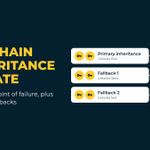
Two big upgrades to our on-chain timelock inheritance: no more single point of failure, and Fallbacks.
In October, after this year’s wave of hardware wallet attacks, we said multi-key protection was coming. It’s here.
🔑 Two keys to claim
Previously, once the timelock passed, any one of your keys could claim the inheritance alone. As we wrote then, a timelock only delays the risk. If that key is compromised, an attacker just waits it out.
Now a claim needs two keys by default. Your beneficiary gets one of your keys plus a dedicated inheritance key that only works after the timelock. One compromised key or tampered device is no longer enough, and your beneficiary still can’t claim early.
🛟 Fallbacks: layers of insurance
Fallbacks are optional backup paths that unlock in sequence after your primary plan. Each one is a layer of insurance: if the path before it can’t be used, the inheritance can still go through, just later. Each has its own keys and unlock time, and Bitcoin enforces all of them.
Use them for:
✅ A second heir, if your first beneficiary can’t claim
✅ Lost keys, with a backup set stored somewhere else
✅ Your own recovery, if you lose too many keys to spend normally
✅ A last resort, like an estate attorney
On every path, you choose which keys sign and how many are needed.
Available now in the latest Nunchuk app for new Honey Badger wallets. Already on an on-chain plan? We’re adding an extra assisted wallet to your subscription so you can migrate.
Full breakdown👇
nunchuk.io/blog/onchain-inhe…


A few words given the recent exploits on hardware signing devices:
• The Ledger supply chain attack represents one of the most sophisticated attacks thus far on the wallet ecosystem. In many ways it’s a lot more sophisticated than the Coldcard RNG exploit, because that one was software only. This one took a cross-border company buyout, tampering with the devices (implanting an eSIM, an LTE module and a CPU) and manufacturing the implants at scale.
• These sorts of attacks have been predicted by early Bitcoiners, but in Bitcoin they remained theoretical or crude until this year. It shows that the level of sophistication of attacks has risen quickly, and what was previously “good enough” advice on wallets and self-custody is no longer sufficient.
• When we started Nunchuk a few years ago, our premise was that multisig, and multi-vendor multisig, needs to become the standard for self-custody in the future. But even we didn’t expect how fast it would materialize. This is likely due to 2 factors: Bitcoin getting more mainstream, and the rise of AI-assisted attacks. This is a Sputnik moment for Bitcoin self-custody. The defenses need to level up.
• Passphrases wouldn’t have helped in the Ledger case, since you are required to enter the passphrase into the device for it to sign any transactions. A compromised device that phones home the seed phrase can also easily phone home the passphrase the moment you enter it.
• Similarly, generating the private key somewhere else (even by rolling dice) and subsequently importing it onto a tampered device wouldn’t save you here. The device can phone home the seed phrase the moment it’s imported.
• Anti-tampering techniques might help, such as transparent casing or bricking the device if it’s tampered with. Or forever displaying a message once the seal is broken. Or using on-device encryption between the internal hardware components. But a dedicated and resourceful enough attacker can still find ways to get around these layers. Tampering and anti-tampering have long been a cat-and-mouse game. In 2008, card readers doctored right off a Chinese production line sent card data and PINs over mobile networks to Pakistan. The Ledger attack is the same playbook, 18 years later. The bigger the target, the more attackers spend on overcoming the defenses.
• You should order directly from the vendors as much as possible, using a PO box for privacy.
• Any setup that relies on a single hardware/software stack or a single vendor should be considered at risk.
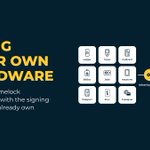
• Building your own hardware signers from generic parts is a good option for technical users.
• Multi-vendor multisig should become the standard. Each signer should have a completely independent hardware/software stack from the other signers. The point is that there shouldn’t be any single-point-of-failure anywhere in your setup.
• Many advanced protocols rely on timelocks and the recovery path being a simple singlesig. The recent attacks and exploits should highlight how dangerous this could be. Timelocks simply delay a risk. If a seed is compromised and there’s a timelock involved, the attacker just needs to wait out the timelock. (For Miniscript wallets, there’s the wallet descriptor too, but presumably it also gets sent to the device at some point.) Vault-like protocols face a similar problem: any withdrawal or recovery path that relies on a single key is a potential single point of failure.
• For our on-chain timelock-assisted wallets, in a few weeks we are adding the option to customize the recovery path to be an M-of-N, so that, if you want, spending would require multiple keys at all points during the wallet’s lifetime.
nunchuk_io retweeted

Timelocks don’t replace multisig.
That’s the main idea behind today’s upgrade to our on-chain inheritance protocol.
In the past, many Bitcoiners (including us) believed timelocks could remove the need for multisig on the heir’s side. The idea is simple: the owner runs a multisig for strong security, and after some time passes it decays so the heir can claim with a single seed phrase (plus the wallet config). It lowers the bar for the heir.
But recent supply-chain attacks on Ledger and Trezor devices sold through resellers showed that isn’t safe enough. You can’t trust any single hardware and software stack at any point in a wallet’s lifecycle. If an heir uses a tampered device to claim, the moment they import that seed phrase, an attacker has everything needed to sweep the funds. Because families are often less technical, the risk peaks at the exact moment they claim. As AI-assisted attacks become the norm, any potential crack in your setup will get targeted.
Broadly speaking, any inheritance setup that lets a single device withdraw funds has a single point of failure. For generational wealth and treasuries, multisig is the baseline—whether you use timelocks or not.
So our on-chain protocol now requires 2 keys to claim by default. Yes, we realize it adds friction on the family side. But we believe with good standards and clear guidance, families can handle it. The alternative is trusting one device with everything.
We also added Fallbacks: extra timelocked paths so a second heir or trustee can claim later if the first can’t. Each one is another layer of insurance. (Just don’t overcomplicate it with too many keys and keep the number of fallbacks small.)
With these upgrades, you can choose the exact trade-offs you want:
• On-chain protocol (timelocks enforced by the Bitcoin network): Choose this for maximum assurance. Even if Nunchuk disappears, your heir can claim on their own. And if we’re around, they still get professional help. Best of both worlds. More rigid and higher operational bar, in exchange for full self-sovereignty.
• Off-chain protocol (timelocks enforced by Nunchuk’s platform co-signer): Choose this for simplicity, broader hardware and third-party wallet support, easy changes over time, or phased distribution (splitting funds across heirs or rolling them out gradually).
• DIY: Build your own setup in our free app. (Just make sure you write everything down clearly for your heir.)
All three are built on open standards, multi-vendor, and designed so Nunchuk can never lock or take your funds.
Bitcoin’s Proof-of-Work is the only thing that guarantees digital, portable scarcity in a post-AI world flooded with infinitely generated slop. We remain bullish on Bitcoin and are focused on making owning and inheriting it rock solid.
Stay humble and stack sats.
Two big upgrades to our on-chain timelock inheritance: no more single point of failure, and Fallbacks.
In October, after this year’s wave of hardware wallet attacks, we said multi-key protection was coming. It’s here.
🔑 Two keys to claim
Previously, once the timelock passed, any one of your keys could claim the inheritance alone. As we wrote then, a timelock only delays the risk. If that key is compromised, an attacker just waits it out.
Now a claim needs two keys by default. Your beneficiary gets one of your keys plus a dedicated inheritance key that only works after the timelock. One compromised key or tampered device is no longer enough, and your beneficiary still can’t claim early.
🛟 Fallbacks: layers of insurance
Fallbacks are optional backup paths that unlock in sequence after your primary plan. Each one is a layer of insurance: if the path before it can’t be used, the inheritance can still go through, just later. Each has its own keys and unlock time, and Bitcoin enforces all of them.
Use them for:
✅ A second heir, if your first beneficiary can’t claim
✅ Lost keys, with a backup set stored somewhere else
✅ Your own recovery, if you lose too many keys to spend normally
✅ A last resort, like an estate attorney
On every path, you choose which keys sign and how many are needed.
Available now in the latest Nunchuk app for new Honey Badger wallets. Already on an on-chain plan? We’re adding an extra assisted wallet to your subscription so you can migrate.
Full breakdown👇
nunchuk.io/blog/onchain-inhe…
A few words given the recent exploits on hardware signing devices:
• The Ledger supply chain attack represents one of the most sophisticated attacks thus far on the wallet ecosystem. In many ways it’s a lot more sophisticated than the Coldcard RNG exploit, because that one was software only. This one took a cross-border company buyout, tampering with the devices (implanting an eSIM, an LTE module and a CPU) and manufacturing the implants at scale.
• These sorts of attacks have been predicted by early Bitcoiners, but in Bitcoin they remained theoretical or crude until this year. It shows that the level of sophistication of attacks has risen quickly, and what was previously “good enough” advice on wallets and self-custody is no longer sufficient.
• When we started Nunchuk a few years ago, our premise was that multisig, and multi-vendor multisig, needs to become the standard for self-custody in the future. But even we didn’t expect how fast it would materialize. This is likely due to 2 factors: Bitcoin getting more mainstream, and the rise of AI-assisted attacks. This is a Sputnik moment for Bitcoin self-custody. The defenses need to level up.
• Passphrases wouldn’t have helped in the Ledger case, since you are required to enter the passphrase into the device for it to sign any transactions. A compromised device that phones home the seed phrase can also easily phone home the passphrase the moment you enter it.
• Similarly, generating the private key somewhere else (even by rolling dice) and subsequently importing it onto a tampered device wouldn’t save you here. The device can phone home the seed phrase the moment it’s imported.
• Anti-tampering techniques might help, such as transparent casing or bricking the device if it’s tampered with. Or forever displaying a message once the seal is broken. Or using on-device encryption between the internal hardware components. But a dedicated and resourceful enough attacker can still find ways to get around these layers. Tampering and anti-tampering have long been a cat-and-mouse game. In 2008, card readers doctored right off a Chinese production line sent card data and PINs over mobile networks to Pakistan. The Ledger attack is the same playbook, 18 years later. The bigger the target, the more attackers spend on overcoming the defenses.
• You should order directly from the vendors as much as possible, using a PO box for privacy.
• Any setup that relies on a single hardware/software stack or a single vendor should be considered at risk.
• Building your own hardware signers from generic parts is a good option for technical users.
• Multi-vendor multisig should become the standard. Each signer should have a completely independent hardware/software stack from the other signers. The point is that there shouldn’t be any single-point-of-failure anywhere in your setup.
• Many advanced protocols rely on timelocks and the recovery path being a simple singlesig. The recent attacks and exploits should highlight how dangerous this could be. Timelocks simply delay a risk. If a seed is compromised and there’s a timelock involved, the attacker just needs to wait out the timelock. (For Miniscript wallets, there’s the wallet descriptor too, but presumably it also gets sent to the device at some point.) Vault-like protocols face a similar problem: any withdrawal or recovery path that relies on a single key is a potential single point of failure.
• For our on-chain timelock-assisted wallets, in a few weeks we are adding the option to customize the recovery path to be an M-of-N, so that, if you want, spending would require multiple keys at all points during the wallet’s lifetime.
This update is for our on-chain timelock inheritance protocol. Off-chain protocol never had this gap, since every claim also needs our Platform key to co-sign.
For the latest on our off-chain protocol, see our previous post 👇
Inheritance update: you can now use almost any hardware signer as the inheritance key in Nunchuk's off-chain timelock inheritance protocol, including @Ledger, @Trezor, @BitBoxSwiss, @BlockstreamJade, @KeystoneWallet, @FoundationHQ Passport and @selfcustodykrux.
Your heir still doesn't need to be technical. They claim with a short Magic Phrase and the inheritance key, guided step-by-step in the Nunchuk app, with chat support if they get stuck. If they hold the key on a device, they simply sign a claim message to prove ownership of the inheritance key.
You also choose how the key reaches them: hand over its seed phrase backup directly or, on devices that support it, upload an encrypted backup. Either way, Nunchuk's servers never see your seed phrase.
If you share the seed phrase directly, keep it separate from the Magic Phrase. A compromised inheritance key alone is insufficient to withdraw funds: an attacker would also need the Magic Phrase, and then wait for the timelock to expire.
Leaving bitcoin to more than one person? Our Phased Rollout feature splits the inheritance across several heirs by percentage and releases each share on its own schedule, even in stages over the years. Each heir claims with their own Magic Phrase.
Because the timelock is enforced off-chain, you can still change the date, your heirs or the distribution schedule at any time without moving funds.
Note about @SeedSigner: an inheritance key has to sign a message with the wallet's multisig key, because that's how your heir proves they hold it. SeedSigner can't do that yet. Once its pending message signing update ships, we'll add SeedSigner to the list. It already works as a regular key.
Available in Nunchuk 2.9.0 (out now on Android; iOS update coming soon, pending App Store review). Existing subscribers can move their inheritance key to new hardware with the Key Replacement feature in the mobile app.
Prefer an inheritance that doesn't depend on Nunchuk at all? Nunchuk's on-chain timelock inheritance protocol (leveraging Miniscript) enforces the timelock on the Bitcoin network itself, and already supports bring-your-own-hardware. We'll release an important improvement to the on-chain protocol in a couple of weeks. Stay tuned.


nunchuk_io retweeted

My kid had his own multisig starting at 13 (using Nunchuk).
The UX is fine and it's not hard to recover. If people don't want to take responsibility (including Bitcoiners teaching their family), no UX is good enough.
New in Nunchuk: key compatibility check.
When you create a multisig, Miniscript or group wallet, Nunchuk now flags any keys that aren't on the standard BIP32 path, before they can cause signing or import problems later.
Remove them in one tap.

nunchuk_io retweeted
On Bitcoin inheritance planning with a multisig wallet:
Better standards will 100% emerge, and the inheritance claiming process will get more standardized and streamlined. That will take a couple more years. You don’t have to worry about multisig being too difficult for your family. I mean, most people now know what Two-Factor Authentication is and why it is needed, so it makes absolute sense that to inherit bitcoin safely you need multiple independent keys, not one. In fact, it’s becoming the norm to require two secrets to do almost ANYTHING important on the Internet safely. So why the hell would you think Bitcoin is any different?! Just stop and think about that for a second.
I’m confident it will get easier on the family side. Standards, guides, personal AI agents and a whole professional class will show up to help families with Bitcoin inheritance.
But your job as the OWNER is to eliminate as many single points of failure as possible RIGHT NOW, so your family has a more robust foundation to work with in the future. The #1 mistake to make is to model the risks as they are today. You should multiply them by 10, as attacks become more sophisticated with AI and the world (and organized crime, like the multinational Prince Group operated by Chen Zhi) goes more and more digital. Leave yourself plenty of margin for error, and just know that attackers will increasingly target not just you, but your family too.
As of right now, the minimum setup I can comfortably recommend is a multisig for both the owner and their family. (The more advanced one is combining multisig with a timelock, so you can isolate the inheritance security from the daily usage security. But multisig is the bare minimum.)
Zoom out and think really long term.

It doesn’t have to be complicated. If you have a 2-of-3 multisig, you share with your family 24 words (2 keys, 12 words each) and a descriptor file. Just separate them into 2 sets of secrets, so possession of one set alone is not sufficient to sweep funds.
That’s not much different from how you would share a singlesig seed + passphrase with your family. And the descriptor has no private keys, so you can keep copies anywhere. It’s also an open standard that Bitcoin Core itself can read.
Now think about the alternative of NOT using multisig in inheritance planning:
• you roll your dice and generate your own entropy
• you add a long passphrase so that the seed alone is not enough to sweep funds
• you keep your keys cold
• you build your own hardware signer from generic hardware
(Note that a passphrase does NOT eliminate the single point of failure inherent with singlesig: you must combine both secrets on the same device every time you sign. But for the sake of argument, let’s say your security hygiene is good enough that you never get hacked while signing.)
All seems good until you’re dead and your family goes to sweep the funds. That’s when the attacker gets you: your family imports the seed + passphrase into malicious wallet software; the device they use/buy has a chip implant that can phone home the seed phrase AND passphrase the moment your family enters it; the OS or wallet software has a vulnerability that lets attackers swap out the withdrawal address. With a single stack, nothing independent is there to catch any of them. This isn’t comprehensive, just a few attack vectors.
The point is once your wallet setup contains a single point of failure, it is there forever, regardless of how careful you are in setting it up. Even if you don’t fuck it up, your family still can when they go to claim the funds.
Most people don’t have a complete view of security over a long-term horizon. Inheritance planning goes far beyond the person setting things up.
If you have a significant amount of bitcoin worth passing on to your children (we’re not talking insignificant amounts or funds used for trading/speculation here), why would you want to take shortcuts, especially as AI-assisted attacks become the norm?
Eliminate ALL single points of failure from the get-go.
nunchuk_io retweeted
It doesn’t have to be complicated. If you have a 2-of-3 multisig, you share with your family 24 words (2 keys, 12 words each) and a descriptor file. Just separate them into 2 sets of secrets, so possession of one set alone is not sufficient to sweep funds.
That’s not much different from how you would share a singlesig seed + passphrase with your family. And the descriptor has no private keys, so you can keep copies anywhere. It’s also an open standard that Bitcoin Core itself can read.
Now think about the alternative of NOT using multisig in inheritance planning:
• you roll your dice and generate your own entropy
• you add a long passphrase so that the seed alone is not enough to sweep funds
• you keep your keys cold
• you build your own hardware signer from generic hardware
(Note that a passphrase does NOT eliminate the single point of failure inherent with singlesig: you must combine both secrets on the same device every time you sign. But for the sake of argument, let’s say your security hygiene is good enough that you never get hacked while signing.)
All seems good until you’re dead and your family goes to sweep the funds. That’s when the attacker gets you: your family imports the seed + passphrase into malicious wallet software; the device they use/buy has a chip implant that can phone home the seed phrase AND passphrase the moment your family enters it; the OS or wallet software has a vulnerability that lets attackers swap out the withdrawal address. With a single stack, nothing independent is there to catch any of them. This isn’t comprehensive, just a few attack vectors.
The point is once your wallet setup contains a single point of failure, it is there forever, regardless of how careful you are in setting it up. Even if you don’t fuck it up, your family still can when they go to claim the funds.
Most people don’t have a complete view of security over a long-term horizon. Inheritance planning goes far beyond the person setting things up.
If you have a significant amount of bitcoin worth passing on to your children (we’re not talking insignificant amounts or funds used for trading/speculation here), why would you want to take shortcuts, especially as AI-assisted attacks become the norm?
Eliminate ALL single points of failure from the get-go.

Sharing 24 words isn't the hard part. Recovery is. Your family needs the descriptor, 2 of 3 keys stored in different places, and software that still reads it years from now. If you lose the descriptor the seeds alone won't find the coins.
And that 5 vendor demo is 5 xpubs, not 5 tested signers. You don't need a hardware wallet to get your keys/addresses.
nunchuk_io retweeted
Security updates are now available for Nunchuk:
• iOS 2.9.4
• Android v2.9.3
• Desktop v2.9.3
These releases strengthen Nunchuk against two recently disclosed industry vulnerabilities: the compromised eMudhra certificate authority keys and the malicious Electrum-server attack.
We refreshed our embedded certificate trust bundle and explicitly reject certificates using the compromised eMudhra intermediate keys, including cross-signed variants.
Nunchuk also now locally verifies pending transactions before accepting them into wallet history. Invalid transactions returned by an Electrum server are rejected and reported to the user, preventing a malicious server from presenting an invalid conflicting transaction as a legitimate fee-bump candidate.
No Nunchuk subscriber was affected by either vulnerability.
More broadly, to date, not a single Nunchuk subscriber has lost bitcoin from a Nunchuk-assisted multisig wallet, despite the rise in reported vulnerabilities and attacks across the industry.
Whenever we identify a credible threat, however small, we act early and proactively advise affected subscribers to rotate their keys where appropriate.
We have also seen increased attacks against Nunchuk’s website and infrastructure in recent months and are continuing to strengthen our defenses.
The broader lesson is simple:
Multisig works.
Bitcoin multisig has been battle-tested for well over a decade. As AI makes phishing, malware, reconnaissance, and exploitation cheaper and easier to scale, eliminating single points of failure matters more than ever.
A properly designed multisig forces an attacker to compromise multiple independent keys, devices, locations, and security domains. The more multisig becomes the standard, the more attackers will move on to easier targets.
The recent Binance hack does not show that multisig failed. It shows what poorly designed multisig and custody look like.
Binance’s initial investigation identified a single compromised DevOps engineer’s laptop as the entry point to a roughly $6.3 billion hot-wallet theft.
Billions of dollars should never sit behind online authorization reachable through the compromise of a single developer device.
A multisig with a hot quorum is still a hot wallet.
Proper multisig keeps the spending quorum cold, separates keys across independent hardware and software stacks, and ensures that compromising one system is not enough to move the funds.
The Binance incident also demonstrates why delegating custody to an exchange or custodian is never risk-free.
Centralized custodians aggregate enormous, identifiable pools of assets. Their size makes them prime targets for the world’s best-resourced criminal and state-backed networks.
Customers also accept privacy loss, counterparty risk, withdrawal freezes, political pressure, and the possibility of 6102-style seizure or confiscation.
Self-custody is not about finding one perfect device, vendor, or company to trust. It is about designing a setup in which no single failure can cost you everything.
We are continuing our mission to make multisig and Miniscript easier for everyone to access, with seamless integration across a growing range of hardware signing devices.
Over the next few weeks, we’ll add support for more hardware signers, giving users even more options when building a multi-vendor setup and reducing dependence on any single manufacturer or software stack.
We will also work with other Miniscript wallet projects, including Liana and Bull, to improve interoperability across Miniscript-based and timelocked wallets, reduce vendor lock-in, and strengthen the broader self-custody ecosystem.
Please update to the latest Nunchuk release.
nunchuk_io retweeted
Security improvements are out. Please update your Nunchuk app on iOS, Android and Desktop.
Security updates are now available for Nunchuk:
• iOS 2.9.4
• Android v2.9.3
• Desktop v2.9.3
These releases strengthen Nunchuk against two recently disclosed industry vulnerabilities: the compromised eMudhra certificate authority keys and the malicious Electrum-server attack.
We refreshed our embedded certificate trust bundle and explicitly reject certificates using the compromised eMudhra intermediate keys, including cross-signed variants.
Nunchuk also now locally verifies pending transactions before accepting them into wallet history. Invalid transactions returned by an Electrum server are rejected and reported to the user, preventing a malicious server from presenting an invalid conflicting transaction as a legitimate fee-bump candidate.
No Nunchuk subscriber was affected by either vulnerability.
More broadly, to date, not a single Nunchuk subscriber has lost bitcoin from a Nunchuk-assisted multisig wallet, despite the rise in reported vulnerabilities and attacks across the industry.
Whenever we identify a credible threat, however small, we act early and proactively advise affected subscribers to rotate their keys where appropriate.
We have also seen increased attacks against Nunchuk’s website and infrastructure in recent months and are continuing to strengthen our defenses.
The broader lesson is simple:
Multisig works.
Bitcoin multisig has been battle-tested for well over a decade. As AI makes phishing, malware, reconnaissance, and exploitation cheaper and easier to scale, eliminating single points of failure matters more than ever.
A properly designed multisig forces an attacker to compromise multiple independent keys, devices, locations, and security domains. The more multisig becomes the standard, the more attackers will move on to easier targets.
The recent Binance hack does not show that multisig failed. It shows what poorly designed multisig and custody look like.
Binance’s initial investigation identified a single compromised DevOps engineer’s laptop as the entry point to a roughly $6.3 billion hot-wallet theft.
Billions of dollars should never sit behind online authorization reachable through the compromise of a single developer device.
A multisig with a hot quorum is still a hot wallet.
Proper multisig keeps the spending quorum cold, separates keys across independent hardware and software stacks, and ensures that compromising one system is not enough to move the funds.
The Binance incident also demonstrates why delegating custody to an exchange or custodian is never risk-free.
Centralized custodians aggregate enormous, identifiable pools of assets. Their size makes them prime targets for the world’s best-resourced criminal and state-backed networks.
Customers also accept privacy loss, counterparty risk, withdrawal freezes, political pressure, and the possibility of 6102-style seizure or confiscation.
Self-custody is not about finding one perfect device, vendor, or company to trust. It is about designing a setup in which no single failure can cost you everything.
We are continuing our mission to make multisig and Miniscript easier for everyone to access, with seamless integration across a growing range of hardware signing devices.
Over the next few weeks, we’ll add support for more hardware signers, giving users even more options when building a multi-vendor setup and reducing dependence on any single manufacturer or software stack.
We will also work with other Miniscript wallet projects, including Liana and Bull, to improve interoperability across Miniscript-based and timelocked wallets, reduce vendor lock-in, and strengthen the broader self-custody ecosystem.
Please update to the latest Nunchuk release.
nunchuk_io retweeted

Nunchuk 넌척 보안 업데이트 배포
Security updates are now available for Nunchuk:
• iOS 2.9.4
• Android v2.9.3
• Desktop v2.9.3
These releases strengthen Nunchuk against two recently disclosed industry vulnerabilities: the compromised eMudhra certificate authority keys and the malicious Electrum-server attack.
We refreshed our embedded certificate trust bundle and explicitly reject certificates using the compromised eMudhra intermediate keys, including cross-signed variants.
Nunchuk also now locally verifies pending transactions before accepting them into wallet history. Invalid transactions returned by an Electrum server are rejected and reported to the user, preventing a malicious server from presenting an invalid conflicting transaction as a legitimate fee-bump candidate.
No Nunchuk subscriber was affected by either vulnerability.
More broadly, to date, not a single Nunchuk subscriber has lost bitcoin from a Nunchuk-assisted multisig wallet, despite the rise in reported vulnerabilities and attacks across the industry.
Whenever we identify a credible threat, however small, we act early and proactively advise affected subscribers to rotate their keys where appropriate.
We have also seen increased attacks against Nunchuk’s website and infrastructure in recent months and are continuing to strengthen our defenses.
The broader lesson is simple:
Multisig works.
Bitcoin multisig has been battle-tested for well over a decade. As AI makes phishing, malware, reconnaissance, and exploitation cheaper and easier to scale, eliminating single points of failure matters more than ever.
A properly designed multisig forces an attacker to compromise multiple independent keys, devices, locations, and security domains. The more multisig becomes the standard, the more attackers will move on to easier targets.
The recent Binance hack does not show that multisig failed. It shows what poorly designed multisig and custody look like.
Binance’s initial investigation identified a single compromised DevOps engineer’s laptop as the entry point to a roughly $6.3 billion hot-wallet theft.
Billions of dollars should never sit behind online authorization reachable through the compromise of a single developer device.
A multisig with a hot quorum is still a hot wallet.
Proper multisig keeps the spending quorum cold, separates keys across independent hardware and software stacks, and ensures that compromising one system is not enough to move the funds.
The Binance incident also demonstrates why delegating custody to an exchange or custodian is never risk-free.
Centralized custodians aggregate enormous, identifiable pools of assets. Their size makes them prime targets for the world’s best-resourced criminal and state-backed networks.
Customers also accept privacy loss, counterparty risk, withdrawal freezes, political pressure, and the possibility of 6102-style seizure or confiscation.
Self-custody is not about finding one perfect device, vendor, or company to trust. It is about designing a setup in which no single failure can cost you everything.
We are continuing our mission to make multisig and Miniscript easier for everyone to access, with seamless integration across a growing range of hardware signing devices.
Over the next few weeks, we’ll add support for more hardware signers, giving users even more options when building a multi-vendor setup and reducing dependence on any single manufacturer or software stack.
We will also work with other Miniscript wallet projects, including Liana and Bull, to improve interoperability across Miniscript-based and timelocked wallets, reduce vendor lock-in, and strengthen the broader self-custody ecosystem.
Please update to the latest Nunchuk release.
Update from official sources only:
iOS: apps.apple.com/us/app/nunchu…
Android: play.google.com/store/apps/d…
Desktop: github.com/nunchuk-io/nunchu…
Nunchuk will never ask for your seed phrase or send you update links in DMs.
2
12
1,448
Hardware signer best practices:
• Order directly from the manufacturer. Avoid third-party resellers to reduce supply-chain risk.
• Where practical, do not ship directly to your home. Use a PO box or another address that does not link your residential address to bitcoin ownership.
• Verify the packaging, device, and firmware before using it.
• Use multi-vendor multisig so that a vulnerability or supply-chain compromise affecting one manufacturer cannot compromise your wallet.
• Keep the signing quorum cold and geographically separated.
• For technical users, building an open-source signing device from off-the-shelf components using projects such as @SeedSigner, @selfcustodykrux, or @SpecterDIY is another strong option.
Security does not come from trusting one supposedly perfect exchange, custodian, hardware vendor, device, or company.
It comes from eliminating single points of failure.
Questions about setting up multisig or multi-vendor multisig? Reply below and we’ll do our best to help.
nunchuk_io retweeted
All Liana scripts should be recoverable in Nunchuk in the latest app versions.

This is why we are Bitcoin-only.
Supporting things like Ethereum and its smart contracts significantly increases the attack surface on the infrastructure.

nunchuk_io retweeted

you can already build a wallet that decays to 1/n after a timeout, or uses a completely new set of keys for the recovery, using Liana or Nunchuk
i've tested with both of them, and the UX is pretty smooth


