

Patients Rising was formed to provide the support, training, and tools #patients and caregivers need to access the treatment they deserve.
Washington, DC
Joined August 2015
- Tweets10.4K
- Following2.6K
- Followers6.2K
- Likes1.9K







When the president of the trade association representing pharmacy benefit managers acknowledges that the industry hasn't been the partner patients and other healthcare stakeholders need, it's a statement worth examining.
Pharmacy benefit managers have become central to debates over prescription drug affordability, pharmacy reimbursement and prior authorization. Their influence is substantial, and so are the questions surrounding their business practices.
In the latest episode of State of the Patient, David Marin, President and CEO of the Pharmaceutical Care Management Association, and other association leaders, address the industry's role in healthcare, the criticisms directed at PBMs and opportunities for reform.
The conversation offers a closer look at how the industry responds to concerns about its practices and what greater accountability could mean for patients.
When even industry leaders acknowledge the need for stronger partnerships, the question becomes what they're prepared to do differently.
Listen to the latest episode of State of the Patient with Terry Wilcox:
hubs.ly/Q04DPw6r0

54
When it comes to cancer treatment, time has a value that doesn't appear on a prescription drug's price tag.
Advances in medicine have made it possible for some cancer treatments that once required hours of IV infusion to be administered through injections in just minutes. That means less time in treatment chairs and fewer disruptions to patients' daily lives.
But a proposed Medicare drug-pricing policy could discourage the development of these more convenient treatment options by reducing the financial incentives for pharmaceutical companies to invest in them.
Lowering prescription drug costs is an important goal, but policymakers must also consider the value of innovations that improve how patients receive care.
In her latest commentary for RealClearHealth, Patients Rising Chief Patient Advocate Terry Wilcox examines the potential unintended consequences of Medicare's approach and why the time patients spend receiving treatment deserves consideration in drug-pricing decisions.
What is a patient's time worth, and is Medicare accounting for it?
Read Terry's full article, A Medicare Rule Could Cost Cancer Patients Their Time:
hubs.ly/Q04DPlG40

1
2
93
A lower drug price might look like a victory on paper, but what happens when the policy behind it discourages treatments that could save cancer patients hours of their lives?
Newer injectable cancer therapies can reduce treatment times from hours to minutes, giving patients more time away from infusion centers and reducing the financial burdens associated with prolonged care.
Yet a proposed Medicare drug pricing policy could discourage the development of these innovations by treating separately approved injectable therapies the same as their older IV counterparts.
In a recent RealClearHealth op-ed, Patients Rising Chief Patient Advocate Terry Wilcox examines the unintended consequences of this proposal and why the true cost of cancer care extends well beyond the price of a drug.
Read her full commentary: hubs.ly/Q04DGT6j0

Prior authorization has become one of the most frustrating parts of accessing prescription medications, particularly for patients who find themselves repeatedly having to prove they need a treatment they've been taking for years.
And even the pharmacy benefit management industry recognizes that the process needs improvement.
In conversations with Patients Rising, representatives from the Pharmaceutical Care Management Association acknowledged the difficulties patients encounter with prior authorization and discussed efforts to reduce unnecessary requests, expand electronic approvals and improve coordination with healthcare providers.
Tim Dube, PCMA's Senior Vice President for Policy and Regulatory Affairs, even addressed the continued reliance on fax machines during the organization's town hall with Patients Rising.
Of course, recognizing a problem and resolving it are two different things, and patients have plenty of questions about what these proposed improvements will mean for their ability to access medications.
In the latest episode of State of the Patient, Terry Wilcox speaks with PCMA leadership about the role of PBMs, the challenges patients encounter and the parts of the pharmacy benefit system that may be working better than people realize.
Listen to the conversation and hear what the industry has to say for itself: hubs.ly/Q04CYYYV0

2
1
84
PBMs have become one of the most criticized players in healthcare, particularly when it comes to prescription drug costs, prior authorization and access to medications.
But how often do we hear about the parts of the pharmacy benefit system that actually work?
In the latest episode of State of the Patient, Terry Wilcox takes a closer look at pharmacy benefit managers through conversations with leadership from the Pharmaceutical Care Management Association and caregiver Lu Ann Coe, whose experience with a specialty pharmacy offers a different perspective on an industry that frequently finds itself under scrutiny.
The episode also addresses the frustrations patients continue to experience with prior authorization, including what PCMA representatives acknowledge needs improvement and how technology could help reduce administrative delays.
It's a conversation that gives the industry an opportunity to answer difficult questions while examining what patients can learn about navigating their own pharmacy benefits.
Listen here: hubs.ly/Q04DrVVc0

3
72
Cancer treatment can consume hours of a patient's day, even when the medication itself takes far less time to administer.
Advances in cancer therapies are making it possible for some patients to receive treatment through injections that take minutes rather than lengthy IV infusions. However, a proposed Medicare policy could discourage the development of these alternatives by treating newer, separately approved injectable therapies the same as their older IV counterparts for drug price negotiations.
In a new RealClearHealth opinion piece, Terry Wilcox, Chief Patient Advocate at Patients Rising, examines the potential consequences for patients, particularly those balancing treatment with employment, caregiving responsibilities and the financial burden of repeated medical appointments.
Her argument raises an important distinction in healthcare policy: lowering the price of a medication does not necessarily reduce the total cost of receiving care.
Read Terry's full commentary, A Medicare Rule Could Cost Cancer Patients Their Time, to learn why the details of Medicare's proposed policy deserve closer scrutiny: hubs.ly/Q04DnfT00

2
99
Your Medicare card might say you're covered, but that doesn't necessarily mean you'll find a doctor who can afford to accept it.
Physicians are facing growing financial pressures as the costs of operating a medical practice continue to rise. For some, that means making difficult decisions about accepting new Medicare patients, limiting services or whether they can afford to keep their practices open.
These decisions have consequences that extend well beyond a physician's balance sheet. Patients may find themselves waiting longer for appointments, traveling farther for care or struggling to maintain relationships with physicians who understand their medical histories.
And as more Americans become eligible for Medicare, the financial sustainability of medical practices becomes an increasingly important part of the conversation about healthcare access.
Patients Rising is supporting the Patients First Act, legislation that would reform Medicare physician reimbursement and address some of the financial pressures affecting medical practices.
Having insurance is one part of accessing healthcare. Having a physician available to provide that care is another.

66
Medical science is making progress in detecting Alzheimer's disease through blood-based testing, raising an important question about whether healthcare policy can keep pace with the technologies being developed.
Earlier detection can give patients and families valuable time to understand a diagnosis, explore appropriate treatment options and make decisions about their future. However, the availability of new diagnostic technology doesn't automatically mean patients can access it or that their insurance will cover it.
The Alzheimer's Screening and Prevention Act seeks to establish a Medicare coverage pathway for certain FDA-approved blood-based screening tests. Patients Rising is following this legislation because delays in accessing medical advances have consequences for patients and families already navigating the uncertainty of a progressive disease.

63
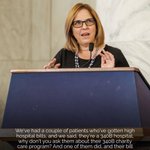
“We've had a couple of patients who've gotten high hospital bills, and we said, they're a 340B hospital, why don't you ask them about their 340B charity care program? And one of them did, and their bill went away.”
Terry Wilcox, Chief Patient Advocate of Patients Rising, shared this experience during the 2026 State of the Patient Summit on Capitol Hill.
It raises an important question: How many patients are paying medical bills they might qualify for assistance with simply because no one told them what help was available?
The exchange was part of a larger discussion about the 340B drug discount program, including whether hospitals are doing enough to ensure the patients they serve benefit from it.
Hear the conversation from the Summit in the latest episode of the State of the Patient podcast: hubs.ly/Q04Cf5cl0

A hospital can qualify for a federal drug discount program based on the patients it serves, yet the financial benefits don't necessarily flow to the hospitals caring for the greatest number of patients in need.
That's one of the concerns raised by Dr. Anthony DiGiorgio, a neurosurgeon at UC San Francisco, during a discussion about the 340B program at the State of the Patient Summit.
The conversation explored how hospitals generate revenue from discounted medications, why some health systems benefit more than others and what proposed reforms could mean for patients.
Hear what Dr. DiGiorgio and fellow panelists had to say in the latest episode of the State of the Patient podcast.
Listen to the episode: hubs.ly/Q04Cf4dW0

1
2
81
The next medical milestone may hit a wall.
A new federal proposal intended to protect U.S. national security could have unintended consequences for patients waiting on the next generation of treatments.
The Treasury Department wants to restrict certain American investments in biotechnology overseas, but its proposed definition is broad enough to include medicines, vaccines and promising new therapies.
Patients Rising supports protecting American interests, but national security policies must be precise enough to avoid creating unnecessary barriers to medical innovation.
Terry Wilcox, Chief Patient Advocate of Patients Rising, is calling on Treasury to reconsider how broadly the restrictions are written before the rule is finalized.
Read more about what's at stake for patients and why Patients Rising is speaking out: hubs.ly/Q04Cf3k70

Medicare policy should make cancer care easier, not harder. Thank you @RepRonEstes for joining colleagues from both parties in asking @CMSGov to withdraw its fixed-dose combination proposal.
2
104
Thank you @RepBrianJack for standing with Georgia patients and urging @CMSGov to withdraw a proposal that could slow access to newer, less invasive cancer treatments. hubs.ly/Q04BSwQw0

71
Patients fighting cancer shouldn't lose access to options that spare them hours of treatment time. Thank you @RepYoungKim for signing the bipartisan letter asking @CMSGov to drop its fixed-dose combination proposal.
60
Cancer care is hard enough. Thank you @RepMarkAlford for signing the bipartisan letter urging @CMSGov to withdraw its fixed-dose combination proposal and keep less burdensome options within reach. hubs.ly/Q04BSx3k0
43
Thank you @RepJuliaLetlow for putting patients first and asking @CMSGov to reconsider a policy that could put less invasive cancer treatments out of reach.
47
Patients count on improvements that make treatment faster and less invasive. Thank you @RepHouchin for signing on to ask @CMSGov to withdraw its fixed-dose combination proposal.
42
For patients in rural communities, a treatment given closer to home can save hours of travel. Thank you @RepDavidKustoff for asking @CMSGov to keep those options within reach. hubs.ly/Q04BSw9Z0
1
109
Medicare policy should make cancer care easier, not harder. Thank you @RepJamesComer for joining colleagues from both parties in asking @CMSGov to withdraw its fixed-dose combination proposal.
42