

Rootooba is a food and feed based platform that offers evidence-based and uniquely tailored solutions in diverse contexts across the agricultural value chain.
Kenya
Joined November 2018
- Tweets3.4K
- Following3K
- Followers5.3K
- Likes12K






Pinned Tweet
This September, Kenya will proudly host the GLOBALG.A.P. TOURSTOP, a high-level, three-day event scheduled for 23–25 September 2025, in Nairobi. With an agenda centered on food safety, smart assurance tools, aquaculture and inclusive market access, the TOURSTOP will unite local and international actors across private, public, and development sectors. Register today to reserve your spot: rootooba.com/globalg-a-p-202… #GGTour

Heroes are rooted.
This Mashujaa Day, from farm to mouth, we celebrate the people who keep Kenya's food systems moving - the farmers who cultivate our land, the traders who connect markets, and every hand that helps bring food from the soil to our plates.
Our name, Rootooba, is rooted in rotuba, the Swahili word for fertility. And where there is fertility, there is life, growth and the promise of a better future.
Today, we honour the people at the roots of it all.
Happy Mashujaa Day!
#MashujaaDay #MashujaaDay2026 #Rootooba #FromFarmToMouth #FoodSystems #Agriculture #Kenya

Feed is one of the biggest costs in poultry production. But what if the solution lies in rethinking the ingredients we use?
This Thursday, 22 October 2026, join @ATLTExpo for a webinar exploring alternative feed ingredients, smarter nutrition strategies and locally available resources that could help make poultry production more affordable, sustainable and resilient.
Register to join the conversation:
us06web.zoom.us/meeting/regi…
#PoultryNutrition #SustainableAgriculture #Rootooba

A Kenyan meat processor had a specific ask for a visiting U.S. delegation: 100 tonnes of non-GMO sorghum.
During the NASDA (the National Association of State Departments of Agriculture, representing the top agriculture officials of all 50 U.S. states) delegation's visit to Kenya in August, @FarmersChoiceKE explained one of its biggest constraints: animal feed. Maize and soya are costly and difficult to source, and feed can account for close to 70% of a pig farmer's production costs.
The company identified a potential starting point: a trial of approximately 100 tonnes of non-GMO sorghum. It also shared how addressing raw material sourcing constraints could create room for significant growth.
The volume may be modest, but the insight is worth considering: trade opportunities don't start with what a country wants to sell. They start with what businesses actually need.
This is an important consideration in the NASDA project, implemented in Kenya by Rootooba, as engagements with Kenyan agribusinesses explore potential demand for U.S. agricultural products, including soybean meal, distillers grains and sorghum.
For those working in agribusiness, where do you see the biggest gap between what Kenyan businesses need and what actually reaches them?
#USAgriculture #USKenyaTrade #AgriculturalTrade


From Chemistry to Commerce: Ensuring Authenticity & Building Trust in Africa’s Food Systems
How can science help strengthen trust, authenticity and safety across Africa’s food systems?
Join the @ATLTExpo Insight Series on 25 September for a conversation exploring how scientific testing and authenticity can support safer, more trusted food systems across the continent.
If you work across food systems, laboratories, trade, quality assurance or related fields, this is a conversation worth joining.
Register at :atlt.foventa.africa/from-che…

What if Africa’s food systems don’t have a solutions problem but a connection problem?
Knowledge exists. Capital exists. Markets exist. Policies exist. Innovations exist.
So, where’s the disconnect?
Perhaps the challenge isn’t doing more, but connecting what already exists.
What do you think is the biggest disconnect?
#FoodSystems #AfricanAgriculture #Rootooba


Rootooba retweeted

Rethinking Agricultural Extension Model:
Kenya urged to review agricultural extension services
Stakeholders seek a more farmer-centred extension model
US model links farmers to research, expertise and markets
Counties and private sector key to Kenya’s extension system
#CitizenMondayReport
Kenya has the institutions. What it needs is the wiring.
That was one of the powerful ideas shared today as the Rootooba team and NASDA delegation engaged Kenya’s university leadership on the future of agricultural extension.
The conversation focused on a critical question: How can universities become a stronger link between agricultural research, innovation, counties and the farmers who need that knowledge most?
Speaking during the engagement, Dr. Julius Kirimi Sindi observed that Kenya has the institutions but lacks the “wiring” to connect them effectively.
And that became the heart of the conversation.
What role can universities play in a functional Kenyan agricultural extension model?
Where can they add value? What should they do, and what should they not do? What would universities gain from being part of the system?
The discussion explored the connective capacity of universities, recognizing that counties cannot carry the entire extension function alone, and that universities can potentially help bridge research, knowledge, technology and producers.
The engagement also opened space to explore lessons from the U.S. university-based extension model, bringing together NASDA’s experience and Kenya’s own institutional realities.
For Rootooba, as the Kenya implementing partner for the NASDA project, this is at the heart of building stronger agricultural systems: not creating new institutions, but strengthening the connections between the ones Kenya already has.
Because sometimes, the missing piece isn't another institution. It's the connection that makes the institutions work together.


As part of the ongoing NASDA engagement in Kenya, the Rootooba team had the opportunity to join the NASDA delegation for a weekend of exploring Kenya’s livestock and wildlife landscape.
The delegation visited Ol Pejeta Conservancy for an overview of livestock–wildlife integration, followed by a game drive across the conservancy.
Today, the team visited the animal orphanage, getting an up-close look at some of the rescued animals and the work involved in giving them a safe second chance.
From agricultural systems and trade discussions to Kenya’s unique conservation landscape, the NASDA delegation continues to experience different facets of the country, creating space for learning, connection, and shared experiences along the way.
@OlPejeta @NASDA #WildlifeConservancy #Agriculture #Kenya


From policy conversations to seeing the value chain in action.
Today, the NASDA delegation, together with Rootooba and USDA, visited Farmer’s Choice to get a closer look at Kenya’s integrated pork and beef value chain from production and sourcing to meat processing, food safety and value addition.
The field visit offered the delegation an opportunity to see firsthand how a Kenyan agribusiness is building an integrated value chain while maintaining standards that support food safety, quality and market access.
The NASDA delegation appreciated the work being done across the value chain, while Farmer’s Choice highlighted opportunities where technology and traceability can further strengthen the sector.
And that is where the conversation gets particularly interesting.
Better traceability can mean better information across the value chain. Better technology can support efficiency, transparency and stronger connections between producers, processors and markets.
These are the kinds of practical exchanges that can turn agricultural dialogue into opportunities for technical collaboration, innovation and stronger U.S.–Kenya agricultural trade.
From the boardroom to the processing floor, the NASDA engagement is bringing the conversation closer to where agricultural value is actually created.
@USDA @ted_mckinney @USEmbassyKenya #USKenyaAgriculture @FarmersChoiceKE


Following this morning’s engagement with the Council of Governors(CoG), the NASDA delegation continued the conversation this afternoon at Tribe Hotel, Nairobi, bringing together senior U.S. agricultural leaders and key Kenyan public and private sector stakeholders for a Kenya–U.S. Agriculture, Trade and Investment Roundtable.
Convened through the NASDA project implemented in Kenya by Rootooba, the roundtable looked beyond individual transactions to the bigger question: how can Kenya and the United States build a stronger, more strategic and sustainable agricultural trade relationship?
Opening the discussion, Ms. Regina Ombam, Principal Secretary, State Department for Trade, Ministry of Investments, Trade and Industry in Kenya, pointed to the structural imbalances shaping global trade and the growing difficulty of navigating these tensions through existing systems.
Her message was clear: the opportunity is to think beyond market access.
Kenya and the U.S. can explore more strategic frameworks, deeper engagement and long-term approaches that create value for both sides.
That thinking shaped the conversation around:
· Agricultural trade & market access
· Investment & value addition
· Food systems & supply chains
· Hospitality, tourism & agricultural demand
· Innovation, technology & producer engagement
With NASDA, USDA, the Kenyan government, private-sector and industry stakeholders around the table, the conversation connected policy with business, producers with markets, and agricultural opportunity with investment.
For Rootooba, this is at the heart of the NASDA project: creating the connections, information and structured engagement needed to turn U.S.–Kenya agricultural potential into practical opportunities.
@USDA @cwgkamau @wagakimuchiri @ted_mckinney #NASDA #USKenyaAgriculture #AgriculturalTrade


Stronger agricultural trade starts with stronger connections.
Through the NASDA project in Kenya, Rootooba is helping create those connections, bringing together Kenyan counties and U.S. state agriculture departments through the National Association of State Departments of Agriculture (NASDA) to explore practical opportunities for collaboration.
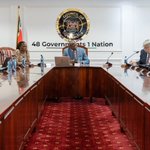
Today, that conversation took place at the Council of Governors, with a focus on one big opportunity: how U.S. state-level agricultural experience can support Kenya’s county-level agricultural transformation and create stronger pathways for trade.
Chaired by Hon. Kizito Wangalwa, Director of Committees at the Council of Governors, the engagement brought together the CoG Secretariat, with H.E. Kenneth Lusaka, EGH, Chair of the CoG Agriculture, Livestock and Cooperatives Committee and Governor, Bungoma County, joining virtually alongside H.E. Mutahi Kahiga, Vice Chair of the CoG Agriculture, Livestock and Cooperatives Committee and Governor, Nyeri County.
Five potential areas of collaboration emerged:
oPeer exchange between NASDA member states and Kenyan counties on extension, veterinary services and food safety.
oAgricultural data - strengthening producer surveys and agricultural statistics.
oStructured dialogue between Kenyan county agriculture leaders and U.S. state agriculture officials.
oTrade & standards - exploring certification, sanitary standards and buyer linkages for county value chains.
oA standing framework through a proposed Memorandum of Cooperation between the two associations.
The opportunity here goes beyond knowledge sharing. It is about connecting expertise to local needs, producers to better support systems, and agricultural value chains to new markets.
The CoG Secretariat has confirmed its readiness to advance the technical discussions.
A conversation today. Practical partnerships tomorrow.
NASDA - National Association of State Departments of Agriculture USDA Council of Governors Kenya
@NASDA @USDA #USKenyaAgriculture #AgriculturalTrade #CouncilOfGovernors #Agriculture #ExtensionServices #FoodSystems #TradeAndInvestment


The National Association of State Departments of Agriculture (NASDA) will be present at the Africa Food Systems Forum 2026 in Kigali, Rwanda (1 - 4 September 2026). NASDA represents state agriculture departments in all 50 U.S. states, with long-standing work in livestock systems, animal health and agricultural trade.
NASDA President Doug Miyamoto, Director of the Wyoming Department of Agriculture, will join the panel "Transforming Africa's Livestock Economy: Market Linkages, Value Addition and Inclusive Growth," hosted by the Hailemariam & Roman Foundation.
Date: 3 September 2026
Time: 09:30–11:00AM (CAT)
#AFSForum2026 #AfricaFoodSystems #Livestock #AgriculturalTrade

Agriculture Sector Network (ASNET) invites you to its July Monthly Forum, scheduled for Tomorrow, Friday, 31 July 2026 At 8:00 AM – 9:00 AM with a focus on FINAS 2026 - Closing the AgriFinance gap .
During this session, Maarten Susan, Team Lead, Moving Frontiers & Co-Chair, FINAS Secretariat, will share key highlights, insights, and recommendations from FINAS 2026, focusing on practical approaches to closing the agricultural finance gap and strengthening financing opportunities for Kenya's agriculture sector.
Link: us06web.zoom.us/j/8446135569…

From 30 June to 2 July 2026, Nairobi became the hub where governments, financiers, agribusiness leaders, researchers, civil society, and development partners came together to reimagine the future of Africa’s food systems.
Over three transformative days, stakeholders engaged on Policy & Coordination, Innovative and Inclusive Financing Models, how to strengthen Partnerships & Market Engagement, and advance finance for Trade, Investments, and Multilateralism.
This was more than a summit, it was where ideas met action, and where Africa’s agri-food financing transformation began to take shape.
#FINAS2026
Rootooba retweeted

Strategic partnerships are the engine behind sustainable agri-food systems.
At the #FINAS2026 media launch today, our partners - @TharakaUni , #FinanceinMotion, @IFAD , Netherlands Food Partnership #NFP, and #GODAN - unveiled the key sessions they will be leading at the summit from 30th June - 2nd July 2026. 👇
🌍Finance for green, inclusive, and resilient economies.
💼Trade, investments, and multilateralism: rethinking coalitions for impact.
Together, let’s shape the future of agri-food financing in Africa. #Agrifinancing #ClimateFinance


Rootooba retweeted
Asanteni Sana
A huge thank you to all our partners, the media and key stakeholders for joining us at the #FINAS2026 Media Launch in Nairobi yesterday.
The message from this event was crystal clear: Collective action is the only path to transforming how Africa’s food systems are financed.
The stage is set. The partners are aligned. Let’s get to work.
Registration is live: finasafrica.org/finas-2026/


Rootooba retweeted
Dr. Sophia Baumert, Project Manager, Sustainable Agricultural Systems and Policies (AgSys), #GIZKenya:
“FINAS began as a national platform in 2024 and has advanced into a continental forum advancing agri-systems dialogue from a pan African perspective. The platform holds all actors accountable and as #GIZ, we are coming to drive the dialogue as process facilitator and foster stronger collaborations towards our common goal. We look forward to a strong FINAS 2026 summit and rally more partners to join us in this cause.”
#FINAS2026
Registration is live: finasafrica.org/finas-2026/

Rootooba retweeted

Day 1 of the 3-day kick-off meeting for TRACE (Tackling the Risks of Aflatoxins and Climate Effects on Child Health in Africa).
Led by #KWTRP, TRACE is a 3-year, Wellcome Trust-funded collaboration bringing together partners across Africa and beyond.
This meeting brings together investigators, collaborators, policymakers, and key stakeholders in one room to align priorities, shape a shared vision, and map how the work moves from research to real-world impact.


Rootooba retweeted
Empowering Africa through the FINAS Dialogue means creating a results-driven platform that transforms commitments into measurable impact. FINAS has positioned itself as the go-to convening platform driving Africa’s food systems transformation by unlocking innovative solutions and directing capital toward scalable, high-impact opportunities.
Across the continent, agrifood systems face pressing challenges: climate change, financing gaps, market inefficiencies, and limited access to technology. FINAS responds by bringing together policymakers, financial institutions, development partners, private sector leaders, and innovators to align strategy, policy, and investment.
The Dialogue goes beyond thought leadership. It catalyzes partnerships, strengthens bankable pipelines, de-risks investments, and promotes inclusive financing models that empower SMEs and agrifood enterprises. By bridging the gap between innovation and capital, FINAS accelerates sustainable growth across the entire value chain.
As Africa advances toward resilient and climate-smart food systems, FINAS remains central to shaping solutions, mobilizing resources, and delivering real, scalable transformation that benefits communities, markets, and economies continent-wide.
#FINAS2026 #FoodSystemsTransformation #SustainableFinance #AfricaAgriculture #ImpactInvestment


