
Digital Transformation, IT Risk, Cybersecurity, Data Privacy, Technology, Operations | Strategic Thinker, Leader, Doer | COO, CIO, CTO, CISO
Joined January 2015
- Tweets7.2K
- Following14.1K
- Followers51.3K
- Likes9K






Pinned Tweet
LLMs are next-token-predictors-based-on-training-data and you can hype it however you want, they can only predict the next token. By virtue of the underlying stats, they get things ok/avg often, fail spectacularly sometimes, and come up with exceptionally good output sometimes




US originated crypto scams remain allowed, for an obvious reason

Trump to tout crackdown on overseas crypto scams reut.rs/4i1n3HC reut.rs/4i1n3HC


Sebastien Meunier retweeted

Not sure who needs to hear this but....
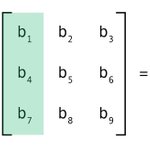
An LLM doesn't "understand" anything. It is a statistical model that spews out tokens based on probabilities calculated through massive matrix operations and context, not an understanding of the subject matter.
An obvious manifestation of how out of touch AI hypers are: their obsession with personal AI assistants. as if there was anything to automate in the life of real people. lol


You can't be "cruel" to a software. They lost their minds

Exclusive: Anthropic is updating its usage policy for the first time in over a year. The new rules prohibit sustained "abusive or cruel behavior" towards Claude & add new restrictions about propaganda campaigns, surveillance & weapon development. theverge.com/ai-artificial-i…

Sebastien Meunier retweeted

There is no "super intelligence", there is not even "artificial intelligence". These are just marketing terms.
In reality, all of AI ist just a bunch of programs, written by humans, and executed on a computer.
Thus all risks caused by AI are the result of *human* activity.

1/ Why do so many people believe LLMs "think" or "understand"? Because nobody has a test for "thinking" that goes beyond behavior, even for other humans. You never check someone's neurons. You listen to what they say. So people evaluate LLM by what they say, not what they are
5/ "But agents act on their own now". No. A model runs when you call it, produces an answer, stops. Agents can be tasked by humans to work in a loop to achieve some goals, same as a VBA macro that reruns Solver until it converges. LLMs have zero autonomy on their own
This guy should go to jail. One day he says AI is going to kill all humans, the next day is so excited to have Claude work in a biolab on genomics. What level of psychosis is this?? WTH

Today we announced the Claude-led discovery of a molecular machine that we suspect could represent a new gene editing mechanism. Its precise function, biotechnological utility (if any), or level of significance is not yet clear, but at minimum it is work I would have been proud to do as a PhD student. The work was done mostly, though not entirely, by Claude: our life sciences team suggested a broad area of research, Claude read through the literature and a bunch of genome data and discovered something interesting, then Claude proposed experiments to verify the discovery and our team carried them out.
It’s easy to dismiss this as a one-off or curiosity, but we’ve repeatedly seen a pattern where AI performance in new intellectual domains goes from weak to superhuman in a matter of a few years. In 2023 models struggled to do math at the level of an average high-school student. In 2024 they started to do well on math competitions for the best high-schoolers in the country, in 2025 they started to solve minor open problems, in early 2026 more significant open problems, and in late 2026 they are beginning to solve the top few open problems in all of mathematics. We believe AI for biology is on a similar exponential trend.
The main difference between biology and mathematics, of course, is that math can be done purely theoretically, while biology requires experimentation. Some have used this to draw the conclusion that AI’s utility in biology will be limited. We think this is wrong. As we’ve demonstrated today, humans can collaborate with AI to perform the experiments, validate key results in a few weeks and, if necessary, work with the AI to iterate on what they find. Eventually it may even be possible for Claude itself to safely perform the experiments by autonomously controlling lab equipment, with appropriate safeguards in place, but we aren’t doing that today (our lab is also a BSL1/BSL2 facility that doesn't handle materials dangerous to humans).
More broadly, biomedical advancement has many stages — from fundamental biology discoveries, to translational research, to drug discovery, clinical trials, and finally the actual delivery of medicines and health care to patients. We are also interested in these later stages, but even simply accelerating the first stage of fundamental biological discoveries has the potential to speed up and broaden the entire pipeline. Improving our understanding of biology and sharpening biologists’ tools can drive forward all of the later stages, for example by identifying new drug targets, finding new therapeutic modalities, allowing for more precise measurement, and speeding up the experimental loop which itself further accelerates our understanding of biology. This will not in itself speed up clinical trial times, but if it succeeds it could greatly increase the number of promising candidates that go into the pipeline — an increase in throughput even though latency remains.
In Machines of Loving Grace, I wrote about AI’s potential to “cure most diseases in 5-10 years” — a goal that sounds impossible, but one I believe is just barely possible if AI is applied to every stage of the pipeline. The first step is showing that AI can first help with, and then drive, biological discoveries.
Claude’s discovery is the latest in a line of related prior work that goes back decades, beginning with systems like CRISPR, and continuing with discoveries like the bridge recombinase and VIPR in the past few years. Recently, there has been heightened interest in systems based on reverse transcriptase (RT) enzymes, the enzyme underlying the system Claude identified. And most recently, a Stanford team working independently described a novel RT system with an associated non-coding array that is in some ways similar to the one Claude found, though they are distinct systems that evolved independently from each other. I believe that we’re at the very beginning of finding such systems and developing them into powerful tools for biotechnology.
I’m proud of the resources Anthropic has invested in accelerating the public benefits of AI through the life sciences, and we’re aiming both to grow our life sciences team and to work with other scientists to extend this approach to a broad range of problems. If you have a proposal for a research collaboration or are interested in joining our life sciences team, please reach out.
Did you know that an "agent"
within a LLM solution, is a feature, a system prompt that the main session can hand a sub-task to
outside of a LLM solution, is a software (script or more complex executable) that can call an LLM and other tools to perform what it was coded to do
Lol 🤣 It only works because they added rule-based libraries & interpreters on top of the LLMs components, so yeah traditional software can do maths, and LLMs cannot
