

Co-founder of The Long Now Foundation--which takes no sides. In this forum, as a private person, I do take sides occasionally.
Sausalito, CA
Joined December 2015
- Tweets14.7K
- Following542
- Followers56.9K
- Likes55K









NICE application of a lesson from history to current AI issues.

I've been reading @stewartbrand’s Maintenance: Of Everything, and I hit a passage that felt analogous to the current AI backlash from certain sectors or professions, and another insight I don't see many people talking about.
Back in the late 1700s, a French inventor named Honoré Blanc figured out how to use gauges to make musket parts interchangeable. Turns out, they became the best and easiest to repair guns in Europe. The local gunsmiths' guild hated it. They rallied around the romantic idea of "craft," smashed his workshop, and killed interchangeable parts in France.
Usually, the conversation is about the machine and the workers it displaces, similar to the recent backlash about AI from mathematician societies. What Stewart adds to the conversation though is the customer.
In the case with the interchangeable gun parts in 1700s France, the guild protected their own members while putting the much larger population of customers at risk, forcing French soldiers to use expensive, shoddily made guns that were difficult to repair. Eventually, mechanization and industrialization led to countless breakthroughs across every industry that infinitely improved the quality of life for everyone everywhere.
I'm not saying AI won't cause massive disruptions across every sector. What I am saying is that slowing down to appease a small subset of guild members would cause historian Ken Alder's "technical amnesia" and delay the countless improvements AI will enable to improve human quality of life for everyone.


You can set in motion a whole new field of research.

Before we launched the Field Building Accelerator, we needed early field builders to test the model. This summer, @NikoMcCarty, founding editor of @asimovpress and Fellow at Renaissance Philanthropy, launched the Hyperspectral Biology Fund.
The idea is to engineer organisms whose molecular states can be read by hyperspectral cameras on drones, or even satellites in orbit. A team at MIT had shown it could work by detecting engineered bacteria from 90 meters away. But the field was missing almost everything else: affordable cameras, public datasets, good algorithms, and people working on it.
So Niko did what field builders do. He named the field, laid out the open problems, created a call for applications, and funded scientists ready to start. Small, fast grants enabled Niko to build, and now he’s looking to raise funds to start a nonprofit research group in this space.
You can learn more about hyperspectral biology here: experiment.com/programs/hype…
Do you have a field in mind? Apply to the Accelerator by December 15th at fieldbuilding.org


Why I recommend the Kindle version of my MAINTENANCE book…
• Images in color
• Images expandable for detail
• Set text size most readable for you
• Footnote links are live--see the original source of things
amazon.com/dp/1953953492/

I wonder how true this statement is...
"The more time invested in maintenance, the better all of life is."
Anyone?...

Reading the "Maintenance of: Everything" by @stewartbrand helped me recalibrate where I should spend my time and energy.
The more time invested in maintenance, the better all of life is.
For me, and everyone, and everything I love.
Can't wait for part two.
In this video you can pick up my MAINTENANCE book and page through it, read the text and study the photos, just like in a bookshop.

The new Stripe Press website is a masterclass in making the user want the physical object by making the digital version sublime... I especially love the page turning noises! stripe.press/book/maintenanc…

Help build the field of building fields. A great project.

BIG NEWS!
For the past few years, we've given scientists budgets so they can fund their peers with small, fast grants. Today, we're going bigger.
We're opening up a call to find and fund emerging "field builders"—people with the ambition and curiosity to kickstart a new field of science and technology. You'll get a budget of $70,000 to regrant (up to $10,000) out to projects and ideas and join a community of explorers.
Do you have an idea for a new field of science that *should* exist? Please apply!
A good "ought" here.
Related to my: "Voice your opinions strongly; hold them loosely." (In other words, talk like a hedgehog, think like a fox. You'll be understood more often and right more often.)

Both left and right challenges to the founding "stem from a form of pessimism—but that neither is quite pessimistic enough... we ought to be absolutists about right and wrong, but relativists about praise and blame."
papers.ssrn.com/sol3/papers.…
1
28
2,989
This is an outstanding essay on the nature and prospects of AI.

I'm absolutely thrilled to have written this article for Long Now. It's about AI and time: how we got here, and what we can do now, when all of the pace layers are disrupted at once by an influx of new minds.
I wrote this over the summer. At the time, it seemed maybe too weird, like people wouldn't believe or understand what I was saying. And of course, everything changes so fast that it's hard to imagine writing something about AI that far in advance and have it still make sense. But I think the events of the last few months have only made it more relevant.
The Long Now Foundation has been an inspiration to me for a decade now, and has changed my life in countless ways. I'm incredibly grateful and honored to be among so many of my heroes and friends and colleagues represented in this issue of Pace Layers and Long Now Ideas. I wouldn't be here in San Francisco, here on Twitter, or here in the field of artificial intelligence if not for this community.
The conversation about AI has been fractious. It's very hard to think about how to fit this sudden, disruptive, technological change into the 10,000-year view. I hope I provide some insights, or at least some new angles for the conversation. It's scary to go on the record, especially about something that will affect everyone, and affect the rest of history. If I'm wrong, I'm wrong forever!
Please read and enjoy, and post quotes and screenshots, and buy Pace Layers Issue 3 so you can have a permanent hard copy. I have always wanted to be a part of the 10,000-year library, so I have to be serious for once and try to stand for something. Let me know what you think.
It's weird to be on a Forbes list (#192) with so many billionaires.
(But nice to be on one with Danny Hillis and Jacqueline Novogratz.)
forbes.com/sites/alexknapp/2…


All my work online for a guaranteed 100 years.
It's a new service being offered by WordPress. They tried it out on me. I think it's great.
Explained here: wordpress.com/blog/2025/02/1…


This is such a gift to the world. All of @stewartbrand’s work: writing, festival shenanigans, & 50,000(!) photos, dating back to the 50s: stewartbrand.org/
(Where else could you find Marshall McLuhan, Brian Eno, and Marlon Brando in one place!?)


An even more thorough account of the process of eliminating disease mosquitoes. It would a Jonas Salk scale event to make it happen.
(By the way, re birds, the native birds of Hawaii are going extinct from avian malaria because of alien-invasive mosquitoes.)

Since my original post below got a bit of traction, I've been doing a bit of research with Grok on the costs of completely eliminating mosquitoes that attack humans using gene drives. Bottom line is, this would probably save 2/3rds to 3/4ths of the money we currently spend for only partly effective insecticide based control methods in the United States, but would totally eliminate mosquitoes rather than just cutting back on them.
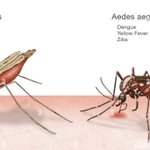
For those tuning in late, gene drive involves the release of male mosquitoes that generally only have male descendants; the "gene drive" part uses advanced techniques so that instead of half of the offspring inheriting this property, almost all or all do. Eventually the population disappears for lack of female mosquitoes.
Again for those tuning in for the first time, most mosquito species don't attack human beings; there are 3500 species of mosquitoes worldwide but only a couple hundred, most of them invasive, are of interest because they bite humans and spread disease, not to mention just raw discomfort and an inability to stay outdoors without covering yourself in DEET. The rest we don't care about. Also, only female mosquitoes bite humans; the males do not, so releasing males doesn't itself add disease carriers to the environment.
To some of you, doing this is already obviously good, but I'll mention that in addition to the vast amount of misery they cause, mosquitoes are by far the most dangerous animal to humans, killing over a million people a year by spreading disease, far more than any other animal including human beings themselves in wars and other violence.
Also, yes, it's been studied, and no, there's almost certainly no real impact on the environment from doing such a thing; for example, no species we're aware of feeds exclusively on mosquitoes. Also, in my opinion, it would be worth it even if such an impact existed. Human life is worth too much.
Anyway, I'm sure everything I've learned by doing this was already known by people in the field (probably there's some survey paper that discusses all this far better than my crappy couple of hours of work; apologies to actual experts) and the cost estimates below should be taken with a pound of salt because the reliability of AI systems for such research is not always the best, but given that:
After working for a while and going back and forth, Grok estimated for me about $400 million a year for the first decade of a US only program, covering the R&D costs for a large number of species that would each need an individual gene drive designed, plus factories for breeding gene drive males for release, and a budget of something like $200 million a year after the first decade (at a point when the mosquitoes would be largely gone from the United States) for continued surveillance to find re-emerging populations (usually because of accidental importation) and to eliminate those re-emerging populations.
This sounds like a great deal of money, but currently we may be spending close to $700 million a year in government money alone for pesticide based mosquito control in the US (exact numbers are hard to come by) not to mention the cost of health care for people who get mosquito borne diseases and private costs from mosquito control, repellent, etc, so this would plausibly save a great deal of money.
Some people asked about why this is better than just releasing sterile males, which does reduce the population for a time. Based on my back and forth with Grok, the costs of doing this are likely dramatically lower than the costs of doing traditional sterile male releases, because those only reduce but never really eliminate populations and require continuous mass production and release of sterile males forever at great expense.
One would probably want to start extending such a program worldwide, but I presume that if the US began it, we would almost certainly share know-how and gene drive insects with other countries; after all, if reservoirs overseas disappear, it ultimately reduces our own costs because we can eventually stop doing surveillance and re-elimination for mosquito species that are completely gone. That means that much of the R&D costs would not need to be repeated.
Unfortunately I expect that large chunks of Europe would opt to retain their mosquitoes forever because of irrational fears of such engineering, probably inducing costs for the rest of the world for quite a while, but absent large reservoirs of diseases like dengue and zika and malaria and chikungunya etc. etc. we might see the effective extinction of those illnesses worldwide anyway.
There were some other interesting discoveries here which I also assume actual experts in the field already knew. In the computer models Grok and I examined, the speed to crash any given population of mosquitoes depended far more on the efficacy of the gene drive itself and less than you would think on the numbers of gene drive males released. One does need to produce enough such insects to cover a lot of the country as mosquitoes don't travel all that fast on their own, but it's not nearly as bad as one might naively expect provided that the engineering work up front is good enough.
All this of course assumes fairly conventional costs for designing the gene drives in question. The use of AI would almost certainly improve the work, speed it up, and reduce costs further.
teapawt.org/perrymetzger/status/21…
I’ve spent some time on the issue of eliminating the human-disease mosquitoes. It is highly worth doing.
Let them go the way of the horrible Guinea worm.

Only a tiny fraction of the world’s mosquito species prey on humans. All of these are invasive across essentially their entire range, having tagged along with humans as we moved around the world. Multiple careful studies say that eliminating these species would have little or no impact on the environment. However, it would save at least a million human lives a year, and get rid of a constant source of discomfort that prevents people from safely spending as much time outside as they would prefer. Malaria is only one of dozens of diseases, many potentially fatal, spread by mosquitoes. Gene drives can safely and relatively inexpensively eliminate these parasitic insects; we can create male mosquitoes that can only have male offspring and which then crash the population. It’s well past time that we did it.
Indeed. The warning in biotech in those days was “If you surprise a bioethicist, the answer is ‘No’”
But it didn’t help if you kept them up to date. Their answer was still “No.

The bioethics circle jerks during the Human Genome Project, which were allocated 5% of the project's funding, were a total waste of time.
They had countless conferences and workshops imagining bad things that could happen like punitive health insurance rates based on genetic risk, none of which actually came to pass. Meanwhile all the real issues that arose from ubiquitous DNA data, like accidentally doxing your criminal relatives with your own 23andMe data, were never imagined.
It's a condemnation of the precautionary principle. Philosophers can make up all sorts of hypothetical scenarios in a vacuum but it's nothing like actually trying things and seeing all the weird second and third-order consequences that emerge and *then* dealing with the unwelcome ones.
Xerox, if they still existed, would be even more upset by what I've written recently about another PARC project. It will be part of the next volume of my MAINTENANCE book. It is online now, here:
books.worksinprogress.co/boo…


Far the best and most complete online version of my 1972 article titled "Spacewar: Fanatic Life Among the Computer Bums" in Rolling Stone starts on Page 39 of my 1974 book, Two Cybernetic Frontiers:
wholeearth.info/p/ii-cyberne…


> The event was organized by Rolling Stone writer @stewartbrand
Stewart were you writing frequently for Rolling Stone at some point? Will be hunting this one down.
The photograph by Annie Leibovitz shows the first esports event, "The Intergalactic Spacewar Olympics Free-For-All," underway.
I'm in the photo. So is the first employee of Amazon.com. Can you identify him? (Answer below.)
1
4
672

Mirene has a new owner—Matt Mullenweg @photomatt ! She has new life (and so does he).
Price down, visitability up on the historic tugboat Mirene that I and wife Ryan customized into a perfect home. We lived and cruised on her for 40 years. Price is now $1 million WITH BERTH in the houseboat community. You can visit her at the Sausalito Boat Show Sep. 25-27.
compass.com/homedetails/13-S…

I strongly agree with @kevin2kelly 's
Arguments in Favor of AI Fair Use
kevinkelly.substack.com/p/ar…
