

ZWO (Suzhou ZWO Co., Ltd.) is the worldwide leading supplier of astrophotography equipment and service.
Suzhou, China
Joined October 2018
- Tweets2.1K
- Following569
- Followers9.2K
- Likes2.3K






Pinned Tweet
Meet Seestar S50 Pro — The Next Evolution of Smart Astrophotography.
Seestar S50 Pro takes smart astrophotography further with a 50mm aperture, 4K Dual-lens system, and 4-element apochromatic lens. Capture finer deep-sky detail with the 260mm telephoto camera, or switch to the 63° wide-angle view for the Milky Way, star trails, and more. With equatorial mode support, 128 GB storage, and up to 9 hours of runtime, exploring the night sky has never been this effortless.
✅ 4K Dual-lens System — 880mm Telephoto + 35mm Wide-Angle
✅ 50mm Aperture & 260mm Focal Length — Capture Finer Deep-Sky Detail
✅ 4-Element APO Optics with ED Glass — Sharper, Cleaner Stars
✅ Milky Way & Star Trail Imaging — More Ways to Capture the Night Sky
✅ 10,000mAh Battery, Up to 9 Hours Runtime & 128 GB Storage
See more. Capture more. Explore further.
Seestar S50 Pro. Available now.
Grab yours: tinyurl.com/mrxje8w4
#Seestar #SeestarS50Pro #SmartTelescope #Astrophotography #Astronomy #NewArrival
Have you ever seen Saturn through a telescope? 🪐 Captured with a ZWO camera—bringing the ringed planet into view.
#ZWO #Saturn #PlanetaryImaging #Astrophotography #Astronomy #Telescope #NightSky #SolarSystem
From the factory to the remote observatory—see what ZWO astro gear can do. 🔭✨
#ZWO #Astrophotography #AstroGear #RemoteObservatory #DeepSky #Telescope #Space #NightSky
🏆 #ASIWEEK #43/2026 Winner | Alex AstroPhoto
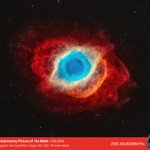
Congratulations to Alex AstroPhoto on this stunning capture of the Helix Nebula (NGC 7293)! ✨
Often called the Eye of God, the Helix Nebula is one of the closest planetary nebulae to Earth, about 650 light-years away. It’s the glowing remnant of a Sun-like star, with intricate layers of gas expanding into space.
🔭 Telescope: Takahashi FSQ-85
📷 Camera: ZWO ASI2600MM Pro
⚙️ Mount: ZWO AM5N
⏱️ Total integration: 50 hours
Detail: bit.ly/3WhSoP9
Share your image in our Facebook group with #ASIWEEK for a chance to be featured and win ZWO products!
#ZWO #ZWOAstrophotography #Astrophotography #DeepSky #ASIWEEK

🌌 Meet Andromeda: Your First Galaxy to Photograph?
About 2.5 million light-years away, the Andromeda Galaxy (M31) is our nearest major galactic neighbor. On a dark night, you may even spot it without a telescope—as a faint, fuzzy patch. The light you see began its journey millions of years ago.
And what about its future with the Milky Way? A collision was once considered inevitable in roughly 4–5 billion years, but newer research suggests the outcome is still uncertain.
Swipe through to learn why M31 is a rewarding target for beginners and how to capture it.
Your first setup doesn’t need to be complicated. Start with the equipment you have, take a test shot, and build your exposure time one session at a time.
Have you photographed Andromeda yet? Share your image or tell us what gear you’re planning to use! ✨
#ZWO #AndromedaGalaxy #M31 #Astrophotography #BeginnerAstrophotography #DeepSkyPhotography #Astronomy


❓ 42 hours beneath the stars—and the Cosmic Question Mark revealed.
Jeff Fishman captured NGC 7822, a vast emission nebula in Cepheus, about 3,000 light-years away. Look closely: its glowing clouds and dramatic pillars of gas and dust form a shape that resembles a giant question mark.
Jeff combined data collected across different nights, years, and imaging setups to bring this stellar nursery to life—a beautiful reminder that patience can reveal more of the universe, one photon at a time. ✨
📸 Credit: Jeff Fishman
🔭 Camera: ZWO ASI2600MC Pro
⏱️ 48 hours of integration
Can you spot the question mark? What does this nebula look like to you? Share your thoughts below! 👇
#ZWO #ASIWEEK #NGC7822 #Astrophotography #DeepSky #space

From Watching Apollo 15 to Building an Asteroid Hunter
Christopher Rose’s fascination with space began at home, in front of a television. His parents bought a black-and-white set so the family could watch the first Moon landing. Later, at his grandparents’ house, he watched Apollo 15’s lunar journey in color. As a boy, he imagined that by the end of the decade, people might be living on the Moon—or even Mars.
That early wonder never left him.
Living near Jodrell Bank Observatory in the UK gave Christopher the chance to visit one of astronomy’s most inspiring places. In 1990, he helped launch the Macclesfield Astronomy Society. Its first meeting drew 45 people; in time, the society grew to more than 100 members. They welcomed renowned speakers, hosted beginner sessions for children and families, and helped spark a new generation’s curiosity about the night sky.
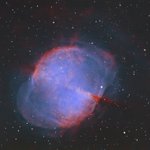
Christopher also shared his expertise beyond the society. As technical editor for Astronomy Now, he wrote about the emerging world of computer software. And while he spent decades focused mainly on visual observing, his first astrophotograph—a rough but unforgettable image of the Dumbbell Nebula—pulled him into deep-sky imaging.
His equipment evolved over the years, from an 8-inch telescope and Nikon camera to cooled CCD imaging, automation, narrowband photography, and PixInsight. After moving to the United States, he began building around ZWO cameras, starting with the ASI533MC Pro and later adding the ASI2600MM Pro, a filter wheel, and the AM5N mount.
Today, his setup includes the ZWO FF131, AM5N, ASI2600MC Duo, ASI2600MM Pro, EAF, and ASIAIR. He also uses his IT and coding experience to develop an ambitious project: an automated system to scan the sky for asteroids.
Through astronomy society meetings and beginner demonstrations, Christopher continues to share what he has learned. His advice to new astrophotographers? Take it one
#zwo #Astronomy #astrophotography #userstories


POV: Your ZWO setup is ready… and then the clouds show up...
#ZWO #Astrophotography #ClearSkies #AstroHumor #Stargazing
🏆 The 2026 ASIWEEK Q3 Winner Is Here!
Congratulations to Gianni Lacroce, whose stunning image of the Crescent Nebula and Soap Bubble Nebula has been selected as this quarter’s winner! 🎉 Gianni will receive an ASIAIR Plus 256GB.
Thank you to everyone who shared their incredible images with our community. Your work continues to inspire us! ❤️
A quick reminder: posting in the ZWO Users Group doesn’t automatically enter your image in ASIWEEK. Be sure to include #ASIWEEK so your submission is eligible.
📸 How to enter:
✅ Share your image in the ZWO Users Group
✅ Add #ASIWEEK
✅ Follow the submission rules
You could win ZWO gear and have your work featured on our official channels. We can’t wait to see what you capture next!
🔗 Join the ZWO Users Group: facebook.com/groups/zwoasius…
📖 ASIWEEK Rules: bit.ly/4fnv8oy
#ZWO #ASIWEEK #Astrophotography #DeepSky #Astronomy

A close encounter between the Moon and Jupiter!
On October 16, the Moon and Jupiter appeared side by side in the night sky—a striking celestial pairing that brings our nearest neighbor together with the largest planet in our Solar System.
Captured by Jonathan Reeves with an Askar 160 APO, ZWO ASI2600MC, and ASIAIR.
Credit: Jonathan Reeves
#ZWO #MoonAndJupiter #LunarConjunction #Jupiter #MoonPhotography #Astrophotography #NightSky

POV: The full Moon rises—and your ZWO camera is ready. 🌕
Would you stay up to capture this view?
#ZWO #FullMoon #MoonPhotography #LunarPhotography #Astrophotography #MoonLovers #telescope
Two scopes. Two filters. One target. 🌌
First light for Adam Leaković’s dual-scope setup, aimed at IC 1396 — the Elephant’s Trunk Nebula.
With two ZWO FF65 scopes working side by side, the setup captured complementary narrowband data through L-Ultimate and L-Synergy filters — making the most of every clear-sky minute.
⏱ Total integration: 5 hours
📸 Credit: Adam Leaković
Why image with one scope when you can run two? 👀
#ZWO #ZWOAstrophotography #DualScope #Astrophotography #IC1396 #ElephantsTrunkNebula #ASI2600MCPro #ZWOFF65 #DeepSky #Narrowband #Astronomy


POV: Every time the skies clear, I can’t wait to point my telescope at the stars. 🔭✨
#Astrophotography #Stargazing #NightSky #Telescope #Astronomy #ZWO
From DSLR to Deep Space: The Upgrade That Changed John Rowe’s Astrophotography
Could your camera take you beyond the Milky Way?
John Rowe (@astrorowe) began with a Nikon D3100 on a tripod, photographing the night sky one frame at a time. A small star tracker and an ASI120MM Mini helped him take his first steps toward longer exposures. Later, he upgraded to a Nikon Z6II and a 150–600mm lens—great for wide-field nightscapes and exploring the stars.
But when John wanted to capture the finer details of distant galaxies and nebulae, he realized a DSLR setup could only take him so far. Deep-sky imaging called for more precise tracking, dedicated astronomy cameras, and a workflow designed for long nights under the stars.
So he made the switch, step by step.
Today, John’s main setup pairs an Apertura CarbonStar 150 with the ZWO AM5, ASIAIR Plus, EAF, and ASI2600MC Duo. The Duo’s built-in guiding sensor means he can guide through his main telescope without adding a separate guide scope—keeping the setup compact. Mounted on a pier, the rig is ready to move into his backyard and start imaging in minutes.
Even under Bortle 6 skies, John experiments with broadband and dual-band filters to explore different views of deep space. He also keeps a Rokinon 135mm lens in his kit for wide-field images rich with surrounding stars and dust.
For John, the best part is watching each exposure appear on screen: ancient light revealing structures that have traveled for hundreds, thousands, or even millions of years to reach his camera.
If you shoot nightscapes with a DSLR, what would you want to photograph next—a wide Milky Way vista or a distant deep-sky object? Tell us below. ✨
#ZWO #Astrophotography #NightscapePhotography #DSLRPhotography #DeepSkyAstrophotography #AstroPhotography


Why astrophotography?
Because sometimes, looking up changes everything. 🌌✨
#ZWO #Astrophotography #Astronomy #NightSky #DeepSkyAstrophotography #Stargazing #Telescope #Space #Universe #Cosmos
From Seestar to a full astrophotography rig
"After starting this hobby nearly two years ago with a Seestar S50 I fell in love with the night sky and sharing it with others. The Seestar was so much fun and easy to use. I eventually stumbled upon the Seestar Facebook page and was blown away with what people were doing with editing their images. I got really into it with first learning Siril then PixInsight. One day a good friend introduced me into processing space telescope data like from the James Webb. Then I started editing data from remote telescopes of different kinds. After seeing the kind of quality you could get with amateur equipment I knew I had to build my own rig one day. At last that time has come! I will still continue to use my Seestars as they are so easy to grab and go. Finally sorry for all the clouds this will bring 😆"
Take a look at what Jason has already captured with his ZWO setup.
📸 Credit: Jason Marriott @unsolicitedspacepix
#ZWO #Seestar


What does it mean to love something for 40 years?
For Alessandro Cipolat Bares, it means continuing to look up.
His fascination with the cosmos began in the 1960s, inspired by the first space missions. In 1986, the return of Halley’s Comet gave that wonder a direction: astrophotography. He began with film, capturing Hyakutake and Hale–Bopp on a Nikon FM2. Over the years, the cameras changed—from film to CCD, DSLR, and CMOS—but the reason he goes out under the stars never did.
Today, Alessandro photographs from the mountains of Italy and beneath Namibia’s dark skies. He welcomes the quiet, the cold, the long winter nights—and even the unexpected wildlife nearby. For him, astrophotography is more than collecting images. It is being present with the night sky, feeling connected to nature, and remembering the beauty of the world we call home.
His journey has taken him from film to a ZWO setup built around the ASI2600MC, ASIAIR, and AM5. The technology has made capturing the sky simpler and more portable, helping him spend less time managing equipment and more time beneath the stars.
Forty years on, Alessandro isn’t chasing the next upgrade. He’s happy with the tools he has—and with the peaceful nights they make possible. Because some passions don’t need to be reinvented. They only need room to keep growing.
What have you loved doing for years? Tell us in the comments. ✨
#ZWO #Astrophotography #AstrophotographyJourney #CometPhotography #NightSky


40 years. Four comets. One lifelong passion.
For Alessandro Cipolat Bares, astrophotography began in 1986 with the return of Halley’s Comet. Since then, he’s captured the wonders of the sky through the eras of film, CCD, DSLR, and CMOS—each image marking a new chapter in a journey that began with a youthful fascination for space.
Swipe through four comets photographed across the years, and see how the technology has changed while the passion has stayed the same.
How long have you been into astrophotography? Or is there another hobby you’ve loved for years? Tell us in the comments! 👇
#ZWO #Astrophotography #CometPhotography #AstrophotographyJourney #Comets


October Targets Are Calling. What’s Your Plan?
#ZWO #astronomy #astrophotography #telescope #stargazing
✨ When Planets Meet in the Sky
A planetary conjunction happens when two or more planets appear close together in the sky. They may look like they’re side by side, but they’re actually millions of miles apart—just lining up from our point of view on Earth.
Some conjunctions are easy to spot with the naked eye. Others are best viewed through binoculars or a telescope. Check the date, time, and local conditions before you head out.
Look up and enjoy the show. Clear skies! 🌙
#ZWO #Astronomy #PlanetaryConjunction #Skywatching #NightSky #ClearSkies


✨ October’s Deep-Sky Targets Are Calling
October brings a little bit of everything to the night sky—from glowing nebulae to distant galaxies. Add these targets to your list:
👻 Ghost of Cassiopeia
🌌 California Nebula
🕳️ The Cave Nebula
🔭 Little Dumbbell Nebula
✨ NGC 300
Ready to plan your next imaging session? Wishing everyone clear skies!
#ZWO #Astrophotography #DeepSkyObjects #OctoberSky #Nebula #Galaxy #NightSky
