

Delivering meaningful conservation impact through the empowerment of family forest landowners.
United States
Joined March 2009
- Tweets10.3K
- Following2.6K
- Followers11K
- Likes2.5K


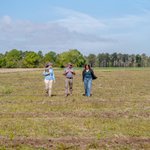





"When we think of carbon sequestration in the context of forests, we often think of the carbon being stored... in the trees themselves. We can modify the way we steward forests through Improved Forest Management to suck that CO2 out of the atmosphere," says Brittany VanderWall.
2
9
564
Lori Pickford will join our policy briefing on July 16 at 12pm ET. Pickford is a senior energy advisor for @BPC_Bipartisan, offering experience in the policy process from every perspective. Register to hear her thoughts on the Rural Forest Markets Act forestfoundation-org.zoom.us…

1
1
249
Today’s #CarbonTermoftheDay is “Dynamic Baseline.” A dynamic baseline is more accurate than a general baseline because it uses actual measurements of surrounding, unenrolled forests of a similar forest type. Learn more carbon terms today: forestfoundation.org/why-we-…

192
What's new with FFCP? We're continuously expanding, with landowners in more states and counties eligible every year. In 2024, the new Family Forest Carbon Program Premium Option was introduced, providing 20% more in payment value than the standard option. forestfoundation.org/why-we-…

On July 16 at 12pm ET, hear @REI's Madeline Wade offer a unique perspective on how the Rural Forest Markets Act can create the enabling conditions for companies to maximize their climate impact and boost rural economies: forestfoundation-org.zoom.us…

1
159
Joining our virtual policy briefing on July 16 at 12pm ET, Morgan Cashwell is an Associate Director on the Legislative Affairs team at @nature_org. She worked for 13 years with members on both sides of the aisle and will offer valuable insight on the RFMA: forestfoundation-org.zoom.us…

143
On Tuesday, July 16, hear from experts at AFF, @nature_org, @BPCAction, and @REI on how the Rural Forest Markets Act can put the power of private finance into rural America in our upcoming briefing: forestfoundation-org.zoom.us…

3
154
Today’s #CarbonTermoftheDay is “Avoidance Credit.” Avoidance and reduction credits are issued when a project’s emissions are reduced compared to the most likely course of action. Learn more carbon terms today: forestfoundation.org/why-we-…

2
126
Japanese stiltgrass is an invasive species which impacts a forest by quickly crowding out native plant species, altering the nutrient cycle of the soil. Learn how FFCP can help connect you with a professional forester: forestfoundation.org/why-we-…

Today’s #CarbonTermoftheDay is “Long-Term Monitoring.” Long-term monitoring is the commitment of a carbon project developer to monitor the enrolled forests even after the contract with a landowner expires. Learn more carbon terms today: forestfoundation.org/why-we-…

American landowners have cared for their woodlands for generations. They know every square inch of their land and what it can do for their community. With the Family Forest Carbon Program, we're working with landowners to increase forest carbon storage and create climate impact.
Many landowners may not realize the common reed is invasive. This species spreads through its seeds and root system, replacing native grasses, sedges and herbaceous plants. Learn how FFCP can help connect you with a professional forester: forestfoundation.org/why-we-…

2
118
Working with Field to Forest, GA landowners can generate an average of $3,000/acre from loblolly pines. AFF’s project provides a new opportunity for landowners to turn their fields into productive sources of diversified revenue streams: forestfoundation.org/why-we-…

85
Today’s #CarbonTermoftheDay is “Advance Market Commitment.” An Advance Market Commitment is a long-term agreement in which a company pays a developer up front for a volume of credits at a discounted market price. Learn more carbon terms today: forestfoundation.org/why-we-…

2
124
The Family Forest Carbon Program works with landowners to steward healthy, native ecosystems. When enrolling forests in FFCP, we provide guaranteed annual payments to assist in supporting healthy native woodlands.
The multiflora rose is an invasive species spread by animals foraging on the fruit and flowers. It grows quickly and earlier in the year than native plants, and the thorns of the multiflora rose protect it from wildlife grazing. Learn how FFCP can help: forestfoundation.org/why-we-…

1
112
The Japanese barberry bush is an invasive species of particular concern. By enrolling in FFCP, we connect you with foresters who can help implement a forest management plan that includes managing invasive species. forestfoundation.org/why-we-…

1
109
"New guidance from the Biden-Harris Administration is a welcome acknowledgment of the value of climate-smart forestry and the importance of scaling the voluntary carbon market," says Rita Hite, President and CEO of AFF. Read the full statement at: forestfoundation.org/why-we-…

3
134
The last #CarbonMyth we’re tackling is that “Management isn’t Necessary.” Mismanagement, the stresses of invasive species, and severe weather events all contribute to the deteriorating health of forests. forestfoundation.org/why-we-…

“Landowners take pride in their land and want to do what’s best to keep it productive,” says Natalie Omundson, Director of Product Implementation at AFF. Learn how you can support GA landowners growing pines and storing carbon: familyforestcarbon.org/ffcp-…
