

All views systematic: https://teapawt.org/t.co/hz2IJAhW7R & https://teapawt.org/t.co/mGbPf9PtMf. Quant of the Year by Risk Magazine: https://teapawt.org/t.co/7MeiDASJc2
Zurich, Switzerland
Joined October 2014
- Tweets3K
- Following333
- Followers10.3K
- Likes48.2K
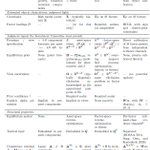







The Science and Practice of Trend-following Systems - updated draft of our paper is posted on SSRN
We present a unified approach to the design of trend-following systems and their classification into European, American, and Time Series Momentum systems
ssrn.com/abstract=3167787
Artur Sepp: Systematic Quant Trend/Vol/Rates/Macro retweeted

卧槽!机构量化团队用来拆收益、查风险的东西,被他直接开源了
做股票量化,最难受的不是策略亏钱,而是赚了钱却不知道到底赚在哪,亏了也不知道风险藏在哪。
qis 就是专门干这个的。多数回测库最后扔给你一条净值曲线 + 几个指标,qis 则是直接把收益和风险拆开给你看:
1️⃣ 绩效归因:收益率、波动率、夏普,牛熊市分开分析
2️⃣ 风险拆解:因子暴露、Benchmark Beta、跟踪误差
3️⃣ Euler 风险贡献:每只股票到底贡献了多少组合风险
4️⃣ 多空、杠杆 ETF、波动率目标、趋势跟踪都有现成案例
5️⃣ 一键生成 PDF / HTML Factsheet,直接做成机构风绩效报告
6️⃣ 还能分析 VIX、季节性以及不同市场状态下的策略表现
比较有意思的是,作者 Artur Sepp 本身就是做多资产量化的老手。
所以这个库不像普通回测框架,更像是把量化投研团队内部做绩效归因和风险分析的那套工具开源了。
尤其适合做组合管理的人:策略赚没赚钱只是第一层,钱到底怎么赚的、风险到底从哪来,这个才是它真正解决的问题。

量化高手怎么玩交易依赖:亏了才跟,反而让突破策略更赚钱
大多数趋势策略,都默认每笔交易互不相关。
但海龟交易法则里有个很有意思的规则:上一笔赚钱了,下一次突破反而跳过;上一笔亏了,才继续做下一次突破。
这支约 12 分钟的视频,用游程检验(Runs Test)严格验证了这一点,并在比特币小时数据上把唐奇安通道突破策略做了增强:
✅ 基础唐奇安:收盘价突破过去 N 根最高/最低价交替持仓
✅ 游程检验证明交易盈亏序列存在显著负自相关(Z > 2.7)
✅ 过滤规则:前笔亏损 → 执行本次突破;前笔盈利 → 跳过
原始策略 Profit Factor 仅约 1.02,扣成本后基本打平;「亏后跟进」在几乎所有回看周期下都显著提升盈亏比,并降低在场暴露时间。而「赢后跟进」几乎全军覆没。
适合做趋势跟踪、通道突破、想降低震荡消耗的朋友。
建议收藏,配合代码(需要代码喊我)一起看。
sharing #factorlasso open-source #Python for sparse factor models that preserve signs from univariate OLS: model economics is intact
Methodology under review at the Journal of Statistical Software: article+replication code in repo. pip install factorlasso
github.com/ArturSepp/factorl…

Our new paper on SSRN:
MATF-CMA model as factor-space alternative to Black-Litterman with portfolio alpha-beta consistency by construction: ~2× tighter efficient frontier vs. Grinold-Kroner
papers.ssrn.com/sol3/papers.…

Artur Sepp: Systematic Quant Trend/Vol/Rates/Macro retweeted

Condensed summary of the thread:
Jeff Liang shares notes from a technical discussion with quant Alex Wu on RR (Risk Reversal) PnL modeling, based on Artur Sepp’s 2014 workshop.
Main focus:
RR carry / PnL attribution in Black-Scholes vs. stochastic vol models.
Handwritten derivations cover Vega, skew (SKEW·W), volatility differences, theta/gamma terms, and Vanna contributions.
Key simplified forms: δΠ_Carry ≈ -Vega × SKEW × W and similar expressions.
Alex Wu’s key points:
Accurate risk premium approximations across the full volatility surface + strong implementation = foundation of vol arbitrage.
Carry modeling is context-dependent; hard-coding Sepp’s formulas into SABR/Bergomi-style models often breaks (especially smile dynamics).
Practical issues: unifying notional settings, distinguishing theta differences vs. gamma accrual.
The exchange is short, professional, and math-heavy, with Jeff replying 👍 and adding more reference images. No major debate—just focused quant shop talk on volatility hedging and P&L.
Artur Sepp: Systematic Quant Trend/Vol/Rates/Macro retweeted

"Inflation as a trading signal":
"Simple inflation-based trading factors have proven their predictive power in global financial markets over the past decades... This points to a lack of attention and understanding of all the dynamics that CPI excesses (or shortfalls) set in motion."
macrosynergy.com/research/in…

Artur Sepp: Systematic Quant Trend/Vol/Rates/Macro retweeted

“People always forget that 50% of a stock’s move is the overall market, 30% is the industry group, and then maybe 20% is the extra alpha from stock picking. And stock picking is full of macro bets. When an equity guy is playing airlines, he’s making an embedded macro call on oil.”
— Stanley Druckenmiller

New paper: Dynamic Mean-Variance Portfolio Allocation under Regime-Switching Jump-Diffusions
A wealth floor is a barrier. A market crash is a jump.
Result: analytical terminal wealth densities, floor protection costs & de-risking glide paths - all analytic
papers.ssrn.com/sol3/papers.…

Artur Sepp: Systematic Quant Trend/Vol/Rates/Macro retweeted

For decades everyone in the asset management industry learned that bonds are the best diversifier to stocks. Then inflation came and ruined the relationship but allocators have been slow to move to find better diversifiers in this environment even when they exist.

Anthropic #AI: cognitive engagement for coding tasks is crucial - not AI avoidance, but how one uses AI when AI-generated code requires genuine understanding.
Workers acquiring new skills should remain actively engaged rather than delegating entirely to AI
arxiv.org/pdf/2601.20245
Artur Sepp: Systematic Quant Trend/Vol/Rates/Macro retweeted

Weekend read, "Nonlinear Time Series Momentum". Not really revealing but still cool for someone who missed this method, especially since the authors apply ML techniques here.
papers.ssrn.com/sol3/papers.…

Artur Sepp: Systematic Quant Trend/Vol/Rates/Macro retweeted
Paper "Nonlinear Time Series Momentum" documents "a persistent nonlinear relationship between price trends and risk-adjusted returns across markets and asset classes that is consistent with asset pricing theory." papers.ssrn.com/sol3/papers.…


🏆 Honored to be a @quantstrats Hot 10 finalist!
If my research work has resonated with you and added value to your work, I'd be grateful for your vote: docs.google.com/forms/d/e/1F…
Looking forward to connecting at @quantstrats conference in London on 14-15 October!

Artur Sepp: Systematic Quant Trend/Vol/Rates/Macro retweeted
“The Science and Practice of Trend-following Systems“: “We present a unified approach to the design of trend-following systems and their classification into European, American, and Time Series Momentum systems.” papers.ssrn.com/sol3/papers.…


In case you want to shift your quant career from crunching numbers to creating our future AI overlords...

Do you think it is true that you can apply existing open source LLMs to generate trading strategies or it just marketing bluff?
bloomberg.com/news/articles/…

A great book to turn your holiday into a self-study workshop!
@__paleologo would you have something like a Q&A forum, if possible to raise some follow-up questions and comments?

I am planning to migrate my #Python quant analytics from 3.11 to either 3.12 or 3.13.
Any preference between 3.12 or 3.13?
Any expected problems with common quant packages (pandas, numpy, numba, matplotlib, cvxpy)?
Join my online talk on Wed 9th July at 18 UK time to learn about:
· New approach to strategic & tactical asset allocation with illiquid private equity and debt
· New approach for estimation of covariance matrix of public and private assets
cqfinstitute.org/content/ind…
Very interesting paper on problems with factor timing.
Generally, these problems transfer to any timing strats including (dynamic) regime-conditioning.
I do not find that any timing or regime models work well out-of-sample.
Any thoughts? @investingidiocy
papers.ssrn.com/sol3/papers.…