

@AsiaSociety's think tank.💡Tackling key policy challenges confronting the Asia-Pacific
New York, NY & Washington, DC
Joined February 2013
- Tweets22.1K
- Following1.3K
- Followers21K
- Likes4.6K



Pinned Tweet
On Dec. 3, join us for an end-of-year expert webinar examining 2026's defining developments for South Asia and the forces likely to shape the region's policy trajectory in 2027. Ft. @avasudeva_87, @nilanthis, @Rabs_AA, and @faamer. Register: asiasociety.org/policy-insti…

Why did Xi hug Trump at the airport in Shenzhen? In a new op-ed in the @FT, ASPI VP @DaveShullman analyzes Beijing’s emerging dilemma over personal diplomacy in U.S.-China relations. Read his full analysis: ft.com/content/4dbdecf6-396d…

Read @asiapolicy and @AmPakFdn fellow Ismail Faisal's research paper on Enabling U.S. Foreign Investment in South Asia. Ismail examines the gaps and what factors must be addressed to enable greater regional investment: asiasociety.org/policy-insti…

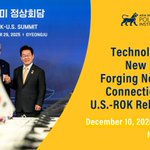
On December 10, join @AsiaPolicy and the Korea Foundation for a public panel on the U.S.-ROK relationship. Leading experts from the U.S. and South Korea will discuss bilateral efforts to form a more integrated partnership across emerging and critical technologies, including through interoperable tech ecosystems, trusted AI adoption, and cooperation on tech deployment across the Indo-Pacific.
👉RSVP here: asiasociety.org/policy-insti…

Asia Society Policy Institute (ASPI) retweeted

A wide-scoping conversation here with my friend @faamer from the @AsiaPolicy on the role of 🇨🇦Canada in the Indo-Pacific and the evolving contours of several of our relationships of consequence in the region, including 🇯🇵 Japan, 🇮🇳 India, ties in ASEAN, and also 🇨🇳 China.
Thank you Farwa for having me on for this fun chat and also highlighting Canada's interests in the Indo-Pacific.

In the latest from #AsiaInsideOut, @faamer speaks with Jonathan Berkshire Miller on Asia's hedging season, India-Canada ties ahead of PM Modi's visit, and recalibrations in the Indo-Pacific. Watch here: youtu.be/LI6DZLo4TgQ

Catch us on your favorite podcast platform: buzzsprout.com/2205547/episo…

107
What is still worth striving for?
Join Academy Award-winning filmmaker @jimkchin and Asia Society's Jing Qian on Dec. 9 in NYC for a conversation on risk, purpose, and living well in the age of AI.
Register: asiasociety.org/new-york/eve…

How can India use its #BRICS chairship to make #AIsafety testing work across borders? India has only a few months left as BRICS chair, and a chance to build something lasting for AI safety.
In a new paper, @polcumpally proposes a BRICS AI Governance Coordination Mechanism linking AI safety institutes across emerging economies. asiasociety.org/policy-insti…

"It's not really a trilateral. It's two against one." Watch why ASPI Distinguished Fellow @dannyrrussel is picturing the upcoming meeting between Presidents #Trump, #Xi, and #Putin as a "three-card monte." ♣️♦️
Yesterday, ASPI's DC office held a private roundtable with senior professional staff from the Senate Armed Services Committee on the midterms' impact on Asia. With moderation from Emma Chanlett-Avery, Mike Urena and Mike Noblet provided a bipartisan perspective on expectations for the National Defense Authorization Act, priorities for the lame-duck session, and how new majorities in both chambers may address the Trump Administration's policies in the Indo-Pacific.

513
Last week, ASPI New Delhi’s JSW Science and Technology Fellow Dr. Arun Teja @polcumpally spoke to students at @iiit_hyderabad on how India, the EU and four Asia-Pacific countries govern AI, from data to deployment, and what they can learn from each other.


4
473
Asia Society Policy Institute (ASPI) retweeted

This issue of @AsiaPolicy’s PLA Watch highlights a PLA undergoing major leadership upheaval while expanding its operational reach and international engagement. Here are the highlights:
-The Fifth Plenum formalized the expulsion of 16 senior military officers and elevated Zhang Shengmin to the Politburo, leaving him its only serving PLA general. The issue argues that Xi continues to prioritize loyalty and discipline, even as the loss of experienced commanders raises questions about readiness ahead of the 2027 modernization milestone.
-On October 29, the PRC Defense Ministry of National Defense announced the restructuring of several military educational institutions,including the establishment and reorganization of colleges specializing in unmanned and intelligent engineering, operational support, and military discipline and legal affairs. The two principal institutions explicitly identified were the PLA Army Engineering University and the PLA National Defense University. Other military universities were also reportedly affected.
-The Liaoning’s apparent circuit around the Philippines, alongside widespread surface-ship deployments, demonstrated alternative routes into the Philippine Sea. These activities extended well beyond Taiwan, making direct comparisons with the Taiwan-centered Justice Mission 2025 exercise problematic.
-PLAN replenishment ships crossed the First Island Chain separately under destroyer escort, suggesting experimentation with a more flexible support model. Whether they directly supported Liaoning remains unconfirmed, but the pattern could have significant implications for sustained operations east of Taiwan.
-A mixed PLAN–China Coast Guard formation transited into the Western Pacific, indicating closer coordination beyond the First Island Chain. More broadly, large deployments described as “routine training” could complicate assessments of Chinese intentions and reduce warning time before a crisis.
-PLA engagements with European counterparts, Russia, ASEAN, and African officers continued despite internal turmoil. A record 378-day Gulf of Aden deployment and a hospital-ship mission to Ghana illustrated growing endurance and Beijing’s use of military missions to build diplomatic influence.
Special thanks to @angelo_mlh and @leontw99 for their contributions.
centerforchinaanalysis.asias…


Asia Society Policy Institute (ASPI) retweeted

Take a break from watching the big Asia Week and register for our upcoming webinar. I look forward to speaking with three brilliant experts to assess South Asia's trajectory as we prepare for the new year. Register: asiasociety.org/policy-insti…

On Dec. 3, join us for an end-of-year expert webinar examining 2026's defining developments for South Asia and the forces likely to shape the region's policy trajectory in 2027. Ft. @avasudeva_87, @nilanthis, @Rabs_AA, and @faamer. Register: asiasociety.org/policy-insti…
Asia Society Policy Institute (ASPI) retweeted

I'm looking forward to speaking about the Smaller South Asian countries, the subject of my forthcoming book for @BloomsburyAcad. Events in Nepal, Bangladesh, Bhutan, Maldives and Sri Lanka increasingly shape the outlook for regional cohesion. Thanks to @faamer for the invitation.
On Dec. 3, join us for an end-of-year expert webinar examining 2026's defining developments for South Asia and the forces likely to shape the region's policy trajectory in 2027. Ft. @avasudeva_87, @nilanthis, @Rabs_AA, and @faamer. Register: asiasociety.org/policy-insti…
Asia Society Policy Institute (ASPI) retweeted

Sharing a new essay from @FengmingLuPE and me on what makes tech transfer work, vs what sounds good on paper but is unlikely to deliver…
As APEC approaches, with the G20 coming up next, there's a window to put some meat on the bones of the Board of Investment (currently just words).
Many dismiss it as unrealistic in the current political climate, but we think there's a promising way to make it work for both sides. The question is how.
And to start, what do we get wrong about tech transfer? One common misperception is that we underestimate how much heavy lifting domestic suppliers, engineers, and firms have to do.
In the piece, we discuss some of these ideas focusing on China's auto industry and what its experience with foreign automakers, e.g., Tesla, can teach us about doing tech transfers.
Our argument is that so-called tech transfer isn't a one-off transaction, or even necessarily a transfer at all... It's a process of iterative capability building. It often starts with much less glamorous legacy tech, followed by the right incentives and sustained capacity building over time.
The recipient country (in the BOI case, the U.S.) needs to think carefully about which legacy technologies to transfer that would be realistic starting points for domestic capability building, then how to iteratively build up domestic suppliers, engineers, etc., and develop the capacity to absorb, adapt, and eventually improve on those technologies.
Also, how to tie deals into Chinese incentives (which tech they are open to transfer, and for what in return?) and critically, build institutions that are independent of political climates, which change fast.
China's experience offers some surprisingly (or unsurprisingly) relevant lessons for how the U.S. might approach this today!
Full article below. Thoughts, as always, welcome! cc @AsiaPolicy
foreignpolicy.com/2026/11/12…

Asia Society Policy Institute (ASPI) retweeted
Pleased to contribute to this preview piece on Trump and Xi at APEC: What to Watch in Shenzhen. My @AsiaPolicy colleagues cover trade, tech, AI safety, the role of allies and partners, and Taiwan.
We expect a summit focused on keeping U.S.–China relations steady. Yet Trump and Xi face a fragile trade truce, renewed pressure over technology controls, and potentially consequential choices on Taiwan.
Have a read below!
centerforchinaanalysis.asias…

What’s at stake when Trump and Xi meet at APEC in Shenzhen?
In a new compendium, CCA experts examine the prospects for U.S.-China stability, from trade and technology to Taiwan and regional security.
Read the analysis: centerforchinaanalysis.asias…
