

Economics Editor, @ObserverUK Sign up for my newsletter: https://teapawt.org/t.co/7AkpprP0El
London, England
Joined June 2011
- Tweets6.8K
- Following731
- Followers10.2K
- Likes12.7K



Pinned Tweet
A reminder that I've got a newsletter, already described as "surprisingly funny" and "actually quite interesting". You can sign up at the link below.


I’m starting a newsletter! Sign up here for a weekly dose of economic analysis, charts, interesting nuggets, and forays into the properly nerdy stuff they won’t let me put in the actual newspaper.
observer.co.uk/newsletters

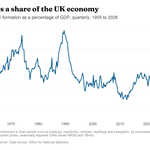
The pensions minister criticised the press for failing to report that total UK investment is at its highest share of GDP since 1989.
One minor issue: it's not true! You can't use chained-volume measures to construct a % of GDP time series. Using current prices, you get this:


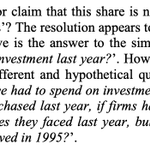
... it answers the question: “what share of GDP would have had to be spent on investment in order to buy the capital goods that were actually purchased in each year, if those capital goods were purchased at the real prices of capital goods that were observed in 2024?”
2
2
1,133
Ben Zaranko retweeted

Workers are changing jobs less frequently, and it spells economic trouble
A sluggish jobs market is locking out younger workers, weighing on pay growth, and harming the economy’s ability to adapt
✍️ @BenZaranko
bit.ly/3XLk2Vm

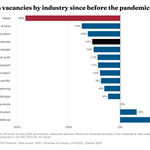
New ONS linked employee-employer data is interesting on the decline in UK labour market dynamism.
For example: 56% of job-to-job moves are to a firm which pays more on average. Around 60,000 fewer employees are making such a switch each month, vs pre-pandemic.

Hiring rates have fallen particularly quickly for young people, and in business and professional services


1
1
572

Anand thinks EU officials are pushing hard for the UK to lower fees on EU students because so many of their kids study here, and suggests self-interest could be creeping into their negotiating position

Ben Zaranko retweeted

Can I say , again, that I am more than sick and tired of this baseless statements on the basis of 0 evidence by people who have no freaking idea about the labour market, or the organization of work? This is insanely stupid. And even more stupid that you can become famous by just doing this.

Anthropic Researcher Tao Lin: Pretty much all humans on earth will become permanently unemployable because of AI
"It's very likely that pretty much all humans on earth will become permanently unemployable"
"And will need to strictly rely on government welfare to sustain themselves"
"Human employment will go away."
On Milburn...
A good stat to underline how hard it is to design job subsidies that aren't just deadweight (paying for jobs that would have been created anyway):
96% of spending on the recent US Work Opportunity Tax Credit went to workers who would've been hired without it.

From this paper, evaluating a program which is similar-ish to those Milburn recommends that we expand in the UK:
nber.org/papers/w35229
