

The AI-Native Blockchain for the Agent Economy & RWA
Joined April 2023
- Tweets1.3K
- Following52
- Followers15.5K
- Likes736







The BOT Chain Ecosystem Heat Leaderboard has officially concluded! 🟢
📊 71 projects received votes
🗳️ 259,821 on-chain votes
👥 8,309 participating addresses
A big thank you to our community and ecosystem builders for being part of this journey.
The leaderboard is now temporarily offline for upgrades. Stay tuned for what's next. See you again soon!

An invoice gets tokenized. A week later, the customer pays it through a bank transfer.
What happens to the token? 👀
Who confirms the payment? Who updates its status? Can the claim still be transferred?
For RWA builders, transfer permissions, payment reconciliation, and keeping onchain records aligned with real-world events are just as important as issuing the token.

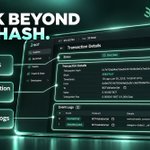
A transaction hash tells you where to look, not the whole story. 🔎
After sending a contract transaction, check its status, transaction details, and any event logs.
See what happened onchain with BOT Chain Explorer.
👉🏻 scan.botchain.ai/

Equity perps entering regulated markets raises a bigger question:
What happens to pricing and liquidations when the underlying stock market is closed?
Funding mechanisms, mark prices, and margin controls will be critical to making these products work reliably.


@ChairmanSelig Releases Statement on Equity Perpetual Futures: cftc.gov/PressRoom/PressRele…


Before deploying, double-check your network settings. 🛠️
The right Chain ID and RPC endpoint help ensure you're connecting to the intended network.
Keep the explorer handy to verify what happens onchain. ↓
dev-docs.botchain.ai/docs/in…

Tokenized deposits are about more than moving money onchain.
@StanChart’s latest move raises a bigger question: can treasury operations keep pace with programmable settlement?
24/7 transactions mean little without equally reliable authorization, reconciliation, and audit trails.

We’ve announced the launch of our Tokenised Deposits solution in Hong Kong, the first market in the Group to offer the solution.
The solution enables corporate treasurers, banks, investment platforms and digital asset businesses to use commercial bank deposits within digital treasury and investment workflows.
Built on our proprietary blockchain infrastructure, it combines the trust of regulated bank deposits with the programmability of tokenised assets, helping clients enhance efficiency, interoperability and settlement predictability while reducing counterparty risk.
This is the first step in our ambition to expand the solution to additional markets.
Read the full announcement: sc.com/en/press-release/stan…


Permission to burn shouldn’t mean permission to mint.
This highlights a bigger issue: delegated permissions must be enforced, not just defined.
Especially as AI agents take on more onchain transactions.


How does an AI agent pay for an API request?
With x402, the service returns payment requirements, the agent submits a signed payment, and the server verifies it before delivering the response.
Explore BOT Chain AgentPay ↓
botchain.ai/en/agent-os/agen…

Not every AI task needs the same computing power.
Text processing, image generation, and large-scale data analysis can require different combinations of CPU, GPU, memory, and storage.
For decentralized compute, matching resources to the workload is part of building an efficient system.

A deposit being observed doesn’t mean it’s final.
A single block reorg can expose the gap between observation and settlement.
Cross-chain infrastructure needs reliable verification, reconciliation, and safeguards when things don’t go as expected.


On October 31, THORChain halted trading on several blockchains.
An Ethereum block reorg caused THORChain to pay out 10 ETH that a vault never received. The automatic solvency checker caught the shortfall and halted ETH swaps. Within approximately two minutes, node operators halted ETH transaction signing, so no further ETH could leave the vaults.
Node operators then halted all chains as a precaution so core developers could investigate.
The 10 ETH has been returned by the user to make the vault solvent again.
Breakdown of what happened and next steps:
At 11:34 UTC Oct 31, Ethereum had a one-block reorg. A 10 ETH deposit to one of the vaults sat in the dropped block and never landed on the canonical chain.
THORChain had already observed and credited that deposit. The swap missed its price limit and was refunded, so the vault paid out 10 ETH it never received. The sender's real deposit was refunded as well.
Every node detected the reorg. But the re-check that should have removed the deposit could not get a clear answer in time, so it was finalized.
The solvency checker halted ETH swapping automatically, then three node votes halted all ETH outbound payments.
All chains were then halted by three node votes as a precaution. Now that this is public knowledge, every time there is a block re-org on an external chain, a malicious actor could perform a new transaction with the same nonce and would be paid funds by the THORChain vaults.
Note: Three node votes can trigger emergency halts to protect network solvency. However, that action can be reversed by four counter node votes, then five node votes can reverse the reversal, and so on, maintaining a balance between decentralization and rapid emergency intervention. Halting a chain does not give those nodes control of the assets.
Core developers have been working on the necessary fixes.
Nodes will decide to re-enable chains as they are deemed safe.
Trading blockchains: AVAX, BASE, RUNE, XRPL
Halted blockchains: ATOM, BCH, BSC, BTC, DOGE, ETH, LTC, SOL, TRON, ZEC
BOT Chain retweeted

🎃 250 USDT IN TREATS — HAVE YOU JOINED YET?
The Spooky Rewards Festival is still on! Complete the quests on Slidefun.app for a chance to win $250. 👻
📅 Ends November 2
📌 Already joined? Double-check your tasks! Only participants who complete every required task are eligible. Our team will carefully verify entries before selecting winners.
Don’t let these Halloween treats slip away! 🐸


/2 Infrastructure Updates
⚡ BDEX V2 / V3 core data is now available on DeFiLlama, making protocol performance easier to track.
🏆 The BOT Chain Ecosystem Leaderboard remains active, featuring weekly, monthly and all-time rankings alongside on-chain voting.

