

Principal Investigator at @MSKCancerCenter
New York, New York
Joined October 2015
- Tweets2K
- Following1.6K
- Followers4.8K
- Likes18.7K




Caleb Lareau retweeted

In our PETase test case, we tested 48 PETase designs. PETase is an enzyme that breaks down PET, the plastic in most drink bottles. After 42 hours, the best design, a single mutation away from the engineered HotPETase, had broken down twice as much plastic as the original HotPETase and more than every reference enzyme we tested, including FastPETase.

Caleb Lareau retweeted

incredibly excited to finally share this work, led by @Masa_Uehara_1! since starting the team last year, i knew GPT would be able to design proteins w/o special models, but it took us a while! here's a movie of GPT-6.2 making binder against IL-7Rα, wet lab validated w/ Onava!

We’re sharing a new preprint showing wet lab validation of intrinsic protein design capabilities of the GPT-6 family of models.
Our models can design new protein shapes and sequences using reasoning and code, without calling specialized biology models to generate them.
openai.com/index/gpt-6-model…
Caleb Lareau retweeted

We’re sharing a new preprint showing wet lab validation of intrinsic protein design capabilities of the GPT-6 family of models.
Our models can design new protein shapes and sequences using reasoning and code, without calling specialized biology models to generate them.
openai.com/index/gpt-6-model…
Caleb Lareau retweeted

🐳 Last few days to apply for a faculty position at Weill Cornell comp bio!
This is a transformative moment. Big changes afoot in science & medicine (like it or not). Seeking those who are excited about this moment & see new horizons far ahead
1/2

Faculty ad is out,
please help spread the word
Come #DreamBig together, without a doubt,
in the best city in the world!
jobs.sciencecareers.org/job/…

Caleb Lareau retweeted

We are happy to share CARDINAL (Cellular Architecture of immune-state Regulation, Disease, and Immune Networks across the Adult Lifecourse): four complementary studies connecting population-scale single-cell genomics to immune variation and disease mechanisms.
Caleb Lareau retweeted

🚨PREPRINT🚨 10X 3' capture has a catch: oligo(dT) primes off internal A-rich stretches ~80x more than the true polyA tail for HIV/SIV (6x for host), fracturing transcripts. We turn the bug into a feature + works on archival samples biorxiv.org/content/10.64898…
🧵🔜 @EmanuelleGrody


Caleb Lareau retweeted

Help!
I need philanthropists to help Impetus Grants produce the missing data AI needs to ACTUALLY cure diseases of aging.
There’s a lot of talk about simulation solving biology. Useful simulations don’t come out of thin air: DeepMind’s latest weather prediction model was trained on weather records dating back to 1959. AlphaFold had decades of PDB. Tesla and Waymo’s driving simulations draw on data collected over tens of millions of miles on real roads.
Building the biological equivalent requires a much stronger data foundation. We need more observations of how diseases with long timelines like Alzheimer’s unfold and respond to treatments. Some of those observations will take years no matter how fast intelligence improves. So I’m directing @impetusgrants to identify longitudinal biosamples we can use for AI-quality data generation, as well as starting necessary new cohorts today.
I started @impetusgrants in 2021 after hearing @patrickc talk about Fast Grants at a conference. If fast grants worked for COVID, why not longevity? COVID was obviously urgent. But far more people die from age-related diseases.
Since then we’ve deployed $34M across 146 projects and supported five clinical trials, with resulting publications 100x representation in Nature/Science/Cell About 60% of the papers we assessed had no National Institute on Aging support identified. Very satisfying to see work we funded a few years ago now bearing fruit: norn.group/impetus-grants
The next round will fund around 50 projects generating open source data on how diseases of aging develop and respond to treatments. We’ve raised >$9M toward the $15M we need to kick off.
If you’d like to help fund this or know someone who could, please DM me.
(No fancy video of rockets and art deco, all our money goes to longevity research)
Caleb Lareau retweeted

AlphaGenome 2 is now on bioRxiv!
I was really impressed by how much we were able to compress the paper writing timeline with Gemini and @antigravity. Gemini was able to write first drafts of the methods and results given our code, figures, and an outline, which we iteratively refined.
biorxiv.org/content/10.64898…

Caleb Lareau retweeted
I think you're understanding this: $50M in grants for AI-enabling datasets will have more impact on health than this entire Isomorphic round
Caleb Lareau retweeted

“Wet-lab validated.” AI binder design papers keep reporting impressive hit rates. But does it bind in a second lab?
One independent retest: only 29/107 published AI-designed nanobodies showed binding—and 6 of those had high aggregation.
Germinal stands out for the wrong reason: just 1 of 12 published binders showed detectable binding on retest—a result that warrants an explanation.
How much trust should we put in headline hit rates?
Read more on my blog 👇
smiles724.github.io/blog/ai-…

Caleb Lareau retweeted

If the genetic code is a 64 entry lookup table, tRNAs are the decoder hardware that performs each lookup.
Work by @LauraCKida, @CalebLareau & colleagues at @MSKCancerCenter counts a cell's tRNAs to gain more insight into this control layer.
Breakdown in the video below:

About 90% of RNA molecules in our cells are tRNAs. To date, we have mostly been blind to their abundance and regulation in single-cell sequencing. Today, I’m excited to share a new manuscript from my MD/PhD work
biorxiv.org/content/10.64898…

The code of life is written in nucleic acids, but proteins carry out the instructions. New work from @MSKCancerCenter led by the brilliant @LauraCKida introduces sctRNA-seq, a new single-cell assay that defines how cells translate between these languages
biorxiv.org/content/10.64898…
Every few months, a thread pops off reminding us that RNA =/= protein. One of my favorite results in this work is that tRNA levels may often serve as another lever of cellular regulation controlling this conversion, e.g., for transcription factors.
teapawt.org/arjunrajlab/status/211…

For everyone chiming in with "RNA and protein don't correlate"… here's some thoughts I wrote up on this point a while back:

1
8
734
This paper is packed with new insights into how tRNAs regulate RNA->Protein, including perturbation screening with @thenormanlab, comprehensive cell-state profiling with @dana_peer, Ronan Chaligne, SAIL, and @LeifLudwig, and mRNA+tRNA+protein.
Let us know what you think!
5
323
Caleb Lareau retweeted
@GordianBio is hiring a special agent for 1-3 mos,to work directly with me on a secret project with the utmost consequences for our ability to eliminate disease.
Need high agency and follow-through, familiarity with healthcare bonus but not required.
DM me.
Caleb Lareau retweeted

Our Summer at Memorial Sloan Kettering Cancer Center (MSK) research programs are now open to current sophomores and juniors interested in biomedicine, chemistry, computational biology, and engineering.
These in-person programs in NYC offer students the opportunity to gain research experience, build new skills, expand their scientific knowledge, and explore STEM career paths.
Learn more at: bit.ly/4zDi2Mx

ALT Memorial Sloan Kettering Cancer Center (MSK) research students.
Caleb Lareau retweeted
Single-cell atlases continue to map the diversity of cell states, but how can we use them to interpret non-coding genetic variants?
Excited to share AlphaGenome 2, our model for predicting cell-type-specific regulatory activity and variant effects from DNA sequence.
deepmind.google/blog/alphage…

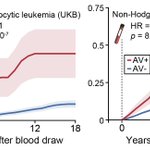
Our bodies are colonized by trillions of viruses that we live with in homeostasis. The most diverse and abundant of these viral families are anelloviruses. A new paper from us at @MSKCancerCenter explores what happens after we *all* have been infected
biorxiv.org/content/10.64898… 1/n
In addition to the great team at MSK, I want to give a special shout-out to friends all over who helped with this, including @RayanChikhi, @RyanDhindsa, @julirsch, and many others! Teamwork is… infectious? 19/n
1
16
1,562
Finally, I want to give a sense of where we will (and I think others should) look next. We primarily collapsed our anellovirus detection onto a binary vector that ignored the nuances of viral strain, epitope specificity, etc. We have reasons for this assumption (which we document in this study), mainly because discarded WGS has limited sensitivity as a discovery reagent. Deeper metagenomic profiling at biobank scale is what we need to do to really nail down the impact of chronic viruses on our health
We show strain-specific HLA analyses that reveal that the heritable component we see is mostly outside the HLA, but this is likely because we aggregate over thousands of related yet independent viral strains. My best guess (based on work in EBV and other chronic infections) is that there may be a chronic risk component of anellovirus infection that underlies autoimmune diseases, but it likely occurs through interactions between viral genomes and HLA. We will continue to squeeze as many insights as we can from the discard pile, but this has its limits.
Please reach out if you're interested in long-term, longitudinal profiling of chronic infections—I am convinced this is a major factor in our health that we are only now starting to appreciate. 20/n