




Pinned Tweet
Learning resources play a key role in shaping where talent goes. Today I’m launching my side project, BioTorch, in public beta to give researchers a clearer path into biological AI.
LLMs have a wealth of great tutorials, courses, and minimal implementations from great teachers. They make the path from curiosity to contribution easy to see and offer researchers from fields like math or physics a legible roadmap to transition into AI research.
In bio AI, that path is much harder to piece together. That friction can mean fewer researchers entering the field, fewer startups getting built, and less investment allocated to promising ideas. This ultimately leads to fewer life-saving cures being discovered than would otherwise be possible.
BioTorch is my attempt to help change that.
It starts with 116 PyTorch exercises and 17 model guides. You implement the building blocks, test your code, and see how the pieces fit into seminal models like AlphaFold2, ESM2, and RFdiffusion.
The goal is to make influential papers in bio AI something you can understand and build on, bringing researchers up to the frontier as rapidly as possible.
I want more people working on biology’s hardest problems. My mission is to help researchers find their way into the field, and BioTorch is the result of that ambition.
BioTorch is completely free while in beta.
Try your first problem now!
biotorch.chrishayduk.com

Ok finally got around to watching The Odyssey and I have to admit, I thought the "age of bronze" line was a twitter meme
1
5
1,477
Chris Hayduk retweeted

I was reproducing their docking results and my thoughts went from "meh they're just memorizing" to "wait but diffdock/esmfold2 are also memorizing" to "oh ofc trillion param model memorizes better than million" to "wait actually gpt can generalize better"

We’re sharing a new preprint showing wet lab validation of intrinsic protein design capabilities of the GPT-6 family of models.
Our models can design new protein shapes and sequences using reasoning and code, without calling specialized biology models to generate them.
openai.com/index/gpt-6-model…
LLMs are poised to become models that represent all of biology, capable of representing both biological data (across all scales / levels of organization) & teleology (in the form of natural language) natively.
This will unlock powerful representations within and between scales, as well as reasoning about both upward and downward causality.

We’re sharing a new preprint showing wet lab validation of intrinsic protein design capabilities of the GPT-6 family of models.
Our models can design new protein shapes and sequences using reasoning and code, without calling specialized biology models to generate them.
openai.com/index/gpt-6-model…
We’ve added 96 PyTorch exercises since I launched BioTorch on September 5, bringing the total to 212.
You can now explore all 17 model guides chapter by chapter, jump to the line where your code failed, and try an exercise without signing up.
biotorch.chrishayduk.com

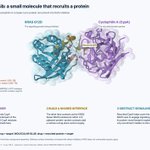
Also, shout out to @500kim_ and @kinasekid for their work on mol-blender to produce the protein image in the first tweet! Great to have a simple way to produce stylistic and physically correct protein images
github.com/magnusbauer/mol_b…

Chris Hayduk retweeted

SE(3) invariance of GPT-6.2 inverse folding: on average, GPT-6.2 recovered 74.7% of a protein’s amino acid sequence from its backbone coordinates. when we rotated and translated the same structures, it recovered 75.9%.
fig. 11 from our paper w/ @Masa_Uehara_1
cdn.openai.com/pdf/gpt-6-a-u…
you can change all the (x, y, z) coordinates in a file w/o changing the shape of the protein or the distance between any two atoms. that’s what we did here.
each dot on the right is one assembly. the ones GPT-6.2 did well on before the transformation were largely the same ones it did well on after (r = 0.957)

Chris Hayduk retweeted

While there’s still plenty of room for improvement, I am genuinely surprised by how strong GPT-6.X’s intrinsic capabilities have become across many important tasks in protein biology. Over the past few years, I’ve developed specialized models for the life sciences, and I still believe in their value. However, my recent experience at OpenAI has significantly shifted my perspective on how LLMs can tackle these problems compared to specialized deep learning models.
We’re sharing a new preprint showing wet lab validation of intrinsic protein design capabilities of the GPT-6 family of models.
Our models can design new protein shapes and sequences using reasoning and code, without calling specialized biology models to generate them.
openai.com/index/gpt-6-model…
Chris Hayduk retweeted
GPT-6.2 can fill in a missing 25-aa CDR region of an antibody and produce functional binders to the same target despite changing 17 amino acids.
fig. 19 from our paper w/ @Masa_Uehara_1
cdn.openai.com/pdf/gpt-6-a-u…
those 25 amino acids make up the 3 loops (CDRs) that help the antibody recognize its target, IL-4Rα. we started with a VHH from @onava_ai. we gave GPT the sequence minus CDR and an unpublished prediction of how the antibody and IL-4Rα fit together.
note: we still used specialized structure predictions models to help pick which designs to test in the lab. we measured apparent KD via BLI, which ranged from 10-22 nM.

Chris Hayduk retweeted

This is exceptional work, and the technical report offers valuable insights into the continually improving model capabilities. I’m excited for the future this research points toward, where generalist models outperform specialized bio models.

incredibly excited to finally share this work, led by @Masa_Uehara_1! since starting the team last year, i knew GPT would be able to design proteins w/o special models, but it took us a while! here's a movie of GPT-6.2 making binder against IL-7Rα, wet lab validated w/ Onava!
The results in this preprint have made me update my beliefs about the future of AI in biology more than anything else I've seen so far.
Six months ago, I would have thought that specialist models in biology would be outperforming frontier LLMs until we scale things up by another couple orders of magnitude. My median estimate for when something like this would happen would have probably been 2030.
Instead, our generalist language models, today, are performing tasks at or above the state-of-the-art in various protein design & understanding tasks. And there is clear improvement across all domains as our models improve generally.
The implications of this are enormous - we are on the doorstep of being able to program biology using natural language.
Truly incredible work from @Masa_Uehara_1, @joyjiao12, and the team! An absolute milestone for @OpenAI and the field as a whole
We’re sharing a new preprint showing wet lab validation of intrinsic protein design capabilities of the GPT-6 family of models.
Our models can design new protein shapes and sequences using reasoning and code, without calling specialized biology models to generate them.
openai.com/index/gpt-6-model…
Chris Hayduk retweeted
incredibly excited to finally share this work, led by @Masa_Uehara_1! since starting the team last year, i knew GPT would be able to design proteins w/o special models, but it took us a while! here's a movie of GPT-6.2 making binder against IL-7Rα, wet lab validated w/ Onava!
We’re sharing a new preprint showing wet lab validation of intrinsic protein design capabilities of the GPT-6 family of models.
Our models can design new protein shapes and sequences using reasoning and code, without calling specialized biology models to generate them.
openai.com/index/gpt-6-model…
Spoke about this during our latest FDE Forum!

Huge +1 to @joyjiao12’s point here!
"What we really wanna do is bring something that is as good as Codex for coders, for scientists and to biotechs and pharma."
As a software engineer / ML engineer by background, my work has been completely transformed over the last 2 years by reasoning models and then coding agents. I feel enabled to do more than I ever thought possible and pursue all of the crazy ideas that once would’ve thrown out for lack of time.
Our goal is to bring that same experience to life sciences researchers
Replay of the full livestream: forum.openai.com/public/vide…

1
536
Huge +1 to @joyjiao12’s point here!
"What we really wanna do is bring something that is as good as Codex for coders, for scientists and to biotechs and pharma."
As a software engineer / ML engineer by background, my work has been completely transformed over the last 2 years by reasoning models and then coding agents. I feel enabled to do more than I ever thought possible and pursue all of the crazy ideas that once would’ve thrown out for lack of time.
Our goal is to bring that same experience to life sciences researchers

OpenAI's Joy Jiao on building a Codex for scientists:
"One of the biggest things that we see with the models today is that there's what we call a capability overhang, and this means that there's a lot of things the models can do, but no one knows about it, and so no one has access to that."
"What we really wanna do is bring something that is as good as Codex for coders, for scientists and to biotechs and pharma."
"When we are training GPT-Rosalind, we have all these interesting capabilities in the model in both chemistry and structural biology. We see that the models are doing really well on the benchmarks."
"But one repeated theme we've seen is that people don't know how to use the models. They don't know even what prompts to use, what questions to ask. And I think this is really where you need an exceptionally good product or a good harness around the model to really make that capability accessible to people."
@joyjiao12
Chris Hayduk retweeted
Eva is a good friend from high school and undergrad, and one of the kindest, smartest, most hardworking people I know. She represents the best of us and her detention is a travesty. It’s in moments like this that we’re called upon to support our own. Call your representatives!


