

Protecting the Rights of People and Communities in the Era of Climate Change Follow us on Bluesky @ https://teapawt.org/t.co/DdoCMORjPW
Joined January 2023
- Tweets1.7K
- Following344
- Followers2.4K
- Likes249






China has made significant progress in renewable energy, but major gaps remain in fulfilling its human rights, climate, and environmental commitments.
A new Climate Rights International briefing paper examines China's progress on recommendations it accepted during the UN Universal Periodic Review (UPR), highlighting persistent concerns over fossil fuel dependence, forced labor, restrictions on independent civil society, and the environmental and human rights impacts of Chinese activities abroad.
UN member states, particularly those that issued these recommendations, should urge China to report on its progress and take concrete steps to fulfill its commitments.
Read full briefing paper: cri.org/china-recommendation…

1
37
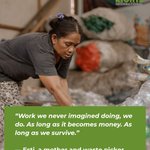
Esti and her family once depended entirely on the sea for their livelihoods, even using its clear water for everyday activities.
But nickel mining and steel processing have changed everything. The sea is now polluted, fish have moved farther away, and her husband often returns from fishing empty-handed despite spending extra money on fuel. To make ends meet, Esti now spends her days collecting plastic bottles for recycling.
Despite their growing frustration, their complaints remain unanswered. Esti asks for little: simply the peace and the way of life her family had before the companies arrived.
Read our full report on how nickel mining is affecting women in Indonesia: cri.org/story/busy-surviving…

Climate Rights International Researcher @CaraSchulte_ spoke with @NPR earlier this year about our research on how extreme heat is threatening the health and rights of garment workers in Pakistan and Bangladesh, two major hubs of the global fashion industry.
🎧 Listen to the segment here: npr.org/2026/11/15/nx-s1-601…
Many thanks to Diaa Hadid for her persistence in reporting this story, and to Zia Ur Rehman and Hannan Biswas for their contributions to CRI's work.

"Fossil fuel companies and major polluters should no longer be allowed to thwart climate action through ISDS claims,” said CRI Legal Director Linda Lakhdhir.
Investor-State Dispute Settlement (ISDS) provisions allow foreign investors to sue governments over policies affecting their investments, potentially discouraging governments from taking action to address climate change.
At COP31, governments must work together to exclude climate action from ISDS provisions in existing and future investment agreements or eliminate these provisions altogether.
Read our press release:
cri.org/cop31-investor-provi…
Read our briefing paper:
cri.org/climate-crisis-inves…

The DRC’s Green Corridor could become a major climate initiative, or a major missed opportunity. If implemented properly, the Corridor could protect nature, attract investment, and drive economic growth.
But to achieve this, the project must overcome some major inconsistencies and risks.
Mining projects within the Corridor threaten people and ecosystems in a sector plagued by corruption, human rights abuses, and armed groups. Communities also face forced evictions and land dispossession, while environmental defenders face violence, threats, and SLAPPs.
Despite €78.6 million in EU funding, clear benchmarks and effective independent oversight remain lacking. We call on the Congolese government and its partners to ban oil, gas and destructive mining; permanently ban new logging concessions; protect land rights and ensure FPIC; protect environmental defenders and hold perpetrators accountable; and establish independent oversight with community and civil society participation.
Full report: cri.org/reports/the-democrat…


Climate action cannot be effective without human rights.
Together with 14 civil society organizations, we are calling on the Turkish government, the UNFCCC, and the international community to protect human rights and ensure meaningful civil society participation at COP31.
demandrightsatcop.org/statem…

Climate Rights International and 34 organizations urge the European Commission to reject further amendments that weaken the EU Methane Regulation.
"Every responsible government, every lawmaker and the Commission should be acting to stop that harm, not buying the industry more time," said Lotte Leicht, Advocacy Director at Climate Rights International.
cri.org/eu-block-changes-wou…
Joint letter: cri.org/wp-content/uploads/2…

1
46
The DRC’s proposed Green Corridor could help protect vital forests and support local communities—but only if human rights and environmental protections are guaranteed.
In a new report, Climate Rights International calls on the Congolese government to protect land rights, safeguard environmental defenders, make the moratorium on new logging concessions permanent, and prohibit oil and gas extraction and destructive mining within the Green Corridor.
Spanning 2,400 km from North Kivu to Kinshasa and home to 25 million people, the initiative carries both significant opportunities and serious risks.
Read our report:
cri.org/reports/the-democrat…

For decades, Diana supported her family by fishing near Tapunggaya, Indonesia. Before nickel mining damaged local fisheries, she could catch several kilos of fish a day and earn enough to feed her family.
Today, collapsed fish stocks have made that way of life increasingly difficult to sustain. Like many women across Southeast and Central Sulawesi, Diana has struggled to secure enough food for her family. In its report, "Busy Surviving: Women on Indonesia’s Nickel Frontier," Climate Rights International documents how nickel mining is disrupting women’s livelihoods, food security, and traditional ways of life.
cri.org/story/busy-surviving…

1
80
Join Climate Rights International's webinar on our new report "The Democratic Republic of Congo’s Green Corridor: Opportunities and Risks for People and the Environment in One of the World’s Most Important Ecosystems."
Speakers will discuss what is at stake for the communities living in the Corridor and what is needed to ensure the project delivers on its promises.
Speakers include Fabien Offner, Researcher at Climate Rights International; Blaise Mudodosi, National Coordinator at Actions pour la Promotion et Protection des Peuples et Espèces Menacés (APEM); Pascal Mirindi, Co-founder at Green Solution; and Emmanuel Musuyu, Executive Director at Coalition des Organisations de la Société Civile pour le Suivi des Réformes et de l'Action Publique (CORAP).
Register here: bit.ly/GreenCorridorCRI

Extreme heat intensified by climate change is creating dangerous conditions for factory workers in Pakistan.
In a new AP article, CRI researcher Cara Schulte discusses how global brands have the responsibility to ensure safe working conditions throughout their supply chains.
Read the AP story here: apnews.com/article/climate-e…
Full CRI Report: cri.org/reports/they-dont-se…

1
59
What’s at stake in Brazil’s presidential election?
On October 25, Brazilians return to the polls to choose between President Luiz Inácio Lula da Silva and Senator Flávio Bolsonaro.
Climate Rights International (CRI) is publishing a series of explainers examining what the election could mean for Brazil’s human rights and environmental policies.
Follow along for more explainers next week 🇧🇷
cri.org/what-brazils-electio…

1
47
Can China lead the clean energy revolution while denying fundamental human rights?
In World Politics Review, Climate Rights International’s Sophie Richardson challenges the narrative surrounding China’s green energy ambitions and asks what the world risks overlooking in the rush toward a cleaner future.
worldpoliticsreview.com/chin…
@WPReview @SophieDRich

As global temperatures rise, little is known about how hormonal contraceptives might interact with the body’s response to extreme heat.
We urge both policymakers and academics to pay more attention to the experiences of contraceptive users in hot, low- and middle-income countries, where heat exposure may be greater, and to better integrate climate-related risks into sexual and reproductive health research and care.
As the world warms, can women truly make informed decisions about contraceptive use and exercise their right to health?
substack.com/@climaterightsi…

2
45
What if the world’s two largest emitters competed to cut greenhouse gas emissions instead of expanding fossil fuels?
At last week’s Trump–Xi summit, climate change was barely part of the conversation. Meanwhile, the U.S. is relaxing restrictions on methane, China remains heavily reliant on coal, and both countries continue expanding fossil fuel production.
Who benefits when climate change stays off the agenda? And who pays the price?
substack.com/@climaterightsi…

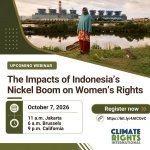
Indonesia is the world’s largest producer of nickel.
For women living near Indonesia’s nickel mines and processing facilities, the clean-energy boom is changing everyday life—often in harmful ways.
“Women living near or downstream from Indonesia’s massive, polluting nickel industry are facing some of the greatest burdens to their health, well-being, and livelihoods, all while receiving few, if any, benefits from the multi-billion-dollar industry powering the renewable energy transition,” said Krista Shennum, senior researcher at Climate Rights International.
cri.org/indonesia-nickel-ind…
