

The full-stack research platform for public equity investors. https://teapawt.org/t.co/0xRZegn2ep [email protected]
Joined November 2012
- Tweets2.4K
- Following1.2K
- Followers39.2K
- Likes1.8K




Pinned Tweet
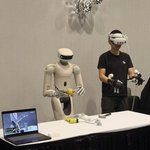
It was a pleasure supporting @TomorrowXSummit and meeting many of you in-person.
If you did not attend the conference, no worries, we will continue to host calls and other in-person events. Next Tuesday we will host a Product Day to walk through three plays on the Funda platform. The call is free, no Funda account or subscription required.
Time: Tuesday, 24 November 2026, 10:00 AM ET
Register here: funda.ai/event/gnx7mxqr
What to expect:
• Live walkthroughs of each Play
• The research frameworks behind each workflow
• Insights into compute costs, sector leadership, and inference demand
• Live Q&A and platform updates
The Plays we will discuss are:
GPU Rental Price Tracker
Compare rental prices across providers, GPU models, and lease types. Follow cross-vendor price indices, see which providers are driving price changes, and examine the gap between hyperscalers and neoclouds to assess how compute costs are evolving.
Thematic Sector Rotation
Track relative strength and momentum across thematic sectors through daily rankings, rotation charts, and leadership maps. See which sectors are gaining or losing leadership, and use S&P 500 style indicators to put those shifts in the context of broader equity-market conditions.
Inference Tokens
Follow a daily estimate of global inference token volume, summed vendor by vendor across 34 companies, and the changing mix of open-weight and closed models. Examine vendor contributions to growth, spending estimates, and realized versus listed token prices to assess where inference demand is expanding and how pricing is changing.
Our GPU rental tracker is free: funda.ai/play/gpu-spot-price…


A week before TomorrowX, Austin also hosted the Conference on Robot Learning 2026.
We report our takeaways in the second post of our Physical AI series. Among other things, we update our assessment of robot deployment timelines and assessment of compute demand from robotics.
fundaai.substack.com/p/resea…

We can divide demand into three segments: startups, tech companies, and enterprises. Our earlier briefing focused primarily on the enterprise segment. For more details, please see our report.
Report fundaai.substack.com/p/deepa…

Two days ago, we published our report on Anthropic’s IPO, drawing on research involving more than 80 enterprise customers. One interesting finding is that enterprise adoption may be slower than the market expects, particularly between now and the end of the first half of next year. Adoption could start to accelerate around the middle of next year.
The 58 traditional enterprises we track generally expect AI spending growth to slow in 2027. A closer look at their spending mix and project pipelines suggests that growth is shifting from paid seats to more complex applications, rather than demand reaching a ceiling.
On average, respondents expect AI spending to rise about 31% year over year in 2027. Roughly 60% expect slower growth next year than this year, and a small number expect spending to be flat or decline.
Report fundaai.substack.com/p/deepa…

Two days ago, we published our report on Anthropic’s IPO, drawing on research involving more than 80 enterprise customers. One interesting finding is that enterprise adoption may be slower than the market expects, particularly between now and the end of the first half of next year. Adoption could start to accelerate around the middle of next year.
The 58 traditional enterprises we track generally expect AI spending growth to slow in 2027. A closer look at their spending mix and project pipelines suggests that growth is shifting from paid seats to more complex applications, rather than demand reaching a ceiling.
On average, respondents expect AI spending to rise about 31% year over year in 2027. Roughly 60% expect slower growth next year than this year, and a small number expect spending to be flat or decline.
Report fundaai.substack.com/p/deepa…
Seat Expansion Drove Early Spending Growth but Is Approaching Its Limit
Early in the adoption cycle, companies could quickly raise AI spending by rolling out paid seats to employees. Seats still account for about 55% of AI spending on average in our sample, but roughly 67% of employees are already covered, leaving limited room for further expansion. Growth must increasingly come from API usage in actual business workflows. About 60% of respondents expect API usage to be the main source of future spending growth. That requires new applications that consume more tokens.
Report fundaai.substack.com/p/deepa…

1
6
2,944
More Complex Applications Can Drive API Growth but Take Longer to Deploy
Basic API applications, including knowledge search and Q&A, document summaries, and coding assistance, are becoming widespread. Further growth increasingly depends on customer-facing applications and more complex, multistep agentic workflows. These take much longer to deploy.
The difficulties arise at both ends of the process: identifying the right problem and putting the solution into production. Companies must select valuable use cases from a long list of possibilities and define the requirements clearly. Many traditional enterprises lack the talent and experience to do this themselves and turn to external forward-deployed engineers (FDEs). Deployment then requires substantial organizational and process changes. Cross-functional workflows need redesigning, gaps in legacy data need filling, and permissions, compliance, and identity integration must be worked through. Sequential security and governance approvals are difficult to compress, while expansion across departments and regions requires extensive coordination.
Complex AI applications therefore typically take 6-12 months from kickoff to launch, with large- scale deployment taking longer at major enterprises. Our earlier research found that even products such as M365 Copilot take months to roll out: roughly 2-3 months to launch and integrate Copilot, and 3-6 months for ChatGPT or Claude enterprise editions. Custom API projects typically take 3-12 months from approval to launch, followed by a further ramp-up in usage.
Report fundaai.substack.com/p/deepa…

Ahead of Anthropic’s IPO, we spent considerable time on field research to better understand AI ROI.
In our latest post, we set out to answer the questions below.
- If we divide Anthropic’s customers into startups, technology companies, and traditional enterprises, how is demand developing in each group, and where does it go from here?
- How do KV caching and model routing affect ARR?
- How does today’s token budgeting differ from the SaaS optimization cycle of 2022-2023?
- How does competition from OpenAI and open-weight models affect ARR?
- Which use cases create meaningful switching costs?
- Beyond today’s applications, what new use cases could contribute to ARR in 2027?
- How might recent developments at NVIDIA affect Anthropic, and which findings from our research might they challenge?
fundaai.substack.com/p/deepa…
AI is accelerating vulnerability discovery, but the rush to patch is now causing outages. The bottleneck is shifting from finding vulnerabilities to fixing them without disrupting production.
This is largely positive for cybersecurity. AI may commoditize code scanning and patch generation, but these are not core revenue drivers for most major security platforms.
$CRWD, $PANW, $NET and $ZS are better positioned to benefit from rising security complexity through their telemetry, enforcement and infrastructure capabilities.
$QLYS and $TENB have more direct exposure to vulnerability management, creating both opportunities and competitive risks.
The real value is shifting toward safe remediation, production-level enforcement and rollback—not simply finding more vulnerabilities.

NEWS: Wall Street execs and NSA have told Congress that outages were caused by patching vulnerabilities identified by AI models, sources say
AI did not cause outages but found so many issues that the rush to fix them before an attack overwhelmed systems
washingtonsun.com/technology…

AI is beginning to creep into chip design, suggesting that RSI is now extending into hardware.
We take a closer look at how the frontier labs have been hiring for chip design roles, and the impact of AI at each stage of chip design:
fundaai.substack.com/p/deepl…
1
32
7,310

Weekly|The Rebound and What Comes Next, NVDA Financing, Cybersecurity, CPO, IFX & AMAT
Last week, we argued that the medium-term questions facing AI could coexist with a near-term rebound after the sharp selloff. In the first half of the week we saw a sharp rebound, which was later interrupted. We would keep the same distinction between time horizons: a recovery in share prices does little to resolve the gap between ambitious infrastructure spending and the revenue needed to support it. Jensen Huang’s departure adds another reason to look more carefully at how that spending gets financed.
As we discuss in this week’s NVDA deep dive, Huang’s role extended well beyond selling GPUs. NVIDIA’s equity investments, capacity backstops and credit support helped Neolabs and Neoclouds raise capital and commit to expansion. A more conservative approach under new leadership could make the medium-term constraints we discussed last week more visible. The first changes may show up in new investments and financing commitments over the next one or two quarters, with consequences for deployment and hardware demand emerging later. Strong near-term GPU demand can coexist with a less supportive funding environment. We think the market needs to scrutinize who is financing the next round of capacity, on what terms, and how much spending depends on continued support from NVIDIA.
This week also brought more evidence of the security and operational risks surrounding increasingly connected software. Fireworks’ security incident exposed data from some Notion workspaces, illustrating how an AI infrastructure vendor’s breach can reach customers of the applications built on it. Separately, the prolonged Microsoft 365 outage disrupted essential business services. Microsoft attributed the outage to a network upgrade issue exposed by a subsequent change, and said it was unrelated to cyberattacks or AI/agents. It does, however, underline how much business activity depends on a small number of shared services.
These developments reinforce our focus on the cost of securing and maintaining the systems that AI increasingly relies on. As AI expands software development and accelerates vulnerability discovery, enterprises face more work in remediation, identity management, third-party oversight and continuous protection. We see a firmer basis for sustained cybersecurity demand, even while the funding and returns on parts of AI infrastructure remain uncertain. The timing still matters: our latest checks point to security-spending growth among covered customers rising from 10–12% in 2026 to 13–15% in 2027, with much of the immediate response funded through existing budgets. Our PANW preview provides an early read on how that demand is reaching established security platforms.
This Week’s Reports
NVDA: Near-term demand meets a more uncertain financing backdrop. Our earnings preview examines the B300 ramp and Rubin shipment timing, while our new deep dive considers how Huang’s departure could change NVIDIA’s support for Neolabs, Neoclouds and its supply chain.
fundaai.substack.com/p/deepn…
fundaai.substack.com/p/previ…
CPO: Bonding and testing still limit the ramp. Our equipment and process checks point to large-scale shipments in late 2027–2028, with hybrid-bonding yields and an unresolved test-vendor decision keeping near-term volume expectations in check.
fundaai.substack.com/p/deep-…
Cybersecurity & PANW: The budget response is taking shape. Our latest cybersecurity checks point to faster spending growth in 2027, while the PANW preview examines solid customer spending and continued consolidation onto fewer security platforms.
fundaai.substack.com/p/colum…
fundaai.substack.com/p/previ…
Premium Report Snapshot
A portion of our research is reserved for Premium subscribers and is not distributed via Substack. Below is a snapshot of what Premium subscribers received this week beyond the Substack feed.
Deep | DELL: Direct ODM Procurement and Fading Memory Benefits Pressure Margins
Review | AMAT FY26Q4: DRAM Strength Supports Another Year of Expansion
Preview & Review | IFX FY26Q4: Data Center Guidance Reaches the Upper End of Expectations
Column | Adobe: AI Accelerates the Development of Competing Products
Detailed Report
fundaai.substack.com/p/weekl…

$nvda - It might be worth revisiting our note from April about the durability of one of Nvidia's moats, CUDA.
At the time, our audience was only half as large as it is today.
fundaai.substack.com/p/deepn…
Today, the Federal Aviation Administration issued only the second nationwide ground stop since 9/11. It exposed a serious problem: legacy infrastructure is struggling to keep pace with digital transformation.
Network modernization is the most immediate necessity ($T, $CSCO, $HPE), while rising system complexity will drive demand for Observability and AI Ops ($DT, $DDOG).
We've set out fuller thoughts about the impact of Jensen's departure in our latest note: fundaai.substack.com/p/deepn…
One example relates to our CPO update - Jensen has been a driving force behind CPO. It remains to be seen if the supply chain will continue to develop aggressively in his absence.
The news surrounding Jensen Huang hits hard, and it throws a major wildcard into the medium-to long-term outlook for the AI supply chain.
Reflecting on the past few years, $NVDA's exponential leaps in compute came down to a founder-led culture of relentless boundary-pushing and trial and error.
Whether moving into CoWoS packaging and high-stack HBM, or aggressively driving high-speed copper cabling, CPO, orthogonal backplanes, Q-glass substrates, full-rack liquid cooling, and HVDC power, Jensen was always willing to stomach early yield pain and product delays to test the limits of physics and manufacturing with every data center generation. That kind of founder-driven conviction is difficult to replicate under professional management.
For the supply chain, Nvidia’s radical innovation translated directly into tangible dollar-content expansion. Steeper technical and production barriers allowed component and manufacturing players to command meaningful pricing premiums and these are the fundamental driver behind the massive value creation and multiple re-rating across the supply chain over the past three years.
If the pace of hardware iteration turns more conservative without Jensen's leadership, it is an open question whether the supply chain will continue to benefit from spec-upgrade tailwinds.
We interviewed several equipment and process experts on where CPO mass production stands, with a focus on hybrid bonding.
The note is relevant to (among others) Besi, Tokyo Electron, EV Group, ficonTEC, MPI, Teradyne, Advantest, FormFactor, Chroma, TSMC, and ASE/SPIL
fundaai.substack.com/p/deep-…
The news surrounding Jensen Huang hits hard, and it throws a major wildcard into the medium-to long-term outlook for the AI supply chain.
Reflecting on the past few years, $NVDA's exponential leaps in compute came down to a founder-led culture of relentless boundary-pushing and trial and error.
Whether moving into CoWoS packaging and high-stack HBM, or aggressively driving high-speed copper cabling, CPO, orthogonal backplanes, Q-glass substrates, full-rack liquid cooling, and HVDC power, Jensen was always willing to stomach early yield pain and product delays to test the limits of physics and manufacturing with every data center generation. That kind of founder-driven conviction is difficult to replicate under professional management.
For the supply chain, Nvidia’s radical innovation translated directly into tangible dollar-content expansion. Steeper technical and production barriers allowed component and manufacturing players to command meaningful pricing premiums and these are the fundamental driver behind the massive value creation and multiple re-rating across the supply chain over the past three years.
If the pace of hardware iteration turns more conservative without Jensen's leadership, it is an open question whether the supply chain will continue to benefit from spec-upgrade tailwinds.
Preview|NVDA FY27Q3: HBM Delays May Slow the Rubin Ramp; Near-Term Demand Remains Solid
Earlier HBM Delays May Slow the FY27Q4 Rubin Ramp. We expect FY27Q4 Rubin GPU shipments to fall slightly below earlier expectations because of shipment delays caused by prior HBM delays. Customer demand remains solid, and B300 demand should support near-term results. We expect the delayed Rubin shipments to move into 2027.
Detailed Report
fundaai.substack.com/p/previ…
