







🚩 Linux Cryptomining Campaign Uses Rootkits, TOR C2, and Fake GPU Readings
thehackernews.com/2026/11/sa…
A Linux cryptomining operation tracked as REF3364 is using SANSAR, a Rust-based toolkit that manages CPU and GPU miners through TOR.
It modifies NVIDIA's NVML library so tools like nvidia-smi report 0% GPU usage, even while mining is running.
The toolkit also includes a kernel rootkit to hide processes and files, plus a backdoor that retrieves its C2 address from an Ethereum smart contract.
#ThreatIntel #Linux #Cryptomining #Nvidia #CyberSecurity

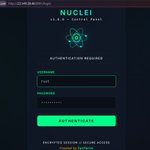
An operator going by ZynTarvo, the handle signed on the Nuclei panel running on this box, left their whole C2 kit sitting in an open directory.
This one's the attacker's own box, not a victim's. Sliver and a custom Python server both running as root, with a reverse shell set to call home every 5 minutes. A live operation, wide open to read.
#opendir 23.149.28[.]46:8000 🧵

So who's the target? The kit points at web apps. Next to the C2: rockyou.txt, a top2000 password list, and hash files including phpass, WordPress's own hashing scheme. That's a setup for cracking site logins offline.
Three JSON profiles dress C2 traffic up as normal web requests, and a branded Nuclei scanner runs on :8081, "NUCLEI // ACCESS", signed ZynTarvo.

Original find by @navneetr4j. Thanks for flagging this one!
Full file listing available here:
portal.hunt.io/attackcapture…


Hunt.io retweeted

Daily @Huntio because why not?
http://195.133.61[.]76
Guys busy sending phishing lures as business proposals and harvesting creds. The twist? They published their SMTP creds for Gmail. 😂
🚨 XMRig and Gh0st RAT Deployed in Attacks Against Microsoft SQL Servers
infosecurity-magazine.com/ne…
Attackers are targeting internet-facing Microsoft SQL Servers with weak passwords to deploy an XMRig-based Monero miner and Gh0st RAT.
The campaign uses Naabu to scan port 1433, followed by brute-force attempts against more than 2,700 passwords.
Once inside, attackers enable xp_cmdshell through T-SQL to execute commands and download malware.
Persistence involves scheduled tasks, Windows services, and registry Run keys. Gh0st RAT supports keylogging, data theft, screen capture, and remote desktop access.
#ThreatIntel #SQLServer #XMRig #CyberSecurity

4
848
🚩 Falcon C2 Abuses WebSockets and Browser Extensions for Espionage
cyberpress.org/hackers-deplo…
A NodeJS-based C2 framework called Falcon has been used to target government agencies across Southeast Asia and the Middle East.
Attackers inject malicious JavaScript into compromised webmail portals and government applications, establishing encrypted WebSocket connections for command execution.
Falcon also uses malicious Chrome and Firefox extensions disguised as PDF viewers to intercept HTTP requests, steal credentials and session cookies, and turn browsers into reverse proxies.
Some attacks also deployed Antino, a Rust backdoor that uses Microsoft OneDrive for C2.
#ThreatIntel #ThreatHunting #Malware #CyberSecurity

📌 Hunting PHP2Shell: From Honeypot Activity to Exposed Exploit Tools
When the PHP2Shell vulnerabilities surfaced a few weeks ago, we quickly started tracking exploitation attempts and exposed attacker tooling.
CVE-2026-109618 and CVE-2026-109619 are critical PHP RCE flaws, both rated CVSS 9.2. Our honeypots detected scanning just 20 minutes after patches shipped.
Using AttackCapture, we found around ten exposed attacker workspaces containing PHP2Shell tools, including one targeting 123 servers through a proxy network.
In our analysis, we break down the exposed infrastructure, attack attempts, and indicators worth monitoring.
Check out the full article here 👉 hunt.io/blog/php2shell-cve-2…
#ThreatHunting #ThreatIntel #CyberSecurity #PHP2Shell

🚨 Hackers Chain PHP2Shell and Gaia OS Flaws in Check Point Gateways
thehackernews.com/2026/11/ha…
Attackers are exploiting PHP2Shell (CVE-2026-109618/109619) on unpatched Check Point Security Gateways, then chaining CVE-2026-123039 in Gaia OS to gain root access.
Once inside, they deploy PHP web shells and a persistent backdoor called TSGA, which supports encrypted remote access, configuration theft, and firewall log tampering.
In some cases, attackers moved laterally to VMware ESXi hosts over SSH and deployed a wiper called destroy_v6.
The campaign initially targeted Israeli organizations before expanding worldwide.
#ThreatIntel #ThreatHunting #PHP2Shell #CyberSecurity

1
595
🔍 Turn Threat Research into Your Next Investigation with IOC Hunter
Looking for a starting point for your next threat hunting investigation?
Hunt's IOC Hunter turns public threat research into validated, enriched indicators that analysts can use to investigate suspicious infrastructure.
We pull IOCs from 175+ trusted publications, combining LLM-powered extraction with human review to balance speed and accuracy.
Each IOC comes with additional context and can be used to pivot across our platform, explore related infrastructure, and find new leads.
See how threat intelligence can help kickstart your investigations 👉 hunt.io/get-started
#ThreatHunting #ThreatIntel #Phishing #CyberSecurity


⚠️ Hackers Abuse GSocket to Maintain Persistent Access to Linux Servers
sqmagazine.co.uk/microsoft-g…
Hackers are deploying GSocket on compromised Linux servers to maintain access even after the initial vulnerabilities are patched.
GSocket uses encrypted outbound connections through a relay network, with a shared secret replacing traditional C2 addresses. No inbound listener is needed.
Most detected activity involved PHP applications and cPanel hosting environments, with payloads staged under /dev/shm and disguised as system processes.
Persistence involves cron jobs, systemd services, and shell startup files. Some attacks also attempted to exploit CVE-2026-43284 for root access.
#ThreatIntel #ThreatHunting #GSocket #Linux #CyberSecurity

🕵️♂️ Exploring Real Attacker Files Hidden in Open Directories
Investigating suspicious infrastructure hosted by a particular provider?
Using Hunt's AttackCapture, we can filter by provider to narrow down malicious infrastructure and investigate what's hosted there.
In this example, we filter for OVH SAS, select a server with hundreds of files, and explore its contents.
We can review malware detections, preview scripts, inspect complete files, and download them for further analysis.
On this occasion, we quickly came across a shell script, dl_chunks.sh, which downloads a payload from 139.170.223[.]9:8081 in 65,536-byte chunks.
And that's just one file. From there, we can keep digging into other scripts, malware samples, and related infrastructure, all within the same investigation.
Start exploring exposed directories and attacker tooling 👉 hunt.io/get-started
#ThreatHunting #ThreatIntel #CyberSecurity


🚩 China-Linked CopperDragon Targets Critical Infrastructure Across Three Continents
gbhackers.com/copperdragon-m…
A malware framework called CopperDragon has been linked to several China-linked threat groups, including FamousSparrow, Earth Estries, and TropicTrooper.
Three campaigns, SilentDelivery, OceanGate, and DarkWire, targeted telecom providers, government agencies, and critical infrastructure across Europe, Asia, and Latin America.
The attacks involved watering-hole sites, phishing, Linux backdoors, credential theft, and lateral movement.
The findings suggest these groups may be sharing tools supplied by the same malware developer.
#ThreatIntel #ThreatHunting #FamousSparrow #CopperDragon #CyberSecurity

One Contabo server in France. Six ports. An Indian financial fraud operation running in the open.
Port 9090 serves “ASTIK MODULE,” an SMS gateway panel with a cast injection UI listing sender IDs: PAYTM, HDFCBK, SBIINB, ICICIB. Port 3000 hosts a fake “Account Verification / Ministry of Road Transport” page that collects name and mobile number, then asks for a ₹1 “registration fee.” There’s also a mParivahan clone on :8090 and :3005.
The :3000 phishing page passes an API parameter pointing to 13.140.57[.]112 in the URL. That same IP appears in the AttackCapture report as the configured panel endpoint for BlackieDev, the Android root module found on :8085. That’s not a coincidence. The phishing frontend and the device-control backend share infrastructure.

Host: 169.58.23[.]32 (AS51167, Contabo GmbH, FR)
PTR: vmi3442832.contaboserver(.)net
Ports observed:
:80/:8085 open directory
:1234 file upload
:3000 fake Ministry of Transport
:3005/:8090 mParivahan clone
:9090 ASTIK MODULE SMS gateway
:9091 Astic Exec Bridge
Full AttackCapture report: portal.hunt.io/attackcapture…
Create a free account to access the report and file analysis at portal.hunt.io/sign-up

1
1
210
Thanks to @solostalking for the find:
teapawt.org/solostalking/status/21…

Opendir of operator hosting fake mParivahan app/ website
169.58.23.32:8085
app.any.run/tasks/23c89fde-2…
