

IPSS: Research to Build Peaceful African Societies. Retweets ≠ endorsements.
Addis Ababa, Ethiopia
Joined November 2013
- Tweets6.2K
- Following146
- Followers13.9K
- Likes2.3K




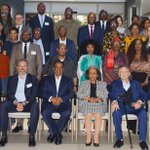


The Institute for Peace and Security Studies (IPSS) extends its warmest congratulations to Dr. Yonas Adeto Adaye, its former director, on his appointment as Ambassador Plenipotentiary by H.E. Taye Atske Selassie, President of the Federal Democratic Republic of Ethiopia. We are confident that his experience in peace, security, and dialogue will greatly serve his new diplomatic mission. We wish Ambassador Dr. Yonas Adaye great success in this national responsibility.

Addressing 21st-century security challenges requires a fundamental reorientation in how peace work is conceptualized and implemented. On 19 November, IPSS hosts Prof. Gearoid Millar to analyze Africa’s strategic choices in adapting policy and scholarship to emerging realities. The lecture will be followed by a discussion facilitated by @halelule.
📅 19 Nov | 8:30 AM EAT
📍 IPSS Conference Hall
Register to attend 👉 forms.gle/KtasrrVTgW8EaE3c7
More Info: ipss-addis.org/event/21st-ce…

Yesterday, during Panel 2, Esraa Adam's presentation, “Redefining Women's Agency in Peacebuilding: Lessons from Eastern Africa for International Peace Frameworks,” examined the gap between international commitments and the recognition of women's roles in conflict resolution and peacebuilding.
The speaker highlighted UN Security Council Resolution 1325 and its recognition of women's participation in conflict prevention, resolution and peace processes. The discussion also examined the implementation and limitations of the Women, Peace and Security agenda in the Horn of Africa, particularly in Sudan. The presentation emphasised the critical role women play in peacebuilding.


How can IGAD reclaim its strategic role in managing conflicts in the Horn of Africa?
During Panel 2, Mohamed Yimer, Academic Affairs Internationalization and Partnerships Coordinator, Woldia University (ILA alumni), presented on “The Strategic Role of IGAD in Managing Sudan-Ethiopia-Eritrea (SEE-R) Relations,” arguing that the three countries form an interconnected regional conflict system requiring coordinated responses.
He identified five structural challenges facing IGAD, including perceptions of partiality, incomplete membership, divisions among member states, limited mediation leverage and coordination gaps with the AU.
The presentation proposed five roles for IGAD: convening regional leaders, upholding non-interference norms, providing early warning, supporting AU-led mediation and securing member-state commitments to peace.
Recommendations included stronger AU-IGAD coordination, impartial mediation safeguards, a regional non-interference compact and renewed Sudan-Ethiopia border cooperation.
The discussion emphasised the need to restore IGAD's credibility, institutional independence and member-state trust to strengthen regional peace and security.

Panel 1: The presentation by Ashenafi Mebratu, Haramaya University/ILA Alumni chairperson, examined how digital media shapes public perceptions of regional security, diplomacy and geopolitical relations in the Horn of Africa. The speaker argued that regional foreign policy is no longer shaped solely through state-to-state diplomacy, military alliances and formal negotiations. Young digital citizens increasingly influence how geopolitical developments are interpreted, discussed and understood online.
The presentation called for stronger youth media literacy to counter misinformation, emotional manipulation and polarising narratives surrounding regional issues, particularly Nile hydropolitics and Red Sea access.

🌍 Happening Now: ROLES-ILA Research Conference on Conflict Resolution in Eastern Africa.
Despite remarkable strides in economic development and regional cooperation, the East and Horn of Africa continue to navigate a complex, fragile security landscape. Cross-border conflicts and regional dynamics call for urgent, continued dialogue, research, and collaborative action.
Right now, scholars, researchers, and practitioners from the region and Japan are gathering at the Institute for Peace and Security Studies (IPSS), Addis Ababa University, to dive deep into these critical issues.
This conference marks a vital milestone in the 2026–2028 research cycle of the ROLES Theory and Practice of Conflict Resolution Study Group (University of Tokyo) in partnership with the IGAD Leadership Academy (ILA) and IPSS.
Stay tuned for more insights as discussions, presentations, and interactive exchanges unfold this afternoon! 🤝🕊️
#ConflictResolution #EasternAfrica #HornOfAfrica #PeaceAndSecurity #ROLES #ILA #IPSS #AddisAbaba #GlobalPartnerships


🚨New Insight | November 14, 2026
In this week’s IPSS Insight, Haymanot Kassahun, Programme Officer, IPSS, examines the complex relationship between federal structure and security in her latest review, "A Reader’s Perspective on Federalism, Insecurity, and the Pursuit of an Own Ethnic Region in Southern Ethiopia ".
The insight analyses how pre- and post-2018 demands for regional statehood in Southern Ethiopia have frequently been met with securitized responses by the government, which often perceives these demands as threats to national unity.
Follow the link to read the full Insight 👉 🔗ipss-addis.org/a-readers-per…

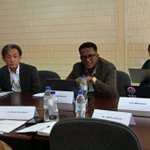
IPSS / Tana Forum Secretariat, participated in the High-Level Roundtable on the Peace, Security and Cooperation Framework for the Democratic Republic of the Congo and the Great Lakes Region from 10 –11 November 2026 in Durban, South Africa. The roundtable was convened by the African Centre for the Constructive Resolution of Disputes (ACCORD) in collaboration with the Department of International Relations and Cooperation (DIRCO).
The roundtable sought to:
📍Assess the evolving political, security, and humanitarian dynamics in Eastern DRC and the wider Great Lakes region, including the role and interests of regional actors and institutions.
📍Examine ongoing peace, mediation, and diplomatic initiatives, including the implementation of the PSC framework.
📍Identify strategic priorities, challenges, and opportunities for South Africa’s leadership during its tenure as Chair of the Regional Oversight Mechanism (ROM).
📍Generate policy-relevant recommendations to inform engagements on broader regional efforts towards peace, security, and stability in the Great Lakes Region.
The workshop ended with a set of recommendations to be submitted to the Department of International Relations and Cooperation (DIRCO) for their consideration.


🚨New Publication: #TANAPAPERS2026

#Peace in #Africa goes beyond #silencingguns. It requires total economic independence. The TANA PAPERS 2026 reveals how energy integration, smart border governance to stop illicit financial flows, and digital inclusion are the true pathways to stability.
Read or download the full policy briefs 👉🔗 ipss-addis.org/download/tana…
#TanaForum2026 #TanaForum #AfricaRising

State of Peace and Security in Africa 2025/2026 👇
We keep treating the symptoms of conflict in Africa, like armed groups and fragile borders, while ignoring the disease: who controls the wealth. Unveiled at the #TanaForum2026, the SPSA 2025-2026 report reveals that true peace isn’t just a ceasefire; it’s economic sovereignty. The #AfCFTA isn't just for trade, it's a weapon for peace.
Read or Download the full report 👉ipss-addis.org/download/spsa…

Institute for Peace and Security Studies retweeted

Opening and significance - How can Africa prevent conflicts from recurring? On 9 November, H.E. @Bankole_Adeoye, AU Commissioner for @AUC_PAPS, opened a roundtable on the revised AU PCRD Framework, with perspectives from Dr Solomon Dersso (@africa_amani) and Dr Mercy Fekadu (@IPSS_Addis).
#AU20PCRD #PCRDMonth26


In her closing reflections, Ms. Lesley Connolly, Regional Policy and Advocacy Manager at Nonviolent Peaceforce, calls for urgent implementation of the revised AU PCRD Framework. She stresses the need to connect community-led risk assessments with continental early warning systems, establish two-way communication and provide sustainable funding for grassroots peacebuilders.

1
3
393
Ms. Shemona Otu-Ansah, Representative to the AU, Baha’i International Community highlights the role of young people in advancing community-led conflict prevention. Drawing on experiences from the Democratic Republic of the Congo, Zambia and Liberia, he calls for greater trust in youth leadership, meaningful participation in governance and sustained institutional support for locally driven peacebuilding.

191
Ms. Kudzanai Mativiria, Head of Programs, Nonviolent Peaceforce South Sudan highlights how community-based early warning and early response mechanisms help prevent violence in South Sudan. Drawing on 16 years of work, the speaker calls for formal recognition of community protection teams, sustained funding, protection for local peace actors and stronger links between community-level warnings and national and AU response systems.
