
American in Ukraine - YouTube @JayinKyiv
Kyivwf
Joined June 2022
- Tweets74.6K
- Following2.6K
- Followers212K
- Likes91.7K





As Ukraine binges on Russian refineries - 20 attacks on 17 refineries in only 26 days - Putin's desperation reaches a new level, now with a veiled plea to Trump to somehow stop those dastardly Ukrainians.
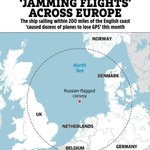
A Russian ship is suspected of jamming the GPS navigation systems of approximately 140 civilian aircraft over northern Europe, including passenger flights operated by British Airways, Ryanair and EasyJet.
According to ADS Advance, the November 9 incident affected airspace over eastern England, the Netherlands, northwestern Germany and the southern North Sea.
The interference lasted 19 minutes, affecting up to 92 aircraft simultaneously.
The Russian vessel suspected of being responsible was believed to be escorting a convoy of cargo ships through the North Sea.

Jay in Kyiv retweeted

The U.S. continues to block Ukraine's Starshield.

It is deeply troubling when, amid all the discussions about how to end the war, Starshield works one moment and faces restrictions the next, while missiles for Patriot systems are not only becoming scarcer, but additional steps are also being taken that prevent deliveries. All this is happening while Putin's plan is focused on winter. All the intelligence on this is available, and our intelligence agencies are sharing the relevant information. Putin is counting on breaking Ukraine. Kyiv, Dnipro, Odesa, Kharkiv, Zaporizhzhia – these cities above all. Breaking us through a lack of protection and forcing Ukraine to withdraw from Donbas.
This cannot be happening at the same time as the American side is not signing off on deliveries of anti-ballistic interceptors. Because America is putting itself in a very unpleasant situation. Politically, it looks as if it is on a course aligned with what Putin wants: forcing Ukraine into unfavorable compromises. But life and history extend far beyond friendship, business, or partnership with a single person who is an aggressor. Far beyond.
From an interview with Bloomberg. (2/3)
As Russian casualties ramp to record levels, Russian soldiers that manage to survive are posting on social media, warning others of a roughly 90% death rate, with most lasting less than two weeks and that even those merely wounded still eventually die.
The Putin/Musk/Trump anti-democracy continues blocking Ukraine's Starshield.
It is deeply troubling when, amid all the discussions about how to end the war, Starshield works one moment and faces restrictions the next, while missiles for Patriot systems are not only becoming scarcer, but additional steps are also being taken that prevent deliveries. All this is happening while Putin's plan is focused on winter. All the intelligence on this is available, and our intelligence agencies are sharing the relevant information. Putin is counting on breaking Ukraine. Kyiv, Dnipro, Odesa, Kharkiv, Zaporizhzhia – these cities above all. Breaking us through a lack of protection and forcing Ukraine to withdraw from Donbas.
This cannot be happening at the same time as the American side is not signing off on deliveries of anti-ballistic interceptors. Because America is putting itself in a very unpleasant situation. Politically, it looks as if it is on a course aligned with what Putin wants: forcing Ukraine into unfavorable compromises. But life and history extend far beyond friendship, business, or partnership with a single person who is an aggressor. Far beyond.
From an interview with Bloomberg. (2/3)
Jay in Kyiv retweeted

To reżim w Mińsku uderzył w bezpieczeństwo polskiej granicy. Świadomie. Wykorzystując migrantów jako narzędzie presji i destabilizacji Polski oraz jej europejskich partnerów.
Polska nie wywołała tego kryzysu. Od 2021 roku mierzyliśmy się z wieloletnią presją migracyjną będącą częścią ataku hybrydowego. Bronimy przy tym nie tylko granic Rzeczypospolitej. Przystępując do strefy Schengen, przyjęliśmy odpowiedzialność za ochronę jej granicy zewnętrznej, również w interesie bezpieczeństwa pozostałych państw.
Nie można oceniać działań polskich władz i służb w oderwaniu od źródła tego zagrożenia.
Wydany dziś wyrok Europejskiego Trybunału Praw Człowieka stwierdza naruszenie Konwencji przez Polskę. Budzi jednak poważne pytania o to, czy europejski system ochrony praw człowieka w wystarczającym stopniu uwzględnia realia ataków hybrydowych i obowiązki państw odpowiedzialnych za bezpieczeństwo zewnętrznych granic Europy.
Co więcej, sam ETPC wskazał, że władze białoruskie zachęcały migrantów do przekraczania granic, ułatwiały im to lub do tego zmuszały w celu destabilizacji państw sąsiednich. Trybunał potwierdził również prawo państw do kontrolowania, a nawet zamykania granic.
Białoruś nie podlega jurysdykcji ETPC, ale pozostaje stroną Konwencji ONZ przeciwko torturom oraz Konwencji dotyczącej statusu uchodźców.
Polska ma prawo i obowiązek bronić swoich granic.
Jay in Kyiv retweeted

Canada is the fourth-biggest contributor to PURL, which funds these Patriot interceptors that the Pentagon is delaying. Ottawa should be asking questions about why our aid for Ukraine is being blocked. giftarticle.ft.com/giftartic…

Jay in Kyiv retweeted

It is worth explaining why 720,000 russian military deaths over nearly five years of war matter much more than many think.
An ordinary russian may not give a fuck about these 720,000 dead. Many would say, well, it was their choice. Some see it as tragic, some feel for them, but much of the general population appears indifferent.
A large proportion of these troops signed contracts voluntarily in exchange for money. There is a very different perception of their deaths in society. "Your choice, you knew the risks, you took them, and now you are dead. Sorry, but that's the way it is."
So let's look at recruitment numbers.
Russian budget data shows that the regional cost of recruiting a soldier increased by approximately 36% year over year in October, while recruitment fell by 11% over the first ten months of 2026 compared to the same period in 2025.
They are offering more but getting less. This is an obvious indicator of the exhaustion of their existing recruitment pools.
There are two main reasons why I think we are seeing this:
Information about losses becomes more accessible every day. More people lose family members, more wounded soldiers return home, and more soldiers tell their families what is actually happening on the battlefield. This information spreads through society.
The low-hanging fruit of recruitment is gradually disappearing. Those in financial desperation, those heavily in debt, highly motivated patriots, criminals and others for whom military service was an attractive option have already been heavily recruited.
Every new recruit costs more and is harder to get. The longer this continues, the more difficult recruitment becomes.
Fine, but russia still recruits large numbers of people and manages to fill gaps in its military rosters. That is correct.
However, these are just numbers on paper. A brigade of 3,000 soldiers can be an effective, cohesive fighting force, or it can be a demoralized, unwilling and dysfunctional formation that struggles to accomplish even basic tasks.
Both look identical on paper.
That's where we turn to evidence from the battlefield. We have good mappers such as DeepState, Andrew Perpetua and Clément Molin, who do an excellent job documenting the frontline.
Russian territorial gains have significantly decreased, while the number of russian soldiers dying for each square kilometer gained has increased.
Estimated deaths per square kilometer:
2025: 60
2026: 120–180 (data is not yet complete)
60 deaths per square kilometer is already an extremely high price to pay. At 120 or even 180, we are talking about an entirely different level of attrition.
At this rate, taking the remaining 5,300 square kilometers of Donetsk Oblast controlled by Ukraine would theoretically cost russia another 636,000 to 954,000 military deaths.
That's why Ukraine refuses to withdraw. You want it, you pay for it with blood.
Why did this number spike so much in 2026?
Obviously, Ukraine adapts. Technology evolves, tactics change, and defensive capabilities improve. However, I believe one of the major factors behind this deterioration is the declining morale and cohesion of the russian military.
Imagine the psychological toll of losing thousands of soldiers just to advance a few hundred meters into desolate land, with minimal tactical gains and no meaningful strategic gains.
Now imagine doing it day after day, month after month, for years.
The surviving soldiers and commanders may become completely indifferent to the lives of new recruits being sent into the meat grinder. Others develop depression, anger and severe psychological problems.
This creates a growing disconnect between experienced soldiers and new recruits, resulting in distrust, resentment and enormous internal tension.
How do you build unit cohesion when experienced soldiers no longer want to become emotionally attached to new recruits because they may be dead within days?
Every military in the world has limits to how many casualties it can sustain without meaningful achievements.
No, this is not necessarily the point when a commander says, "I won't send my troops to die anymore." Commanders themselves may become indifferent to the lives of their soldiers.
It is the point at which the force loses cohesion and effectiveness. Soldiers become unwilling to fight, desertion increases, trust in commanders disappears, and the formation becomes increasingly ineffective despite being fully staffed.
We have seen elements of this during the collapse of the russian imperial army in WWI, during the First Chechen War, and during the collapse of russian defensive positions in Kharkiv Oblast in September 2022.
We shouldn't forget Prigozhin's mutiny in June 2023 either. Months of fighting in Bakhmut, enormous losses, growing resentment towards military leadership and public accusations against the Ministry of Defense eventually culminated in an armed rebellion.
That happened less than a year and a half into the full-scale war. Think about how much psychological exhaustion, resentment and frustration could have accumulated within the russian military since then.
Yes, Ukraine also suffers casualties and has a much smaller manpower pool. But there is a fundamental difference between enduring losses while defending your own country and repeatedly sacrificing thousands of men for another few hundred meters of someone else's land.
Under normal circumstances, military leadership facing these diminishing returns would have strong reasons to reconsider its offensive strategy, consolidate its defenses and seek a diplomatic solution.
However, I believe putin is politically trapped.
While the war continues, the final cost of the war isn't being calculated, the promised rewards are still within reach, and the military remains occupied with fighting.
Even a ceasefire could present a serious political risk to putin. Soldiers would have time to reflect on what happened. Society would have more opportunities to ask what was achieved, what was lost, who is responsible, and whether it was worth it.
Continuing the war postpones these questions but makes the eventual answers increasingly difficult.
And so the meat grinder continues.
In my view, the russian military is on a path towards a disaster that cannot simply be prevented by increasing signing bonuses and recruiting more people. Lower oil revenues and Ukrainian deep strikes into russia can further accelerate this process.
You can replace dead soldiers. You cannot buy back years of accumulated combat experience, mutual trust, unit cohesion, morale and the willingness to fight.
For those that don't have time to read the thread, its summarized here.


Our approach at the Pentagon is to make our alliances stronger and more secure *in reality.* This naturally requires being *realistic* — about the threats we face, the resources we have available, the resolve to meet them, and the right practical strategies in light of those factors. Rhetoric has its place, but our view is that rhetoric supplanted reality far too much over the last generation. 1/


Jay in Kyiv retweeted

"Мамо, у мене зі спини тече кров". Цій дівчинці було 15. Вона мріяла про братика.
А за добу до загибелі сказала мамі: "Завтра все закінчиться".
Катя Шишкіна з Гостомеля не хотіла помирати. Вона хотіла жити - і казала про це мамі прямо, у підвалі, під звуки обстрілів.
До війни родина жила звичайним життям: Катя танцювала хіп-хоп, любила корейські серіали, готувала разом із мамою, годинами могла обирати щось у крамницях.
З собою завжди носила іграшкового песика Бульку - ще з трьох років.
24 лютого все змінилося. Родина опинилася в епіцентрі бойових дій і до початку березня ховалася в підвалі.
"Мамо, я так не хочу помирати", - сказала тоді Катя. Мама відповіла: "Ну що за дурниці?"
А дівчинка продовжила: "Я стільки всього в житті не спробувала, стільки всього невідомого…"
За добу до загибелі вона сиділа, схрестивши ніжки, хиталась і сказала: "Завтра все закінчиться". Мама не надала значення.
3 березня родина виїжджала з Гостомеля. На перехресті по машині почали стріляти російські військові.
Автівку розстріляли з усіх боків, колеса пробиті.
Коли мама відчинила задні двері, Катя сказала: "Мамо, у мене зі спини тече кров".
Коли Катя підняла куртку, на спині була дірка від кулі. Куля пробила нирку, легеню, пройшла в черевну порожнину.
Дівчину забрали на операцію. Через годину медики повідомили: травми були надто тяжкі. Каті не стало.
Машина з іграшковим Булькою, який був у крові дівчинки, так і залишилась на місці обстрілу.
Катю поховали за територією лікарні, у ковдрі, на подвір’ї місцевого дідуся. Пізніше перепоховали на Бучанському кладовищі.
Нині мама Юлія живе в Канаді. З собою має кілька речей доньки: шапку, трохи одягу. А у снах донька приходить до неї маленькою: танцює, усміхається, жартує.
"Думала колись - буде у мене випускниця. Яке плаття вона обере, яку зачіску? Я ніколи цього не побачу…"
Катя мріяла про братика й обирала плаття на випускний. Замість цього її історія - це нагадування про те, якою ціною Україна виборює своє майбутнє.

Jay in Kyiv retweeted

Musk censorship of anti-putin tweets reaches new levels... now if you call putin "kremlin pig" in a tweet, that tweet can no longer be retweeted and no longer be liked.

Jay in Kyiv retweeted

Merkel vetoed, not “Europeans”. I was there, Johnson wasn’t. The rest were in favour or neutral but Merkel wanted to appease Putin and do nordstream.
And it was only MAP, not membership.

Jay in Kyiv retweeted

Delaying the shipment of already paid for missile defense interceptors— another carrot.

Jay in Kyiv retweeted

I hope this report is wrong.
They are urgently needed to protect Ukrainian civilians from Russian ballistic missiles.

Pentagon delays Patriot missile shipments to Ukraine ft.trib.al/kNnEeYY

Jay in Kyiv retweeted

This is a policy designed to kill more Ukrainian children
FT Exclusive: The delivery of anti-ballistic interceptors, which the US had agreed to supply to Ukraine and are being paid for by Kyiv’s western allies, has been held up by defence secretary Pete Hegseth, according to people familiar with the matter ft.trib.al/sNDPxcX

ALT President Donald Trump and Ukraine's President Volodymyr Zelenskyy shake hands at the start of a joint news conference in December 2025. Text on image reads: (FT Exclusive) Pentagon delays Patriot missile shipments to Ukraine (Credit: Alex Brandon/AP)
Absent full mobilization, at the current trajectory of -20k/month, the Russian Army will be reduced by 50% two years from now.

