

CEO of TradeSmith, a leading fintech and quantitative investment research firm. Investors trust over $30 billion to be monitored and analyzed on our platform.
Joined October 2022
- Tweets2.9K
- Following228
- Followers5.7K
- Likes1.3K


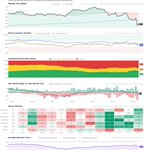


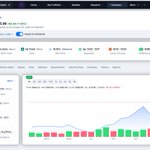
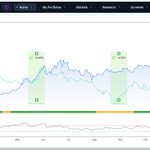
Most people expect a memory stock with this kind of order book to trade near its highs. Micron $MU is doing the opposite.
The stock closed Friday at $646.95 after a 7.6% bounce, and it still sits about 48.5% below its 52-week high of $1,255.
The business story has not changed. Management has said roughly 75% of 2027 output is already spoken for. TradeSmith's fundamental score on $MU reads 94 out of 100.
The price story is about targets coming down. BNP moved to Neutral with a $775 target, down from $1,700. UBS cut its target to $1,100 from $1,625. Even the lower targets sit above Friday's close.
Now the debate gets a deadline. Micron reports fiscal first-quarter results on Dec 17, and its buyback window opens Dec 9.
That gives the market two dates to decide whether a sold-forward order book or a falling target deserves more weight.
Which number matters more to you on Dec 17: margins or 2028 commentary?
70
Most people read a falling price per user as weakness. At SpaceX $SPCX, it looks more like the plan.
Starlink consumer revenue per user was $69 a month in Q3, down from $83 a year earlier, per the Q3 call. In the same quarter, Starlink added 1.6M subscribers to reach 13.6M.
That is the trade: lower price, more reach. Cheaper plans pull in households that would not pay the old rate, and each new user spreads the cost of a network that is already in orbit.
Then the FCC widened the sky.
The agency granted in part, with conditions, SpaceX's orbital data center system, called Starmind, for up to 1,000,000 satellites. That is not a consumer product. It is compute in orbit.
So the question for Starlink is shifting. Revenue per household matters less if the next revenue line is not households at all.
Consumer broadband built the network. Orbital data centers could become its next customer.
There are conditions on the grant, and no timeline for revenue. But the direction is clear.
Which matters more for SpaceX over the next few years, subscriber growth or Starmind?
2
440
Weight loss is more important than AI. Eli Lilly $LLY tirzepatide sold $44B in the first nine months of the year versus $33B for all of Anthropic $ANT.
Eli Lilly $LLY revenue in Q3 2026 was $24.4B, led by Mounjaro and Zepbound vs. Anthropic's roughly $17B quarter.
Anthropic lost half a billion last quarter. They had a $567M operating loss in its amended S-1, but the reported net loss was $23.29B, mostly a non-cash charge on convertible notes.
Same revenue scale, very different accounting. The headline contrast is fair on sales and looser on earnings.
Which side of that comparison gets more attention in your own portfolio?
342
$SMH fell 29% in a recent 35-day stretch. Meanwhile, pharmaceutical infrastructure stocks are sitting near one-year highs.
That contrast tells you where the big money is going.
Thermo Fisher $TMO, Agilent $A, Waters $WAT, Cytek Biosciences $CYTK and Revvity $RVTY are showing some of the strongest relative strength in the market.
These companies sell the instruments, tools and services that drug developers rely on. They get paid whether a single drug succeeds or fails.
The broad market averages are trading below their 200-day moving averages.
Many of these names are doing the opposite. They are in uptrends, above their 200-day lines and near one-year highs.
Agilent $A stands out. It just reached a new all-time high after strong earnings, one of the few large caps to do that in this tape.
When a group holds up this well during a broad decline, it often leads when the market turns higher.
The tailwind is the same one driving biotech. More money is flowing into drug development, and AI is speeding up discovery.
Every new program needs lab equipment, analytical tools and testing. That demand lands on the companies selling the shovels.
Relative strength in a falling market is one of the most useful signals there is. This group is flashing it clearly.
Which of these toolmakers would you rather own, $TMO or $A?
Sell a stock at a loss and buy it back too soon, and the tax code pretends the loss never happened.
The window is 30 days before and 30 days after the sale. Buy the same or a substantially identical security inside it, and the loss is disallowed. It gets added to the cost basis of the new shares instead of helping you this year.
The loss is not gone. It is just delayed, and the deduction you were counting on is not there.
3
437
Gaming GPUs appear to be losing the fight for wafers at Nvidia $NVDA.
Board Channels, via VideoCardz, reported a further 20-30% cut to GeForce gaming GPU allocation for the November to January quarter. Nvidia has not confirmed it, so treat it as a report.
Note that it is described as a further cut. This would come on top of earlier reductions, not instead of them.
When supply is tight, chips go where the margin is. A wafer that becomes a data center GPU earns far more than one that becomes a gaming card. If capacity is the constraint, the math decides the allocation.
That is not a statement that gaming demand has disappeared. It is a statement about priorities when there is not enough to go around.
For Nvidia, it would mean more of its limited supply going to its highest-value customers.
The open issue is how long the squeeze lasts. If capacity loosens, gaming allocation can recover. If AI demand keeps absorbing every wafer, gaming stays second in line.
1
5
627
Darden Restaurants $DRI hit a new all-time high this week. That says more about the U.S. consumer than most economic reports.
Darden is America's largest full-service restaurant operator. It owns Olive Garden, LongHorn Steakhouse, Ruth's Chris, The Capital Grille, Yard House and Seasons 52.
Dropping around $150 on dinner is not something people do when they are worried about their jobs.
It signals employment, income and optimism. That makes full-service restaurant earnings and stock prices a real-world read on consumer health.
$DRI is not alone. Over the past six months, The Cheesecake Factory $CAKE, Chili's owner Brinker International $EAT and Texas Roadhouse $TXRH have all been in uptrends.
Cracker Barrel $CBRL also reached a new one-year high this week.
The strength goes beyond restaurants. Over the past two months, railroads, Best Buy $BBY, Williams-Sonoma $WSM and hotel chains have posted soaring share prices.
These are economically sensitive businesses. They tend to struggle first when the consumer pulls back.
None of this erases the real problems. Wealth inequality, government debt, housing affordability and healthcare costs are all serious.
But the price action in consumer stocks says the positives currently outweigh them.
The consumer is in better shape than the headlines suggest.
Does a record high at $DRI change your read on the economy?
$XBI is up 73% since I turned bullish on biotech in August of last year. The S&P 500 is up 13.2% over the same stretch.
And this week, while the broad market sold off, the leaders kept climbing.
Gilead $GILD, Biogen $BIIB and Roivant $ROIV all hit all-time highs. Amgen $AMGN traded within pennies of its record.
Smaller names joined in. Xeris $XERS, Kymera $KYMR and Kiniksa $KNSA all printed new all-time highs too.
That is what relative strength looks like during a decline.
The setup is what makes it interesting. Biotech has strong price momentum, yet the investing public barely notices.
Financial TV coverage is thin. Newsletter sales and conference interest in the sector are muted.
A strong industry uptrend plus public indifference is one of the best combinations in investing. Ignored markets tend to be cheaper, and they have more room to rise once the crowd shows up.
There is also a long runway. Biotech struggled from 2021 to the middle of last year, and the last biotech bull market lifted the sector about 300% over four years.
AI is a new accelerant. Faster drug discovery could compress breakthroughs that once took decades into years.
TradeSmith's Quantum Score on $AMGN sits at 81, a read that backs up the momentum.
Is biotech still under the radar in your portfolio?
3
4
765
When a company goes public, insiders and early investors typically cannot sell for a set period, often 90 to 180 days.
When that lockup expires, a wave of shares that was never available for sale can suddenly hit the market. The float jumps, and the price often wobbles.
Know the lockup date before you buy a fresh IPO. The seller you should worry about is the one who has not been allowed to sell yet.
S&P 500 +5.6% this week, its best Thanksgiving week since 2008, after Friday's half-day session added another 1.6%.
Friday's close: S&P 500 7,297 (+1.6%), Nasdaq 24,130 (+2.3%), Dow +1.3%, Russell 2000 +1.8%. For the week, $QQQ +7.0%, $IWM +6.7%, $DIA +5.5%. Every one of the 11 sectors finished the week higher.
Chips led the rebound. $SMH rose 4% Friday and 10% on the week as worries over AI profitability eased after the prior week's selloff. $SNDK jumped 16% and $MU 8% in Friday's session alone. Tech ($XLK +2.8%) and materials ($XLB +7.9% on the week) were the strongest sector trades.
$NVDA was the week's story. Jensen Huang resigned Nov 13, the board reinstated him Monday, and the stock posted its best day since 2003. It gave back ground Tuesday and Wednesday, then closed the week +20% at 150.49. He testifies to the Senate Banking Committee Dec 3.
$AMZN rose 4% Friday on early Black Friday data, and consumer discretionary ($XLY +2.1%) led Friday's sector board. Utilities, staples and health care each gained less than 0.5%, a clear risk-on tilt.
Rates leaned the other way. Third-quarter GDP was revised up to 4.3%, Treasury yields climbed and $TLT fell 1.2%. The market now leans toward a hike at the Dec 8-9 Fed meeting.
Next up: the November jobs report Friday Dec 4, $MRVL earnings Dec 1, $CRM and $SNOW Dec 2, and OPEC meets Sunday.
Which matters more from here, the chip rebound or the rate hike risk?
$QQQ +2.5% in a three-hour Black Friday session, led by a memory-chip rebound.
Final tape: $SPY +1.6%, $QQQ +2.5%, $DIA +1.3%, $IWM +1.6%. 412 of 503 S&P 500 stocks finished green, and all 11 sector SPDRs closed higher.
Memory and storage did the heavy lifting. $SNDK +16%, $STX +8%, $MU +7%, $WDC +7%. After a rough November for AI hardware, dip-buyers came back to the names that had been hit hardest.
Optical networking joined in. $COHR +14% and $LITE +8%, part of a broad bounce across the AI supply chain after Wednesday's dip.
Growth led and defensives lagged. Tech $XLK +2.5%, communication services +2.1% and consumer discretionary +2.1% topped the board, while staples +0.1%, health care +0.2% and utilities +0.3% barely moved. That is risk appetite returning, not a hiding-place bid.
Mega caps helped too: $TSLA +5%, $AMZN +4%, $AVGO +3%.
The caveat: holiday volume is thin, and one short session does not settle a month of AI doubts. Next up: Cyber Monday spending reads and the early-December economic data.
Do you think this bounce have legs into December?
4
4
578
Target $TGT hit a new one-year high this week, one of the few large caps to do it in a weak tape.
That matters more than a single stock chart.
Target is a $79 billion retailer with about 2,000 U.S. stores selling groceries, clothing, electronics, beauty, home goods and everyday essentials.
Its typical shopper is middle to upper-middle income, somewhere between Dollar General and Whole Foods.
That makes $TGT a real-world economic indicator. When it is making new highs, Americans are earning and spending on everyday goods.
It is not alone. Visa $V, Mastercard $MA, Best Buy $BBY, Williams-Sonoma $WSM and Marriott $MAR have all pointed the same direction over the past two months.
Strong results from the big card networks and hotel operators are a clear sign of robust consumer spending.
TradeSmith's Technical Score on $TGT sits above 80 out of 100, confirming the strength in the chart.
The U.S. economy still has imbalances, distortions and risks. Nobody should ignore them.
But right now the positives outweigh the negatives.
Strong prices across payments, electronics, home furnishings, hotels and mass retail do not happen when the economy is sputtering.
The headlines say the consumer is tapped out. The stock prices say otherwise.
Which matters more to you, the headlines or what $TGT, $V and $MA are doing?
2
500
Eli Lilly $LLY sold more than $16 billion of Mounjaro and Zepbound in a single quarter. That is about two-thirds of the company's total revenue.
While many high-profile stocks and indexes sit more than 10% below their highs and under their 200-day averages, $LLY is well above its 200-day and close to a new all-time high.
The third-quarter numbers explain why.
Total revenue rose 39%. Mounjaro sales jumped 65% to $10.72 billion. Zepbound climbed 49% to $5.35 billion.
International revenue grew 47% to $9.3 billion. Gross margin came in at 83.9%.
The bigger picture is the GLP-1 market itself. Per IQVIA, GLP-1 weight-loss therapies did $55 billion in sales over the past 12 months, up from $2 billion in 2022.
The demographic engine is just getting started. Federal Reserve data shows 15 to 20 million baby boomers are millionaires, and more than 1 million are worth over $10 million.
The U.S. population aged 80 and older is projected to roughly double, from 14.7 million in 2025 to 29.4 million by 2045.
Studies suggest GLP-1s may also help with cholesterol, cardiac risk and sleep apnea. That widens the market well beyond weight loss.
TradeSmith's Quantum Score on $LLY sits above 85 out of 100, with strength on both the technical and fundamental sides.
Fast sales growth, a clear uptrend and a stock that held up during the correction. That is the profile of a leader.
Is $16 billion a quarter the ceiling for GLP-1s, or just the start?
The AI spending debate keeps getting framed as boom or bust. JPMorgan's numbers describe something more specific.
The bank's estimate puts AI and data center capital spending through 2030 at about $5 trillion, with a base case near $5.5 trillion and an upper bound that could stretch to $7 trillion.
That gap matters. Headlines tend to quote the $7 trillion ceiling. The base case is the number that drives the forecasts, and it is still enormous, about $1 trillion a year on average through the end of the decade.
Here is the harder question. Spending on that scale cannot all come from cash flow. A growing share has to be financed with debt and equity, which is why bond yields and credit spreads now matter as much to AI stocks as chip benchmarks do. When the 10-year Treasury sits near 4.9%, every dollar borrowed for a data center costs more.
AI demand did not break. The price of AI money is the variable.
Which part of the AI stack do you think is least dependent on borrowed money?
Why did AMD $AMD just register more than 336 million shares?
The company filed an automatic shelf registration on Nov 23 covering 336,934,324 shares. Most of them are warrant shares tied to two customers: 160 million for Meta and 160 million for OpenAI, each with a one-cent exercise price. The rest are about 16.9 million shares tied to World Labs and Taalas.
The vesting is the interesting part. Those warrants unlock in tranches tied to GPU purchases of up to 6 gigawatts, and the stock-price thresholds "escalate to $600 per share for the final tranche," per the filing.
Read that again. The biggest dilution only happens if customers buy enormous amounts of AMD hardware and the stock roughly clears $600. Registering the shares now is housekeeping, not a sale.
TradeSmith's Fundamental Score on AMD is 94 out of 100, which fits a company whose customers are paying in volume to earn equity.
Is this the kind of dilution you are happy to accept?
2
3
891
A reverse split turns ten of your shares into one, at ten times the price. Nothing about the business changes.
Companies do it mostly to keep a sinking share price above an exchange's minimum. It can be a sign a stock has been falling for a long time and management is buying time.
Unlike a regular split, it is rarely a sign of strength. Ask why they needed it.
Why does the SpaceX $SPCX share price matter so much for a Tesla $TSLA deal?
Because in an all-stock combination, the stock is the currency. SpaceX closed Wednesday at $127.44, up 1.3%, after trading as low as $112.93. Tesla closed at $380.14, down 1.2%.
Gary Black estimates that a 25% premium for Tesla in an all-stock deal could mean 52% more SpaceX shares issued. He has said he would wait for $SPCX below $100.
Here is the simple logic. A deal is set at a value. The higher SpaceX trades relative to Tesla, the fewer new shares it takes to reach that value. The lower SpaceX trades, the more shares get issued, and the more existing holders get diluted.
So every tick in SpaceX moves a hypothetical exchange ratio.
A falling SpaceX price makes a combination costlier in shares, though it would also bring the stock closer to the sub-$100 level Black says he would wait for.
Which matters more for a deal: where SpaceX trades, or the size of the premium?
Thermo Fisher $TMO and Waters $WAT are less than 4% from all-time highs, even after two months of broad market weakness.
That is relative strength, and it matters right now.
The Dow is trading below its 200-day moving average. That tells you the flow of money that supported stocks is receding.
In a correction, the stocks that barely flinch are the ones to study. If the market drops 10% and a stock drops 2%, big money is quietly supporting it.
Pharmaceutical Infrastructure is showing some of the highest relative strength in the market: $TMO, $WAT, Agilent $A, Azenta $AZTA, Cryoport $CYRX and Revvity $RVTY.
$A hit a new one-year high today, one of the few large caps to do it. TradeSmith's Technical Score on $A sits above 85 out of 100.
These are the picks and shovels of drug development: lab instruments, diagnostics, testing gear and bioprocessing equipment. Their fortunes track the R&D budgets of Pfizer $PFE, Eli Lilly $LLY and Gilead $GILD.
Two tailwinds stand behind them. First, genomic sequencing and AI analytics are pushing medicine toward personalized treatment.
Second, the reshoring push. Per the FDA, more than half of U.S. pharmaceuticals are made overseas, and only about 11% of API makers are U.S.-based.
CBRE tracked about $350 billion in U.S. pharma manufacturing and R&D announcements since 2025, though it estimates roughly half was already planned.
William O'Neil's lesson: leaders that hold up during corrections often lead the recovery. This group is on the watch list.
Which of these tool makers would you own when the Dow reclaims its 200-day?
2
6
873
Micron $MU fell 10.7% during the day yesterday to its lowest level in more than six months.
It is one of the poster children of the AI infrastructure trade, so the drop matters.
The run before it was enormous. $MU gained more than 950% over the 12 months through June, backed by 49% revenue growth in fiscal 2025.
Since its June high, the stock traded sideways. Then six weeks of selling pressure pushed it to multi-month lows.
It is not the only one. Bloom Energy $BE, Lumentum $LITE and Vertiv $VRT are showing similar weakness.
The long-term case is still intact. Alphabet $GOOG, Microsoft $MSFT and other giants have collectively invested more than $1 trillion in AI infrastructure.
They are on pace for more than $700 billion this year, with more than $4 trillion expected after that.
Adoption is still early. Fewer than 1% of people worldwide pay for top-tier AI programs, and fewer than 10% of large companies say AI has made a meaningful impact so far.
That points to a trend with years left to run.
But a good long-term story does not override a broken short-term chart. The plan here is simple: no new money into AI infrastructure until it shows healthy buying support.
Trends are guilty until proven innocent.
What would you need to see before buying $MU again?
Wednesday was supposed to be the sleepy session before the holiday.
Instead, SPY opened down 2.58%, the steepest gap down on the day before Thanksgiving since the fund launched, according to Bespoke.
It got worse before it got better. The S&P 500 fell as much as 3.21%, touching 6,970.11 at the low.
Then the tape turned. The index closed down just 0.25% at 7,182.78.
The Dow did even more. It was down more than 1,100 points at one stage and finished up 164.25, a gain of 0.33%, at 50,182.95.
Part of the answer to who was buying showed up at the bell: about $7.6 billion of market-on-close buy orders on the S&P 500. That is real money stepping in at the final print.
A gap that size usually sets the tone for the whole day. This one was nearly erased by the close.
The open told you what sellers feared. The close told you what buyers were willing to pay.
1
3
1,040