Political Scientist @GWTweets; How can we build things society needs, but few want nearby?

Philadelphia, PA
Joined May 2024
Building affordable housing ➡️ support for funding housing. Nearby homeowners ⬆️ support; renters ⬇️ support. Both are “the policy adjacent”—secondhand recipients & drivers of policy feedback. Forthcoming at @AJPS_Editor (onlinelibrary.wiley.com/doi/…) w/ A. Magazinnik & M. Sands
1
13
40
5,598
Michael Hankinson retweeted
why do we insist on asking people questions about things they have never considered in their lives
AI policy data dump! Here's what 56,000 Americans told CSAIP about 79 AI policies: Significant support for policies that are straightforwardly redistributive (transfer resources from corporations/wealthiest to support workers/families), & that put AI companies on the hook
2
4
35
4,734
Michael Hankinson retweeted
Going to APSA next week? Check out this panel, The Politics of Housing: Evidence from Surveys and Behavior of Political Elites, on Saturday at 12:00, from BUILD members @CSElmendorf @dbroockman @msghankinson @katherineeinst @anna_weissman
1
1
72
Michael Hankinson retweeted
New working paper from me, @sahnicboom, and Jacob Brown (offline): how do voters react to new homeless shelters and supportive housing built in their backyards? We find voters living nearby new facilities *increase* their support for more spending on homeless services.
2
27
6
69
19,257
Absolutely loved seeing this talk at EUI. Comparative urban scholars get to work on some of the most interesting questions
🚨New Working Paper on local government capture and local bureaucracy with @davidecipu @mlemoglie and Alberto Perego
4
343
Michael Hankinson retweeted
A typical issue is that data on local politicians, parties and their communication is difficult to collect, since publication formats vary, past information is deleted, etc. Here is a new derived dataset of local party chapter websites. This was built using the Internet Archive. It covers about ~2,600 local party chapters (Kreisverbände), or ~29,000 chapter-years since 2015, based on about 1 million archived pages. For every chapter and year, I use open-weight models to measure (i) who held local office, (ii) the issues emphasized, (iii) the contact and mobilization tools the site lists, and (iv) what it published as news, including ~237,000 classified news articles.
2
6
37
1,971
Yesterday, Delaware's VRA was signed into law. DEVRA defines "method of election" to include proportional & semi-proportional systems, and lets courts order changes to election method as a remedy. We show how non-district tools improve representation while districts often fail👇
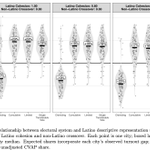
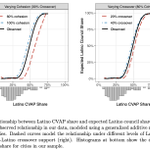
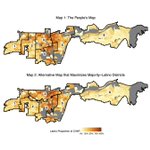
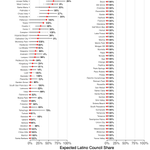
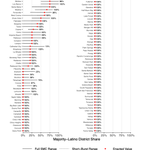
Districting has been the standard remedy for minority vote dilution in local government for over 40 years. Does it work? It requires a map that would actually improve minority representation and a council willing to draw it. As we show, the first is impossible in most cities. 1/
205
Districting has been the standard remedy for minority vote dilution in local government for over 40 years. Does it work? It requires a map that would actually improve minority representation and a council willing to draw it. As we show, the first is impossible in most cities. 1/
1
6
1
7
1,108
But the reforms that work need no map at all. Cumulative voting, limited voting, & RCV don't waste a crossover vote for being cast in the wrong neighborhood. Nearly every state VRA already permits them. In most of these cities, they may be the only remedy. 9/
1
68
2
60
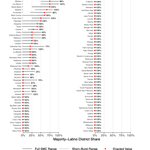
Where cities did have real choices, most made good ones. CA councils adopted maps near the top of what was available. But discretion cuts both ways. Councils also reliably prefer plans giving each sitting member a district of their own. 7/
1
8
As we show in related work ("Reform Drift"), that incumbent protection also hinders Latino candidates from winning the new districts. In short, reforms can be bunted by those empowered to implement them, ultimately reinforcing existing power structures. 8/
10