

Digitizing the sense of smell for human health and happiness.
New York, NY
Joined May 2022
- Tweets192
- Following44
- Followers3.8K
- Likes44







Pinned Tweet
We’re honored to be recognized as one of the most innovative AI companies of 2025 by @FastCompany. We're just getting started!
fastcompany.com/91268960/app…

13
5,959
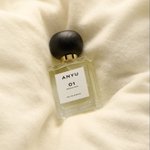
Meet Anyu, Emese Gormley’s intimate new fragrance. Named for the Hungarian word for “mother,” it is a love letter to her mother and to scent as an expression of personal style. A signature whispered, never announced.


3
273
Osmo retweeted

This is amazing
our computers + phones can
-EYES (cameras) 👀 + can see
-EARS (microphones) 👂 + can hear
Now they have a ...NOSE 👃 + can smell...

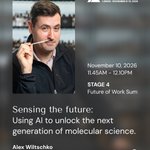
What happens when AI moves beyond screens and into the physical world? Tomorrow, Osmo Founder & CEO @awiltschko takes the stage at @WebSummit to explore the next frontier of the next frontier of AI.

1
1
348
Sai De Silva picked patchouli, “a note my mother used to wear that instantly transports me back to her.”
She worked with Osmo to create P.S. Never Forgotten, her love letter in scent.

Handwritten letters. That person you think of often. The place you go in your mind. How would you bottle that in a scent?
1
250

Osmo retweeted
I've been thinking a lot about data bottlenecks, and I'm not sure who else is screaming this from the hilltops. I feel like I'm taking crazy pills looking at the jagged frontier thinking it's smooth if you order by data volume.
the spikes in the jagged frontier are tasks with tons of data (either static or simulated; think math, programming, games), and the valleys are tasks with little or no data (cooking a lasagna, olfaction, manufacturing a passenger train). I don't know of any exceptions.
if you order the jagged frontier by data it looks like a spiral frontier. models are superintelligent where we have enormous data, and progressively less so as we have less data. some tasks may draw data from static lakes of data, some may be from limitless waterfalls from simulators that convert compute into data. but ultimately, intelligence on a task is proportional to the data absorbed by the model for that task.
scaling laws are real. if you are not bound by compute or algorithms (increasingly we are not), then intelligence is proportional to data. since we don't have a very good notion of task similarity, it's often difficult to know if data for one task will help you with another, without training a model and seeing. but, it doesn't seem like chess data helps much with math performance and vice versa. so when I refer to data, I refer to data that is task-relevant.
maybe we call this the 'no shortcuts hypothesis'. all the rules-of-thumb about learning are at the root, the same -- Malcom Gladwell's 10,000 hours, Moravec's Paradox, Scaling Laws, the Bitter Lesson, Age of experience. If your learning system (model, brain, whatever) is unconstrained by compute, intelligence is proportional to accumulated experience. no shortcuts. want to be superhuman at chess? play all the chess, more than the whole species combined (good thing a model can do that in 24 hours). want to be superhuman at math? build a math simulator and lock the model in it and run it faster than reality. superhuman at coding? first, collect all public examples of humans writing and responding to code ever, make the model learn from that first, and then lock the model in a simulator where it fixes bug after bug, faster than realtime.
superhuman at image generation? no shortcuts. but here, we don't have a simulator. so now we're moving around the spiral frontier away from closed-loop into large static lakes. still big enough to be superhuman though, which also applies to video, text, and audio. oh! and once you have a superhuman model, you can use it to bootstrap other tasks by making a superhuman model a judge on other tasks.
let's keep marching along the spiral frontier, out of the realm of data abundance, simulators and large static lakes.
biology? no shortcuts. go get a ton of data. and be freaking careful! you can get bad data in biology pretty easily. tilting a well plate 5 degrees the wrong way can ruin an experiment. so make sure you understand the domain, otherwise you're going to have to filter a lot out.
robotics? no shortcuts. get the data. if you can build a simulator, do it, but be mindful our simulators don't have perfect correspondence with reality. so, build an arm farm. fold 1M shirts, put 1B balls in cups. play ping pong forever.
olfaction? no shortcuts. smell the world. build a laboratory of chemical sensors, an international network of trained sensory panelists, a scent production factory, and link them all together. make millions of samples. smell millions of samples. take billions of chemical sensor readings.
I totally buy super intelligence as a concept because I feel it, I use it for coding, the breakthrough math results speak for themselves. I see RSI coming, because how could an all-digital task like ML research and model building not fall to the current paradigm? But the notion that AI will come for everything, all at once, irrespective of domain, feels silly, because there are no shortcuts. if you want a specific form of intelligence, you have to get the data.
looking at you @willdepue, I feel like we're both seeing the same thing
🤖 Made with AI

We’re proud to share that Osmo has been named a 2025 Technology Pioneer by the World Economic Forum.
In his new op‑ed, our founder and CEO @awiltschko lays out a bold vision for the future of scent: weforum.org/stories/2025/06/…
Our founder and CEO @awiltschko became obsessed with perfume when he was 12 years old. Now, he's giving computers a sense of smell.
Alex joined @jacobgoldstein on the What's Your Problem? podcast to discuss why scent is the next frontier in technology.
open.spotify.com/episode/7AZ…
Osmo retweeted

How does smell work? Our CTO @rwhitcomb breaks it down.
instagram.com/reel/DJmQ9MLgm…
Osmo retweeted
Step inside the lab. Where molecules make memory. Creativity meets chemistry. Scent becomes story.
We’re building the future of fragrance—powered by Olfactory Intelligence, crafted by world-class perfumers, and shaped by your vision.
Let's create something iconic.

Osmo retweeted
What happens when fragrance becomes programmable? @awiltschko will speak at the Experimental Scent Summit during Scent Week LA, on how AI is reshaping fragrance design.
—May 27, 1:15pm PT
—Institute for Contemporary Art LA + livestream
scentweek.com/experimental-s…

Scent is more than memory or mood. It’s language. It’s data. It’s a frontier in biology.
In a new piece, @awiltschko shares the vision behind Olfactory Intelligence (OI)—and why fragrance is just the beginning.
Read it here: generationbyosmo.com/blog/tr…

Osmo retweeted
.@awiltschko is the CEO of @Osmo_Labs, a company that uses artificial intelligence to digitize the sense of smell. trib.al/RVFV55P

AI has transformed how we see, hear, and understand the world. At Osmo, we’re teaching computers how to smell.
Thank you to @FortuneMagazine for capturing the science and the story behind our work.

.@awiltschko is the CEO of @Osmo_Labs, a company that uses artificial intelligence to digitize the sense of smell. trib.al/RVFV55P