
Where the world turns to talk about science.
New York, NY
Joined May 2009
- Tweets11.4K
- Following176
- Followers9.7K
- Likes716





Pinned Tweet
If knowledge is power, and power corrupts, become totally evil about Halloween science by reading Halloween Science 2.0, on Kindle, paperback, and hardback.
Link in comment:

ScienceBlogs retweeted

I think I've experienced every conceivable lab meeting organization scheme as an undergrad, grad student, postdoc and PI, and the main conclusion I've drawn is that the format is largely irrelevant. Group meetings work in almost any format when people give a shit about each other's science, and no scheme can overcome it when they don't. Also that pastries are better than lunch.


ScienceBlogs retweeted

It will be the dumbest thing you read today, unless you follow evolutionary anthropology or quantum paleontology or anything else you wish DOGE had found and squashed so the money could go toward science instead.

BREASTMILK
She thought she was studying milk.
What she uncovered was a conversation.
In 2008, evolutionary anthropologist Katie Hinde was working in a primate research lab in California, analyzing breast milk from rhesus macaque mothers. She had hundreds of samples and thousands of data points. Everything looked ordinary—until one pattern refused to go away.
Mothers raising sons produced milk richer in fat and protein.
Mothers raising daughters produced a larger volume with different nutrient balances.
It was consistent. Repeatable. And deeply uncomfortable for the scientific consensus.
Colleagues suggested error. Noise. Statistical coincidence.
But Katie trusted the data.
And the data pointed to a radical idea.
Milk is not just nutrition.
It is information.
For decades, biology treated breast milk as simple fuel. Calories in. Growth out. But if milk were only calories, why would it change depending on the sex of the baby?
Katie kept digging.
Across more than 250 mothers and over 700 sampling events, the story grew more complex. Younger, first-time mothers produced milk with fewer calories but significantly higher levels of cortisol—the stress hormone.
The babies who drank it grew faster.
They were also more alert, more cautious, more anxious.
Milk wasn’t just building bodies.
It was shaping behavior.
Then came the discovery that changed everything.
When a baby nurses, microscopic amounts of saliva flow back into the breast. That saliva carries biological signals about the infant’s immune system. If the baby is getting sick, the mother’s body detects it.
Within hours, the milk changes.
White blood cells surge.
Macrophages multiply.
Targeted antibodies appear.
When the baby recovers, the milk returns to baseline.
This was not coincidence.
It was call and response.
A biological dialogue refined over millions of years. Invisible—until someone thought to listen.
As Katie reviewed existing research, she noticed something unsettling. There were twice as many scientific studies on erectile dysfunction as on breast milk composition.
The first food every human consumes.
The substance that shaped our species.
Largely ignored.
So she did something bold.
She launched a blog with a deliberately provocative name: Mammals Suck Milk.
It exploded. Over a million readers in its first year. Parents. Doctors. Scientists. People asking questions research had skipped.
The discoveries kept coming.
Milk changes by time of day.
Foremilk differs from hindmilk.
Human milk contains over 200 oligosaccharides babies can’t digest—because they exist to feed beneficial gut bacteria.
Every mother’s milk is biologically unique.
In 2017, Katie brought this work to a TED stage. In 2020, it reached a global audience through Netflix’s Babies. Today, at Arizona State University’s Comparative Lactation Lab, she continues reshaping how medicine understands infant development, neonatal care, formula design, and public health.
The implications are staggering.
Milk has been evolving for more than 200 million years—longer than dinosaurs walked the Earth. What we once dismissed as simple nourishment is one of the most sophisticated communication systems biology has ever produced.
Katie Hinde didn’t just study milk.
She revealed that nourishment is intelligence.
A living, responsive system shaping who we become before we ever speak.
All because one scientist refused to accept that half the story was “measurement error.”
Sometimes the biggest revolutions begin by listening to what everyone else ignores.


Bank tellers feel the pain of mathematicians who figured they'd get tenure working on one problem for the rest of their careers.

On 6 October, James Maynard was nervously checking his phone under the table throughout dinner. He’d heard rumors of a tsunami heading for the shores of math. When he checked in one last time from bed, the swell struck: OpenAI had released more than 700 math papers, generated with an advanced version of its AI model. They appeared to topple hundreds of long-standing problems, forcing researchers to face the reality that no problem in math is off-limits for machines.
At first, Maynard, a mathematician at the University of Oxford and recipient of the Fields Medal, math’s most prestigious prize, feared for colleagues whose work would be upended. But then he spotted a paper that offered progress on one of his favorite pastimes: the Riemann hypothesis, a puzzle about prime numbers and one of seven famed Millennium Prize Problems, often considered the most formidable in all of math. “I was like a kid at Christmas,” Maynard says. “Even if it was some scary monster giving me a gift, I was just so excited.”
The release comes less than 1 month after OpenAI announced a solution to the Navier-Stokes equations, another Millennium Prize Problem. OpenAI’s latest proof solves only a weaker version of the Riemann hypothesis. But Maynard, who made the most recent notable Riemann advance in 2024, says it is “groundbreaking” and likely to have payoffs for other problems across math. “Within analytic number theory, it’s obviously the best headline result for the past 100 years in the field.”
Learn more: scim.ag/4s9F8Ip

ALT A ScienceInsider headline reads, "AI edges closer to solving the Riemann hypothesis, one of math’s hardest problems."
Yes. All surveys are meaningless. Including ones where women claim they want emotional intelligence in a partner most.

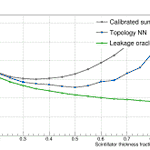
Breaking The Shower Containment Taboo For Hadron Calorimeters
Writes physicist @dorigo : "Going below 6 interaction lengths is anathema for classic calorimeters: stochasticity of the leakage will kill you! - that is, unless you have AI reconstruction."
Enter ChatGPT...


One academic at just one college got $15 million to recruit for China. That wasn't Trump exposing it, it was Obama.

A US investigation into nine universities’ employment of international researchers is prompting concerns among academics at the campuses
go.nature.com/4ig8i4a

Cambridge has not declined due to the Arday weirdness and won't because he was in a humanities field, and no one takes them citing each other seriously. STEM is the reason it maintains its top 10 university status.

Women have outnumbered men in PhDs for 25 years. When a new faculty job opens up, women get them 70% of the time.
Just because tenure isn't removed because of the genitalia of the professor does not mean anyone younger is devalued, it means jobs in academia are finite.
Held to higher standards. Left off invitations. Pointed to as “diversity” but ignored.
These are just some of the hundreds of examples of devaluation women faculty in the United States shared with computational social scientist Katie Spoon. These experiences, more common for women than men, are to blame for the higher rate of attrition for women faculty, Spoon and colleagues report in a new analysis.
Learn more: scim.ag/4hOhcH1 @NewsfromScience

ALT A group of individuals walks away from an open door on a red background. One individual stands in a separate doorway to the side. The text above reads: "For women academics, feeling devalued can be a fatal career blow."
You're making the point that economics can be replaced by AI tomorrow and nothing would change; it can only predict the past because it has no qualitative mechanism.

Economist @MazzucatoM: "If bankers, estate agents and bookmakers claim to create value rather than extract it, mainstream economics offers no basis on which to challenge them, even though the public might view their claims with scepticism. Who can deny Lloyd Blankfein when he declares that Goldman Sachs employees are among the most productive in the world? Or when pharmaceutical companies argue that the exorbitantly high price of one of their drugs is due to the value it produces? Government officials can become convinced (or ‘captured’) by stories about wealth creation, as was recently evidenced by the US government’s approval of a leukemia drug treatment at half a million dollars, precisely using the ‘ value- based pricing’ model pitched by the industry – even when the taxpayer contributed $200 million dollars towards its discovery."
Read more: evonomics.com/value-of-every…

Tragic. They're already social psychology students, the baseline was already really low.

Interacting with attractive women makes men stupid.
The researchers found that even a few minutes with the attractive woman was enough to make the students slower and less accurate on the test.
The more attracted they were, the worse their results.
They also studied the effects on women students of being in the company of handsome men, and found the test scores were unaffected.
sciencedirect.com/science/ar…


Government unions in charge of education are what young people want.
Cornell just produced a massive new report on higher education noting that companies have a “jarring” skepticism of higher ed thanks to a new generation of degree holders who lack key skills like handling uncertainty, compromising, and absorbing feedback.
Faculty also report that incoming students, despite four years of undergraduate education, are “underdeveloped” in these relational or interpersonal skills.
This is a serious crises in higher education and the report calls for a greater need for conflict-resolution training. We need to do a better job training our students to deal with these issues.
These are traditionally the skills students developed in higher education. I loved college because it challenged me, sparked debate, and required me to grapple with complexity. This should be an essential part of college--inside and outside the classroom.
chronicle.com/article/compan…

