

S4C works to increase public participation, especially of the youth, women & communities in social and economic policy development & decision-making in W/A.
Joined May 2011
- Tweets13.2K
- Following133
- Followers2.5K
- Likes2K





Pinned Tweet
As part of the activities at the National Extractives Dialogue (NED) 2026, we launched a briefer titled “Gas Leaks in Bille Kingdom: Testing the Effectiveness of the Petroleum Industry Act’s Environmental Remediation Fund.”
The briefer outlines the known facts surrounding the gas seepages in Bille Kingdom, raising serious concerns about potential fire and explosion risks, environmental contamination, threats to drinking-water sources, public health, and the safety of communities whose livelihoods depend heavily on fishing and other natural resources.
It also examines the relevance and effectiveness of two key financial assurance mechanisms established under the Petroleum Industry Act (PIA) 2021: the Environmental Remediation Fund (ERF), which sets aside financial resources to address environmental impacts arising from petroleum operations; and the Decommissioning and Abandonment Fund (DAF), which guarantees funding for the decommissioning and abandonment of petroleum facilities and associated restoration obligations.
Click here to download the report 👉 shorturl.at/b5U04
#NED2026


Spaces for Change retweeted

Barr Silas Onu making presentation at the Civil Society Week for West Africa on the 2027 general election
Spaces for Change retweeted
'Is the Role of the Judiciary Changing, Evolving or Expanding in West Africa?'
In this panel session hosted by @Spaces4Change, judges and legal practitioners from Nigeria, Senegal, The Gambia, and Niger, alongside participants, examined the complex challenges confronting judicial independence and the exercise of judicial powers across West Africa. Discussions explored executive overreach, threats of reprisal attacks against judicial officers, and allegations of bias, while examining the emerging issues that are pushing the region’s judiciary into increasingly sensitive and complex territory.
#CSWWA2026


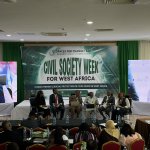
WE ARE LIVE AT THE 4TH EDITION OF THE CIVIL SOCIETY WEEK FOR WEST AFRICA (CSWWA) 2026
#CSWWA2026


Giving the keynote address, Hon. Justice George Chibueze Nnamani, President of the Enugu State Customary Court of Appeal, analyzed the balance between human rights, civic space and security in civil and criminal adjudication, stressing that an independent, adequately funded judiciary is essential to upholding constitutional rights, ensuring accountability and addressing the grievances that fuel public discontent and social unrest.
#CSWWA2026


Closing out Day 1 of the #CSWWA2026, the Civic Space Resource Hub for West Africa (CSRHUB) session moderated by Oumar Ndiaye, Program Officer, @FordFoundation brought together partners of the CSRHUB West Africa project from across the subregion to share their respective and collective experiences across the hub's five strategic pillars, namely: Governance, Digital Security, Research and Knowledge-building, Civic Space Protection, Resource Mobilization and Financial Resilience.
#CSWWA2026


The session hosted by @TapNitiative interrogated the influence of the judiciary on elections and civic participatory rights. Panellists argued that excessive reliance on the courts to determine who participates or hold power in electoral processes undermines the rights of citizens to broker political power, and risks turning the courts into another arena of political contestation, despite the fact that the adjudication of election dispute is consistent with the role of the judiciary in a democratic clime.
#CSWWA2026


'Is the Role of the Judiciary Changing, Evolving or Expanding in West Africa?'
In this panel session hosted by @Spaces4Change, judges and legal practitioners from Nigeria, Senegal, The Gambia, and Niger, alongside participants, examined the complex challenges confronting judicial independence and the exercise of judicial powers across West Africa. Discussions explored executive overreach, threats of reprisal attacks against judicial officers, and allegations of bias, while examining the emerging issues that are pushing the region’s judiciary into increasingly sensitive and complex territory.
#CSWWA2026
Spaces for Change retweeted

“Judicial Officers Must Remain Impartial, Prosecutors Must Not Weaponise Criminal Proceedings” — NBA Enugu, Spaces For Change Warn thenigerialawyer.com/judicia… via @Nigerialawyers

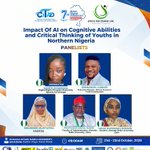
Artificial Intelligence tools, chatbots, generative AI assistants, and algorithm-driven social media
feeds are becoming a major part of how youths in Nigeria learn, communicate, and form
opinions. But growing reliance on AI to answer questions, complete
assignments, and shape what young people see and believe raises concerns about its effect on
independent thinking, reasoning, and the ability to evaluate information critically.
Join @Spaces4Change at the 7th edition of the Kano Social Influencers Summit (KANSIS) as we not only spotlight this issue before a diverse audience of academics, regulators, CSOs, and students, but also discuss the impact of AI on the cognitive abilities and critical thinking of youths in Northern Nigeria.
See the flier for more details 👇

🚨LESS THAN A WEEK TO GO🚨
How can we collectively strengthen judicial protection for civic space in West Africa?
At CSWWA 2026, judicial officers, civil society organisations, policymakers, political actors, academics, and international partners will come together to explore practical answers to this critical question.
Check out the flyers below to meet the distinguished speakers and panellists joining this important regional conversation!
For more information 👉 shorturl.at/BKHqj
#CSWWA2026 @FordFoundation @TapNitiative @ActionGroupFCS
*******************************************************************
🚨PLUS QU’UNE SEMAINE🚨
Comment pouvons-nous, collectivement, renforcer la protection judiciaire de l’espace civique en Afrique de l’Ouest ?
Lors du CSWWA 2026, des acteurs du monde judiciaire, des organisations de la société civile, des décideurs politiques, des personnalités politiques, des universitaires et des partenaires internationaux se réuniront pour explorer des solutions concrètes à cette question cruciale.
Découvrez les visuels ci-dessous pour faire connaissance avec les intervenants et panélistes de renom qui prendront part à cet important échange régional!
Pour plus d’informations 👉 shorturl.at/BKHqj
#CSWWA2026


Spaces for Change retweeted

Join us at the 4th edition of the annual Civil Society Week for West Africa (CSWWA). For more information 👉 shorturl.at/6AxFt
--------
Rejoignez-nous pour la 4e édition de la Semaine annuelle de la société civile pour l'Afrique de l'Ouest (CSWWA).👉shorturl.at/6AxFt


How can women fully participate in the digital economy when legal and cultural barriers continue to constrain their mobility, access to opportunities, and digital inclusion?
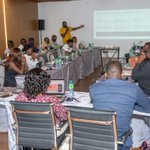
Spaces for Change (@Spaces4Change) and ARTICLE 19 West Africa (@article19wafric) spotlighted this issue at the two-day Digital Security Clinic held last week in Dakar, Senegal, under the Ford Foundation-supported Civic Space Resource Hub (CSR-HUB) project. Bringing together 40 participants from civil society organisations, media organisations, and vocational training institutions, key conversations explored data protection and privacy, cybersecurity, digital safety through a gender lens, technology-facilitated gender-based violence (TFGBV), the proliferation of dual-use technologies, and legal remedies for digital rights violations.
A critical dimension of these discussions was the intersection between gender equality, digital inclusion, and Senegal’s Family Code. By designating the husband as the head of the household and requiring a wife to reside in the home chosen by her husband, the Code has been criticised for reinforcing gender inequalities and potentially restricting women’s geographical mobility. These constraints can further limit access to digital training, co-working spaces, and technology incubators, many of which are concentrated in Dakar.
The Clinic ultimately created a platform for continued advocacy for reforms that promote shared responsibility and gender equality, underscoring the fact that digital security is not just about protecting people online but also about confronting the structural barriers that prevent them from participating safely, equally, and freely in the digital world.
#DigitalSecurity #DigitalInclusion


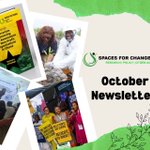
Welcome to another edition of our monthly newsletter. In this edition, we reflect on some of our September activities.
From spotlighting the crisis in Bille kingdom at the 4th edition of the National Extractives Dialogue (NED) 2026, our tour of the creeks and mangrove restoration sites by Nigeria’s Hydrocarbon Pollution Remediation Project (HYPREP) in Ogoniland, Rivers State, to signing a Memorandum of Understanding (MoU) with Ghana's Non-Profit Organisations Secretariat (@nposghana) formalizing our role as a technical partner supporting the Secretariat on AML/CFT issues affecting Ghana’s nonprofit sector, and dragging the Lagos State agencies to the Appeals Committee of the Lagos State Physical Planning and Building Control (Appeals Committee) to challenge the demolition and forceful eviction of three (3) Lagos communities, our activities cut across our extractive justice, civic space protection, and housing and urban governance desks respectively.
Click the link to read more 👉 shorturl.at/Lb2df
#HousingRights #NonProfit #EnvironmentalJustice #Remediation #Bille

Spaces for Change retweeted

#Sénégal : Key takeaways from our session "Digital Safety Through a Gendered Lens – Senegal in Focus" with digital rights lawyer Mojirayo Ogunlana O.
In senegal, women continue to face significant barriers to digital inclusion, while cyber threats targeting civil society, journalists, and WHRDs are becoming increasingly sophisticated.
Root causes : 39% of women are literate vs 62% of men, interfaces rarely available in Wolof, and control over digital tools often remains male within the household.
A big thank to Mojirayo for this insightful and timely presentation.
What is the biggest challenge to building a safer and more inclusive digital space for women?
@article19org @article19eafric @Spaces4Change
#Cybercrime #DigitalSecurity #ARTICLE19 #OnlineSafety #Kebetu


Spaces for Change retweeted
#Retourenimage de notre session de formation avec Mouhamet Diouf, Phd in Law. Docteur en Droit privé et sciences criminelles.
Il a présenté le cadre juridique sénégalais : la loi 2008-11 sur la cybercriminalité (68 articles), la loi 2008-12 sur les données personnelles et le projet de loi 25/2026 sur les infrastructures critiques.
Il est revenu sur la définition de la cybercriminalité et ses formes courantes : hameçonnage, arnaque, vol de données,etc…
Il a enfin alerté sur les nouvelles formes de menaces pour les OSC et les médias : sabotage d'infrastructures, espionnage de masse, ransomware et attaques par IA.
#Cybercriminalité #SecuriteNumerique @article19org @maateuw @ASTOUDIOUF10 @Spaces4Change


👥 125 participants
👨👨👦👦 40 host communities
🌍 11 States
🤝 One national platform
Once again, the National Extractives Dialogue (NED) 2026 brought grassroots voices, especially BILLE host community perspectives, to the forefront of petroleum industry discussions in Nigeria. Across the three days, public and private stakeholders converged at NED2026 to examine the environmental and human consequences of accelerated onshore asset divestments by International Oil Companies (IOCs), spotlighting the voices, stories, and agonies of local people bearing the brunt of the environmental liabilities associated with hurried asset divestments and extractive activities.
The conference kicked off with a tour of the clean-up sites in Ogoniland where S4C witnessed firsthand what clean-up and remediation can make possible - the gradual return to life of once-polluted swamps, rivers, and landscapes affected by decades of crude oil extraction. In solidarity with the restoration efforts, we planted trees at the site, symbolizing that environmental recovery is not only about cleaning up damaged ecosystems, but also about restoring them, rebuilding livelihoods and creating healthier futures for communities.
Yet, Ogoniland is only one part of a much larger story in the Niger Delta. People of Bille Kingdom in Degema LGA narrated how gas leaks, strong gas odours and constant bubbling on land surfaces have contaminated water and food sources, destroyed local livelihoods, disrupted children's education, fuelled water scarcity and gender-based violence while exposing the community to potential sudden ignition and fire explosion. They presented their testimonies and tabled their demands directly to industry regulators, state government institutions, federal legislators, traditional rulers, civil society, the media, academics, independent technical experts, and other stakeholders.
We are grateful to our co-organizers - NEITI and NOSDRA - plus all the attendees for lending your voice, expertise, and commitment toward putting people before profit, and remediation before divestment. The dialogue may have ended, but the work ahead continues. We support and join Bille people to demand the release of the results of all technical and scientific investigations to ascertain the cause of the persistent gas leaks and emissions in their community. 365 days is already too long a time. We urge the Nigerian authorities to act now, now, now!
Tomorrow may be too late!
#NED2026


