

Producer / engineer building @brolabapp Own your storefront. Sell beats + services. Get paid direct. Sharing the build and what I learn.
Lille, France
Joined January 2026
- Tweets1K
- Following426
- Followers133
- Likes531





The title of a beat helps with discovery. The description helps with fit: mood, tempo, key, space and delivered files. Put useful information beside the preview so the artist can listen and decide.
6
A delivery folder belongs in the handoff plan too. Use clear versions and filenames; include notes on the exports. This stem checklist covers the starting files. Apply the same clarity to the final ones.

4
A reference playlist works better when each track has a reason. “This vocal space.” “These drums.” “This low end.” One sentence per reference can save a lot of guessing.
4
An empty studio still needs to explain what comes next. This BroLab test profile, captured 8 October, has 0 draft and 0 published tracks. The first useful action matters more than a dashboard full of empty counters.
19
Une offre de mix peut être simple sans être floue. Ce modèle sépare nombre de pistes, livrables, délai et retours. Les valeurs sont illustratives. Quelle limite doit apparaître dès la première lecture ?

1
5
I want BroLab to make the offer easier to read before it makes the catalogue bigger. Scope, price, delivery, next step. That is a product direction, not a claim that every part is already solved.
3
BroLab upload form, captured 8 October in a test profile: WAV/MP3 input and track metadata. No file was uploaded here. Before adding more fields, I want the producer to understand which information makes the offer useful.
4
“Send me everything” is a vague file requirement. List the essentials, then the optional context. Make the missing item obvious before uploading. A short checklist can be kinder than another long thread of DMs.
4
A WAV file and a license answer different questions. One describes the audio delivered; the other describes permitted use. This checklist keeps those decisions separate. Which distinction do buyers ask you to explain?

4
A storefront is a place to make a decision. The buyer needs enough context to choose, pay and know what comes next. Every extra section should earn its place in that path.
3
A license choice needs more than a price label. In this BroLab demo captured 8 October, compare delivered files and permitted use side by side. The selector illustrates the decision; the written agreement remains the reference.
2
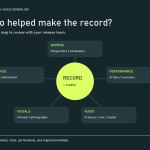
A release credit is more useful when it names the contribution. “Mix: …” tells the listener something “team: …” does not. This map is a template for the people behind a record, not a claim about a release.

2
A feature request has a workflow around it. “What happened before you needed that?” can reveal the missing step. I want to understand the task before naming the button.
5
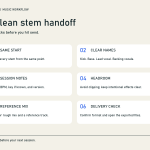
Stems can open correctly and still arrive without context. Include a rough mix, a reference with a reason, and priorities for the song. This checklist is a starting point. Do you prefer the rough with the stems?
7
Ask “what were you trying to do when you stopped?” after an abandoned signup. Then ask which screen made the next step unclear. A location and an intention are more useful than a general satisfaction score.
2
A mix note can preserve what already works. Name the change, then the thing to keep: “Less bite in the chorus vocal; keep the drums.” This comparison is a writing tool, not an audio before-and-after.

11
When an artist says “I love this beat,” there’s still a useful question: what kind of song do you hear on it? The answer can change the arrangement more than another plugin.
5
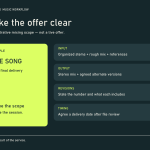
Two revision rounds should mean two collected sets of notes, not an endless stream of separate changes. This sample offer makes that boundary visible before work starts. Define what happens if the recording changes.
20
Le couplet et le refrain n'ont pas besoin du même nombre de couches. Ce schéma montre un contraste possible, pas une preuve audio. Pour le vérifier : placer la voix, écouter, puis décider quoi retirer.

1
21