

finance enthusiast since 2014 | markets & macro
Wall Street
Joined September 2026
- Tweets39
- Following10
- Followers466
- Likes14


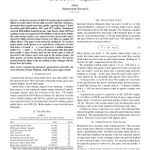

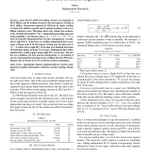


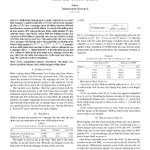
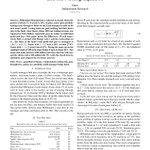
Jane Street handled 24% of the primary market for US ETFs in 2024. The hottest ones on retail screens right now are 3x leveraged.
They lose money when the market goes NOWHERE.
This f*cking formula shows why the bull fund AND the bear fund bleed at the same time.
I ran the math on 100,000 simulated years.
Index ends flat, 20% vol - 3x fund loses 11%. The -3x fund loses 21%.
Single stock ends flat, 50% vol - 2x loses 22%. 3x loses 53%.
Nasdaq down 33% in 2022 - its 3x fund lost about 81%. Not 3 × 33.
Same index. Same year. More leverage. Faster bleed.
Growth = L × index growth - L(L-1)/2 × vol²
The first part is the promise. The second part is the bill. Go from 2x to 3x and the bill TRIPLES. Go to -3x and it's 6x.
At 20% vol the index has to make 4% a year just for a 3x fund to break even. On a 50% vol stock it has to make 25%.
$162 BILLION now sits in leveraged ETFs. About 90% of single-stock leveraged trading is individuals. Last December the SEC shut the door on new funds above 2x.
Leverage multiplies your return by L. It multiplies the decay by L(L-1).
Held for a day, it's a tool. Held for a year, it's a TAX.
The full paper is below.
Bookmark before it's buried.
X is where I publish 20%. Telegram is where the other 80% lives: live breakdowns, the trades behind each paper, the ones too hot to post here. t.me/+Ro_bc4bkeh9jNWMy


Jane Street made $39.6 BILLION last year and handled about 8% of EVERY options contract cleared in the US.
Retail now buys options that expire the SAME DAY. 2.3 MILLION contracts a day. 59% of all S&P 500 options.
This f*cking formula shows what every one of those tickets is really worth.
I ran the math on 2,000,000 trading days.
At-the-money straddle - loses 21% on average. Wins 31% of days.
Call 1 standard deviation out - loses 53%.
Call 2 out - loses 83%. Pays off 0.6% of the time.
Same day. Same index. Further out. Bigger tax.
Expected return = realized vol / implied vol - 1
For 35 years implied vol has run about 4 points ABOVE what actually happened. 15.5 over 19.6 is 0.79. Every ticket gives up 21% before the open.
Spend 1% of your account on one every day and a year later 41% of it is GONE. At 5% a day, 94%. Every simulated path ends down.
And that's BEFORE the spread. Researchers found retail lost $358,000 a day on these.
You're not betting on the market. You're betting the day moves MORE than the price says. On average, it doesn't.
The full paper is below.
Bookmark before it's buried.
X is where I publish 20%. Telegram is where the other 80% lives: live breakdowns, the trades behind each paper, the ones too hot to post here. t.me/+Ro_bc4bkeh9jNWMy

Jane Street made $16.1 BILLION in ONE quarter. To get a seat there, candidates say you have to "make a market" on something you can't possibly know.
It's not a price question. It's a test of how WRONG you are about yourself.
This f*cking formula shows what a too-tight interval does to your account.
I ran the math on overconfidence.
90% sure, right 90% of the time - full growth.
90% sure, right 75% of the time - ZERO growth. Your bets are 2x too big.
90% sure, right 50% of the time - bets 6x too big. You shrink while being RIGHT on average.
Same trader. Same forecasts. Different confidence. Different fate.
Growth = 2k² - k⁴
k is how many times you underestimate your own uncertainty. Squeeze your interval by k and your bet grows by k².
Most people's 90% intervals catch the truth about half the time. In one lab study it was 73.8%. Already past the zero line.
Ten questions is all it takes to catch you. A calibrated person scores 6 or less only 1.3% of the time.
Being wrong is not what kills traders. Being SURE is.
The full paper is below.
Bookmark before it's buried.
X is where I publish 20%. Telegram is where the other 80% lives: live breakdowns, the trades behind each paper, the ones too hot to post here. t.me/+Ro_bc4bkeh9jNWMy

Jane Street made $39.6 BILLION trading with EVERYONE last year.
Citadel paid Robinhood $560 MILLION last quarter ALONE, just to trade with their customers FIRST.
This f*cking formula shows why "dumb" retail flow is the most valuable thing on Wall Street.
I ran the math on 1,000,000 retail trades.
Public exchange half-spread - 10 cents. Retail bears the full cost.
Same trade routed to Citadel - 8 cents. Retail saves 2.
Citadel pays Robinhood 3 cents per trade. Keeps 5. Everyone wins.
Same trade. Different venue. Different fate.
Surplus = (π_market − π_retail) × move size
Retail is 0% informed. The exchange pool is ~10% informed. That 10% gap is a 10-cent pie. 2 cents to the trader. 3 cents to the broker. 5 cents to the market maker.
Total transferred in Q1 2025: $1.19 BILLION in PFOF, record quarter in history.
That's why Robinhood is "commission free". You are not the customer. You are the product. Citadel pays Robinhood for the right to trade with the cleanest flow on earth.
The catch: whatever leaves retail does not vanish. The exchange pool left behind is MORE informed than before. Pensions, hedge funds, everyone trading on the public book pays a wider spread.
Retail wins. Robinhood wins. Citadel wins. The exchange pays.
The full paper is below.
Bookmark before it's buried.
X is where I publish 20%. Telegram is where the other 80% lives: live breakdowns, the trades behind each paper, the ones too hot to post here: t.me/+Ro_bc4bkeh9jNWMy

Jane Street handled 24% of the US ETF market and $2.4 TRILLION of equities every month in 2024. They made $39.6 BILLION trading with EVERYONE.
Here's the trick: they don't predict PRICES. They predict WHO IS TRADING.
This f*cking formula shows why the spread exists at all.
I ran the math on 1,000,000 trades.
1 in 20 traders knows where the price is going - you pay 5% of the move. Every trade.
1 in 10 - you pay 10%.
1 in 5 - you pay 20%. Even when you win.
Same market. Same spread. Different trader. Different fate.
Half-spread = (fraction informed) × (size of the move)
Mix 2% informed traders with 20% informed traders and the market maker quotes BOTH at 11%. The retail crowd pays 5.5x what their own flow would cost.
That's why retail order flow is BOUGHT by market makers. Not because it's informed. Because it isn't.
The spread is not a fee for service. It's the price of trading in a room where someone knows more than you.
The full paper is below.
Bookmark before it's buried.

Join if you actually want the edge. More alpha inside: t.me/+Ro_bc4bkeh9jNWMy

264
Jane Street made $16.1 BILLION in Q1 2026 ALONE. They traded $2.4 TRILLION of equities every month in 2024.
Not by being smarter. By being right 50.5% of the time on a MILLION bets a year.
This f*cking formula shows why volume beats accuracy.
I ran the math on 1,000,000 bets.
Right 50.5% on a million bets - Sharpe 10. Never a losing year in 10^23.
Right 60% on a hundred bets - Sharpe 2.04. Loses 2% of years.
Right 85% on a hundred bets - matches 50.5% on a million. Nobody is right 85%.
Same math. Different scale. Different fate.
Sharpe = (2p − 1) × √N
Doubling accuracy doubles Sharpe. Doubling bets only adds 41%. But accuracy is scarce. Bets can be engineered.
The catch: bets must be INDEPENDENT. A correlation of 0.001 between a million bets turns them into 999 effective ones. Sharpe 10 drops to 0.32.
A million trades on one idea is ONE bet with huge transaction costs. Breadth means thousands of unrelated edges: countries, instruments, options, ETFs, bonds.
The search for a 60% signal is a search for something rare. Adding independent 50.5% signals is ENGINEERING.
The full paper is below.
Bookmark before it's buried.

Join if you actually want the edge. More alpha inside: t.me/+Ro_bc4bkeh9jNWMy
389
Jane Street held a $120,000 Kaggle contest with 3,700 TEAMS. Even if NOBODY had any skill, the winner would still beat the average by 3.6 standard errors.
Millennium hires by TRACK RECORD. The best of 1,000 coin flippers over 3 years shows a Sharpe of 1.87.
This f*cking formula shows how much of "best" is luck.
I ran the math on 3,700 entrants.
Real edge of 1 standard error - wins 0.6% of the time.
Real edge of 2 - wins 6%.
Real edge of 3.6 - wins half the time. That IS the luck bar.
Same contest. Different edge. Different fate.
Luck of best ≈ √(2 ln N)
3,700 entrants means 4 standard errors of pure noise sitting at the top. A real winner has to beat THAT, not the field average.
Scoring on the future stops overfitting. It does not stop selection. The best of 3,700 honest forecasts is still lifted by 3.6σ of luck.
A firm of 300 teams with ZERO skill still expects its best team to post +29% a year on a 10% vol book. By chance alone.
Before believing the best result you've found, backtest or hire or leaderboard, subtract the luck of the maximum.
The full paper is below.
Bookmark before it's buried.

Join if you actually want the edge. More alpha inside: t.me/+Ro_bc4bkeh9jNWMy
Jane Street made $39.6 BILLION last year. In 2013 they built a card game called Figgie to teach new traders ONE thing.
Your biggest pile of cards is almost always WORTHLESS.
This f*cking formula shows why your longest suit pays NOTHING 80% of the time.
I ran the math on 200,000 hands.
6 spades on the deal - each spade worth $1.16. Each club worth $6.09.
10 cards in hand - best guess is right 38%. Never 90% sure.
Longest suit is the goal only 21% of the time. Worse than random.
Same game. Same hand. Different information. Different price.
P(deck) ∝ ∏ C(suit size, cards held)
Holding 6 cards of a suit is 5x more likely if that suit has 12 cards than if it has 8. Bayes flips it: your longest suit is probably the 12. And the 12 never pays.
Your own hand gives 38% accuracy. 30 cards of information gives 64%. The only way to see the other 30 is to TRADE.
Your private information is a starting estimate. Always wrong. The price is everyone's information at once.
The full paper is below.
Bookmark before it's buried.

Millennium cuts your book in HALF after a 5% loss. Jane Street made $39.6 BILLION last year with no trader's P&L on the clock.
Looks like Millennium is punishing you. The math says it's helping.
This f*cking formula shows why halving the book doubles your Sharpe.
I ran the math on the climb back.
Zero skill - 1 in 3 recovers. Cut or no cut.
Sharpe 1 on $1B - 51% climbs back.
Sharpe 1 on $500M - 66% climbs back.
Same trader. Same edge. Half the book. Better odds.
P(back) = (e^(2Sb/σ) − 1) / (e^(2Sb/σ) − e^(−2Sa/σ))
Halving the book doubles both exits in units of volatility. Which doubles your effective Sharpe. A trader at Sharpe 1 on $500M climbs back exactly like a Sharpe 2 trader on $1B.
The cut also buys 4x more time. Six months instead of seven weeks. A good manager needs that time to prove it.
Millennium's cut isn't a punishment. It's a longer, sharper test with better odds for anyone who deserves to keep trading.
After a drawdown, cutting size is not giving up. It's the cheapest way to let your edge show.
The full paper is below.
Bookmark before it's buried.

Jane Street made $39.6 BILLION last year and pays NOBODY on their own P&L.
Millennium pays EVERY winning team. Even when the fund loses money.
This f*cking formula shows how a 20% cut becomes 43%.
I ran the math on the netting.
Team at Sharpe 2 - 20% cut stays 20%.
Team at Sharpe 0.5 - 20% becomes 28%.
Team at Sharpe 0.25 - 20% becomes 43%.
Same contract. Different Sharpe. Different bill.
Real cut = 20% × (Φ(S) + φ(S)/S)
Losses don't net. Winners get paid in full. Losers don't give back what they lost.
Two teams. One makes $100 MILLION. The other loses $100 MILLION. The fund is flat. The clients still owe $20 MILLION in bonuses.
Goldman says the highest-paying firms sent 24.5% of profits to traders in 2025. Contract says 20%. The gap IS the losing teams.
Paying each team on its own P&L is a portfolio of OPTIONS. Paying the firm on its combined result is ONE option on the portfolio. The first is always worth more. Clients pay the difference.
The full paper is below.
Bookmark before it's buried.

i still don't understand why everyone is NOT building 24/7 trading agents with Grok Bot
it will probably make you a lot of money & definitely change your life...
i wrote a 6-page research paper on exactly how to find profitable strategies 24/7 with Grok Bot from scratch
simply paste this paper into grok bot, it will research the whole market & build you a 24/7 trading bot
this is the EXACT system I have been running for the past 15 days are so far results are INCREDIBLE:

1
12
167
Jane Street made $39.6 BILLION last year. Partner capital only. Not one outside dollar allowed.
Renaissance's Medallion caps at $15 BILLION and sends the rest back. 40% a year since 1988.
This f*cking formula shows why they both say NO.
I ran the math on the capacity ceiling.
$5 BILLION fund - earns $3.3B a year.
$15 BILLION fund - earns $6B a year. Peak.
$30 BILLION fund - earns ZERO. Same edge, twice the size.
Same strategy. Same people. Different size. Different fate.
Profit = Capital × (α − β × Capital)
Peak at Q* = α / (2β). At twice the optimum, the market pushes back exactly as hard as the strategy pushes forward. Dollar profit = 0.
In 2020 Medallion made 76%. The same firm's funds open to outsiders LOST 23% and 34%. Not a different manager. A different size.
Scaling didn't clone the edge. It replaced it.
The optimal size of an edge is a function of the edge, not of how much money wants in.
The full paper is below.
Bookmark before it's buried.

Jane Street made $4.3 BILLION in India in 27 MONTHS. SEBI accused them of manipulating the index on expiry days to do it.
11 MILLION Indian retail traders lost $21 BILLION on the other side.
This f*cking formula shows why 93% of them were doomed before they started.
I ran the math on the central limit theorem.
100 trades at a 2% disadvantage - 58% in the red.
1,000 trades - 74% in the red.
5,000 trades - 92% in the red.
Same trader. More trades. Different fate.
P(you're losing) = Φ(edge × √trades)
2% is a fiftieth of one trade's risk. Invisible in any single result. But √5,000 is 71, and 71 × 0.02 is a wall.
The sign flips the wall. A market maker with a 2% edge over a million trades is in the red once in 10^88 lifetimes. That's zero.
SEBI's report hides the same number twice. 93% of retail lost. 8.3% of persistent losers made it back on their third year. Both point to the same disadvantage.
Trading more does not change your edge. It only removes the doubt about its sign.
The full paper is below.
Bookmark before it's buried.

Millennium runs 280 teams on $97 BILLION so no one team can sink the firm. In March 2025 TWO of them lost $900 MILLION on the same trade.
Jane Street made $39.6 BILLION last year and pays NOBODY on their own P&L.
This f*cking formula shows why 280 teams can't save you.
I ran the math on the ceiling.
10 teams at 10% correlation - 73% of the max. Already.
30 teams - 88%.
280 teams - 98%. The last 250 add almost nothing.
Same teams. Same skill. Different correlation. Different firm.
Firm Sharpe = Sharpe × √(N / (1 + (N-1) × correlation))
The ceiling is S / √correlation. At 10% that's 3.16. Doesn't matter if you hire 280 teams or 10,000. Still 3.16.
A losing year goes from 1 in 1,000 to 1 in 29 when correlation jumps from 10% to 30%. Not one team lost any skill. They just stopped being different from each other.
That's what Jane Street's "nobody sees their own P&L" is for. If no bonus depends on personal returns, no one is paid to pile into the same trade.
280 teams can't save a firm from one trade.
The full paper is below.
Bookmark before it's buried.

Millennium FIRES you at -7.5%. Jane Street pays nobody on their own P&L. Citadel pays you to SIT STILL for 24 MONTHS.
This f*cking formula shows what the bench actually destroys.
I ran the math on the bench.
Six-month signal, 2 years out - 6% left. Dead.
One-year half-life, 2 years out - 25% left.
Five-year relationship, 2 years out - 76% left. Intact.
Same bench. Different edge. Different fate.
Edge left after the bench = 2^(-years / half-life)
The bench the firm actually WANTS = half-life × log₂(edge / salary). A $20M PM on a $500K base = 5.3 half-lives. No cap in any country comes close.
Citadel can't buy more time with money. Florida just let them lobby for a longer cap instead.
Jane Street solved it the other way. No trader sees their own P&L. No one has an edge to carry out. The bench doesn't need to exist.
Same equation. Two answers.
The full paper is below.
Bookmark before it's buried.

No f*cking way. Goldman Sachs just took Claude Code from over 20,000 people. Only the quants kept it.
Is AI making traders stupid, or just dangerous?
For months traders built their own tools with it. Then in October it was gone.
The tool didn't get worse. Nobody could explain the code it wrote.
That's expensive. A script off by 1% on a $100 MILLION book is a $1 MILLION mistake. Every time it runs.
A trader can tell you what a tool shows. A quant can tell you when it's wrong.
If AI wrote your trading bot and you can't explain it line by line, you're the trader Goldman just cut off. You'll just find out when it breaks.
The rule: never run code you couldn't explain to the person who loses money if it breaks.
The prompt that forces Claude Code to prove every line is below.
Tomorrow I'm running it on the most-bookmarked AI trading prompt on X. Follow to see what breaks.
