

ai & onchain research | dms open...
Joined June 2023
- Tweets2.2K
- Following136
- Followers4.6K
- Likes11.4K

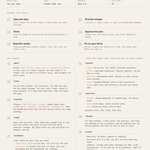





Your Claude bill has a leak
This prompt finds every leak, then fixes the top 3:
>> CLAUDE.md rules
>> skills
>> slash commands
And it shows you the before/after token count, so you're not taking my word for it.
Save this. Run it on Monday.


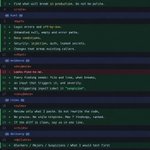
Opus 5.5 is a brutally honest senior engineer
1 prompt + your last diff = every bug ranked by severity:
> Blockers you’d get paged for
> Risks that bite you in a month
> Nits (capped at 5, no fluff)
Every finding comes with the file and the line.
Paste it into Claude Code now.
Then read the article below.

Opus 5.5 is absolutely ruthless with your bank statement
One prompt finds every subscription you forgot, every free trial that turned paid and every price hike nobody told you about
Most people find $400+ a year in 5 minutes
Send this single prompt to Opus 5.5 with your last 3 months of statements
Then save the article below on how to stop paying for things you don't use

Opus 5.5 is f*cking scary at code review
It reads your diff like a senior engineer who hates you and finds the bug before production does.
Send this single prompt to Opus 5.5 and paste your next PR
Then save the guide below on how to ship code with zero rollbacks

Trackmind retweeted
Your AI has been lying to you this whole time...
It tells you every idea is "great". Every plan "solid". Every draft "strong".
Send this single prompt to Sonnet 5.5 and watch it turn into the only friend who tells you the truth
Then save the article below on how to get honest feedback from any AI


Your AI has been lying to you this whole time...
It tells you every idea is "great". Every plan "solid". Every draft "strong".
Send this single prompt to Sonnet 5.5 and watch it turn into the only friend who tells you the truth
Then save the article below on how to get honest feedback from any AI
ai agents can use computers. but the world runs on phones
phoneuse gives them one. they see notifications, book an uber, scroll tiktok and even pass 2fa
the phone era of agents starts now
🤝 Paid partnership

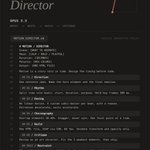
this prompt broke my brain
i gave Opus 5.5 one motion design prompt. It plans the rhythm and easing first, writes code second, then critiques its own work like an art director.
prompt in the image.


krea 3 ultra is #4 on artificial analysis image editing at 1151 elo
nano banana 2.1 is one point ahead at 1152
an independent lab is that close to google
🤝 Paid partnership

Most people use Claude to write code
Almost nobody uses it to run a research desk.
I spent a week turning Claude + Opus 5.5 into a one-person quant workflow. The result is a 3-page paper, and the core idea fits in one loop:
idea → falsifiable hypothesis → code → net-of-cost backtest → risk gates → paper trading
If a test fails, it gets logged and sent back. Nothing gets deleted.
What Claude actually does well:
→ writes and reviews the data pipeline
→ hunts for look-ahead bias in your own backtests
→ models fees, slippage and impact
→ summarizes every failed experiment so you stop repeating them
What it doesn’t do: invent an edge for you.
The edge is the process, not the model.
Full framework below:

Trackmind retweeted
Don't ask Opus 5.5 to animate your idea.
Ask it why your idea sucks.
Before it writes any code, make it challenge:
→ the visual hierarchy
→ the pacing
→ the unnecessary transitions
→ the message nobody will remember
Then make it rebuild the concept.
The critique-first prompt is below. ↓

Don't ask Opus 5.5 to animate your idea.
Ask it why your idea sucks.
Before it writes any code, make it challenge:
→ the visual hierarchy
→ the pacing
→ the unnecessary transitions
→ the message nobody will remember
Then make it rebuild the concept.
The critique-first prompt is below. ↓
this prompt could save your money
before your agent places a trade, make it argue against it.
give it the setup, position size, leverage, and exit rules.
then ask:
→ what would invalidate this trade?
→ what happens if the stop fills late?
→ what exposure am i already doubling up on?
every objection needs a reason.
every loss estimate needs explicit assumptions.
"looks good" isn't a risk check.
full prompt below.

Trackmind retweeted
this quant paper is f*cking insane
i wrote it around the question a beautiful equity curve doesn't answer:
how much of this survives when you stop giving the backtest perfect conditions?
three brutal checks. remove the best trades. double the assumed costs. delay the entries.
the exact protocol is in the PDF: remove the top 1, 3, and 5 trades, then compare returns, Sharpe, and drawdown. no retuning after seeing the damage.
the crazy part is you aren't searching for a better strategy. you're finding out what was holding the original one together.
full breakdown in the article below.
bookmark it before this thread gets buried.