

Psychology studies that change what you say to people. One real paper a day, plus the exact line to use. Myths busted weekly.
Planet Earth
Joined April 2008
- Tweets17.1K
- Following9
- Followers771
- Likes685





Pinned Tweet
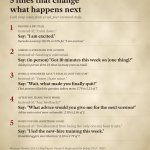
Start here.
I read one real psychology paper a day and turn it into the exact line to say to people.
These 5 swaps each come from a peer-reviewed study. The numbers are on the card. Every source is in the reply.
Which one are you trying this week?

1
47
You were taught that 38 people watched a woman get murdered and did nothing. The court records don't back that up.
Then researchers watched 219 real fights on CCTV. Bystanders stepped in 9 times out of 10.
Psychology's scariest crowd story, checked against the actual papers:
For the pin, keep Start Here for now. At about 48 hours it had 38 views, 0 likes and 0 bookmarks. About 48 hours after this Article is up, swap in the Article (or its promo) only if it beats that: more than 38 views, or any like or bookmark.
teapawt.org/2mavin/status/21245474…


5
"It's the thought that counts." Mostly nonsense to whoever opens it.
At a Chicago museum, people picked a gift for a stranger. Careful pick or random grab, same thanks: 7.22 vs 7.39 of 10.
The thought only counted when a friend gave a bad gift.
Ask what they'd actually use.
#psychology #neuroscience

1
10
Zhang & Epley (2012), J Exp Psychol Gen 141(4), 667-681. doi.org/10.1037/a0029223
Random vs careful: Exp 4, 75 stranger pairs. Bad gift from a friend: Exp 3, careful 7.38 vs random 5.74 of 10.
Caveat: museum visitors, cheap gifts, small groups. No independent replication found.
3
That smiley in your first email to a new coworker might cost you.
Two smileys in a hello email. Readers rated the sender less competent, 4.79 vs 5.10 of 7. Replies got 25% shorter.
An 847-person rerun still found it, smaller. Warmth rose.
Save the smiley until they send one.

1
10
Glikson, Cheshin & van Kleef (2018), Soc Psychol Personal Sci 9(5), 614-625. doi.org/10.1177/194855061772…
Rerun: Lai & Mayiwar (2023), Collabra: Psychology 9(1), 90195. doi.org/10.1525/collabra.901…
Caveat: made-up emails, small original samples. The rerun's hit was about a third as big.

4
Psych myths #7
"21 days to build a habit" traces back to plastic surgeon Maxwell Maltz in 1960. His evidence? Patients getting used to new faces.
UCL timed real habits. Median: 66 days. One person was on pace for 254.
Still hard on day 21? Normal. You're a third of the way.
#psychology #neuroscience

1
12
Lally, van Jaarsveld, Potts & Wardle (2010), "How are habits formed," Eur J Soc Psychol 40(6), 998-1009. doi.org/10.1002/ejsp.674
Maltz: Psycho-Cybernetics (1960), preface.
Caveat: 96 London students rated themselves. Only 39 fit the curve, and 254 is a forecast.

8
A 2050 guess had company.
Katja Grace's team asked 2,778 AI researchers, and their 50% date for machines beating humans at every task moved 13 years sooner, to 2047, in one year.
Even the builders guessed late. The proof checks are still running.
#psychology #neuroscience

Terrance Tao expected the Riemann Hypothesis to be proven maybe in 2050.
In fact it took only 35 days.
24
Trained crisis line volunteers lost a compassion test to ChatGPT, 3.47 vs 4.08 of 5.
Much of that was length. Trimmed to human length, the AI beat everyday people by 0.13, down from 0.58.
Skip "So sorry, that sucks." Repeat one detail back, then ask "What was the worst part?"

1
29
Ovsyannikova, Oldemburgo de Mello & Inzlicht (2025), "Third-party evaluators perceive AI as more compassionate than expert humans," Communications Psychology. doi.org/10.1038/s44271-024-0…
Caveat: strangers rated written replies to made-up stories. Length test: a small extra rerun.

5
Willpower isn't a battery. Power poses don't change your hormones. The famous jam study barely holds up.
I went through the big reruns of 10 famous psychology findings. Some collapsed. Some were never what you were told.
What's left of each, and what to do instead:

9
Sources, in card order:
1. Brooks (2014), "Get Excited," J Exp Psych: General. doi.org/10.1037/a0035325 (2025 replication kept the feeling, not the speech ratings: doi.org/10.58734/plc-2025-00…)
2. Roghanizad & Bohns (2017), JESP. doi.org/10.1016/j.jesp.2016.…
3. Huang et al. (2017), JPSP. doi.org/10.1037/pspi0000097
4. Blunden et al. (2025), Management Science. doi.org/10.1287/mnsc.2022.03…
5. Sezer, Gino & Norton (2018), JPSP. doi.org/10.1037/pspi0000108
The exact lines are mine. The studies tested the idea, not my wording.
15
The people who never had sex were more educated. That's not the sad part.
Researchers led by Amsterdam UMC went through UK Biobank answers from 405,117 adults aged 39 to 73. The paper, "Life without sex," came out in PNAS in 2025.
3,929 of them, roughly 1 in 100, said they'd never had sex of any kind.
You probably already have a picture of that person. The data wrecks half of it.
On average they had more education. They drank less and smoked less. The men had weaker grip strength, and they needed glasses earlier.
Then the part that stings. They were lonelier, more nervous and less happy. And the clearest differences weren't about looks or brains at all. They were social. Fewer visits from friends and family. Much more likely to live alone. A lower chance of having a single person to confide in.
Where they lived mattered a little too. Men were more often sexless in areas with fewer women, and both sexes in areas with bigger income gaps.
Genes showed up as well. Common DNA variants explained about 17% of the variation in men and 14% in women, and gene scores built from them predicted related outcomes in a separate group of roughly 13,500 Australians. Hardly destiny. Most of the variation wasn't explained by those variants.
Before anyone turns this into a stereotype, read the authors' own warning. These are "subtle patterns rather than stark differences." It's one snapshot, so nobody knows what caused what. Loneliness might keep people single. Being single might feed loneliness. Probably both.
So what do you do with it?
Think of the friend who's always the only single one at dinner. Most people keep asking them the same question. "So, seeing anyone yet?"
Swap it for "We're cooking Sunday. Come over."
That's my suggestion, not something this study tested, and it won't fix anyone's love life. But the gap the data showed most clearly was having somebody to talk to. One invite goes straight at that.
#psychology #neuroscience

1
65
Source: Abdellaoui et al. (2025), "Life without sex: Large-scale study links sexlessness to physical, cognitive, and personality traits, socioecological factors, and DNA," PNAS 122(38), e2418257122. Open access: doi.org/10.1073/pnas.2418257…
Correlational, one time point. The authors are blunt that cause and effect could run either way.

20
Apparently a person is less kind if he sleeps less well.

Broken sleep? You might be a bit less kind this morning.
347 UK adults, one group woken 5 times overnight. That group reported 5.49h sleep vs 6.74h, and next morning felt less empathy for people in pain.
Your 3am wake-up: kids, noise or heat?
(Int J Clin Health Psychol, 2025)

ALT First page of Restless nights, cold hearts: Poor sleep causally blunts empathy (International Journal of Clinical and Health Psychology, 2025)
16
Why does a group that holds every clue still pick the worse option?
Because people mostly talk about what everyone already knows.
Miami University researchers caught this in a 1985 paper with a dry title, "Pooling of unshared information in group decision making."
Students met in groups of 4 to choose a student body president from 3 candidates. Candidate A was the best on paper, with 8 strong points against 4 for each rival.
When everyone read the full profiles, 83% of groups picked A.
Then the researchers split the facts up. Everyone still got the shared basics, but each person saw only 2 of A's 8 strong points and all 4 of his weak ones. Put the 4 people together and the group held every single fact.
Only 18% of those groups picked A. That's 7 of 38.
They'd even been warned that the others might know things they didn't.
Worse, talking made the wrong pick stronger. In one condition, 61% favored candidate B before the discussion and 75% after it. Discussion didn't help people recall the facts only they had been given.
Labs have rerun this setup again and again. A 2012 meta-analysis pooled 65 studies and 3,189 groups. Groups with split information were 8 times less likely to find the right answer than groups who all had the full picture. Meeting by computer instead of face to face didn't change that.
Now think of a hiring panel. Everyone read the same CV summary. The one person who heard a worrying reference call mentions it once, nobody picks it up, and the room drifts back to the CV.
Example: before anyone says which option they like, go round and ask each person, "What do you know about this that probably nobody else here does?" Write those down, then vote. A 2010 JPSP paper found that hearing others' preferences early made groups worse at these tasks, because people paid less attention to the facts being shared. The exact question above hasn't been tested.
Honest limits: these are mostly student lab tasks with a built-in right answer, and real decisions are messier. The size of the problem changed with group size, information load and task. Sometimes the shared view is shared because it's right.
#psychology #neuroscience

1
26
Source: Stasser & Titus, "Pooling of unshared information in group decision making: Biased information sampling during discussion," JPSP 48(6), 1467-1478 (1985). doi.org/10.1037/0022-3514.48…
The part that bugs me most is that they were told their info might be incomplete and still didn't dig.
Meta-analysis, 65 studies: Lu, Yuan & McLeod, PSPR 2012. doi.org/10.1177/108886831141…
4