

Lifelong Southerner. Born and raised Republican. Now @DemSocialists. Educated @UTAustin. Working hard to make the world better. All views are my own.
Houston
Joined January 2026
- Tweets1.7K
- Following424
- Followers61
- Likes3.4K


here's a 10 minute supercut of Trump's totally bonkers, nearly hour-long interview with CNBC during which he made clear that he directly intervened with the Nvidia board to restore Jensen Huang and didn't even really try to hide the fact he regards Nvidia's share price as being more important that US national security
20


When did bribery stop being a crime?
It didn't, technically. The statutes are right where we left them. Section 201 still forbids bribing a federal official. Section 666, the one that reaches state and local officials handling federal money, is still on the books. Honest services fraud is still there, one sentence long, sitting in the mail and wire fraud chapter like a shotgun over the door. Nothing was repealed. What changed is what the words mean, and the words were changed by a court rather than a Congress, in a run of opinions that almost nobody outside the profession has read.
Start where the country last took this seriously. In August 1974 a president resigned rather than face impeachment over a burglary and the cover-up that followed. What came next was the most sustained anticorruption project in American history, and it was bipartisan to a degree that is hard to picture now. Campaign finance limits and the Federal Election Commission in 1974. The Foreign Corrupt Practices Act in 1977, which made it a federal crime for an American company to bribe an official anywhere on earth. In 1978 alone: the Ethics in Government Act, which created financial disclosure for senior officials, the Office of Government Ethics, and an independent counsel who could investigate the executive branch without the executive branch's blessing; and the Inspector General Act, which put a semi-independent auditor inside every major agency. A country that had just watched its own Justice Department used as a personal instrument sat down and built machines designed to run even when the people operating them would rather they didn't.
Then we took the machines apart, the same way we took the tax code apart, and for the same reason. One piece at a time, each removal defended by a reasonable-sounding argument, and the man making the argument was usually the man the machine was pointed at.
The independent counsel statute was allowed to lapse in 1999. What replaced it is not a law. It is a Justice Department regulation, written by the Justice Department, revocable by the Attorney General on any Tuesday he pleases. A special counsel today serves at the pleasure of the official he may be investigating, or of the official appointed by the man he may be investigating. That is the entire safeguard. That is the whole fence.
The Supreme Court did the rest.
In 2010, Skilling cut honest services fraud down to bribes and kickbacks only, reading self-dealing clean out of the statute. In 2016, McDonnell took up a Virginia governor who had collected roughly $175,000 from a businessman seeking state help: loans, a Rolex, catering for his daughter's wedding, vacations, the use of a Ferrari. In return he arranged meetings, hosted events at the governor's mansion, and made calls to state officials on the man's behalf. The Court vacated the conviction, 8 to 0, holding that none of that amounted to an "official act." Read that again. The governor did the governor parts of the job, and the Court held the governor parts of the job were not official.
In 2020, Kelly threw out the Bridgegate convictions, 9 to 0, because the object of the scheme wasn't money or property. In 2023, Percoco and Ciminelli narrowed things further, both unanimous. And in 2024, Snyder held that Section 666 reaches bribes but not gratuities. So a mayor whose city bought $1.1 million in trash trucks from a local company, and who then accepted a $13,000 check from that same company, landed outside the statute, because the money arrived afterward and nobody could prove a handshake beforehand.
Now, where I come from, a man who sells you five trash trucks and mails you thirteen thousand dollars a few months later does not require a law review article to explain himself. He requires a jury. He got one. It convicted him. Six justices then decided the jury had misunderstood the word "rewarded," which is a word sitting right there in the statute, in plain English, doing exactly the job the jury thought it was doing.
Add the cases up and here is the standard a federal prosecutor now faces. He must prove an explicit agreement, formed before the conduct, to trade a thing of value for a formal exercise of government power, and the power has to be a decision on a specific matter pending before the official. Not access. Not influence. Not the meeting, the phone call, the introduction, or the thumb on the scale. And not the reward that shows up later, because nobody wrote it down in advance.
Nobody competent ever writes it down in advance. That is the entire point of the standard. We have built a bribery law that catches only the fools, and then we hold up the conviction numbers as evidence there isn't much corruption going around.
Meanwhile the campaign check, which I wrote about last week, does the same work out in the open and needs no agreement at all. You never have to buy the vote if you can fund the primary.
There is one more layer, and it is newer. In 2024 the Court held that a former president enjoys absolute immunity for acts within his core constitutional authority, presumptive immunity for everything else official, and, crucially, that evidence of official acts cannot be put before a jury even in a prosecution for private conduct. Stack that on two Office of Legal Counsel memos, from 1973 and 2000, holding that a sitting president cannot be indicted at all. Those memos are not statutes. No court has ever ruled on them. They are internal opinions written by the executive branch, about the executive branch, concluding that the executive branch is difficult to prosecute, and they have functioned as law for fifty years on nothing but their own say-so. Add a pardon power with no stated limit, no review, and no rule against pardoning the very people who could testify against you, and the circle closes: cannot be charged in office, cannot be charged for official acts after, and anyone who might talk can be made whole with a signature. There have been kings who would have considered that arrangement generous.
Now set it beside the ordinary citizen. Round your income up on a mortgage application and you have committed bank fraud, thirty-year maximum. Sell your food stamp benefits at a discount and you have committed a felony. A warehouse foreman who takes $500 from a supplier gets prosecuted under theories that no longer reach a mayor. The STOCK Act requires members of Congress to disclose their stock trades within 45 days; the penalty for blowing the deadline is $200, and dozens have simply written the check and gone on about their day. Two tiers, same as the tax code. The rules that actually get enforced are the ones that reach people who cannot afford to be indicted.
The case for narrowing all this is not frivolous, and treating it as frivolous is how reformers lose the room. Honest services fraud really was one sentence doing the work of an entire code. "Official act," read broadly, really does swallow ordinary constituent service, which means a determined prosecutor could indict damn near any officeholder who ever helped a donor with a permit. A corruption statute vague enough to catch everybody is a loaded weapon lying on the desk of whoever happens to run the Justice Department that year, and the Court's worry about that was real rather than partisan. Three of those decisions were unanimous, which is about the closest thing to a nonpartisan signal that building still produces.
But the cure for a vague statute is a clear one. The Court said so out loud, more than once: Congress can fix this by writing a better law. Fifteen years on, no law. This should surprise no one. You do not hand the indictment to the defendant and ask him to tighten up the language.
So write it anyway, and write it plain. Define an official act as any use of public position or influence, meetings and calls and referrals included. Cover gratuities expressly, so the check that arrives after the contract is the crime that any grown adult already knows it is. Restore the stream-of-benefits theory, so a standing arrangement counts even when no single payment matches up to a single act. Restore honest services to reach undisclosed self-dealing, with a clean disclosure safe harbor so the honest official knows exactly where the line sits.
Then fix the referees. Put the special counsel back in statute, with for-cause removal and mandatory reporting to Congress, so the umpire is not on the home team's payroll. Give inspectors general for-cause protection, advance notice to Congress, and somebody with standing to sue when one gets fired in the middle of an audit. Settle the immunity question by legislation instead of by memo, and at a minimum stop the clock on the statute of limitations for anyone who cannot be charged while in office, so that running out the calendar is not a perk of the corner office. Ban congressional stock trading outright, blind trusts or index funds, with disgorgement of the gains and not a $200 late fee. And fund the prosecutors. The Public Integrity Section at Justice is a few dozen lawyers responsible for the conduct of the entire federal government.
None of this is about any one officeholder, and framing it that way is precisely how it dies in committee. Every provision here would bind the next administration and the one after that, whoever wins, including the people you voted for. That is the test of an honest anticorruption rule: you ought to be willing to write it before you know who it catches.
The rule of law is not a slogan about respecting institutions. It is a narrow, measurable claim, that the same conduct earns the same consequence no matter who does it. By that measure we have been failing for fifteen years, and we failed quietly, without a vote, through unanimous opinions and lapsed statutes and internal memos nobody ever tested in open court. A law that reaches only the powerless is not a law. It is a tool, and we handed it to the very people it was written
Apolitical Observer retweeted
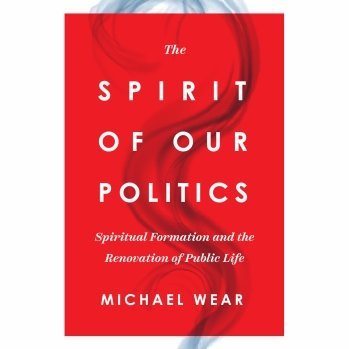
I think this story is a counterargument against the idea that @jamestalarico’s faith and values only take him as far as Democratic orthodoxy allows, and it should nuance that kind of criticism against him.