
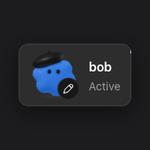






I turned the MacBook notch into something actually useful.
NotchShot is a Dynamic Island for macOS:
• AI activity from Codex / Claude / Cursor
• screenshots + OCR + editing
• screen recording
• Now Playing
• file shelf
Local-first & open source
github.com/7vibex/NotchShot
I’ve been building NotchShot — basically what I wish the MacBook notch did by default.
It turns the notch into a real interactive space for:
→ Codex / Claude Code / Cursor activity
→ screenshots, OCR & annotation
→ screen recording
→ Now Playing + audio output controls
→ file drops & quick actions
→ volume / brightness feedback
Everything is local-first. No account, no backend, no telemetry.
And it’s open source.
github.com/7vibex/NotchShot

The MacBook notch is wasted space, so I built something for it.
NotchShot turns it into a macOS Dynamic Island for screenshots, recording, OCR, music controls and live AI activity from Codex / Claude / Cursor.
100% local-first. Open source.
github.com/7vibex/NotchShot


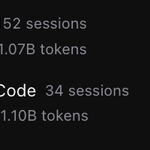
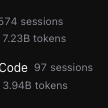
I’m paying $120/month for ChatGPT 5x and $20/month for Claude , and somehow over the past 30 days even with all of Tibo’s resets I’ve ended up getting just 3B tokens difference .
That’s kind of wild. @kimmonismus @ChrisGPT

28 min and still working for some essays ,also 2 % of my usage gone 5x plan btw @thsottiaux


My take on Sol → Luna → Sol orchestration: it only works when Luna gets a tightly scoped task with an easy pass/fail check.
If Sol has to re-read, debug, and repair Luna’s output, the “cheap” middle step becomes rework, extra handoffs, and latency.
Cheap tokens ≠ cheap outcomes.
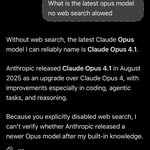
After spending a few hours testing Opus 5 on my Swift project, I’m not that impressed. It’s good for the price, but in my experience, it’s not on the same level as Fable 5 or GPT-5.6 Sol.
I tried to one-shot an entire project, but Opus 5 made significantly more mistakes than both.
For now, GPT-5.6 Sol remains the most capable model for the price.


