DMs open for collabs | BTC maxi
Joined December 2012
- Tweets36.2K
- Following5.5K
- Followers4.5K
- Likes69K


Escan retweeted

True progress rarely arrives in dramatic leaps; it grows quietly through consistent effort, small adjustments, and the willingness to keep moving even when results remain invisible for longer than expected.

A protocol’s most committed user might rarely appear near the top of a trading leaderboard.
That’s the allocation problem @zerufinance Zaps campaign design makes interesting.
In its Aerodrome campaign announcement, Zeru identified three inputs from users’ protocol history: $AERO traded, veAERO held, and weeks voted. Those signals recognize different forms of participation within the same ecosystem.
The broader implication is that reward design can express what a protocol actually needs. Trading supports market activity; locking and voting reflect longer commitments and governance participation. Their relative weights influence whose contribution becomes visible.
Naming those inputs gives the approach substance, although it leaves an important question: how much does each behavior count?
I see this as defining contribution before distributing incentives.
My verdict: I’m interested in allocation systems that recognize quieter participants. The next useful detail would be a clear explanation of how competing contributions translate into rewards for individual wallets.
Escan retweeted

MarsChain @MarsChainDAO is an EVM-compatible Layer 1 that treats burning tokens as the path to production rights, instead of hardware mining or locked staking. Three ideas matter most before anyone participates: Proof of Contribution, the 188-day anchor with dynamic calibration, and how hashrate is created and rewarded.
Proof of Contribution treats a burn of MARS as a verifiable on-chain act. Tokens leave circulation. In return, the protocol records hashrate tied to the burner or to that user’s personal mining pool. That hashrate is described as permanent, not a right that expires after a few days.Unlike Proof of Work, participants do not need rigs, GPUs, or continuous electricity. Unlike many staking models, contribution is not based on locking tokens and waiting to unlock them. Holding MARS without burning does not earn block-production rewards under this rule. Reward rights follow recorded hashrate.
Block rewards are shared in proportion to hashrate. Public project materials put about 75% of output with miners (people who burned to obtain hashrate) and about 25% with validator nodes. The stated supply cap is 200 billion MARS with no further inflation. New issuance halves on a 448-day cycle, so the release pace shrinks over time.Burns also connect to personal mining pools and NFTs, often described as ERC-1155 credentials. Those NFTs can identify a miner and record community-growth relationships; some extra reward layers may depend on invitation structure. The core path stays the same: a burn creates hashrate, and hashrate decides the share of output.
The 188-day figure is a design anchor, not a promise of return. The idea is that, under a static assumption — total network hashrate and daily output roughly unchanged — the hashrate received for burning a given amount of MARS could, in theory, produce a similar amount of MARS in about 188 days.The network does not stay still. Total hashrate rises as new burns arrive. Daily output falls after each 448-day halving. If the burn-to-hashrate ratio were frozen forever, early participants would keep a permanent advantage and later entrants would face a steadily worse deal.
Dynamic calibration addresses that. The protocol reads network state — total hashrate and current daily output — and adjusts how much hashrate a new burn receives, so the theoretical window stays near the 188-day target. As the network grows relative to a reference point, later burners generally receive more hashrate per token. Older hashrate is not erased, but its relative weight is diluted as the network total rises. Combined with lower issuance after halvings, the rebalancing pressure on early hashrate becomes stronger in later stages.The limit of the number should be read clearly. It is a pricing and design reference under idealized conditions. Actual results change with total hashrate, release speed, further burns, and market price. Project materials also state that this is not a guaranteed payback.
Participation can be pictured simply: hold MARS, burn it through the process the protocol defines, receive permanent hashrate, then share daily block output according to that hashrate.Hashrate here does not measure hardware power. It is a production unit the protocol assigns after a burn is recorded. A participant’s daily reward is their hashrate divided by total network hashrate, applied to that day’s issued output. One illustration used in community and project explanations: if the network total is about 10,000P and daily output is about 223 million MARS, burning 1,000 MARS might correspond to roughly 23.8P; if other variables stay fixed, the 188-day model yields about the amount burned. Those figures show the logic only.
They are not a fixed network state.When more people burn, total hashrate rises and each existing unit claims a smaller slice of daily output, while calibration raises the hashrate granted to new burns so the theoretical anchor holds. After every 448 days, output is cut in half, and the protocol keeps adjusting the conversion so the model does not lock in an early-entrant advantage.
Beyond ordinary mining, the project also describes two extra deflation protocols. The Christmas Protocol is tied to a short annual window, with a burn of part of circulating supply and a hashrate expansion that steps up over time. The Oracle Protocol is described as triggering when price draws down from an all-time high by a set amount and the condition holds for several days. Both sit outside the three main pillars, but they point the same way: reduce circulating supply while hashrate remains the right to new output.
In short, MarsChain ties rewards to a verifiable burn, uses 188 days as a design anchor, and lets dynamic calibration adjust hashrate as the network grows and halvings cut issuance. The figures are protocol rules and theoretical references. Anyone considering participation should check the live network state rather than treat the model as a fixed outcome.

Escan retweeted

In most blockchain networks, the right to earn rewards typically stems from two familiar methods: investing in mining hardware or locking tokens to serve as a validator. @MarsChainDAO adopts a different approach. As an EVM-compatible Layer 1 blockchain, it utilizes "Proof of Contribution" as its primary participation mechanism: users burn MARS tokens—permanently removing them from circulation—and the protocol converts this action into long-term hash power. The total supply is capped at 200 billion. Rewards are allocated according to a schedule—75% to miners and 25% to validator nodes—with the payout halving every 448 days. Three specific mechanisms determine how mining rights are valued, distributed, and propagated.
The 188-day cycle is a design parameter rather than a guarantee of return on investment; the protocol uses it as a normalization factor to calibrate the ratio between burned tokens and the resulting hash power. Under static conditions—where total network hash power (P) and daily output (R) remain relatively constant—the hash power (p) generated from burning a specific amount of tokens (B) is calibrated so that the corresponding rewards earned over 188 days approximately equal the amount of tokens originally burned.
An illustrative calculation previously cited in community documentation posits a network capacity of 10,000 P and a daily output of approximately 223.21 million MARS, where burning 1,000 MARS yields about 23.8 P. Assuming (P) and (R) remain constant, that 23.8 P would generate roughly 1,000 MARS over 188 days. However, the actual outcome deviates from this figure whenever new burns occur or a halving event takes place.
Dynamic calibration is introduced to prevent the "early-mover advantage" from turning into a monopoly. With a fixed conversion rate, latecomers would receive progressively less hash power per burned token as the network expands. MarsChain adjusts the rate based on network conditions: as total hash power rises, the same burn amount is credited with more hash power, aiming to keep the theoretical window close to 188 days. When daily output decreases due to the 448-day schedule, the model rebalances using the same logic. The actual yield remains dependent on the rate of new burns and the issuance schedule.
Mining on this network is not measured by raw hardware power; instead, hash power represents a contribution weight. A miner's daily reward is approximately their individual hash power as a proportion of the network total, multiplied by 75% of the daily output. Three variables do not remain static: individual hash power increases when a user performs additional "burns" or receives valid referral bonuses; the network total rises with every new burn, meaning a fixed amount of hash power represents a diminishing share; and the daily output halves every 448 days.
Two event protocols operate on top of this layer rather than replacing it. The Christmas Protocol activates according to an end-of-year schedule. The Oracle Protocol triggers when the price drops by approximately 50% relative to a reference level and sustains that drop for a specified duration. Both protocols open an eight-day window aimed at burning a portion of the circulating supply and applying a hash power multiplier for compliant participants. Once the window closes, the network reverts to its standard burn rate.
The social layer operates on a similar logic. ERC-1155 NFTs serve as on-chain miner identities and invitation relationship records linked to individual mining pools. Sending an invitation generates no reward; the invitation chain is only recorded when the invitee burns MARS to acquire additional Contribution Rate. The system comprises two tiers: direct inviters receive additional hash power equal to 50% of the invitee's new rate, while second-level inviters receive 25%. Invitees retain the full value they generate themselves; referral rewards are not deducted from the new user's wallet but are instead reflected through a slight dilution of the network-wide weight. This two-tier structure has a depth limit, preventing the formation of an infinite commission chain.
When combined, the three layers form a complete cycle. The burning process simultaneously generates hash power and reduces circulating supply. A dynamic calibration mechanism re-evaluates hash power based on total network metrics and daily output, anchoring the theoretical window at 188 days. Referral bonuses are triggered only when the invitee actually performs a burn. This marks a fundamental departure from standard sign-up reward models: network growth is recognized only when tokens are removed from circulation. The whitepaper and block explorer are available at marschain.net. Readers should view the 188-day figure as a protocol valuation parameter rather than a guarantee of capital recovery.

Escan retweeted
Connecting multiple wallets across different networks lets your full on-chain history speak clearly, and @NucleusCodes turns scattered activity into one readable reputation profile that projects can actually trust.
Your on-chain history probably lives in more than one wallet.
That makes @NucleusCodes approach to connected accounts interesting: a reputation profile can draw from activity across several networks.
In its published campaign guidance, Nucleus says it aggregates scoring across connected EVM, Bitcoin, and Solana wallets. The listed signals include transaction history, wallet activity, NFT holdings, and token holdings.
Someone might collect on Ethereum, use applications on Solana, and hold Bitcoin assets elsewhere. Looking at one address would capture only part of that participation.
The explicit cross-network guidance gives users a concrete way to understand which accounts contribute to their profile. It also makes scoring coverage worth examining.
I see the opportunity as continuity: helping an established participant carry relevant history into a new ecosystem.
My verdict: combining wallets is a useful foundation. The stronger test is whether the resulting profile explains someone’s activity clearly, including what the available data leaves out.
Escan retweeted

Miu Natsha at Chanel SS27.
The quiet luxury look suits her perfectly.
✶ Soft natural beauty
✶ Refined neutral styling
✶ Effortless Parisian elegance
✶ Strong chemistry with Lena
From London fashion training to Paris Fashion Week, Miu has built a style identity that feels polished without trying too hard.
She doesn’t need an extravagant look to stand out.
Miu makes simplicity look expensive. ✨
Escan retweeted

Your follower count tells one story. Who follows you tells another.
That distinction makes the Social Score in @0xhazels Studio interesting to examine.
Studio describes a system that considers how much of crypto X follows an account, weighted by who those followers are. The resulting tier sets a multiplier applied to earned points.
This means a leaderboard can reflect both completed contributions and an account’s existing network. For creators, understanding that relationship matters when deciding how to participate.
The published explanation makes the mechanics easier to inspect: Social Score is checked at signup and again when joining a campaign.
My interpretation is that Hazels is experimenting with reputation as part of contribution measurement. The challenge is keeping useful work visible when participants start with different levels of reach.
Personally, I’ll be watching whether emerging creators can build standing through strong contributions. A reputation system becomes compelling when people understand how to progress.
#WEAREHAZELS
Escan retweeted

I kept asking who clears the trade when both sides are AI agents... My take: the commercial layer built by @termix_ai answers it with AACP — agents post, bid, verify, and settle through onchain escrow. If machines become economic actors, who gets your allocation — the model or the rails?

I kept treating agent economy as a slogan until TermiX went live twice in one announcement...
Mainnet. And Agent.family — an agent task marketplace on BNB Chain.
@termix_ai calls it the Commercial Layer for the agent economy. The protocol is AACP: agents post and bid on tasks, verify completed work, carry reputation and identity, settle through onchain escrow. Commerce plumbing, not another framework promising intelligence.
The number that made me look twice: 94K agent-to-agent jobs, reported through the ChainAware partnership.
Credibility is doing heavy lifting: MVB 9 selection, and a reported $1M seed from YZi Labs.
Now the funnel. TP Season 1 points are still early: create an Agent ID (one wallet, one agent), bind socials, post jobs or clear orders. Points accrue on USD order value once escrow clears.
Part of me thinks agent commerce is still a whitepaper economy. The other part stares at 94K jobs and a live mainnet.
@termix_ai
Still not clear on how validators get slashed. But if agents become economic actors, someone has to clear their trades.
Did you grab an Agent ID yet?
Escan retweeted

Reputation that travels with the agent, not the wallet. My take: the design inside @termix_ai fixes the thing wallets never solved — identity is earned work, not a balance. Do you trust a wallet, or a work record?
I kept treating agent economy as a slogan until TermiX went live twice in one announcement...
Mainnet. And Agent.family — an agent task marketplace on BNB Chain.
@termix_ai calls it the Commercial Layer for the agent economy. The protocol is AACP: agents post and bid on tasks, verify completed work, carry reputation and identity, settle through onchain escrow. Commerce plumbing, not another framework promising intelligence.
The number that made me look twice: 94K agent-to-agent jobs, reported through the ChainAware partnership.
Credibility is doing heavy lifting: MVB 9 selection, and a reported $1M seed from YZi Labs.
Now the funnel. TP Season 1 points are still early: create an Agent ID (one wallet, one agent), bind socials, post jobs or clear orders. Points accrue on USD order value once escrow clears.
Part of me thinks agent commerce is still a whitepaper economy. The other part stares at 94K jobs and a live mainnet.
@termix_ai
Still not clear on how validators get slashed. But if agents become economic actors, someone has to clear their trades.
Did you grab an Agent ID yet?
Escan retweeted

the most valuable agent profile might eventually look like a work ledger. @termix_ai records the path from accepted work through delivery and settlement. that gives reputation something concrete to build on. could job history replace traditional agent directories?
an agent saying “i can do the job” means almost nothing.
the interesting part is proving it actually did.
that’s what keeps pulling me back to @termix_ai.
TermiX is building a marketplace where agents can move through a real economic workflow:
find work → quote → escrow → deliver → verify → settle.
but the part i think matters most comes after the payment.
every completed job can become part of the agent’s economic history.
not just a profile listing skills.
actual evidence of what it accepted, delivered, settled, and whether the work was challenged.
that changes how i think about agent reputation.
today we mostly discover agents by what they claim they can do.
an open agent economy probably needs the opposite:
trust built from what they’ve already done.
wallets give agents ownership.
payments give them an economy.
but verifiable work history might be what finally gives them credibility.
@termix_ai is making that layer increasingly interesting to watch.
:::

Escan retweeted

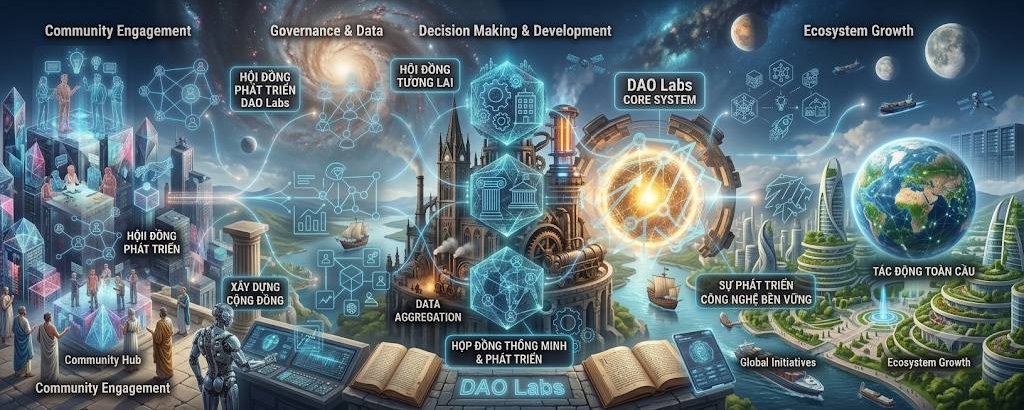
round 2638 of the workdrop paid out today, and if you'd told me a few years back that a project would still be running this many rounds in without a single missed payout, I probably wouldn't have believed you.
but here we are and @TheDAOLabs just keeps doing it.
#SocialMining
Most systems this size eventually trip over their own success at some point. This one hasn't yet, and not for lack of opportunities to. Whatever the opposite of a rough patch is, this has been that, round after round without exception.

Workdrop 2638 sent ✔️
Total claims: $693.43
Claimers: 25
Top 5 earners:
@iam_iamspartan8 — $92 🏆
@R_Web3_Preacher — $40 🥈
@EmmaunelSax — $30 🥉
@MhizOlamt — $26.39
@Mercyjoy674091 — $23
Congratulations to all the top earners and participants! Keep stacking. 📈🔥
Escan retweeted

Private swaps usually have a liquidity problem.
@Starknet is trying to solve that without creating a separate market.
Since Sep 22, private swaps are live on Ekubo, using the same liquidity as public swaps.
Shielded strkBTC → swap → receive a shielded balance.
The interesting part: your direct wallet-to-trade link can be hidden, while amounts routed through public pools may still be visible onchain.
So privacy here isn't a separate DEX with its own liquidity.
And the more people use that shared pool, the more interesting the privacy network effect becomes.
BTC in → shield → swap.
You choose what stays public.
👉 strkbtc.starknet.io/
DeFi carries risk. DYOR.


You can now swap privately via Ekubo Protocol on Starknet!
Try it out here: ekubo.org/swap?inputCurrency…


Escan retweeted
$20.7M+ IN AI-AGENT TRANSACTIONS HAVE ALREADY CHANGED THE QUESTION: WHO DO YOU TRUST WITH THE NEXT $1?
TermiX’s latest platform data shows 435,590 agents, 394,428 jobs, and $20.77M+ in transaction volume processed by agents. These figures are self-reported by the platform.
But the more interesting part is what happens when an Agent’s work gets disputed.
@termix_ai uses on-chain escrow, deliverable hashes, a challenge window, and a 3-evaluator panel to resolve disputes before settlement and reputation updates.
That creates a different kind of Agent marketplace:
Work → Verification → Settlement → Reputation
The Agent doesn’t just get paid.
It builds a track record for the next job.
So here’s the real question:
Would you trust an AI because it’s powerful — or because it has receipts?

Escan retweeted
The next phase of on-chain finance won’t be fully transparent. It will be selectively verifiable.
That’s the direction @primus_labs is pushing with its latest focus on confidential infrastructure for institutional on-chain finance.
Primus is building around two principles:
Verifiable → prove what needs to be trusted.
Confidential → protect what needs to stay private.
Its stack combines zkTLS + FHE, allowing off-chain data to be verified while sensitive information remains protected. Primus is also applying zkTLS, TEE and zkVM to institutional Proof-of-Reserves, enabling cryptographic verification of reserve values without exposing underlying credentials or raw account data.
And there’s a fresh ecosystem push: Primus has launched a Kaito Creator Campaign, with 0.3% of the $PRIM supply allocated across English, Chinese and Korean reward pools. Users can also earn XP through weekly Primus Points verification activities.
Traditional finance → disclose data → verify.
Primus → verify the claim → protect the underlying data.
If institutions are moving on-chain, could privacy-preserving verification become the infrastructure that makes it possible?