

Annals of Biomedical Engineering - The flagship journal of the Biomedical Engineering Society covering all biomedical engineering topics.
Joined October 2017
- Tweets1.9K
- Following127
- Followers2.2K
- Likes42





Conventional artificial lenses implanted in the eye cannot always correct complex vision problems, particularly in patients with irregularities in the cornea.
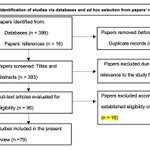
Assessing a potential alternative, researchers conducted a systematic review of small-aperture intraocular implants, which restrict incoming light to reduce the effects of optical irregularities. The authors analyzed clinical and preclinical evidence indicating that these implants can extend the range of distances at which objects appear in focus and reduce dependence on glasses, even in eyes with complex abnormalities. However, reduced light transmission may impair vision in dim conditions, and the implants can make examination of the retina more difficult.
These insights into the benefits and limitations of small-aperture optics could help clinicians identify suitable patients and refine surgical approaches when conventional lenses fall short.
𝗥𝗲𝗮𝗱 𝗺𝗼𝗿𝗲: link.springer.com/article/10…
𝗥𝗲𝘃𝗶𝗲𝘄: Therapeutic Value and Optical Performance of Small-Aperture Intraocular Implants: A Systematic Review
𝗔𝘂𝘁𝗵𝗼𝗿𝘀: Juan J. Prados-Carmona, Mayelín Pérez-Perdomo, Alberto Villarrubia-Cuadrado, Miguel González-Andrades, Álvaro Sánchez-Ventosa, Marta Villalba-González, Timoteo González-Cruces, Yolanda Jiménez-Gómez, and Antonio Cano-Ortiz
@IMIBIC
@HUReinaSofia
@HArruzafa
@Roche
@LoyolaAnd
@UEuropea
𝗦𝘂𝗯𝗺𝗶𝘁 𝘆𝗼𝘂𝗿 𝗺𝗮𝗻𝘂𝘀𝗰𝗿𝗶𝗽𝘁: link.springer.com/journal/10…

Foot pain and walking disorders can be difficult to treat in part because clinicians still lack a precise grasp of how the foot’s intricate structure manages load with every step.
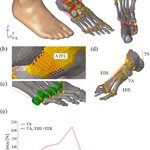
To better understand this mechanical complexity, researchers developed a 3D finite element model of the human foot capable of forward dynamic simulation during the stance phase of walking.
Unlike simplified musculoskeletal models, this anatomically detailed representation incorporated bones, soft tissues, ligaments, and the plantar aponeurosis, and was driven by experimentally measured tibial motion and estimated muscle forces. The simulations closely matched experimental ground reaction forces, plantar pressure patterns, and bone kinematics, while also enabling estimation of internal stresses and strains that cannot be measured directly in vivo.
By illuminating how internal foot structures bear and distribute forces, this framework could support improved orthotic design, surgical planning, and prevention strategies that reduce pain and preserve mobility over the long term.
𝗥𝗲𝗮𝗱 𝗺𝗼𝗿𝗲: link.springer.com/article/10…
𝗦𝘁𝘂𝗱𝘆: Simulating Human Foot Mechanics During Walking Based on an Anatomically Detailed Forward Dynamic Finite Element Model
𝗔𝘂𝘁𝗵𝗼𝗿𝘀: Kohta Ito, Yuka Matsumoto, Hiroyuki Seki, Takeo Nagura, and Naomichi Ogihara
𝗦𝘂𝗯𝗺𝗶𝘁 𝘆𝗼𝘂𝗿 𝗺𝗮𝗻𝘂𝘀𝗰𝗿𝗶𝗽𝘁: link.springer.com/journal/10…

Although a child's ability to maintain balance develops throughout childhood, the extent to which foot structure influences this process remains unclear.
Engineers examined the association between foot morphology and postural sway in 178 children aged 6–11 using a pressure-sensitive platform. Girls aged 8–9 with high arches exhibited greater sway than those with normal arches, with a similar trend observed among older girls. In contrast, boys aged 10–11 with flat feet demonstrated reduced sway under certain testing conditions, suggesting that the relationship between foot morphology and postural stability varies by age and sex.
Variations in how foot structure affects balance could inform more targeted pediatric assessments, helping clinicians identify children who may benefit from closer monitoring or balance training to support healthy motor development and reduce the risk of future lower-limb dysfunction.
𝗥𝗲𝗮𝗱 𝗺𝗼𝗿𝗲: link.springer.com/article/10…
𝗦𝘁𝘂𝗱𝘆: Influence of Foot Morphology on Postural Sway During Childhood
𝗔𝘂𝘁𝗵𝗼𝗿𝘀: Federico Arippa, Bruno Leban, Micaela Porta, Giulia Casu, and Massimiliano Pau
@univca
𝗦𝘂𝗯𝗺𝗶𝘁 𝘆𝗼𝘂𝗿 𝗺𝗮𝗻𝘂𝘀𝗰𝗿𝗶𝗽𝘁: link.springer.com/journal/10…

Even after a surgical wound has been stitched closed, the tension holding its edges together can change over time, potentially compromising the stability of the repair.
Researchers investigated these mechanical changes by developing a measurement system that simultaneously tracks suture tension, applied forces, and closure strength using silicone specimens with simulated incisions. The sutured configuration produced approximately 20% greater tension relaxation than equivalent uniaxial loading, while wound closure strength initially decreased by 5–10% before partially recovering. Increasing initial suture tension from 0.3 to 0.5 N improved closure strength by less than 5%, suggesting limited benefits from tighter suturing.
Quantifying how mechanical loads change over time could help surgeons identify the optimal timing for postoperative adjustments, with the longer-term goal of maintaining wound stability throughout recovery.
𝗥𝗲𝗮𝗱 𝗺𝗼𝗿𝗲: link.springer.com/article/10…
𝗦𝘁𝘂𝗱𝘆: A Multimodal Measurement System for Quantifying Time-Dependent Suture Tension Relaxation and Wound Closure Strength
𝗔𝘂𝘁𝗵𝗼𝗿𝘀: Shuaiyi Li, Yiping Liu, Bao Yang, Zetong Zhu, Licheng Zhou, Zhenyu Jiang, Zejia Liu, Liqun Tang, and Xiulan Zou
𝗦𝘂𝗯𝗺𝗶𝘁 𝘆𝗼𝘂𝗿 𝗺𝗮𝗻𝘂𝘀𝗰𝗿𝗶𝗽𝘁: link.springer.com/journal/10…

Doctors need detailed information about blood circulation to manage complex heart conditions, but obtaining it can require extensive clinical testing and computational analysis.
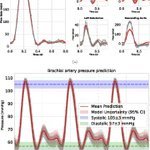
To make this process faster and more practical, researchers compared three neural network approaches for simulating blood flow and pressure across a 17-vessel arterial network. They incorporated physical laws to improve predictive accuracy and integrated the best-performing approach with a Bayesian statistical framework. Using MRI measurements from two patients with Fontan circulation, the model reproduced measured blood flow waveforms and estimated blood pressure consistent with cuff measurements while quantifying uncertainty.
By making cardiovascular assessments more computationally accessible, this approach could improve the efficiency of clinical evaluations while providing additional physiological information to guide decisions about disease management and future interventions.
𝗥𝗲𝗮𝗱 𝗺𝗼𝗿𝗲: link.springer.com/article/10…
𝗦𝘁𝘂𝗱𝘆: Physics-Informed Neural Operators for Parameter Inference in Multi-vessel Cardiovascular Networks
𝗔𝘂𝘁𝗵𝗼𝗿𝘀: William Ryan, Alyssa Taylor-LaPole, Mette S. Olufsen, Vladislav Vyshemirsky, and Dirk Husmeier
@UofGlasgow
@NCState
@NCStateSciences
@NCState_Math
𝗦𝘂𝗯𝗺𝗶𝘁 𝘆𝗼𝘂𝗿 𝗺𝗮𝗻𝘂𝘀𝗰𝗿𝗶𝗽𝘁: link.springer.com/journal/10…

Traditional measures of skating performance may overlook important differences in how hockey and figure skaters coordinate their movements, limiting the ability to assess proficiency and identify areas for improvement.
Researchers evaluated whether wearable sensors could provide a more comprehensive picture of skating biomechanics by measuring 19 hockey and figure skaters during maximum-speed sprints. Six sensors captured conventional performance metrics alongside more detailed indicators of movement complexity, coordination between limbs, and joint motion. The analysis revealed differences associated with athletic proficiency and discipline, while most sensor-derived measures showed little correlation with vertical jump height, suggesting that conventional off-ice testing may not adequately reflect on-ice performance.
These findings could inform the development of more sport-specific assessments, enabling coaches and rehabilitation specialists to better characterize movement patterns and potentially guide personalized training and return-to-sport evaluations.
𝗥𝗲𝗮𝗱 𝗺𝗼𝗿𝗲: link.springer.com/article/10…
𝗦𝘁𝘂𝗱𝘆: A Novel Approach to Assessing Ice Skating Sprint Performance Using Wearable Sensors
𝗔𝘂𝘁𝗵𝗼𝗿𝘀: Aminreza Khandan, Ramin Fathian, Loren ZF Chiu, Jason P. Carey, and Hossein Rouhani
@UAlberta
@UAlberta_Eng
@UAlbertaKSR
@fathian_ramin
𝗦𝘂𝗯𝗺𝗶𝘁 𝘆𝗼𝘂𝗿 𝗺𝗮𝗻𝘂𝘀𝗰𝗿𝗶𝗽𝘁: link.springer.com/journal/10…

Low back disorders disproportionately affect women and older adults for reasons that remain poorly understood.
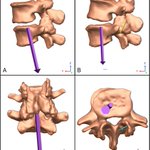
Researchers examined the role of spinal anatomy in these disparities by developing 360 subject-specific computational models of lumbar spine segments using CT scans from 60 adults spanning five decades of age. The models isolated the effects of vertebral geometry on how forces are distributed across intervertebral discs and facet joints under seven loading conditions. The findings revealed substantial differences associated with sex and age, including higher facet joint forces and shear loads in older adults and up to 31% greater disc loading relative to vertebral endplate area in women compared with men.
An anatomically informed understanding of spinal biomechanics could help clinicians better assess mechanical vulnerability, potentially guiding earlier interventions and more targeted strategies for reducing the risk of low back disorders.
𝗥𝗲𝗮𝗱 𝗺𝗼𝗿𝗲: link.springer.com/article/10…
𝗦𝘁𝘂𝗱𝘆: Sex- and Age-Related Variation in Vertebral Geometry Influences Lumbar Spine Loading: An Image-Based Computational Modeling Study
𝗔𝘂𝘁𝗵𝗼𝗿𝘀: Gregory G. Knapik, Ehud Mendel, Eric Bourekas, and William S. Marras
@OhioState
@OhioStateMed
@Yale
@YaleMed
@YNeurosurgery
𝗦𝘂𝗯𝗺𝗶𝘁 𝘆𝗼𝘂𝗿 𝗺𝗮𝗻𝘂𝘀𝗰𝗿𝗶𝗽𝘁: link.springer.com/journal/10…

Fighter pilots face an elevated risk of neck pain from the weight of their helmets, raising questions about how the added strain affects the muscles and structures of the cervical spine.
To investigate these effects, researchers used a validated cervical spine model to compare two methods for estimating the forces needed to stabilize the head with and without a helmet.
The methods produced different muscle activation patterns, with one preferentially recruiting larger muscles and shear wave elastography showing greater activation of deep stabilizers. The latter approach also aligned more closely with in vivo electromyography data, while both methods produced physiologically plausible spinal loads in the no-helmet condition.
Refining estimates of cervical muscle forces could improve predictions of pain mechanisms and inform safer helmet designs, injury prevention strategies, and individualized rehabilitation.
𝗥𝗲𝗮𝗱 𝗺𝗼𝗿𝗲: link.springer.com/article/10…
𝗦𝘁𝘂𝗱𝘆: Predicting Cervical Muscle Forces in Fighter Pilots: A Comparison of Shear Wave Elastography and PID Controllers Using Finite Element Analysis
𝗔𝘂𝘁𝗵𝗼𝗿𝘀: Mackenzie Hoey, Constantin Heinemann, Alex Vadati, and Zachary J. Domire
@EastCarolina
𝗦𝘂𝗯𝗺𝗶𝘁 𝘆𝗼𝘂𝗿 𝗺𝗮𝗻𝘂𝘀𝗰𝗿𝗶𝗽𝘁: link.springer.com/journal/10…

The potential for brain-computer interfaces to help people control assistive technologies is limited by variations in brain signals that make reliable performance across individuals difficult to achieve.
To reduce the impact of this variability, researchers created a deep learning framework designed to interpret brain signals associated with imagined movement without requiring models tailored to each person.
The approach aligns data to reduce physiological differences, identifies patterns in brain activity across multiple spatial and temporal scales, and uses an attention mechanism to emphasize the most informative signals. Tested on a public brain-computer interface dataset, the model achieved an average accuracy of 67.5% across previously unseen individuals, with accuracy for some individuals reaching 81.4% while using relatively few parameters.
Reducing reliance on person-specific training could make brain-controlled assistive technologies easier to deploy across a wider range of users.
𝗥𝗲𝗮𝗱 𝗺𝗼𝗿𝗲: link.springer.com/article/10…
𝗦𝘁𝘂𝗱𝘆: A Multiscale Decoding Approach of Subject-Independent Motor Imagery EEG Signal Combined with Data Alignment Strategy
𝗔𝘂𝘁𝗵𝗼𝗿𝘀: Jixiang Li, Yurong Li, Wuxiang Shi, Ranlan Kang, and Hongyan Wang
𝗦𝘂𝗯𝗺𝗶𝘁 𝘆𝗼𝘂𝗿 𝗺𝗮𝗻𝘂𝘀𝗰𝗿𝗶𝗽𝘁: link.springer.com/journal/10…

Corneal cross-linking, a treatment that strengthens weakened corneal tissue, can help stabilize the eye in people with keratoconus, but how an individual cornea will change after treatment is not always predictable.
Addressing this uncertainty, researchers built a patient-specific finite element model that accounts for both the mechanical and geometrical changes caused by these procedures. Using measurements from donor corneas, they characterized changes in stiffness and viscoelasticity, then personalized models for three individuals with keratoconus using corneal topography and in vivo optical coherence elastography. As a proof of concept, the models predicted changes in corneal curvature that closely approximated clinical measurements six months after treatment.
The ability to reliably anticipate procedural outcomes could enhance clinical planning for cross-linking procedures, potentially refining control over post-treatment corneal shape and vision.
𝗥𝗲𝗮𝗱 𝗺𝗼𝗿𝗲: link.springer.com/article/10…
𝗦𝘁𝘂𝗱𝘆: Integration of Mechanical Testing, In Vivo Optical Coherence Elastography and Personalized Finite Element Modeling to Predict Geometrical Outcomes of Corneal Cross-Linking
𝗔𝘂𝘁𝗵𝗼𝗿𝘀: Matteo Frigelli, Robert Lohmüller, Miguel A. Ariza Gracia, Günther Schlunck, Stefan J. Lang, @ETorresNetto, @farhad_hafezi, Philippe Büchler, and Sabine Kling
@unibern
𝗦𝘂𝗯𝗺𝗶𝘁 𝘆𝗼𝘂𝗿 𝗺𝗮𝗻𝘂𝘀𝗰𝗿𝗶𝗽𝘁: link.springer.com/journal/10…

Before a donor meniscus reaches the operating room, the methods used to preserve it may compromise its ability to function as intended.
Researchers compared menisci tested immediately after collection with those kept for 21 days under fresh or frozen conditions to determine how preservation affected their structural and mechanical properties.
Both fresh storage and freezing increased tissue permeability and porosity while reducing measures of compressive mechanical performance compared with controls. Tissue frozen with a cryoprotectant showed intermediate structural and mechanical properties, suggesting that limiting ice formation may reduce preservation-related changes.
Evidence of how storage alters menisci could inform improved preservation guidelines, giving clinicians greater confidence in the quality of tissue selected for transplantation.
𝗥𝗲𝗮𝗱 𝗺𝗼𝗿𝗲: link.springer.com/article/10…
𝗦𝘁𝘂𝗱𝘆: Effects of Preservation on the Compressive Properties and Microstructure of the Knee Meniscus
𝗔𝘂𝘁𝗵𝗼𝗿𝘀: Chester Jar, Abbi Oguchi, Mohammadhamed Shahsavari, Nadr M. Jomha, Lindsey Westover, and Gail M. Thornton
@UAlberta
@UAlberta_Eng
𝗦𝘂𝗯𝗺𝗶𝘁 𝘆𝗼𝘂𝗿 𝗺𝗮𝗻𝘂𝘀𝗰𝗿𝗶𝗽𝘁: link.springer.com/journal/10…

For people with severe heart or lung failure, an extracorporeal membrane oxygenation (ECMO) life-support system can sustain vital heart and lung function, but blood clots and blood cell damage associated with its circuit remain serious complications.
Researchers developed and experimentally validated a computational fluid dynamics model of a complete pediatric ECMO circuit to examine how the entire system influences blood flow, hemolysis and thrombus formation. Flow was largely uniform through the tubing, but connectors and internal loops produced localized disturbances that could propagate downstream, while higher pump speeds substantially increased shear stress and predicted hemolysis. Accounting for the non-Newtonian behavior of blood also revealed shear and hemolysis hotspots near the pump that were missed under simpler modeling assumptions.
A clearer picture of how ECMO components collectively affect circulating blood could guide safer design that minimizes the unintended harm of treatment.
𝗥𝗲𝗮𝗱 𝗺𝗼𝗿𝗲: link.springer.com/article/10…
𝗦𝘁𝘂𝗱𝘆: Numerical Analysis of Blood Flow Dynamics in Pediatric ECMO Circuits
𝗔𝘂𝘁𝗵𝗼𝗿𝘀: Vikas Kannojiya, Daniel Gagner, Ryan P. Barbaro, Pedro J. del Nido, Peta M. A. Alexander, and Vijay Govindarajan
@BostonChildrens
@harvardmed
@MottChildren
𝗦𝘂𝗯𝗺𝗶𝘁 𝘆𝗼𝘂𝗿 𝗺𝗮𝗻𝘂𝘀𝗰𝗿𝗶𝗽𝘁: link.springer.com/journal/10…

After pancreatoduodenectomy – a complex operation to remove part of the pancreas and surrounding digestive tract – leakage where the pancreas is reconnected remains a major cause of complications and death.
Researchers examined its mechanical behavior to help refine the models used to train surgeons for this procedure. Using compression and dynamic mechanical testing, they found that human pancreas was markedly stiffer than biological and commercially available synthetic substitutes, while hard samples were more than twice as stiff as soft samples in both fresh and frozen states. Further analysis revealed frequency-dependent differences in material response that the synthetic material was unable to reproduce.
Defining these mechanical properties could help future training models better reflect real pancreatic tissue, potentially shortening the learning curve and improving outcomes after surgery.
𝗥𝗲𝗮𝗱 𝗺𝗼𝗿𝗲: link.springer.com/article/10…
𝗦𝘁𝘂𝗱𝘆: Quantifying the Viscoelastic Properties of Pancreatic Tissue: A Comparative Study of Human, Biological and Engineered Hydrogel
𝗔𝘂𝘁𝗵𝗼𝗿𝘀: Kunal Joshi, Daniel M. Espino, Duncan E. T. Shepherd, Nasim Mahmoodi, Keith J. Roberts, Nikolaos Chatzizacharias, Ravi Marudanayagam, and Robert P. Sutcliffe
@unibirmingham
@eps_unibham
@SchoolofEng_UoB
@uhbtrust
@UHB_HPB
@liveRPancSurg
𝗦𝘂𝗯𝗺𝗶𝘁 𝘆𝗼𝘂𝗿 𝗺𝗮𝗻𝘂𝘀𝗰𝗿𝗶𝗽𝘁: link.springer.com/journal/10…

Detecting meaningful changes in heart sounds can be technically demanding, and this challenge can limit effective cardiovascular disease monitoring.
Researchers investigated how the design of flexible sensors could improve heart sound detection, focusing on four performance-related factors: area, aspect ratio, thickness, and encapsulation.
Simulations and mechanical testing showed that output generally improved with greater sensor area and polydimethylsiloxane encapsulation, although testing did not always match simulations when researchers varied sensor thickness and aspect ratio. Guided by these findings, the team optimized a flexible sensor and evaluated its performance using simulated heart sounds, where it produced approximately 1.79 times the output voltage of a commercial sensor.
Greater clarity around the influence of key design factors on sensor performance could support more sensitive wearable cardiac monitoring, giving clinicians richer acoustic information to assess heart abnormalities and follow their progression over time.
𝗥𝗲𝗮𝗱 𝗺𝗼𝗿𝗲: link.springer.com/article/10…
𝗦𝘁𝘂𝗱𝘆: Correlation Between Structural Parameters and Piezoelectric Performance of PVDF Heart Sound Sensors
𝗔𝘂𝘁𝗵𝗼𝗿𝘀: Ke Wang, Ruiqiang Zheng, Rongguo Yan, Shoucheng Chen, and Wenjing Du
𝗦𝘂𝗯𝗺𝗶𝘁 𝘆𝗼𝘂𝗿 𝗺𝗮𝗻𝘂𝘀𝗰𝗿𝗶𝗽𝘁: link.springer.com/journal/10…

The way gut bacteria process bile salts may influence colorectal cancer, but exactly how these microbial activities affect intestinal tissue is not well understood.
Exploring this relationship, researchers developed a controlled co-culture platform combining healthy and tumor-derived colon organoids with an engineered Escherichia coli strain that produces bile salt hydrolase.
The engineered bacteria preferentially colonized tumor organoids and restored farnesoid X receptor signaling in healthy organoids, while tumor organoids resisted this effect. The researchers also found that bile salt exposure and bacterial colonization had opposing effects on Hspg2, a gene associated with bacterial attachment to the intestinal surface.
These findings suggest that cancerous tissue may respond differently to bacteria-driven changes in bile salts – a distinction that could be leveraged in designing more selective therapies.
𝗥𝗲𝗮𝗱 𝗺𝗼𝗿𝗲: link.springer.com/article/10…
𝗦𝘁𝘂𝗱𝘆: Bile Salts and Bacterial Bile Salt Hydrolase Activity Influence Escherichia coli Colonization and FXR Signaling in Colorectal Cancer Organoids
𝗔𝘂𝘁𝗵𝗼𝗿𝘀: Ishita Dasgupta, Arianna Brevi, Yixiao Ma, Durga Prasad Rangineni, Miriam Duran, Amir Zarrinpar, and Abhinav Bhushan
@illinoistech
@UCSanDiego
@Zarrinparlab
𝗦𝘂𝗯𝗺𝗶𝘁 𝘆𝗼𝘂𝗿 𝗺𝗮𝗻𝘂𝘀𝗰𝗿𝗶𝗽𝘁: link.springer.com/journal/10…

As AI methods for medical imaging multiply, determining which approaches are best suited to specific clinical applications is becoming more complex.
To help navigate these choices, three engineers wrote a literature review surveying learning-based medical image classification, emphasizing advances most relevant to clinical translation – including foundation models, vision–language models, hybrid architectures, self-supervised pretraining, federated learning, and efficient deployment.
The authors examine how differences among imaging modalities, available data, and clinical workflows influence which models are appropriate for a given application. They also assess obstacles that can undermine performance outside controlled research settings, including bias arising from limited data diversity and the difficulty of detecting rare conditions.
By connecting technical advances with the realities of clinical use, this review could help shift the focus from what AI models can achieve to where they can deliver meaningful value.
𝗥𝗲𝗮𝗱 𝗺𝗼𝗿𝗲: link.springer.com/article/10…
𝗥𝗲𝘃𝗶𝗲𝘄: Overview of State-of-the-Art Learning-Based Classification Methods in Medical Imaging
𝗔𝘂𝘁𝗵𝗼𝗿𝘀: Nafiseh Ghaffar Nia, Rayyan Manwar, and Kamran Avanaki
@thisisUIC
𝗦𝘂𝗯𝗺𝗶𝘁 𝘆𝗼𝘂𝗿 𝗺𝗮𝗻𝘂𝘀𝗰𝗿𝗶𝗽𝘁: link.springer.com/journal/10…

Restoring hand function after injury or illness can require carefully controlled resistance during rehabilitation – something conventional splints struggle to provide.
Engineers developed a dynamic hand splint that replaces traditional elastic components with soft pneumatic actuators designed to provide controllable resistance during finger flexion. The prototype uses an actuator mounted on a forearm brace and connected to a finger through a tendon, while an onboard load cell monitors force during movement. Psychophysical testing showed that users could reliably perceive changes in resistance and that increasing actuator pressure reduced the average force on a fully flexed finger from approximately 5.2 newtons to as little as 0.7 newtons.
Actively controlled force could allow hand rehabilitation exercises to respond to changing needs, allowing clinicians to adjust therapeutic demands as recovery progresses.
𝗥𝗲𝗮𝗱 𝗺𝗼𝗿𝗲: link.springer.com/article/10…
𝗦𝘁𝘂𝗱𝘆: Hand Rehabilitation Dynamic Splint with Variable Force via Pneumatic Artificial Muscle Actuators
𝗔𝘂𝘁𝗵𝗼𝗿𝘀: Valentina Potnik, Gabriele Frediani, Mattia Dimitri, and Federico Carpi
@UNI_FIRENZE
𝗦𝘂𝗯𝗺𝗶𝘁 𝘆𝗼𝘂𝗿 𝗺𝗮𝗻𝘂𝘀𝗰𝗿𝗶𝗽𝘁: link.springer.com/journal/10…

Determining how the brain maintains stable blood flow could be key to improving treatment for cerebrovascular disorders – a goal that requires better ways to measure this complex regulatory process.
With this in mind, researchers developed a numerical algorithm that quantifies how changes in arterial pressure, oxygen, and carbon dioxide affect the brain’s regulation of cerebral blood flow. They integrated the algorithm with a personalized multidimensional model to account for individual-specific effects. Across two independent datasets, the model reliably reproduced observed physiological responses and maintained strong agreement with experimental measurements under varying conditions.
By capturing how an individual brain responds to changing physiological conditions, this framework could ultimately help clinicians determine when and how to intervene before impaired blood flow causes further harm.
𝗥𝗲𝗮𝗱 𝗺𝗼𝗿𝗲: link.springer.com/article/10…
𝗦𝘁𝘂𝗱𝘆: Enhancing Understanding and Clinical Applications of Cerebral Autoregulation: A Novel Integrated Numerical Framework
𝗔𝘂𝘁𝗵𝗼𝗿𝘀: Qi Zhang, Meng-di Yang, Xuan-hao Xu, Xiu-li Xu, Shuai Tian, and Li-ling Hao
@SYSUworld
𝗦𝘂𝗯𝗺𝗶𝘁 𝘆𝗼𝘂𝗿 𝗺𝗮𝗻𝘂𝘀𝗰𝗿𝗶𝗽𝘁: link.springer.com/journal/10…

Concussions can occur even when conventional measures of head acceleration suggest an impact should pose relatively little risk.
A letter to the editor offers one possible explanation, proposing that short-duration impacts may cause high-frequency vibrations and flexing of the skull that contribute to concussion-like signs and symptoms. Drawing on prior biomechanical research, the author suggests that these responses may transfer mechanical energy into intracranial tissues in ways not captured by traditional measures of rigid-body motion. The hypothesis could account for why baseball catchers experience concussions from foul tips despite substantially lower accelerations than those typically associated with concussions in football.
To determine whether this proposed mechanism contributes to injury, the author calls for further testing that could reveal overlooked sources of risk and inform how head protection is evaluated and designed for short-duration impacts.
𝗥𝗲𝗮𝗱 𝗺𝗼𝗿𝗲: link.springer.com/article/10…
𝗟𝗲𝘁𝘁𝗲𝗿: A Vibration-Based Concussion Mechanism
𝗔𝘂𝘁𝗵𝗼𝗿: @strowson
@virginia_tech
@VTEngineering
@BEAMvt
𝗦𝘂𝗯𝗺𝗶𝘁 𝘆𝗼𝘂𝗿 𝗺𝗮𝗻𝘂𝘀𝗰𝗿𝗶𝗽𝘁: link.springer.com/journal/10…

Calcium deposits in the knee may be associated with osteoarthritis progression, but their involvement in joint degeneration remains difficult to assess in the body.
A key obstacle is distinguishing different types of calcification in the body, and researchers sought to address it by evaluating whether photon-counting dual-energy CT could differentiate basic calcium phosphate from calcium pyrophosphate deposits in meniscus samples.
Using Raman spectroscopy as a reference, they analyzed 36 samples containing only one calcification type and found differences in dual-energy measurements between the two minerals. The differences suggest that their distinct compositions may produce measurable imaging signatures that could enable the calcification types to be distinguished.
CT-based differentiation of these deposits could provide a noninvasive way to assess whether therapies targeting mineral deposition are altering disease progression, potentially informing the development of disease-modifying treatments for osteoarthritis.
𝗥𝗲𝗮𝗱 𝗺𝗼𝗿𝗲: link.springer.com/article/10…
𝗦𝘁𝘂𝗱𝘆: Characterizing Meniscal Calcifications with Photon Counting-Based Dual-Energy Computed Tomography
𝗔𝘂𝘁𝗵𝗼𝗿𝘀: Eeva Alina Nevanranta, Ville-Pauli Karjalainen, Mikael Brix, Iida Hellberg, Aleksandra Turkiewicz, Bijay Shakya, Patrik Önnerfjord, Sampo Ylisiurua, Amanda Sjögren, Khaled Elkhouly, Velocity Hughes, Jon Tjörnstrand, Simo Saarakkala, Martin Englund, and Mikko A. J. Finnilä
@UniOulu
@HST_OY
@OYS_sairaala
@lunduniversity
@ssaarakk
@dr_englund
𝗦𝘂𝗯𝗺𝗶𝘁 𝘆𝗼𝘂𝗿 𝗺𝗮𝗻𝘂𝘀𝗰𝗿𝗶𝗽𝘁: link.springer.com/journal/10…
