

I’m most interested in betting on: Politics, Movie awards, Sports.
Joined April 2020
- Tweets2.8K
- Following506
- Followers1.5K
- Likes2.3K

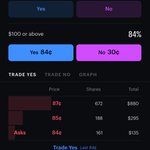


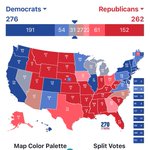


Reminder for everyone: When a candidate priced at 80 cents wins, this means Kalshi was correct and accurate in their pricing. When a candidate priced at 5 cents wins, no this does not mean that Kalshi was wrong. Don’t you understand how probability works? 5% outcomes happen.
13
454
AiBets retweeted

Today, a Minnesota federal court put a halt to aggressive state overreach seeking to ban federally regulated derivatives markets. This is the second time a court has granted an injunction in favor of the agency in defense of its jurisdiction over prediction markets. The @CFTC appreciates the court’s careful consideration of the issues.
AiBets retweeted

People are owed more than just 'their basis' here; several markets were moved by people freeing up shares to accumulate a position here. Like Fed Chair would be at 92c without this market; people paid fees there and took losses to bid on that market.

Kalshi has admitted that large corporate market makers are gifted zero fee trading + rebates, while individual customers pay an insane level of fees. How is that exactly a fair and equal playing field?

1: The notion that market makers, which are the backbone of all financial markets, somehow makes exchanges similar to sportsbooks is false even in its most generous interpretation. For those of you not wanting to read an entire thread…
TL;DR: On a sportsbook, there is a single centralized entity (the “house”) setting prices for the entire market. On an exchange, prices are created from an amalgamation of thousands of bids and asks from thousands of entities. Market makers, including KT, compete for flow in an open, transparent and fair marketplace, and set their own prices as to what they are willing to pay for a contract, but are not able to dictate the broader market beyond that. 🧵
Here’s an explanation of market makers and how they work on Kalshi:
2: In financial markets -- the stock market, the bond market -- assets are bought and sold peer to peer. For example, if you want to sell a share of Nike stock, you will need someone else to buy it.
3: There is an obvious problem with this setup: What if nobody wants to buy when you want to sell? What if nobody is selling when you want to buy? If participants could only buy or sell when willing buyers and sellers happened to match up in timing and price, markets simply wouldn't be able to function.
4: This is where market makers come in. Market makers buy and sell from both sides of the market, enabling buyers to have sellers and sellers to have buyers. This creates a liquid market where anyone can enter and exit positions as they please.
5: Liquid markets are incredibly important to platforms like Kalshi, or the New York Stock Exchange. Liquidity is what enables a good user experience -- nobody would use Kalshi or the NYSE if they couldn't buy or sell contracts when they wanted to.
6: Liquid markets are also incredibly important to consumers. On Kalshi, there is a massive ecosystem of market makers, all competing and pricing separately. It's this thriving ecosystem, made up of thousands of market makers, that creates market efficiency -- and market efficiency is why people get better prices on Kalshi.
7: On Kalshi, one of these market makers is KT, who has been a public part of the platform since its launch. KT is a separate corporate entity that is a market maker on Kalshi charged with providing liquidity. They are one of the thousands of market makers that combine to create the Kalshi ecosystem.
8: On a sportsbook, there is a single centralized entity (the "house") setting prices for the entire market. On an exchange, prices are created from an amalgamation of thousands of bids and asks from thousands of entities. Market makers, including KT, set their own prices as to what they are willing to pay for a contract, but are not able to influence the broader market beyond that. The notion that they can is outright false and a complete misunderstanding of how financial markets operate.
9: Given the financial interest at stake in opposing Kalshi's success, we are not surprised to see misinformation circulating about complex topics. The good news: there are a lot of supporters of the space, especially end consumers…so we’ll keep going! Our door is always open if you want to have a fact-based conversation about where the future of markets is heading.


If the new maker fees that just hit countless markets on @Kalshi today seem high, that is because they are! Say you want to provide liq on NFL markets at a 1 cent spread. Per 100 shares of each, you would make a whopping 12 cents of profit, paying an insane 88 cents in fees (1/2)


AiBets retweeted

Ali, what is with the pathological obsession of people associated with Kalshi bashing Polymarket with really misleading stuff?
Can you explain this? Is this a company directive?
It's all so juvenile and counterproductive and virtually all of the prediction market players think it is slimy, or worse. A pointless internecine war in a space that is growing rapidly.
Kalshi is making tremendous strides and opening a lot of doors and walking through those doors. It's laudable. It's awesome! So why do people associated with it act like insecure bullies?
And if you want to be real, and plop down words like "scam," then please grapple with the fact that Kalshi has paid out multiple markets in a way that is factually, indisputably incorrect without any player compensation or recourse. No protection there. I've tweeted about this (along with, yes, tons of other tweets criticizing Polymarket/far too many UMA disasters). Resolving prediction markets can be HARD!
The suit market was handled poorly, but nowhere close to a scam. It was a subjective market that resolved on a subjective overview of media sources. People subjectively decided it wasn't a suit, and subjectively decided there wasn't a media consensus. Both those determinations are well-founded, but not universally agreed with. The scam narrative snowballed out of control because Polymarket - inexplicably - never clarified that they meant a business suit.
But you should get real. Neither site has solved the rules and oracle problem. Polymarket has all the dirty resolution laundry airing out in the open. Kalshi shuts it behind closed doors.
If you aren't aware of Kalshi's resolution shortcomings, which you don't seem to be, then you aren't very involved in your investment.


AiBets retweeted

Keep your eye on the donut and not on the hole.
In memory of David Lynch, we will continue to explore the otherworldly and the unknown. We will focus not on the loss, but on what we gained from the years we shared this planet with you. We will see you in our dreams.

ALT Using the Event Horizon Telescope, scientists obtained this image of the black hole at the center of galaxy M87, outlined by emission from hot gas swirling around it under the influence of strong gravity near its event horizon. The hot gas is shaped like a doughnut and is glowing a warm yellow color with reddish tint at its edges. The darkness of space is black in the background. Credit: Event Horizon Telescope collaboration et al.


