
Neuroscientist (group leader @Brain_Barriers) exploring brain barriers to understand neurological disease. #BBB #CSF #stroke #dementia #3Rs @KCLalumni 🇬🇧 🇦🇺
Liverpool, UK
Joined July 2012
- Tweets245
- Following453
- Followers263
- Likes859
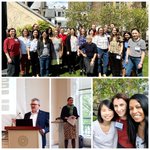






Thanks for the invitation @BenedictNeuro
An excellent line up of talks. Lots of potential for exciting work in the future!

It's the @InfectNeuroLab conference today‼️
We have some really interesting talks lined up from both scientists and clinicians all to do with #neuroscience and #infection 🧠🦠

Fabulous start to @acmedsci #SUSTAIN10 Leadership programme for women in research 👩🔬👏 Looking forward to working with this group of amazing research leaders and the Academy fellows over the next year. @edgehill @edgehill_HRI @LiverpoolCCS

Happy #InternationalWomensDay from @Brain_Barriers 🧠 👩🔬 #WomenInScience @BiologyEHU @LiverpoolCCS
Also congrats to 6th form student from Belvedere Academy Liverpool for her successful work placement in our lab 👩🔬🥳 #STEMeducation @edgehill

Thrilled to see our latest review out! @Brain_Barriers @BiologyEHU @LiverpoolCCS
Congrats to my PhD student @CeinwynGrace for her 1st ever 1st author review 🎉 We discuss the therapeutic potential of using nanoparticles to deliver drugs across the #BBB in #dementia 🧠

OUT NOW in @EJNeuroscience
Blood–brain barrier disruption in dementia: Nano‐solutions as new treatment options - Cooper, Adjanie Patabendige et al. @APatabendige @Brain_Barriers
#BBB #CSF #stroke #dementia #3Rs
onlinelibrary.wiley.com/doi/…


Patabendige & Tagalakis group joint Christmas lunch 🎄 An amazing group of colleagues, a pleasure to work with everyday. Great to end the year on a high 🍾 🥳 @Brain_Barriers @BiologyEHU

Dr Adjanie Patabendige retweeted

Dr Rajiv Sankaranarayanan discussed 'Transforming Care in Heart Failure Patients using VIRTUAL WARDS' , concluding the @ehucardioresprc seminar series – at Ormskirk, England

Thanks for the invitation @ehucardioresprc @EHU_FHSCM
Looking forward to the next couple of seminars @DrRajivsankar and A/Prof Pankaj Garg

Dr Patabendige discussed how in vitro models can be used to understand disruption of the BBB not only in neurological but cardiovascular diseases such as atrial fibrillation as part of the @ehucardioresprc seminar series

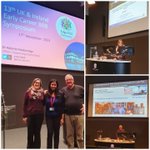
Many thanks to our keynote speakers Prof Egle Solito
@esolitolab and Dr Reinhard Gabathuler for two very exciting and insightful presentations! Lovely to also see so many brilliant ECR presentations. The future of #BBB research is bright! 👏 🧠#13ECRBBB @EHU_Research
@BiologyEHU

A big day for us at Edge Hill!
Hosting the 13th Early Career Research UK and Ireland Blood Brain Barrier Symposium @edgehill
#13thECRBBB


13
1,684
Registration and abstract submission will close soon! Awards & prizes to be won, including the David Begley Excellence Award for Young BBB Researchers (sponsored by Pharmidex).
Pls RT @LNeuroscience @BRUKresearch @BMVBSoc @EHU_Research
Join us for the 13th UK & Ireland Early Career Blood-Brain Barrier Symposium on Friday 17th November here at Edge Hill University.
Registration is open until 15th November.
Please submit abstracts to [email protected] by 10th November.
store.edgehill.ac.uk/confere…
Updated group photo to welcome new members!
L-R: @RosieGaske75026 Project Coordinator, new PhD students Camarra Nazha & Umeshi Karunadasa, @APatabendige and 2nd year PhD student @CeinwynGrace
Pls follow @Brain_Barriers our new X profile.
@LiverpoolCCS @EHU_Research #WomenInSTEM
Our team including a few new faces! Looking forward to getting started with our projects in the lab
@edgehill

2
249
Just over a week left to apply to join my #BBB lab as a fully-funded PhD student and be part of this friendly department @BiologyEHU @EHU_Research and @LiverpoolCCS family. Tuition fees and a tax-free stipend of £18,622 per annum is on offer.
jobs.edgehill.ac.uk/vacancy.…

3
207
Dr Adjanie Patabendige retweeted

🚨 Dr. Cicognola @clau_cico from @lunduniversity will give a virtual talk titled "Associations of CSF PDGFRβ With Aging, BBB Damage, Neuroinflammation, and AD Pathologic Changes" 🤩🧠
📅 17th Aug
🕐 1pm UK time
🖱️ *Register* here: ukdri.zoom.us/webinar/regist…
Please RT! 🙏🏻
@UKDRI
Very sad to hear the news of passing away of Dr David Begley, one of my PhD supervisors with Joan Abbott at BBB group at KCL @KclPhysiology. I was so lucky to have known him and learn from him. A genuine expert in BBB drug transport. Truly irreplaceable. RIP David 🙏

ALT With David Begley at ESN meeting, Milan 2019
Dr Adjanie Patabendige retweeted

A mind-blowing paper has come out today in @Nature
In 2016, JC Venter Institute scientists trimmed a bacterial genome to its barest minimum required for life to synthesize what they called a "minimal genome" (science.org/doi/10.1126/scie…).
Today, a group of scientists from Indiana University reports how that minimal genome evolved over 2000 generations in comparison to the non-minimal genome.
The authors found that even when you reduce a bacterial genome to its absolute minimum where every nucleotide matters, the genome undergoes mutational events generation after generation as much as the non-minimal genome. One simply cannot stop the evolution.
Just over 300 days of evolution (equivalent to 40,000 years in humans) the minimal cell has gained everything it lacked in fitness on day one in comparison to the non-minimal cell.
When comparing the evolved traits between the minimal and non-minimal cells, the scientists found something striking. The evolutionary process increased the cell size of non-minimal cells but not that of the minimal cell. But that is not the striking part.
The scientists were able to identify the key mutation that resulted in cell size evolution. And it turned out that the mutation that helped the non-minimal cells to grow bigger is the same that helped the minimal cells to stay smaller. Growing bigger had a survival advantage for non-minimal cells and not growing bigger had a survival advantage for minimal cells. So, the mutation had a context-dependent effect. This just demonstrates that the evolutionary effects on traits have no absolute direction. All that matter is what is beneficial for the organism's survival.
The conclusion of the paper is metaphorically a quote from the Jurassic Park movie:
“Listen, if there’s one thing the history of evolution has taught us is that life will not be contained. Life breaks free. It expands to new territories, and it crashes through barriers painfully, maybe even dangerously, but . . . life finds a way". (scienmag.com/artificial-cell…)
nature.com/articles/s41586-0…

I'm looking for a research project co-ordinator to join my lab for 18 months. You'll be skilled in cell culture and have some experience as a research assistant or co-ordinator. @EHU_Research Apply via jobs.edgehill.ac.uk/Vacancy.…

A fantastic day at the @acmedsci meeting my fellow #AMSspringboard awardees and the wonderful staff! Thank you for the excellent networking opportunity and interactive sessions on Research Leadership 👌👩🔬 @AMS_Careers

Dr Adjanie Patabendige retweeted

Not a pretty picture.
Fusion of nerve cells after #SARSCoV2 exposure in human brain organoids with loss of function
science.org/doi/10.1126/scia…
@ScienceAdvances

A few more days left to apply! Join our lab this summer to start working on a fully funded PhD project looking at blood-brain barrier dysfunction in atrial fibrillation. jobs.edgehill.ac.uk/vacancy.…


Join my lab! 🧠🫀👩🔬 A 3-year PhD scholarship is available to study BBB dysfunction in atrial fibrillation, funded by an @acmedsci Springboard Award. Apply by 12th June. @EHU_Research pls RT @LNeuroscience @BSCResearch @BritishNeuro @ECR_BBB_Symp @BMVBSoc #AcademicTwitter
Dr Adjanie Patabendige retweeted

I’m beyond thrilled to announce the publication of our new paper in @JAHA_AHA: ahajournals.org/doi/10.1161/….
We show that #stroke➡️#pericyte contraction & capillary stalling➡️neurovascular uncoupling in the peri-ischemic cortex. #Penumbra.
Here's a🧵summarizing our key findings (1/6):
